
drgondog
Major
Fix, train, deploy in four days - a unique fighter that previously did not exist in USSR - rather than remove and study in detail?To defend Leningrad ?

Follow along with the video below to see how to install our site as a web app on your home screen.
Note: This feature may not be available in some browsers.
Ad: This forum contains affiliate links to products on Amazon and eBay. More information in Terms and rules
Fix, train, deploy in four days - a unique fighter that previously did not exist in USSR - rather than remove and study in detail?To defend Leningrad ?

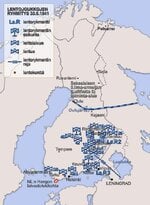
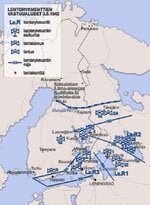
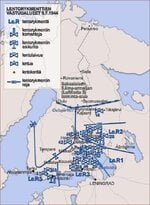
According to Vladimir Kotelnikov, the Spitfires (LF IX) actually served in Leningrad's air defense (the 11th IAP and the 26th, 27th and 102nd Guards IAP). Furthermore, the 767th IAP flew "Spitfires" while defending Murmansk. But that were all air defense (PVO) units - almost all of the "Spitfires" received by the Soviets were used there.
I doubt that Finnish pilots could have encountered these "Spitfires" - deployment mainly began in the summer of 1944. In the north, near Murmansk, "Spitfire" reconnaissance aircraft were operated, but it was mainly German pilots who encountered them.Interesting. Do we know if these PVO Spitfires ever crossed paths with Finnish aircraft? I assume over Murmansk they might have seen some action against German aircraft flying out of Finland or Norway.
...but in fact they were all Yaks or LaGGs.Yes Hans Wind claimed 2 Spits with Brewster and two with 109 G.
I dont think any aircraft is as easy to recognize as a Spit....but in fact they were all Yaks or LaGGs.
You've already been told that misidentifying the type of enemy aircraft in combat was quite common among pilots on all sides. It's easy to mistake a Spitfire for a Yak.I dont think any aircraft is as easy to recognize as a Spit.
There were plentyful.
The thing that caught my eye was that he was escorting Blenheim bombers in mid 1944. You have to take your hats off to the crews of those bombers.Found this, an post war interview with one of the Finnish pilots involved, it seems the soviets did use their early P-51's for one short period in 1944.
.
I doubt that Finnish pilots could have encountered these "Spitfires" - deployment mainly began in the summer of 1944. In the north, near Murmansk, "Spitfire" reconnaissance aircraft were operated, but it was mainly German pilots who encountered them.

Kotelnikov's data seemed insufficient to me, so I decided to consult book All of Stalin's Fighter Aviation Regiments by Anokhin and Bykov and discovered the following:Interesting. Do we know if these PVO Spitfires ever crossed paths with Finnish aircraft? I assume over Murmansk they might have seen some action against German aircraft flying out of Finland or Norway.
Kotelnikov's data seemed insufficient to me, so I decided to consult book All of Stalin's Fighter Aviation Regiments by Anokhin and Bykov and discovered the following:
All of the regiments listed belong to the Air Defense Forces (PVO).
- The 26th GIAP received 8 Spitfire Vs in late June 1943, and from late June 1944 onward, it had only Yak-9s and Hurricanes. Spitfire IX arrived in February 1945
- The 27th GIAP received Spitfire IXs in June 1945
- The 102nd GIAP received Spitfire IXs in May 1945
- The 11th GIAP received Spitfire IXs in the spring of 1945.


