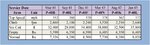
Regarding post #183 Schweik, I have the following:
Looks like the P-40F had about 10 mph on the P-40E, which isn't very much. Still, an advantage IS an advantage. The P-40F had about a 6% climb advantage. Again, not a game changer. The P-40F had about 5,400 feet ceiling advantage. That is more significant than the speed or climb, but in actual fighter performance, the P-40 E started dropping off at about 15,000 feet and the P-40F started dropping off at about 19,000 feet. So, it had a medium advantage, though the P-40E was in combat a full 5 months earlier than the P-40F.
Then we get to the P-40L and P-40N. They only entered combat two months apart, with the P-40L getting there first. The Allison-powered P-40N (interceptor version) was about 6 mph faster, climbed 880 fpm better than the P-40L, and had a 2,200 foot service ceiling advantage. The P-40N's climb was 33% better than the P-40L. The N had a very slight speed advantage, not enough to matter, and the N had about a 6% service ceiling advantage.
So, the P-40F had a slight advantage for about 2 years early in the war and the P-40N had about the same advantage for 2 years later in the war except for climb, where it had a much more significant advantage.
I'll stick with the Allison, myself, overall. In a perfect world where choice was an option, I'd have an Allison P-40 up until Dec 41, right about Pearl Harbor time. Then I'd fly a P-40F until Mar 43, at which time, I'd opt for a P-40N. I'd WISH for a P-40Q that would never show up.
The weights above are for normal combat loadout, not maximum takeoff weight.
I just do not see the P-40F as having a very significant advantage over the P-40E though it DID, in fact, have one. The P-40N DID have a pretty good climb advantage over the P-40L. All in all, they weren't all that much different from one another. Sort of "incremental improvements."