Bomb load limited to 8,000lb initially, later 12,000lb. Service ceiling c27,000ft. Unpressurised.

Navigation
Install the app
How to install the app on iOS
Follow along with the video below to see how to install our site as a web app on your home screen.
Note: This feature may not be available in some browsers.
More options
You are using an out of date browser. It may not display this or other websites correctly.
You should upgrade or use an alternative browser.
You should upgrade or use an alternative browser.
High Altitude Heavy Bomber for RAF (2 Viewers)
- Thread starter wuzak
- Start date
Ad: This forum contains affiliate links to products on Amazon and eBay. More information in Terms and rules
More options
Who Replied?
GrauGeist
Generalfeldmarschall zur Luftschiff Abteilung
It might be worth mentioning that Supermarine responded to the Air Ministry B.13/36 with a heavy bomber design, though it seems that it would have been just a bit smaller than the Short Stirling.
Supermarine's proposal, as with that of Short which produced the Stirling, was to Spec B. 12/36. It was P.13/36 that led to Manchester & Halifax.
Plenty of info on the Supermarine proposal and some of the others here.
 www.secretprojects.co.uk
Plenty of info on the Supermarine proposal and some of the others here.
British B.12/36 Heavy Bomber Competition ?
Hi, In early 1936,the Air Ministry announced for heavy bomber four engined aircraft competetition,and by July of the same year,they asked; Avro,Blackburn,Bristol,De Havilland,Fairey,Gloster,Hawker,Saro,Shorts,Supermarine and Westland. A few weeks later also anther tenders were reached to...
www.secretprojects.co.uk
GrauGeist
Generalfeldmarschall zur Luftschiff Abteilung
The 13 was a typo...
Pu 239, an isotope of Uranium 238
No. An isotope, by definition, is a different species of the same chemical element that differs in how many neutrons it has. Plutonium is a different element than Uranium, thus Pu239 is not an isotope of U238.
It is true that Pu239 is produced from U238. U238 transmutes into U239 via neutron capture, which then beta- decays into Np239, which finally beta- decays into Pu239. You'll note that beta- decay changes the chemical element, not a different isotope of the original element.

No. An isotope, by definition, is a different species of the same chemical element that differs in how many neutrons it has. Plutonium is a different element than Uranium, thus Pu239 is not an isotope of U238.
It is true that Pu239 is produced from U238. U238 transmutes into U239 via neutron capture, which then beta- decays into Np239, which finally beta- decays into Pu239. You'll note that beta- decay changes the chemical element, not a different isotope of the original element.
Agh, gahdammit! I should'a known that. Thank you for the correction.

Howard Gibson
Staff Sergeant
I have just noticed this thread.It's late 1940, the Battle of Britain has come and gone and the newest British bombers, the Manchester, Halifax and Stirling are about to enter service.
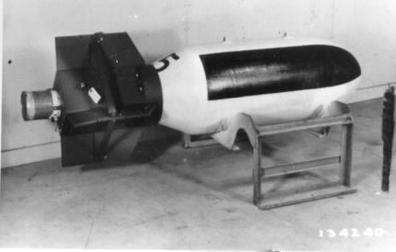
Barnes Wallis has proposed a 10 ton (22,000lb) penetrating bomb for attacking mines, dams and the like. Ideally the bomb would be dropped from 40,000ft.
To carry the bomb, Wallis has proposed the 6 engine "Victory" bomber.
The MAP isn't impressed with a single use bomber.
What if the MAP likes the idea of the bomb, but would like more flexibility with the bomb load?
They ask for a high altitude bomber which can carry a single 22,000lb bomb or equivalent in conventional bombs, witha 2,000 mile range with maximum bomb load.
Operating altitude to be above 30,000ft, preferably 40,000ft. A pressurised cockpit is to be used.
Engine options in production are 2 stage Merlins, which were under development in 1940, Hercules and the Vulture, which is soon to be cancelled.
Engines in development, or in early production, include the Napier Sabre, Bristol Centaurus and the Rolls-Royce Griffon.
For the high altitude role, the engines would need to have 2 stage superchargers developed, or be coupled for a turbocharger. I'm not sure US turbos would be available, so the British would have to develop them. Bristol had some experience with turbos in the 1930s.
What engines would be the best option? 4, 6, 8?
Also in 1940, Hawker are researching the new "laminar flow" wings developed by NACA. Ths would lead, eventually, to the Hawker Tempest.
Can this research be used to improve the performance of the high altitude bomber?
What defensive armament will be required?
The Manchester, Halifax and Stirling each have 3 powered turrets, armed with 0.303" mgs.
Are 0.5" hmgs an option?
20mm gun turrets?
For speed of development, remain with manned turrets in preference to remote controlled guns?
Any chance of the bomber being available in 1944?
High altitude worked fairly well for the British and Americans because they developed two-stage superchargers, and the Germans and Japanese didn't. In 1943, the Germans could catch and shoot down unescorted B17s and B24s at 25,000 to 28,000ft. At B-17 bouncing altitude of 30,000ft, a P47 was around 40mph faster than a Bf109, and maybe 60mph faster than an Fw190. At 33,000ft, the P47s could equal the climb rate of the Bf109s. At 30,000ft, Mosquitos generally were not interceptable. American fighters inflicted unacceptable casualties on the Luftwaffe, and British reconnaissance Mosquitos photographed whatever they damn well pleased where ever they damn well pleased. B29s flew over Japan at 30,000ft with low casualties, although their bombing was not accurate enough for Curtis LeMay. High altitude was a great place for the Allies to fight the war.
If the Germans and Japanese develop and deploy any form of two-stage superchargers, high altitude is not a safe place for the Allies, especially without fighter escort. The Axis created an opportunity. How would B29s have fared against competently flown Ta152Hs?
Did anybody hit a ship sized moving target with dumb bombs from 20,000ft during WWII? How about the Fritz X? The technology was not that complicated. Controllers manufactured in Great Britain or the USA by something other than slave labour will not be sabotaged. Fritz Xs sunk the Roma and heavily damaged HMS Warspite. There was a way to be accurate from 40,000ft.
GrauGeist
Generalfeldmarschall zur Luftschiff Abteilung
B-17s attacked my Uncle's sub (USS Grayling) during the Battle of Midway, and claimed the "Japanese cruiser" sank immediately.Did anybody hit a ship sized moving target with dumb bombs from 20,000ft during WWII?
So...there is that.

The Hs293 glide bomb was first used in Aug 1943. Fritz X in July (against shipping targets at Augusta & Messina, although these were not noticed by the Allies at the time). Fritz X came to prominence in Sept off Salerno sinking Roma and severely damaging Warspite, Savannah & Uganda. By the end of that month the first jammers had been produced to counter them with a second generation in service by the end of the year. By Normandy these were widely fitted across the fleet. RN jammers carried the designation Type 650 (deployed off Anzio) & Type 651.
So, in the overall scheme of things, the shelf life of these weapons was relatively short lived.
The US deployed the AZON in 1944 and had the RAZON in development. But use of AZON was limited to land targets due to guidance limitations.
 en.wikipedia.org
 en.wikipedia.org
Plenty of cases in WW2 of successful bombing attacks from altitude (10,000ft plus but not necessarily as high as 20,000ft) against ships in harbour. Not many against ships on the open sea able to freely manoeuvre. One that does come to mind was in the Med in 1942. Littorio was successfully bombed while at sea by a USAAF B-24 in June 1942 from height (exact altitude unknown). Her attention had been occupied by a low level TB attack so she was caught off guard. 9 aircraft attacked the Italian fleet at sea, but only a single 500lb hit was achieved.
So, in the overall scheme of things, the shelf life of these weapons was relatively short lived.
The US deployed the AZON in 1944 and had the RAZON in development. But use of AZON was limited to land targets due to guidance limitations.
Azon - Wikipedia
VB-3 Razon - Wikipedia
Plenty of cases in WW2 of successful bombing attacks from altitude (10,000ft plus but not necessarily as high as 20,000ft) against ships in harbour. Not many against ships on the open sea able to freely manoeuvre. One that does come to mind was in the Med in 1942. Littorio was successfully bombed while at sea by a USAAF B-24 in June 1942 from height (exact altitude unknown). Her attention had been occupied by a low level TB attack so she was caught off guard. 9 aircraft attacked the Italian fleet at sea, but only a single 500lb hit was achieved.
I have just noticed this thread.
High altitude worked fairly well for the British and Americans because they developed two-stage superchargers, and the Germans and Japanese didn't. In 1943, the Germans could catch and shoot down unescorted B17s and B24s at 25,000 to 28,000ft. At B-17 bouncing altitude of 30,000ft, a P47 was around 40mph faster than a Bf109, and maybe 60mph faster than an Fw190. At 33,000ft, the P47s could equal the climb rate of the Bf109s. At 30,000ft, Mosquitos generally were not interceptable. American fighters inflicted unacceptable casualties on the Luftwaffe, and British reconnaissance Mosquitos photographed whatever they damn well pleased where ever they damn well pleased. B29s flew over Japan at 30,000ft with low casualties, although their bombing was not accurate enough for Curtis LeMay. High altitude was a great place for the Allies to fight the war.
If the Germans and Japanese develop and deploy any form of two-stage superchargers, high altitude is not a safe place for the Allies, especially without fighter escort. The Axis created an opportunity. How would B29s have fared against competently flown Ta152Hs?
Did anybody hit a ship sized moving target with dumb bombs from 20,000ft during WWII? How about the Fritz X? The technology was not that complicated. Controllers manufactured in Great Britain or the USA by something other than slave labour will not be sabotaged. Fritz Xs sunk the Roma and heavily damaged HMS Warspite. There was a way to be accurate from 40,000ft.
It is true that the Germans were late in the widespread employment of two-stage supercharging for fighters, but they did have some good high-altitude capability available if required.
Fighter performance at high altitude was often afforded by the use of the GM-1 Nitrous oxide injection equipment and assisted later by the provision of pressurised cockpits on some fighters, beginning with the Bf 109 G-1 in mid 1942. However, these capabilities were not generally required as there were few high altitude targets and the vast majority of
fighting was well below 30,000'.
The Germans did have difficulty with the Mosquito in higher altitude operation. Here, the good speed at altitudes around 30,000' of the bomber Mossies made interception difficult for
even the GCI fighter. This was the brilliant tactical advantage that the true high performance bomber had, it is simply very difficult to achieve engagement if your target has a similar
speed capability. The later PR Mossies were even better performing.
Notwithstanding the German projects for very high altitude fighters, the reality was that Germany never fully needed to fight regularly at high altitude (say above 30,000'). The high altitude capable Bf 109 G-5AS (pressurised and with the high altitude DB 605 AS motor) had little opportunity or success against the high flying Mossies. When the low-medium level
power boosting of MW50 (water-methanol ADI) became available in mid 1944, the G-5 AS powered aircraft had their GM-1 tanks converted to MW50 use because all the fighting was
against lower level bombers.
Daimler-Benz and Junkers both developed two-stage supercharged engines by late 1944, the DB 603L, the DB 605L and the JUMO 213 E/F. These engines were entering production at
the end of the war and very high altitude capability was in service with the Ta 152 H using the JUMO 213 E with two-stage supercharging and a service ceiling of 49,500'.
Overall, if the B29 had been used in the European war, the Germans certainly did have available fighter capability that could have been effective.
Eng
Howard Gibson
Staff Sergeant
In 1943, intercepting bombers meant fighting P47s at 30,000ft. 30,000ft+ was the P47's happy place. You do not wage war in the enemy's happy place. The Luftwaffe paid dearly for this. Pressurized cockpits are nice and comfy, and some Spitfires and Mosquitos had them. What the P47 had was a massive, honking turbocharger....
Notwithstanding the German projects for very high altitude fighters, the reality was that Germany never fully needed to fight regularly at high altitude (say above 30,000'). The high altitude capable Bf 109 G-5AS (pressurised and with the high altitude DB 605 AS motor) had little opportunity or success against the high flying Mossies. When the low-medium level
power boosting of MW50 (water-methanol ADI) became available in mid 1944, the G-5 AS powered aircraft had their GM-1 tanks converted to MW50 use because all the fighting was
against lower level bombers.
...
Eng
Howard Gibson
Staff Sergeant
This thread is about bombing from 30,000 to 40,000ft. The bomb has to be guided. The RAF eventually hit the Tirpitz with a Tallboy.Plenty of cases in WW2 of successful bombing attacks from altitude (10,000ft plus but not necessarily as high as 20,000ft) against ships in harbour. Not many against ships on the open sea able to freely manoeuvre. One that does come to mind was in the Med in 1942. Littorio was successfully bombed while at sea by a USAAF B-24 in June 1942 from height (exact altitude unknown). Her attention had been occupied by a low level TB attack so she was caught off guard. 9 aircraft attacked the Italian fleet at sea, but only a single 500lb hit was achieved.
Can you guide a bomb while the pilot is doing aerobatics? Again, you don't want be doing this to people who have two-stage superchargers.
In 1943, intercepting bombers meant fighting P47s at 30,000ft. 30,000ft+ was the P47's happy place. You do not wage war in the enemy's happy place. The Luftwaffe paid dearly for this. Pressurized cockpits are nice and comfy, and some Spitfires and Mosquitos had them. What the P47 had was a massive, honking turbocharger.
Fortunately, the Luftwaffe did pay dearly in their fighting against the Allies, partly due to the sheer weight of numbers of Allied bombers and fighters involved, especially when the escort fighters had the necessary range. By the time that a European very high altitude bombing offensive might have been possible with the B29, the Germans did have the Ta 152 H and the P47 had been replaced by the P51. The Germans did learn about guns though, the Ta 152 H having one 30mm and two 20mm cannon.
Eng
Shortround6
Lieutenant General
Germans managed to pull 1200hp at 8,000 meters from the DB 605 AS (single stage DB 603 supercharger) using 1.42 ATA or about 6 1/2lbs boost.
Germans were getting around a 4 to 1 pressure ratio. Granted this was not as quite as good as Merlin 61 but the Germans were using 87 octane fuel?
The British needed the higher pressure to make power from the smaller engine.
Germans were hitting the limit on a single stage supercharger but the limit is quite the difference a lot of people think.
DB 605 AS engine is not that far off in weight from a Merlin 61 and the DB engine isn't hiding the weight/bulk of the intercooler in other lines in the weight.
As a cross check, the Allison engine in the early P-63s was good for 1125hp at 25,000ft at 50in (1.67 ATA) without intercooler but with two stage supercharger and a weight of 1613lbs or within 10-20kg of the DB 605 AS engine.
The British and Americans did manage to push 2 stage superchargers to even higher levels while the Germans sidetracked to Nitrous oxide.
Germans tended to skip right by the intercooler most of the time. Allies with the higher boost (higher temperature inlet air) needed both intercoolers and higher octane fuel to make two stage superchargers work.
Germans were getting around a 4 to 1 pressure ratio. Granted this was not as quite as good as Merlin 61 but the Germans were using 87 octane fuel?
The British needed the higher pressure to make power from the smaller engine.
Germans were hitting the limit on a single stage supercharger but the limit is quite the difference a lot of people think.
DB 605 AS engine is not that far off in weight from a Merlin 61 and the DB engine isn't hiding the weight/bulk of the intercooler in other lines in the weight.
As a cross check, the Allison engine in the early P-63s was good for 1125hp at 25,000ft at 50in (1.67 ATA) without intercooler but with two stage supercharger and a weight of 1613lbs or within 10-20kg of the DB 605 AS engine.
The British and Americans did manage to push 2 stage superchargers to even higher levels while the Germans sidetracked to Nitrous oxide.
Germans tended to skip right by the intercooler most of the time. Allies with the higher boost (higher temperature inlet air) needed both intercoolers and higher octane fuel to make two stage superchargers work.
Germans managed to pull 1200hp at 8,000 meters from the DB 605 AS (single stage DB 603 supercharger) using 1.42 ATA or about 6 1/2lbs boost.
Germans were getting around a 4 to 1 pressure ratio. Granted this was not as quite as good as Merlin 61 but the Germans were using 87 octane fuel?
The British needed the higher pressure to make power from the smaller engine.
Germans were hitting the limit on a single stage supercharger but the limit is quite the difference a lot of people think.
DB 605 AS engine is not that far off in weight from a Merlin 61 and the DB engine isn't hiding the weight/bulk of the intercooler in other lines in the weight.
As a cross check, the Allison engine in the early P-63s was good for 1125hp at 25,000ft at 50in (1.67 ATA) without intercooler but with two stage supercharger and a weight of 1613lbs or within 10-20kg of the DB 605 AS engine.
The British and Americans did manage to push 2 stage superchargers to even higher levels while the Germans sidetracked to Nitrous oxide.
Germans tended to skip right by the intercooler most of the time. Allies with the higher boost (higher temperature inlet air) needed both intercoolers and higher octane fuel to make two stage superchargers work.
Most of this is correct, but the detail is very date and type specific.
Generally, the later DB and Jumo engines were very efficient with their larger single-stage superchargers, which maintained efficient performance to quite high altitudes before the general limitations of a single stage and the impeller inlet diameter reduced compressor performance. Of course, the second stage supercharging adds a further "step-up" in altitude performance but, this comes at a cost of supercharger drive power required and a lower overall supercharger efficiency since each stage of compression suffers from multiplied efficiency losses. Nonetheless, for rated altitudes above about 25,000' the second stage of supercharging is required for further increased high altitude performance, especially as higher MAP operation became possible with improved fuels. This does not mean that a single-stage multi speed compressor is immediately worse than a two-stage compressor above 25,000' but, the balance of efficiency and compressor performance can start to favour the multi-stage compressor equipped engine the higher you go.
As far as fuels go, the Germans were desperate to keep to B4 for production reasons. However, C3 was specified for many highest performance engines by 1944. Nonetheless, further technical refinements saw many engines with multiple ratings for operation with B4 OR C3 fuel. Where this occurred, the C3 fuel was always providing a higher performance rating from higher limit MAP.
Eng
Last edited:
Shortround6
Lieutenant General
Distilling what could be a several hundred page book into short posts gets hard. 

This is not really a working pressure cabin for combat operations. It is a proof of concept pressure cabin. Very poor vision, assuming the windows don't frost over. No defensive guns, assumes your enemy can't get a stripped down fighter to the same altitude for 15-20 minutes?
P-51 Mustangs changed from -3 engines to -7 engines or 1330hp/23,300ft to 1550hp/19,300 engines because much of the combat escorting the B-17s was not at high 20s/low 30s altitudes. But that is also with hindsight. In the spring/summer of 1942 and 1943 when ordering the P-51B & C they want as much altitude as they could get. Due the Germans failure to advance at the same rate it turns out they didn't need the higher altitude performance.
A few interesting engines show up in the Merlin listings that were never produced. Like the R.M.7.S. which is a Merlin 47 with an intercooler and higher gear ratio that achieved (or planned to?) 1100hp at 26,000ft using 9lbs of boost from it's single stage supercharger. I have no idea how big the intercooler was. Of course with a single gear ratio this thing would have terrible performance for take-off. There were also experiments with Merlin 20 series engines with intercoolers or alcohol injection and higher supercharger gear ratios.
This show significant improvement but not as good as the two stage set up.
But for the British and American planes, the 150 octane fuel did nothing at higher altitudes either. Maybe they could have designed newer, high flow superchargers for high altitude work but they stayed with the existing superchargers (for wartime production planes) and the higher boost was used at below the critical altitude of the engines.
Very true, over 5-6 years both sides made advancements and not always at an even pace. More like jumps with uneven spacing.Most of this is correct, but the detail is very date and type specific.
Here we are getting into theory vs practice. Theory says that two stages, operating at a low compression ratio in each stage will require less power and heat the intake air less than a single stage operating at a high compression ratio and will heat the air less for the same output pressure and volume. That assumes that the engineers didn't make mistakes in the design of the two stage supercharger (I have my doubts about the two stage supercharger in the F4F Wildcat). The two stage really comes into it's own when you can run two 2.5 to 1 compression ratio stages and get a total 6.5 to 1 ratio pressure output. How attractive a two stage set up seems at a given point in time depends on how good your single stage compressors look at the same point in time. Then you have to look at the fuel and possible cooling solutions for the intake charge. It doesn't matter how much you can compress the air if the engine goes into detonation as soon as you open the throttle due to too much heat.Of course, the second stage supercharging adds a further "step-up" in altitude performance but, this comes at a cost of supercharger drive power required and a lower overall supercharger efficiency since each stage of compression suffers from multiplied efficiency losses.
This is quite true and I have the advantage of hindsight. Due to the combat during the BoB and many other peoples ideas of the future of flight and combat, in the fall of 1940 many people thought (assumed) that air combat would continue to go to higher and higher altitudes. Turns out that just oxygen and heated flying suits was not enough for longer periods of high altitude flight. Somewhere around 30,000ft was the actual limit for most long distance, high altitude flying and combat/bombing. At least for a few years until they got actual working pressure cabins.Nonetheless, for rated altitudes above about 25,000' the second stage of supercharging is required for further increased high altitude performance, especially as higher MAP operation became possible with improved fuels. This does not mean that a single-stage multi speed compressor is immediately worse than a two-stage compressor above 25,000' but, the balance of efficiency and compressor performance can start to favour the multi-stage compressor equipped engine the higher you go.
This is not really a working pressure cabin for combat operations. It is a proof of concept pressure cabin. Very poor vision, assuming the windows don't frost over. No defensive guns, assumes your enemy can't get a stripped down fighter to the same altitude for 15-20 minutes?
P-51 Mustangs changed from -3 engines to -7 engines or 1330hp/23,300ft to 1550hp/19,300 engines because much of the combat escorting the B-17s was not at high 20s/low 30s altitudes. But that is also with hindsight. In the spring/summer of 1942 and 1943 when ordering the P-51B & C they want as much altitude as they could get. Due the Germans failure to advance at the same rate it turns out they didn't need the higher altitude performance.
A few interesting engines show up in the Merlin listings that were never produced. Like the R.M.7.S. which is a Merlin 47 with an intercooler and higher gear ratio that achieved (or planned to?) 1100hp at 26,000ft using 9lbs of boost from it's single stage supercharger. I have no idea how big the intercooler was. Of course with a single gear ratio this thing would have terrible performance for take-off. There were also experiments with Merlin 20 series engines with intercoolers or alcohol injection and higher supercharger gear ratios.
This show significant improvement but not as good as the two stage set up.
The DB 605 AS was modified several times. Same basic set-up but allowed to run 96 octane at higher boost levels, although it didn't do much at over 6000-6400meters, supercharger was maxed out. They also tries water/alcohol with 87 octane and they finally tried 96 octane with water/alcohol. Performance under 6000 meters (roughly) improved but not above.As far as fuels go, the Germans were desperate to keep to B4 for production reasons. However, C3 was specified for many highest performance engines by 1944.
But for the British and American planes, the 150 octane fuel did nothing at higher altitudes either. Maybe they could have designed newer, high flow superchargers for high altitude work but they stayed with the existing superchargers (for wartime production planes) and the higher boost was used at below the critical altitude of the engines.
Distilling what could be a several hundred page book into short posts gets hard.
Very true, over 5-6 years both sides made advancements and not always at an even pace. More like jumps with uneven spacing.
Here we are getting into theory vs practice. Theory says that two stages, operating at a low compression ratio in each stage will require less power and heat the intake air less than a single stage operating at a high compression ratio and will heat the air less for the same output pressure and volume. That assumes that the engineers didn't make mistakes in the design of the two stage supercharger (I have my doubts about the two stage supercharger in the F4F Wildcat). The two stage really comes into it's own when you can run two 2.5 to 1 compression ratio stages and get a total 6.5 to 1 ratio pressure output. How attractive a two stage set up seems at a given point in time depends on how good your single stage compressors look at the same point in time. Then you have to look at the fuel and possible cooling solutions for the intake charge. It doesn't matter how much you can compress the air if the engine goes into detonation as soon as you open the throttle due to too much heat.
This is quite true and I have the advantage of hindsight. Due to the combat during the BoB and many other peoples ideas of the future of flight and combat, in the fall of 1940 many people thought (assumed) that air combat would continue to go to higher and higher altitudes. Turns out that just oxygen and heated flying suits was not enough for longer periods of high altitude flight. Somewhere around 30,000ft was the actual limit for most long distance, high altitude flying and combat/bombing. At least for a few years until they got actual working pressure cabins.
View attachment 841911
This is not really a working pressure cabin for combat operations. It is a proof of concept pressure cabin. Very poor vision, assuming the windows don't frost over. No defensive guns, assumes your enemy can't get a stripped down fighter to the same altitude for 15-20 minutes?
P-51 Mustangs changed from -3 engines to -7 engines or 1330hp/23,300ft to 1550hp/19,300 engines because much of the combat escorting the B-17s was not at high 20s/low 30s altitudes. But that is also with hindsight. In the spring/summer of 1942 and 1943 when ordering the P-51B & C they want as much altitude as they could get. Due the Germans failure to advance at the same rate it turns out they didn't need the higher altitude performance.
A few interesting engines show up in the Merlin listings that were never produced. Like the R.M.7.S. which is a Merlin 47 with an intercooler and higher gear ratio that achieved (or planned to?) 1100hp at 26,000ft using 9lbs of boost from it's single stage supercharger. I have no idea how big the intercooler was. Of course with a single gear ratio this thing would have terrible performance for take-off. There were also experiments with Merlin 20 series engines with intercoolers or alcohol injection and higher supercharger gear ratios.
This show significant improvement but not as good as the two stage set up.
The DB 605 AS was modified several times. Same basic set-up but allowed to run 96 octane at higher boost levels, although it didn't do much at over 6000-6400meters, supercharger was maxed out. They also tries water/alcohol with 87 octane and they finally tried 96 octane with water/alcohol. Performance under 6000 meters (roughly) improved but not above.
But for the British and American planes, the 150 octane fuel did nothing at higher altitudes either. Maybe they could have designed newer, high flow superchargers for high altitude work but they stayed with the existing superchargers (for wartime production planes) and the higher boost was used at below the critical altitude of the engines.
Yes, We are in general agreement. A good point to note, that we have pointed out, is that the German engines changed a great deal in their supercharging, ratings and fuels in the last 2 years of WW2. Certainly, the written data is often contradictory to some degree. I do find that the best information is that from the actual operating manuals of aircraft and engines in service, because often, some data was taken from development or prototypes, not the engines that were actually used.
I have to point out that the reduction of overall efficiency that is inherent in multiple stages of supercharging, compared to a single stage doing the same pressure head, is stated in the writings of Daimler-Benz Chief Engineer Prof Dr-Ing. Karl Kollmann and published by co-author Calum Douglas in his fantastic book TSCT. Of course, where a greater pressure head than that available from a single stage is required, then multiple stages may be necessary. The main cause of the loss of efficiency, is that the second or later stages have to work with the air that is heated by the preceeding stages. However, if the first stage is made as efficient as possible, the subsequent effects and the overall efficiency reduction will be minimised.
Eng
Howard Gibson
Staff Sergeant
Is this really an issue?I have to point out that the reduction of overall efficiency that is inherent in multiple stages of supercharging, compared to a single stage doing the same pressure head, is stated in the writings of Daimler-Benz Chief Engineer Prof Dr-Ing. Karl Kollmann and published by co-author Calum Douglas in his fantastic book TSCT. Of course, where a greater pressure head than that available from a single stage is required, then multiple stages may be necessary. The main cause of the loss of efficiency, is that the second or later stages have to work with the air that is heated by the preceeding stages. However, if the first stage is made as efficient as possible, the subsequent effects and the overall efficiency reduction will be minimised.
Eng
A centrifugal blower has a characteristic maximum pressure. The blowers on Merlin and Allison engines at the very least ran well into supersonic air-speeds. If you want more pressure, either you do two stages, or you adopt some other compressor technology. Many if not most automotive superchargers use positive displacement Roots blowers. I have not seen a performance curve showing single-stage German blowers with a critical altitude over 20,000ft.
As far as efficiency is concerned, this is why you have multi-speed blowers. At low altitude, you run the blower at low speed. This is sufficient to maintain maximum manifold boost, but it sucks up less engine power, which means more power to the propeller.
Shortround6
Lieutenant General
This may be true according to certain research or conditions. But it was not what was being taught in some of the text books of the time or in industrial practice(air compressors for ventilation or industrial processes). Mercedes had used a 2 stage compressor in their 1939 Grand Prix car (both stages were roots superchargers).I have to point out that the reduction of overall efficiency that is inherent in multiple stages of supercharging, compared to a single stage doing the same pressure head, is stated in the writings of Daimler-Benz Chief Engineer Prof Dr-Ing. Karl Kollmann and published by co-author Calum Douglas in his fantastic book TSCT
Superchargers were not well understood in the 1930s as the fuel would not support high boost. In the US the R-2600 is often said to be the first Wright engine to use a Wright designed supercharger. Others claim it was one of later R-1820 engines. Wright was building superchargers (very low pressure ones) from the late 20s on, but they were GE designs and in fact GE was often supplying at least some of the components which were often built by Allison under subcontract.
Obviously what a lot of designers 'thought' could change very quickly. Allison, P&W and Wright all figured out that GE superchargers weren't very good at about the same time (1-2 years?)
Also superchargers have sort of a sweet spot as far as efficiency goes. On a compressor map
We can see that peak efficiency of a modern, well designed compressor can vary from 78% down to the high 50s depending on flow with the worst being at the extremes.
At least one text book from 1943 (a few years out of date so as not to give away any secrets) was using 65% efficiency in most of their examples on inter coolers and temperature rise in aux superchargers with altitude. Being American there was little about 2 stage mechanical superchargers and it was assumed there would be an intercooler to reduce the intake air temperature before it entered the 2nd stage.
Turbo for a car is rather simple. Supercharger for an airplane is harder in that the mass airflow (pounds per minute?) is also affected by the density of the air and efficiency at cruise may not be peak efficiency at max power.
A Merlin III supercharger was maxing out at about a 3 to 1 pressure ratio and it was the best in the world in the late 30s for a variety of reasons (bad intake for one) so even after Hooker worked on the supercharger for the Merlin XX/45 when he wanted a 5-6 to 1 pressure ratio for the Merlin 60 he had to go to two stages. But the small Merlin (and Allison) need a lot of supercharging to move the air needed to make high power.
The problem with an inefficient supercharger is that not only does it take more power to drive the supercharger (compress the air to degree you want) but that the excess power is converted to heat over and above the heat created by simply compressing the air.
And the heat goes all the way through the engine. If you increase the heat by 100 degrees in the intake manifold you increase the peak temperature in the cylinder by 100 degrees and the exhaust temperature goes up 100 degrees.
Users who are viewing this thread
Total: 3 (members: 0, guests: 3)


