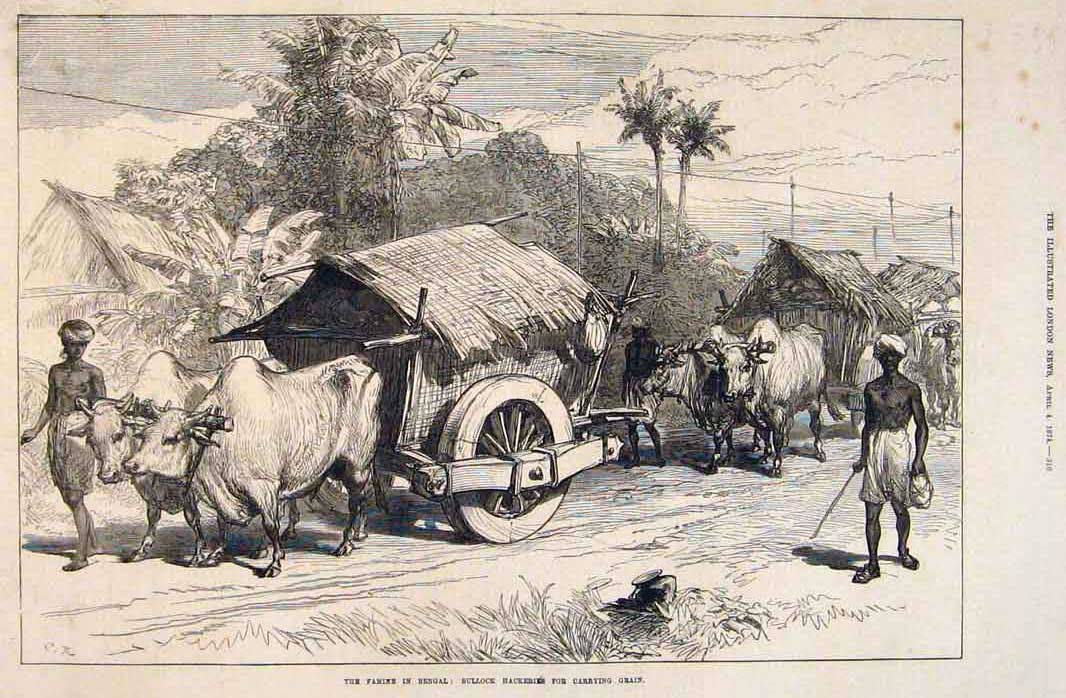
The Bengal famine is in the class of large scale catastrophes where everyone and no one is responsible, that is everyone contributed by their actions and decisions, but no one was trying to create the famine.
The reaction to the cutting off of the Burma rice supply, things like banning of food movements between Indian states, the destruction of rice stocks and boats in Bengal in case the Japanese arrived, all in 1942. The Quit India movement. The poor winter harvest in 1942, the cyclone damage. Priority given to the war, including food and medical resources. Once the first deaths were being reported in May 1943 the hoarding began to pick up, corruption and favouritism also. Add government incompetence or at least being overwhelmed, there had been no famine since the 19th century. Requests for food would be made, altered, withdrawn and remade, at times requiring more than the Indian Ocean cross trade shipping. 600,000 tons of wheat in 4 months required 250,000 tons of ships to bring the wheat from Australia or around 750,000 tons from North America.
The mechanisms the British put in place to shore up food supplies in the Middle East could not be applied to the more decentralised power system in India.
There was probably enough food in India to avoid the famine but to collect and move it required a level of trust between and within the Indian establishment and the British Raj that was not there. Reinforced by early attempts to control food supplies. Bengal had a shortage of rice, shipping wheat to it required people to change their diet.
The British official history
Author: Behrens, C. B. A. (Catherine Betty Abigail)
Title: Merchant shipping and the demands of war / by C.B.A. Behrens.
Publisher: London : H.M.S.O. and Longmans Green, 1955.
Description: ix, 494 p., [24] p. of plates (10 folded) :
See chapter XVI, "The shortage of shipping a stranglehold on essential civilian services" (March 1943).
The allied operations in North Africa had forced cuts in British imports and in turn flowed through to sailings to the Indian Ocean, so there were fewer ships available in the area. To ease war required coal shortages ships were sent in ballast to South Africa to speed the turn around, but the unshipped cargoes were fertilisers. South Africa needed its fertilisers, as did Australia, the shortages produced inflation and encouraged hoarding.
The chapter covers things like the way the Turks had been promised 150,000 tons of wheat by the allied leaders without them checking the shipping was available but the Egyptians would not sell grain unless they had guarantees of fertiliser deliveries so they would not experience a food shortage. The 8th army advance in 1942 upped the Egyptian railway's coal requirements from 14,000 tons per month to 30,000 tons, plus the fuel requirements of the supply ships.
In February 1943 in Ceylon the rubber workers were leaving the plantations in search of food, the island's requirements were 45,000 tons a month of flour and wheat from Australia, plus Egyptian and Indian rice. For Southern Rhodesia, Mauritius and Seychelles "famine, though not an immediate threat, might, it seems, easily become so."
In the second half of 1942 grain shipments to the Red Sea area were 22,000 tons per month, half of what was asked for and the level was considered sustainable for only a short time, in early 1943 shipments dropped to 13,000 tons per month. "Similar misfortunes were in store for the Persian Gulf countries but even in February [1943] famine was in sight there." In February Tehran would be short of bread unless 6,000 tons of wheat arrived immediately. The RAF food bombed what is now Yemen in 1944.
If Churchill wanted to keep control of India creating or extending famines was not the way to do it. Those with power in India and elsewhere, the disruption to normal trade arrangements, the losses of merchant ships, the allocation of merchant ships, the speed of allied military operations, the weather, human instinct, everyone and no one made it happen.

 www.bbc.com

 www.theguardian.com