What about if Mussolini sends torpedo bombers to augment the Corpo Aereo Italiano in the proposed scenario?
The following is from wiki, but corrected as best i can from other sources that I have. Wiki is basically accurate however.
The development of the torpedo capbilities in the RA was still some distance off. They were not registering much sucess in 1940, and were deployed in miniscule numbers for most of that year.
The RA Aerosilurante began with the SM 79 and were forming at the time of italy's entry. They moved to Nothrt Africa in August to the area around Tobruk initially The italians had spent years developing torpedo bombing, but had poured only a few actual resources into it, as high level bombing was seen as a better way to attack ships, with fewer risks.....in this regard they made the same mistakes as the british. Despite all the development work, the unit still went into action without proper aiming systems and a lacking tactical doctrine.
An attack on shipping in Alexandria was quickly organized. There had been experiments for many years but still, no service, no gear (except hardpoints) and no tactics were developed for the new speciality. This was despite previous Italian experiments into the practice of aerial torpedoing in 1914, 26 years earlier.
The first sortie under way on 15 August 1940 saw five SM.79s that had been modified and prepared for the task (only a small fraction of SM 79s were so modified) sent to El Adem airfield. Among their pilots were Buscaglia, Dequal and other pilots destined to become "aces" (but they were still learning the trade in 1940). The journey was made at an altitude of 1,500 m (4,920 ft) and after two hours, at 21:30, they arrived over Alexandria and began attacking ships, but unsuccessfully. The departure airport had only 1,000 m (3,280 ft) of runway for takeoff, so two of the fuel tanks were left empty to reduce weight, giving an endurance of five hours for a 4.33 hour journey. Only Buscaglia and Dequal returned with torps dropped, both aircraft badly damaged by anti-aircraft fire (so much fot he claim that RN AA was not effective) . Buscaglia landed on only one wheel, with some other damage. The other three SM.79s, attacking after the first two, were hindered by a fierce anti-aircraft defence and returned to their base without releasing their torpedoes (again, so much for RN AA not being effective). However, all three ran out of fuel and were forced to jettison the torpedoes which exploded in the desert, and then force-landed three hours after the attack. Two crews were rescued later, but the third (Fusco's) was still in Egypt when they force-landed. The crew set light to their aircraft the next morning, which alerted the British who then captured them. These failures were experienced within a combat radius of only about 650 km (400 mi), in clear contrast with the glamorous performances of the racer Sparvieros just a few years before. This is something to bear ionm mind about the SM79, its radius in combat loading was far more restricted and hence of limited value in a British isles scenario.
Many missions followed, on 22–23 August (Alexandria - no hits), 26 August (against ships never found), and 27 August (Buscaglia against a cruiser, no results). The special unit became known as the 278th Squadriglia, and from September 1940 carried out many shipping attacks, including on 4 September (when Buscaglia had his aircraft damaged by fighters) and 10 September, when Robone claimed a merchant ship sunk (one might have been damaged, but records are unclear, on balance a hit was unlikely). The Italians were learning, but were not yet effective, and were only available in miniscule numbers) . On 17 September, after another unsuccessful day attack, Buscaglia and Robone returned at night, attacking the British ships that shelled Bardia. One torpedo hit HMS Kent, damaging the heavy cruiser to the extent that the ship remained under repair until September 1941 ( this was their first real successafter more than 100 sorties). After almost a month of attacks, this was the first success officially acknowledged and proven. After almost a month of further attacks, a newcomer, Erasi, flew with Robone on 14 October 1940 against a British formation and hit HMS Liverpool, a modern cruiser that lost her bow and needed 13 months of repair. After several months, and despite the losses and the first unfortunate mission, the core of the 278th was now operating at near full strength of 9 a/c, but thats laughable to calim that might make a difference to the shipping wars around Britain. . The last success of this squadron for 1940 was at Suda Bay, Crete, when Buscaglia damaged another cruiser, HMS Glasgow, despite the anti-torpedo netting surrounding the ship, sending it out of commission for nine months while repairs were made. The fact that Buscaglia managed to aim his torpedo so as to pass between the nets is proff of their improving skill and potency, but that was in December.....


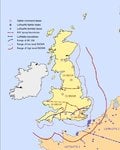
 ) although the first one seems quite obvious.


