Light fighters alternatives, 1935-1945 (4 Viewers)

As noted by the above posters, AI and Wikipedia is meh.


See here for 575 km/h figure for the SAI.207.
Green's books have run their course.
Wikipedia may not be perfect, but neither is anything else. That [citation needed] tag is precisely what Wikipedia is supposed to do.

The aircraft they liked was the S.A.I.403, which incorporated a lot of improvements. 575kph is 350mph, which still is damned impressive for 750hp. Seeing that you have provided an Italian document, I wonder if this is proper English horsepower of 33,000ft.lb/min, which works out to around 746W. Wikipedia describes a metric horsepower in which 75kgf is lifted at 1m/s. This works out to 735W.
 
The aircraft they liked was the S.A.I.403, which incorporated a lot of improvements. 575kph is 350mph, which still is damned impressive for 750hp.
How much they really liked the 403 is open to the debate, since the prototype disintegrated mid-air when the dive tests were conducted, and the pilot was killed due to the malfunction of his parachute. FWIW, machine translated; my bold:
However, there was no time to set up production before the armistice, so the prototype remained the only example produced. In this regard, sources take its destruction before the armistice as certain, while it was carrying out a sinking test in which the wings, of less robust construction than Stefanutti's previous fighters, gave way and detached, with the death of the test pilot Colombo due to the failure of the parachute to function,[2]​[3]​ also bringing this mournful event as the cause of the delay in production and the definitive cessation of interest in the aircraft by foreign companies.

I'd certainly agree that 350 mph on 750 HP is impressive, and I'll reiterate that such a fighter would've been very intersting and useful if it materialized at least a few years before, and of course if it was made strong enough.
 
The limit on the performance of any piston engined propeller driven aircraft is the propeller. As the propeller tip approaches the speed of sound, the efficiency drops off. There is a good video on propellers on YouTube dating from some time in World War II in which they state that aircraft top speeds will plateau at 500 to 600mph. The official airspeed record is a smidgen less than 530mph.

Computational Fluid Dynamics is the process of modelling the fluid as a series of simultaneous equations, and then solving them. Look up Gaussian Reduction. The resulting matrices are huge and not solvable without powerful computers. I believe they then do it again and again, as they iterate to a solution. Basically, you set this running on your computer, then you find something else to do for a day or two. There was no capacity for this during WWII.

If your analysis assumes that thrust is generated by something other than a propeller with a maximum speed of 530mph, than you have garbage in garbage out.

I am looking a William Green's drawings here (sorry TP!). The S.A.I.403 seems to have had a retractable tail wheel.
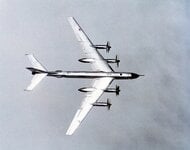
Piaggio Avanti and TU-95 typically move 920 km/h....with propellers.

---

Sai 403 engine weighed 510 kg dry.


The Ford engine matching the description of 650 hp and a 3-liter displacement is the 3.5-liter Cosworth-Ford HB V8 found in the 1994 Ford Supervan 3. Although the displacement is technically 3.5 liters, it is frequently cited in this context due to its Formula 1-derived origins and the specific 650 horsepower output.

  • Vehicle: 1994 Ford Supervan 3
  • Engine: Cosworth-Ford HB V8
  • Displacement: 3.5 liters
  • Power: 650 hp
  • Redline: 13,000 rpm
  • Significance: This power output exceeded that of the McLaren F1 supercar, which produced 618 hp.

The Ford 3.5L EcoBoost engine itself weighs approximately 449 lb (204 kg), according to official specifications for the V6 EcoBoost family.

The 650 hp figure refers to high-output or heavily modified variants of this engine, such as those used in the Ford GT supercar or tuned by companies like Radical for track applications (producing up to 654 hp). While the stock 3.5L EcoBoost typically produces between 365 hp and 375 hp in standard truck applications, specialized builds can achieve the 650 hp mark through upgrades like turbochargers and internal components without significantly altering the base engine's dry weight.
AI-generated answer. Please verify critical facts.


Ford 3.5L PFDI Specs, Features, Performance & Reviews | Ford Component Sales LLC


Here is 675 hp aviation engine:


Weight is unknown.

 
Last edited:
re
Piaggio Avanti and TU-95 typically move 920 km/h....with propellers.
Both of the above aircraft use turboprop engines, and both aircraft also use propellers of design and construction not available in WWII.

If I understand correctly:

On the [Tu-95] the exhaust thrust generated by the turbine allows the propellers to rotate at lower speeds and higher AOA than they would otherwise have to in order to achieve the Vmax of the aircraft. If you vented the exhaust from the turbine at right angles to the direction of flight the aircraft would be limited to around 450 mph(ish).

In effect the jet exhaust thrust takes over the majority of work - in terms of generating aircraft speed - somewhere in the region of 450 mph, with the exhaust thrust rising to around 85% of the total usable effective thrust at Vmax. At Vmax the outer propeller blade sections are effectively at feathered position, and any propeller thrust is being generated by the inner blade sections where the rotation speed is lower and hence the airflow over prop airfoil remains at sub-sonic speeds. (The props on the Tu-95 are very large at Ø18'4.5" and turn at relatively low rpm.)

I cannot speak to the claims of the Avanti re Vmax in any detail - but unless its turboprop propulsion system works in a similar manner to that of the Tu-95 the quoted Vmax is not accurate.

Make sense ?

P.S. I ran across a document around 20 years ago written by former Soviet Union aeronautical engineers (at least one of them from Tupolev) that gave the technical description and detailed analysis of the Tu-95 aerodynamics - including the math. I do not know if I downloaded it, but I will look.

P.S.S. I may be misremembering some of the above values.

[edited for clarity and a bit of additional info]
 
Last edited:
re

Both of the above aircraft use turboprop engines, and both aircraft also use propellers of design and construction not available in WWII.

On the Tu-85 the exhaust thrust generated by the turbine allows the propellers to rotate at lower speeds and higher AOA than they would otherwise have to in order to achieve the Vmax of the aircraft. If you vented the exhaust from the turbine at right angles to the direction of flight the aircraft would be limited to around 450 mph(ish).

In effect the jet exhaust thrust takes over the majority of work - in terms of generating aircraft speed - somewhere in the region of 450 mph, with the exhaust thrust rising to around 85% of the total effective thrust at Vmax. At Vmax the outer propeller blade sections are effectively at feathered position, and any propeller thrust is being generated by the inner blade sections where the rotation speed is much lower and hence the airflow over prop airfoil remains at sub-sonic speeds.

I cannot speak to the claims of the Avanti re Vmax in any detail - but unless its turboprop propulsion system works in a similar manner to that of the Tu-95 the quoted Vmax is not accurate.

Make sense ?

P.S. I ran across a document around 20 years ago written by former Soviet Union aeronautical engineers (at least one of them from Tupolev) that gave the technical description and detailed analysis of the Tu-95 aerodynamics - including the math. I do not know if I downloaded it, but I will look.

P.S.S. I may be misremembering some of the above values.
Okay but 920 kph is just 3/4 of the speed of sound.

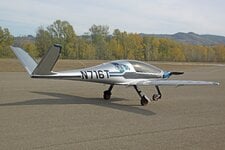
160 hp "fighter" looks like this:


View: https://www.youtube.com/watch?v=AoKBa5uCiNY

The Blackshape Prime is a high-performance, two-seat tandem carbon-fiber ultralight and Light Sport Aircraft (LSA) produced by Blackshape in Monopoli, Italy. [1, 2, 3]

Key Specifications

    • Configuration: Two-seat tandem (pilot in front, passenger behind) with a bubble canopy and retractable tricycle landing gear.

    • Structure: Full pre-preg carbon-fiber composite construction.

    • Wingspan: 7.94 m (approx. 26.0 ft)

    • Length: 7.18 m (approx. 23.5 ft)

    • Height: ~2.1 m to 2.41 m depending on the variant

    • Empty Weight: ~296 – 330 kg (depending on configuration and certification limits)

    • Maximum Takeoff Weight (MTOW): 472.5 kg (ultralight standard) up to 600 kg (LSA/other regional categories)

    • Fuel Capacity: ~66 liters (approx. 17.4 to 26 gallons depending on version) [1, 2, 3, 4, 5, 6, 7, 8, 9, 10]

Powerplant Options

    • Standard: 100 hp Rotax 912ULS (BK100)

    • Optional / Higher Performance: Rotax 914 (115 hp), Rotax 915 iS (141 hp), or Rotax 916 iS A (up to 160–180 hp on Veloce/Xplorer variants) [1, 2, 3]

Performance (Standard / Rotax 912-915 variants)

    • Maximum Speed: ~300 to 306 km/h (165 knots)

    • Cruising Speed: ~260 to 275 km/h (148–170 knots)

    • Stall Speed: ~35 to 45 knots (65–85 km/h) with full flaps

    • Rate of Climb: ~1,000 to 1,750 ft/min depending on engine and weight

    • Range: ~1,100 to 1,260 km (up to 780 nm on higher-performance models)

    • Avionics: Dynon SkyView PFD/MFD suite (10" front / 7" rear displays) or optional Garmin avionics, plus a full autopilot suite

    • Safety: Equipped with a Junkers ballistic recovery parachute system. [1, 2, 3, 4, 5, 6, 7]


Risen Superveloce is a 100 kph faster 2 seater....with 140 hp engine.
 

Attachments

  • Risen.jpg
    Risen.jpg
    1.7 MB · Views: 0
Last edited:
re


?

Sorry, but I do not know what you mean by the above ?
It means that if the cooling and supercharging on piston powered aircraft is well managed the more econimically flying propeller driven plane can exceed that speed...with advanced structures and materials....and know how on aerodynamics well implemented.

1000 km/h might be achievable in dive alone....as the structures are critically experiencing or at least nearing supersonic flow.
 
On the Tu-85 the exhaust thrust generated by the turbine allows the propellers to rotate at lower speeds
The Tu-85 was equipped with VD-4K piston engines. I realize that was a typo, but I couldn't resist nitpicking. 🤓
 
The Tu-85 was equipped with VD-4K piston engines. I realize that was a typo, but I couldn't resist nitpicking. 🤓
Quite a beast:

Cruising speed for maximum range was established at 450km/h, but maximum speed was much higher. At low level, it was measured at 563km/h, and at a level of 10,000m it reached 665km/h.

At the end of the 1940s, Vladimir Dobrynin's engine design bureau had developed a new air-cooled, twenty-four- cylinder in-line piston engine, the VD-4K, which offered a 4,300hp supercharged power output.


tu-85.gif

Tu-95 had 15 000 hp per engine....and swept wings...and fuselage is like a javelin...thin.


Tu-95_wingspan.jpg

Tu-95Diag.jpg
 
Last edited:
re
1000 km/h might be achievable in dive alone....as the structures are critically experiencing or at least nearing supersonic flow.

With modern materials and the current understanding of aerodynamics and structures - maybe. But if we are still talking about 1935-45, then no - the materials and understanding of aerodynamics and (to a lesser degree) structures were not advanced enough to develop a light weight fighter with those kinds of terminal velocities.

FWIW I agree Stefanutti was ahead of the game in some areas.
 
Last edited:
re


With modern materials and the current understanding of aerodynamics and structures - maybe. But if we are still talking about 1935-45, then no - the materials and understanding of aerodynamics and (to a less degree) structures were not advanced enough to develop a light weight fighter with those kinds of terminal velocities.

FWIW I agree Stefanutti was ahead of the game in some areas.
Okay...Sergio plane had landing gear mishap.

The SAI-Ambrosini SS.4, an innovative Italian fighter prototype designed by Sergio Stefanutti, crashed on March 8, 1939, during its second test flight due to a structural failure of the landing gear during touchdown. [1, 2, 3]

The Fatal Sequence
    • The Flight: After the prototype's successful maiden flight on March 7, 1939, test pilot Ambrogio Colombo took the aircraft up for its second evaluation the following day. [1]
    • The Defect: During the flight, severe vibrations and mechanical complications developed.
    • The Crash: As Colombo attempted an emergency landing at the Eleuteri military airfield near Lake Trasimeno, the landing gear structurally failed. The aircraft veered off course and crashed directly into a grove of trees. [1, 2, 3]
    • The Fatality: The crash killed Colombo instantly. Due to the aircraft's rear-engine layout (pusher configuration), the engine bolts sheared upon impact, causing the heavy engine block to surge forward from behind and crush the cockpit. [1, 2, 3]
Because of the loss of the prototype and the inherent safety risks exposed by the rear-engine layout at the time, the Regia Aeronautica (Italian Air Force) discontinued the SS.4 development program. [1, 2]

ss2


View: https://www.youtube.com/watch?v=o6FeC5KiHxM
 
It is a bit funny that only japanese were able to make remakable pusher during WW2.


View: https://www.youtube.com/watch?v=oCiJ8kEcB_8
 

Users who are viewing this thread

Back