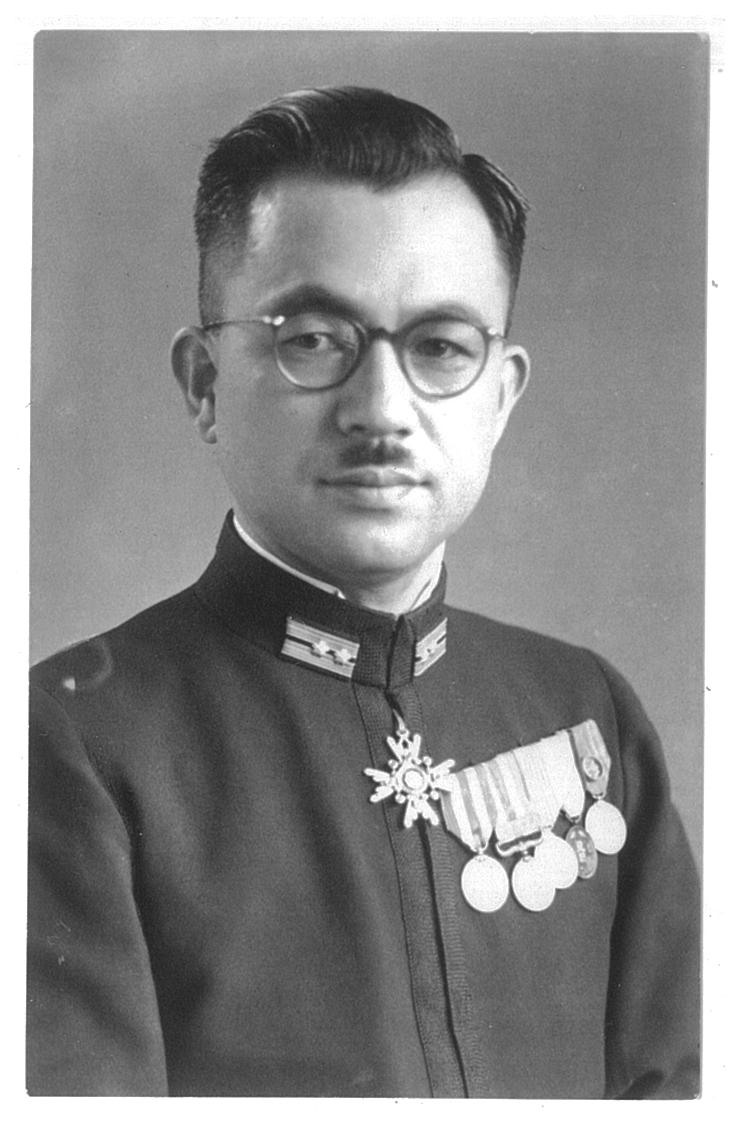
In late 1940. Commander Ito led a technical-exchange mission to Germany. Fluent in the German language and holding a doctorate from Dresden Technische Hochschule, he was well received. Staying several months, he became aware of their pulse-modulated radio equipment for detecting and ranging, and immediately sent word back to Japan that this technology should be incorporated in the NTRI-JRC effort. On August 2, 1941, even before Ito returned to Japan, funds were allocated for the initial development of a pulse-modulated Radio Range Finder (RRF – the Japanese code name for a radar).
The Germans had not yet developed a magnetron suitable for use in such systems, so their equipment operated in the VHF region. At the NTRI, they followed the Germans and built a prototype VHF set operating at 4.2 m (71 MHz) and producing about 5 kW. This was completed on a crash basis, and in early September 1941, the set detected a bomber at a range of 97 km (61 mi). The system, Japan's first full radar, was designated Mark 1 Model 1 and quickly went into production.
[7]
In parallel with the VHF work, Yoji Ito also returned to the magnetron applications, resulting in Japan's first pulse-modulated microwave RRF set. It operated at 10 cm (3 GHz) and produced a peak-power of 2.0 kW. A prototype was tested in October 1941, and several versions for surface ships and submarines were soon put into production. Naval officials favored the microwave sets because with very narrow beams they were less vulnerable to interception.