If you look at the NMUSAF website it says that "Apache" and "Invader" were also nicknames given to the A-36
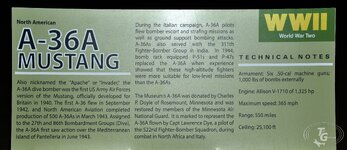
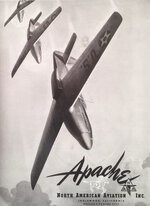
Forgive me for repeating myself if I've already said this --- the USAF Museum, upon being contacted by yours truly (I presented documents from NAA and the USAAF & US Govt to them a year earlier) posted the new and correct sign that says, "A-36A Mustang") . It the commentary or narrative, whatEVER it's called, below the Name and Designation in large lettering, explains that it also had the nickname of "Apache" and "Invader." I settled for that wording, but had they let ME write it, I would've said that many years AFTER WWII, the "Apache" name was used by a writer who, pardon my "judgment" here, did not know what they were talking about. They confused the September, 1941 magazine advertising (see below)featured artwork that showed a diving aircraft and it says "Apache." Well, the aircraft depicted was clearly NOT an A-36 because the A-36 didn't even have a completed contract until August, 1942 and did NOT begin production until September, 1942. "Apache" was a sort of "house name" at NAA and applied to the two XP-51s (the plane depicted in this ad) and to the NA-91 aircraft that were designated "P-51" (no letter suffix) ... that's the Mustang-series aircraft with the two YUUUUGE 20 mm cannons protruding out of the wing's leading edge. On July 13, 1942, the "Mustang" name was officially given to any NAA aircraft that was of the P-51 fighter-type of aircraft.
SOoooo....the name "Mustang" was applied to the whole series or "family" BEFORE the A-36 contract was signed and certainly before the first one was built.
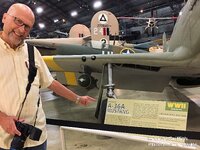
I'm attaching a photo of me, my A-36A Mustang and my sign at the National Museum of the U S Air Force, taken in October, 2018, a month after it was first posted. I'm attaching a closeup of the sign for everyone to read. The NMUSAF took a few months to get their website corrected, but it's been fixed now for around 3 years.
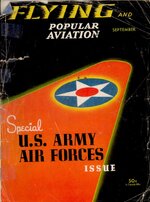
I'm also attaching a copy of a page from that September, 1941 Magazine (page 175) and the cover of the magazine from which it came.