Picture of the day (general).... (6 Viewers)

WASPs with B-17 Tail Guns the net
View attachment 900242
Not saying those aren't WASPs, but they are wearing the brown Army "hobby hats", not any normal WASP uniform headgear.
"Hobby hats" refer to the service and garrison caps worn by members of the U.S. Women's Army Corps (WAC), named informally after Oveta Culp Hobby, the first director of the WAC. They were produced in summer-weight khaki cotton, olive drab (OD) wool, and dark blue variations by manufacturers like Stetson, Knox, and Brae-Burn. Enlisted women's caps featured a brass enlisted device on the front, while officer versions displayed an officer's eagle or cap badge.
These appear to have the enlisted badge, and all WASPs were commissioned, leading me to suspect this was a photo op or WAC girls 'taken for a joy ride.'
WASPs were further distinguished by, and very proud of, their unique to the US then, Santiago Blue stylish beret, designed by Frederick's of Hollywood, with a three-quarter size officer's shield pinned on the front.
As expected at the time, you can see WASPs adorned with all types of headgear, from the 'piss-cutter' flat folding cap, ball caps, pith helmets, and flight helmets, etc. ... but I'd find the 'hobby hat' an odd choice.
WASP baseball hat.jpeg

Blue WASP casual ball cap
WASP beret.jpeg

wasp Fredrick's beret.jpeg
 
Off the top of my head there was the P-66 prototype compared with the final conventinal cowling same engine.
View attachment 900266
View attachment 900267
source Vultee P-66 Vanguard | Defense Media Network
And I think the Japanese J2M is also in the conversation with the extension shaft and fan cooled engine.
View attachment 900268
source Mitsubishi J2M Raiden - Wikipedia
Good information, though different from the impeller spinner of the Tempest, FW190 V1, and Ju288 experiments and/or annular radiator that I was curious about.
IIRC, the P-66 basically had a lengthened propeller shaft and a tight cowling to provide a pointed nose combo to reduce drag. and the J2M had a crank driven fan within the cowl.
Note the later Focke‑Wulf Fw 190's BMW 801 radial engine was cooled by a dedicated engine‑driven cooling fan located behind the propeller. The magnesium‑alloy cooling fan that rotated at about 1.72 times crankshaft speed (roughly 3.17 times propeller speed). Similar fans were used often since WWI on air cooled radials, including on Ju88, Ju52, etc.
ju88.jpg
 
FARMAN F222 photo 3 the net
FARMAN F222 photo 3 the net.png
 
Brewster B-239 Buffalo "BW-378" 1942 the net
View attachment 897379

Nice pic, don't think I've seen that one before. Any idea where you got it from?

P.S. It's "Brewster 239", or "Brewster Model 239"; there never was a "Brewster B-239". Or a "Brewster B-339" either for that matter. Someone added the B-prefix to the export models decades after the war and from there it unfortunately spread to almost all the literature and other forms of media mentioning the aircraft. It doesn't appear in any of the hundreds (or more) of primary source documents from the '30s and '40s mentioning the aircraft that I've gone through. The Dutch did shorten "Brewster" to "B" in some contexts (most notably in their aircraft serial numbers), but they didn't call their aircraft "Brewster B-339C/D/-23" either.
IMHO, a major reason for this site, and the main reason I follow it is to counter the bad information and 'old wives' tales' that have been repeated and perpetuated in print and vids so much that they are accepted as "fact!"
(Just saw another 'authoritative expert' state that failing North American Aviation underhandedly 'stole' the complete blueprints and engineering from Curtiss for their project that became the NA-73 Mustang!)
 
If it's innovative, it's German.
If it's quirky, it's Italian.
If it's ugly, it's French.
If it's innovative, quirky and ugly, it's British!
b704dfe7600a1e31278a080d0bb02c0a.jpg

Westland Lysander Delanne or Westland Wendover.jpeg

Vickers Wellington Mark VI.jpg

miles_m39_libellula.jpeg
 
Nice pic, don't think I've seen that one before. Any idea where you got it from?

P.S. It's "Brewster 239", or "Brewster Model 239"; there never was a "Brewster B-239". Or a "Brewster B-339" either for that matter. Someone added the B-prefix to the export models decades after the war and from there it unfortunately spread to almost all the literature and other forms of media mentioning the aircraft. It doesn't appear in any of the hundreds (or more) of primary source documents from the '30s and '40s mentioning the aircraft that I've gone through. The Dutch did shorten "Brewster" to "B" in some contexts (most notably in their aircraft serial numbers), but they didn't call their aircraft "Brewster B-339C/D/-23" either.
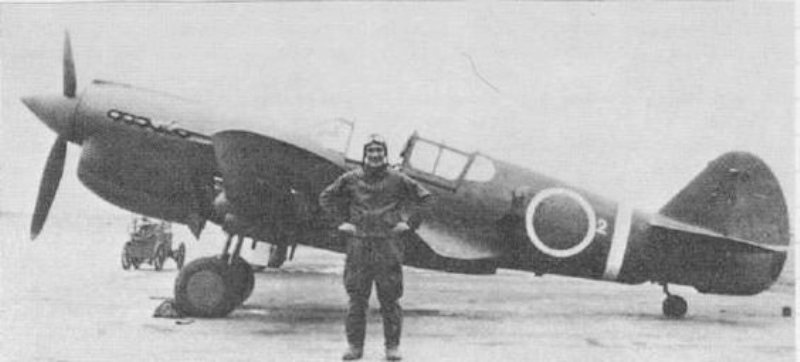
Did the Japanese do anything with captured Buffalos, Hurricanes, P-40s, B-17s etc. other than examine and evaluate them?
 
Did the Japanese do anything with captured Buffalos

The Japanese Air Technical Research Laboratory (Koku Gijutsu Kenkyujo, or Gi Ken) established a base at Andir for testing captured aircraft soon after the airfield was captured by the Japanese, and a number of captured Brewsters were tested there. Some were later transported to Japan where further tests were conducted, and reportedly the flyable Brewsters, together with other captured Allied aircraft, were later used to film realistic propaganda movies.

Sources:

Richard S. Dann, Steve Ginter (2017): Naval Fighters Number 104: Brewster F2A Buffalo and Export Variants, p. 135
Jim Maas (1987): F2A Buffalo in Action - Aircraft No. 81, p. 32
 
Miss Socialist Republic of Serbia winner of 1967 winner, Milja Vujanović, posing in a flight suit next to a MiG-21 supersonic fighter jet during a promotional campaign for the Yugoslav Air Force in 1968.

IMG_20261024_140704.jpg


IMG_20261024_140520.jpg


IMG_20261024_135518.jpg


IMG_20261024_135607.jpg
 

Users who are viewing this thread

Back