Thank you for your reply.
I'm not sure if the -90D was used by the RAAF, both engines were found in europe.
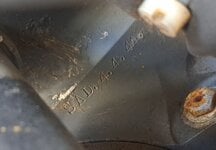
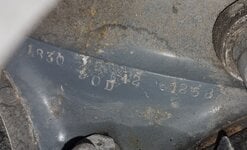
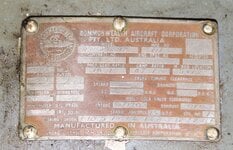
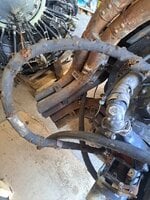
I found more markings on the CAC -92, maybe these could help with the identification:
View attachment 816906View attachment 816905
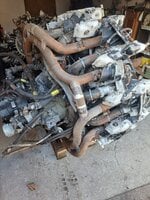
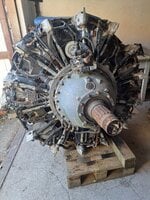
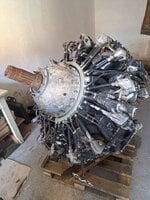
Furthermore, I attached some pictures of the two engines in full view. The CAC -92 has Woodward governor, and a unique exhaust system. Its exit consists of 8 pipes on the left of the engine, if it could help with identification of the aircraft.
Many thanks for the additional info. Because one engine was CAC I made the mistaken assumption both were in Aus.
I am trying to think of a twin with R-1830 that would have such an exhaust but I am limited by those that I worked on. I cannot think of a 4 engined aircraft that used those engines.
From that I can rule out the USAAF and USN DC-3 derivatives which included not just C-47 but also a number of other USAAF aircraft in the C-33 to C-53 and C-1nn designations as it is unlikely that they had a different exhaust system to the Pratt powered DC-3/C-47. If it aint broke why change it.
Same with the Pratt powered Lockheed 18 variants - Hudson, Lodestar. Again all the Lockheed aircraft, and the British Beaufort II (and Aus Beauforts V to IX) which used a large number of Hudson parts in their power plants, had a common exhaust system with a single outlet. Again, if it aint broke why change it. Post war conversions of those aircraft may have had a different exhaust as part of improving the aircraft performance but I know nothing of them.
Catalina and Sunderland had overhead exhausts so that rules them out.
From memory the Douglas DB-7 aircraft sold to France pre war had R-1830 but again, being export engines, they should have had civil designation plates.
That said, post war there were many surplus engines that were sold for civil use so your -92 could have been used in any civil aircraft that had a S1C3G, any military aircraft that had -92, any of a number of post war conversions of military aircraft and any post war design that used the S1C3G. Add to that there were a number of Supplemental type certificates to change engines models in various aircraft. There may also have been an STC (or european equivalent) to modify exhausts on DC-3 or Lockheed 18/Hudson/Loadstar aircraft.
That exhaust system should provide the answer. All the outlets being on one side indicate a twin (so the pilot is not "blinded" by the exhaust at night.
We have a lot of very knowledgeable people on this site so I do not expect the answer will take long to be found.