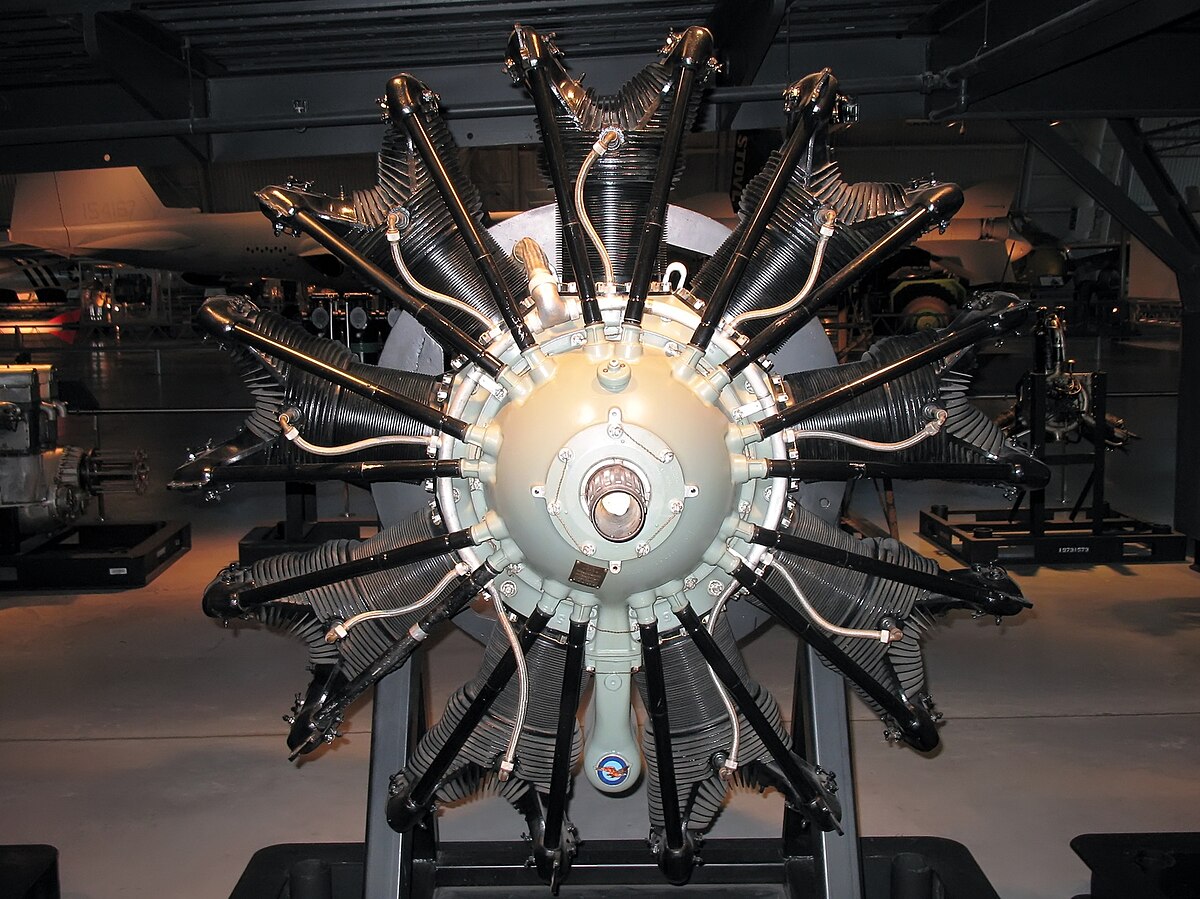
Well, i probably said this with other occasions, but what Germany really lacked was a mid-1930s 14 cylinder radial equivalent to say the GR14K, at about 36-37 litres or so. For this, instead of competing with BMW, Bramo would be in an ideal position to design a 14 cylinder radial instead of the Bramo-323. Let's call it Bramo-324. Initially it would be good for what, 1100-1200 PS? Then the later two-speed variant should be good for 1300-1350 PS?
two speed engines do not actually
make more power.
There is a difference between many US radials and many European radials (and I am throwing the British in with the Europeans) were used/rated in the 1930s.
The US favored lower altitudes for their engines ( P&W and Wright) than the Europeans. This may have been partly because the US market for engines was tipped to commercial aviation and not military. European companies sold a higher percentage of their engines to the military. The Military wanted more altitude performance and used higher supercharger gears.
2 speed engines sort of redistribute the power. We have to look at specific engines. A European engine (most of them) often had a FTH of 3-4000 meters and if/when fitted with a two speed supercharger they did get a boost in low altitude power. However this was due to 3/4 things, 1 was less power going to the supercharger and more going to the propeller, heat load in the cylinders was the same. 2 the lower power used in the supercharger heated the air less and thus the charge was denser which allowed for more power. 3 fewer pumping losses in the system. 4 the ability, if the fuel allowed it, for higher boost in the low speed setting but this often was not used as it required the pilots to use different boost limits and could lead to pilot errors.
In the early/mid 30s a two bearing 14 cylinder radial was a viable option. Since the 73 octane fuel limited pressures in the cylinder there was not the strain on the crankshaft that later engines would get. You also had a limited ability to put enough fins on the cylinder. This indirectly affected rpm. Doesn't do much good to run at 2200 rpm if you can't cool the cylinders at 2000rpm. The two bearing design saved a couple of hundred pounds of engine weight.
Now the big question is when did the 3 bearing design get viable. P&W used in in the early 30s, but the early R-1830s were good for around 800-900hp and were under 1200lbs.
They soon made more power and got heavier.
For the Germans getting into 14 cylinder two row engines too early may be counter productive. The GR14K was licensed/copied by a number of countries but it came with limitations for future growth. The GN14K maxed out at about 1100hp in Soviet hands as the M-88 (with 2 speed supercharger) and the weight was over 1400lbs. It took the Soviets about 5 years to reach that point.
Of course, in this ATL BMW and Bramo should never be merged. BMW should entirely focus on improving the BMW-132 instead of BMW-116/117 inlines, the 132 badly needs better 2-speed superchargers, and then work on the 14 cylinder BMW-139 of 1500 PS,
Only a few companies develop engines for which there is no market. BMW had been one of the few companies in Germany allowed to make aero engines in the late 20s and early 30s . If the German Air Force says they want V-12s (and inverted ones at that) does BMW tell them "No, what you really want are radials" ?. BMW was selling a crap load of old V-12s to the Luftwaffe but the Luftwaffe and put out the requirements for the "new" engines that lead to Jumo 210 and the DB 600 and the Jumo 211. The Luftwaffe didn't have any interest in high powered radials and the German domestic market (Ju 52) wasn't crying out for new improved engines in 1932-35.
The need for two speed superchargers didn't really show up until after 1935, sometimes closer to 1939-40.
You needed better fuel.
You needed better propellers.
You need airplanes that need to fly in 'teens' and not at under 10,000ft and that means military aircraft. Most airliners will not fly at altitudes bordering on needing oxygen masks.
Some will to get over certain mountain ranges but sometimes not all planes in the fleet will get the high altitude engines.
There were reasons that a lot of engines developed the way that they did.
For the BMW 132 vs the R-1820 you had several things going against the BMW.
One is that you have only 93% of the displacement.
Two is a big one, the 1200hp R-1820 used 100 0ctane fuel.
Three is that the 1200hp rating was only good to 4100ft. The benefit if the 2 speed supercharger.
At 14,000ft it was good for 1000ft in high gear and we can perhaps compare that to the 840hp that the Bristol Mercury had at about the same altitude.
Now go back to post #70 with the charts on the Cyclone 9 cylinder finning, in addition the cylinder fin changes the Cyclone 9 to reach the 1200hp was on it's 4th (or more?) different crankcase and crankshaft. Not minor changes either. They were on their 2nd different forged steel crankcase after the early engines had use Aluminum alloy crankcases.
Now in 1938 Wright had built over 8000 Cyclone 9s since the late 20s and most of them were for the commercial market. That is what paid for the continual development. Note that this is before the 1200hp version even shows up.
P&W had sold over 13,500 engines from 1925 to Aug 1938 of 7 different types. And there were few experimental failures (not counted) and 2 commercial failures (one around 1930 and in in the 1938 period).
We can use the retrospectoscope to see what might have gone different but it needs very careful focus and a number of things to go our way.
BMW licensed the P&W Hornet to get into the radial market fast and easy. However the rise of the Nazi's in Germany tended to cut the Germans off from other nations in terms of technical support/R&D from the parent companies.
And like I keep saying, you need to able to make the engines.
Ford is often overlooked in the development of the R-2800 engines. They did not change much of anything in the engine itself, they did make changes in how it was made.
IN 1941, very soon after production started, they figured out a way to make cast cylinders using centrifugal casting instead of using forgings. These cylinders were stronger, required less machining and required much less labor. Also freed up forging equipment for other uses.
The US did not overwhelm the axis by size alone. They used part of their industrial capacity to provide tools/processes that were more efficient which increased the rate/s of production over many of the axis companies.



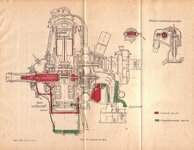
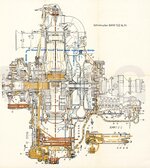
 ). Newer versions were in aggregate much more capable then the 'old tech' versions, but even so they were badly behind the curve come 1939.