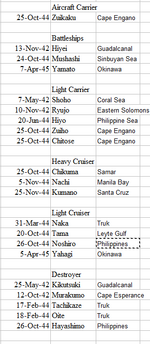
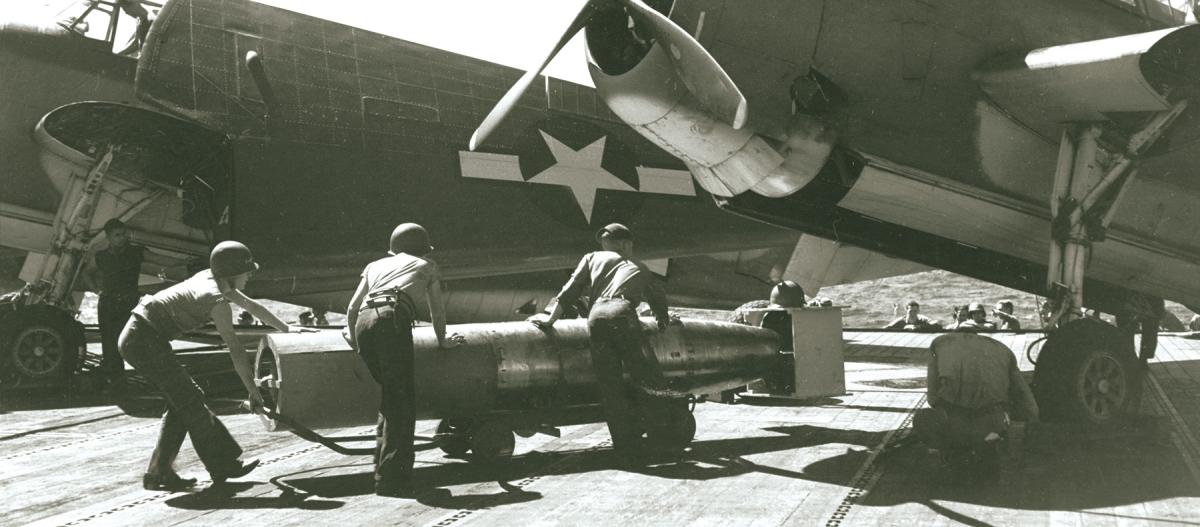
I am a heretic and I believe that the USN was correct not to put torpedoes on large cruisers. The heavy cruiser mounted Type 93s did more harm than good. In actuality they only sunk 2 allied ships outright (INN Java and DeReyter) and contributed to the sinking of two American heavy cruisers (USS Vincennes and Quincy). In addition they slightly damaged the USS Chicago. Those are the only 5 enemy ships they actually hit in the entire war. On the other side of the ledger they were instrumental in the loss of IJN heavy cruisers Mikuma, Furutaka and Chokai and of course Mogami infamously sunk a Japanese minesweeper, 3 transports and 1 hospital ship.
There are only two battles where the heavy cruisers actually hit enemy ships: Java Sea and Savo Island. At Java Sea they unequivocally sank 2 light cruisers. One was the INN Java which was basically a WWI German light cruiser and should not have been in the line of battle. The DeRuyter was better, being almost the equivalent of an HMS Arethusa. Neither of these ships could be considered first rate cruisers. I would posit that the shell damage to the HMS Exeter was more important to overall events than the loss of both of the Dutch ships.
As for Savo Island there were 3 ships struck by type 93 torpedoes fired from heavy cruisers. The most important of these were the 2 fired by Kako that struck the USS Chicago, one of which was a dud. While these caused minimal damage the effect they had was pivotal as the Chicago went into full panic mode and failed totally in its duty to warn the other ships and barely fired back before heading in the opposite direction from the battle.
This is the best possible place to be hit with a torpedo. The fighting efficiency of the ship was not impaired in anyway.
View attachment 736217
Savo Island was a gun duel with the torpedoes not playing a pivotal role. All the cruisers that were lost were damaged beyond salvation before any torpedoes hit. The torpedoes hastened the same inevitable loss as befell Astoria. The Vincennes, Astoria and Quincy all had uncontrollable fires with no means to combat them as the fire fighting mains were all destroyed.
From Vincennes damage report
"19. Just as the enemy searchlights were trained on VINCENNES at 0155, the main battery was directed to train out and fire. A minute later the first enemy salvo struck, hitting the bridge, the carpenter shop, the hangar, battle II and the antenna trunk. Fires were started in the carpenter shop and the airplanes in the hangar. From this time on the enemy was hitting continuously until he ceased firing at 0215.
20. Course was changed to the left and speed increased; however, at no time was it greater than 19.5 knots. About a minute later, direct hits were received on sky aft and sky forward, blowing the after director overboard. Attempts to extinguish fires failed as all fire main risers had been ruptured. Further hits started fires in the movie locker and the cane fender stowage in the after end of the searchlight platform. The fire in the cane fenders was very intense and could not be extinguished. About 0200, attempts were made to evade enemy fire by turning hard right. While in this turn, one torpedo hit (possibly two) was received probably from the submarine which was reported fired on by gun No. 1. No. 1 fireroom was put out of action at this time. While in this turn, the left side range finder hoods of turrets I and II were struck.
21. About 0205, when beginning to make a left turn, steering control was lost in the pilot house. Control was shifted to the after steering station. About this time all steam power was lost due to blowers either being destroyed or drawing smoke and flames from the fires amidships into the firerooms. Diesels were started and they supplied power to turrets I and III. They were still able to fire in local control. Numerous hits during the early part of the action put out most of the guns of the secondary battery.
22. About 0209 turret II was struck on the face plate by an 8" shell which penetrated without exploding and set exposed powder on fire. Another projectile hit the barbette of turret No. I on the starboard side and jammed the turret in train. At this time all turrets and secondary battery except turret III and gun No. 1 were out of action, and all power had been lost.
23. At this time, while still under heavy fire from the enemy, the ship began to list appreciably to port. The crew was about to abandon ship when all at once the enemy extinguished searchlights and ceased firing. During the next fifteen minutes the list increased rapidly and it appeared that there was no possibility of saving the ship. The Commanding Officer then gave orders to abandon ship. About 0250 VINCENNES capsized to port and went down by the head in 500 fathoms of water."
The torpedoes that struck were as follows:
Chicago: 2 torpedoes (1 was a dud) from Kako
Vincennes: 1 torpedo from Choika, 1 torpedo from light cruiser Yubari
Quincy: 1 torpedo from Aoba, 2 -21" torpedoes from light cruiser Tenryu
During the attack on the northern group the Chokai launched 4 torpedoes at 9,500 yards. 3 minutes later she opened fire. The torpedoes arrive at the Vincennes 5 minutes after the gun battle had begun. At this point uncontrollable fires were raging and extensive damage to the Vincennes had been done by Kako's gunfire. There are debates on how many torpedoes hit with one certain and 1 or 2 more which may have actually been shell hits below the water line. I'm inclined to believe that two or three torpedoes hitting out of 4 is a highly unlikely event.
The torpedoes which struck Quincy (1 Type 93 and 2 21 in) were launched well after the gunfire commenced and at a range of only 3,000 yards. An additional Type 93 stuck the Vincennes 15 minutes after that battle started and it was fired from a range of only 2,400 yards.
The battle of Savo Island was decided by the 8" guns of the Japanese heavy cruisers not their torpedoes.
Over 80% of the type 93 hits in WWII were launched from destroyers and there is where the real value lies.