The losses were so serious that task force 63 was delayed getting into action until they could built up their air contingents.
I'm curious about just what you are referring to with this statement. Before Meridian I or after Meridain II? The implication due to the reference to losses seems to be the latter.
The RN strength in the Indian Ocean had begun to build up after the surrender of Italy in Sept 1943, and spurred by a panic in spring 1944 when the Japanese fleet moved to the Singapore area, continued throughout 1944 and 1945 as ships no longer needed in Europe were refitted and sailed east.
Britain split the Eastern Fleet effective 22 Nov 1944, with the fleet carriers and the more modern ships allocated to the British Pacific Fleet which was to transfer to Australia around the end of the year. Due to the failure of B-29 attacks in Aug 1944 and at the request of Nimitz, the BPF was asked to strike at various refineries in the DEI before transferring to Australia. So there was then:-
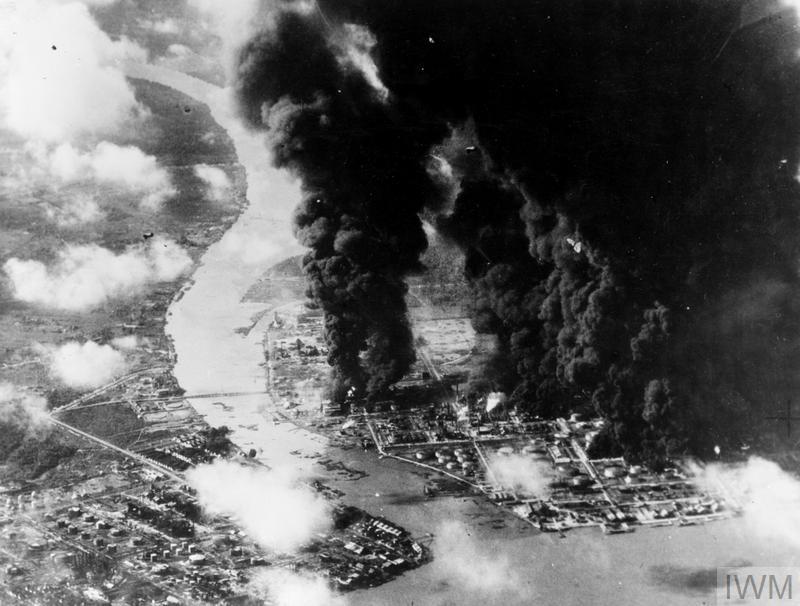
Operation Robson - 20 Dec 1944 intended for Pangkalan Brandan refinery (but switched to the port of Belawan Deli by the strike leader due to bad weather) by air groups of Illustrious & Indomitable (under designation TF67)
Operation Lentil - 4 Jan 1945 restrike on Pankalan Brandan by air groups of Indomitable, Victorious & Indefatigable (designated TF65)
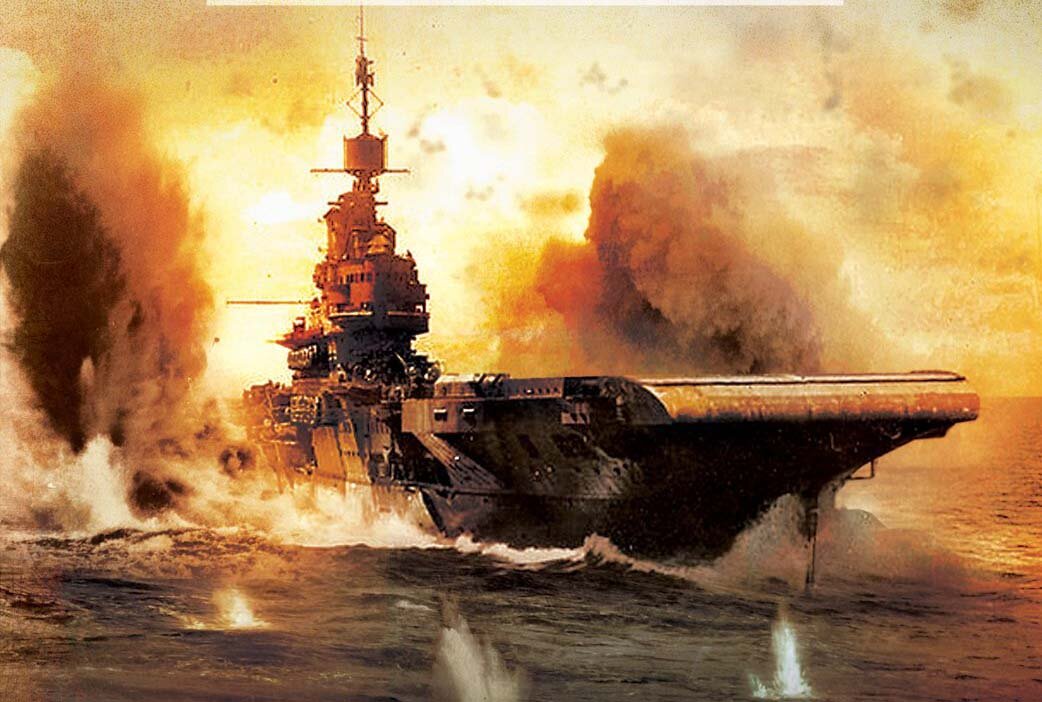
After that the fleet returned to Trincomalee, made good its losses, and sailed again as TF63 on 13 Jan 1945. This was the first time that the 4 carriers (Indomitable, Illustrious, Victorious & Indefatigable. The latter had only arrived at Colombo from Britain on 10 Dec 1944) had worked together as a single group and they exercised en route to Sumatra. Then:-
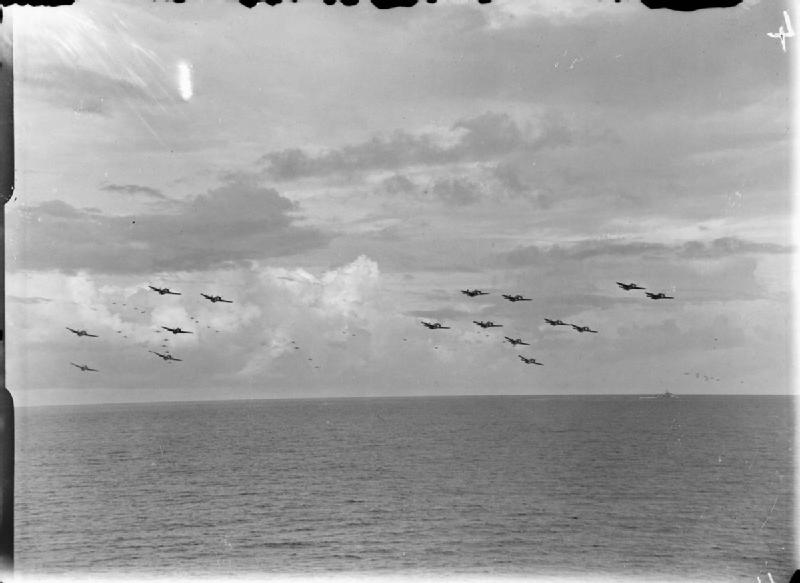
Operation Meridian I - 24 Jan 1945 (delayed by several days due to weather)
Operation Meridian II - 29 Jan 1945
On completion of Meridian II TF63 sailed for Australia, arriving Fremantle on 4 Feb & Sydney on 10/11 Feb. It then sailed for its forward base at Manus on 27/28 Feb as TF113 arriving 7 March, where it restored and exercised in preparation for receiving its next orders about where it would serve alongside US forces in the Pacific. These exercises were necessary as the BPF was adopting USN tactical fleet formations and manoeuvres and signals and this was the first opportunity to practise.
Meanwhile, the movement of replacement aircraft from India / Ceylon to Australia had begun in early Dec 1944 when the Maintenance Carrier Unicorn and 4 escort carriers made the journey east.
During this period there was an ongoing debate between London & Washington and Bruce Fraser (CinC BPF) and Macarthur about exactly how and where the BPF should be used in the Pacific theatre now that it was no longer a hypothetical entity (other than under Nimitz it could have been under Macarthur supporting operations in Borneo). However, it was not until
the night of 14 March that the future use of the BPF carriers was finally settled. Admiral King, who strongly resisted British involvement in the Pacific, relented and signalled the BPF that it was to operate under Nimitz. At that point the BPF could plan its fleet train movements and finalise its schedules for moving north. A tanker force was despatched from Manus on 17th heading for the refuelling area south of Okinawa. On 18th March the BPF sailed from Manus in 2 groups after the carriers had completed loading the last of their replacement aircraft (always a few losses in carrier operations even during exercises). It arrived at Ulithi on 20th March, fuelled and left again on the early morning of 23 March, after senior staff meeting between RN & USN officers on 22nd, for the operational area off Okinawa. After a final refuelling from the tanker group despatched earlier (and receiving 4 new aircraft from the replenishment carrier Striker) on 25th, TF57 as the BPF carrier force was now designated
flew its first operations against the Sakishima Gunto island airfields on the 26th March.
To put this in context, the USN carriers of TF58 left Ulithi on 14 March to strike southern Japan in preparation for the Okinawa invasion (on 19th March the Franklin was bombed and put out of the war), the minesweeping groups left Ulithi for Okinawa on the 19th, beginning operations on the 23rd, the fire support ships left on 21st arriving on 25th. The Kerama Retto island group was invaded on the 26th and Okinawa itself on 1 April 1945.
Given the above, I'm not seeing any evidence that it was the aircraft losses incurred during the 2 Meridian operations that prevented the BPF carriers seeing their next action sooner.