Ok so on to the next period, and the next book.
This covers fighting in and around New Guinea from Sept - Dec 1942
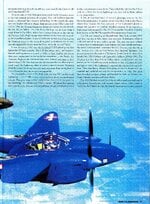
At this point, the US 49th FG was brought in fresh from their successful though punishing defense of Darwin, still equipped with mainly P-40Es and maybe a handful of P-40Ks. An additional P-39 fighter group (including a few newer P-39Ks), and a handful of new P-38Fs started to trickle in, plus several more bomber units with US A-20As, (very similar) RAAF Bostons, a squadron of RAAF Beauforts, some RAAF Beaufighters, a bomb group of US B-24Ds, and more B-25s (including some newer B-25Ds). C-47s - and I think still at this point some De Havilland Dragon Rapides - are being used to move troops and supplies to different positions in the ground fighting on the Island. And the Aussies had some Wirraways being used for Army cooperation, (and on one famous occasion, as a fighter!)
From the arrival of the 49th FG their P-40 Warhawks and the small numbers of P-38s took over most of the longer ranged escort and fighter sweep missions, while the Airacobras focused on air defense of the air bases and strafing nearby Japanese ground positions for the most part.
On the Japanese side, the Imperial Japanese Navy rotated Tainan Ku and No 2 Ku out, and at various points brought in new units including No 3, No 751, No 251, No 252, and no 582 Ku. These included some of the new A6M3 which had a two speed supercharger, clipped wings, and increased cannon ammunition - but less fuel capacity and shorter range. The Imperial Japanese
Army started arriving at the very end of this period, bringing with them Ki-43-I "Oscar" fighters and Army bomber types like the Ki-48 "Lily" and the Ki-21 "Sally". These Oscars were the early type with the two blade propeller and only one 12.7mm gun (sometimes two 7.7mm)
Ground fighting was continuing and this involved a naval component as the Japanese brought in transports and supply ships to supply their isolated ground units in north-eastern New Guinea around Gona and Buna, with ground fighting taking place in the highlands in the center of the country.
Losses were as follows, for the Allies:
115 aircraft including
21 x P-40E "Warhawk" (8 lost to Zeros, 1 to an Oscar, 10 to accidents and mishaps, and 2 to AA)
18 x B-25 "Mitchell" (3 lost to Zeros, 2 to AA, 13 to accidents and mishaps)
15 x B-17 "Fortress" (2 lost to Zeros, 13 to accidents and mishaps)
9 x B-24 "Liberator" (1 lost to Zeros, 8 to accidents and mishaps)
6 x "Airacobra" (all accidents, though 3 of these just disappeared after missions to the Central Highlands and may have been intercepted or shot down by AA)
6 x "Beaufort" (all accidents and mishaps)
6 x C-47 (2 lost to Zeros, 4 to accidents and mishaps)
6 x A-20A (all to accidents, including some apparently due to bomb fuses)
5 x B-26 "Marauder" (all to accidents and mishaps)
5 x Hudson (one to ground fire, 4 to accidents)
4 x Beaufighter (2 to AA, 2 to accidents)
4 x Wirraway (accidents)
3 x RAAF "Bostons" (accidents)
2 x P-38 "Lightning" (both to accidents)
and
5 "Other", (including an O-49A, a Ford Trimotor, an F4 Lightning, a Lockheed Loadstar, and an Anson)
Losses for the Japanese were a total of 51 aircraft, including:
19 x A6M "Zero" (9 to bomber gunners, 5 to P-40s, 2 to Airacobras, 3 to accidents)
7 x D3A "Val" (3 to P-39s, 3 probably to AA, 1 to an accident)
5 x G4M "Betty" (1 to a B-24, 4 to accidents or unknown)
4 x G3M "Nell" (3 to P-40s, 1 to accident)
4 x Ki-43-I "Oscar" (1 to a P-40, 2 to P-38s, 1 to a Wirraway)
2 x A6M2-N "Rufe" seaplane fighters (one blown up on a ship deck by a Hudson, the other from an accident)
10 x "Unknown aircraft" destroyed by bombing.
The Zeros shot down a total of 8 P-40s, 6 bombers, and 2 transports, for a total of 16 real victories against 19 losses in air combat.
The Oscars shot down 1 P-40 and lost 4 in air combat.
The P-40s shot down a total of 5 Zeros, 1 Oscar, and 3 bombers, for a total of 9 victories vs 9 losses in air combat.
The P-39s shot down a total of 2 Zeros and 3 bombers, for a total of 5 victories vs 0 losses in air combat (a superb showing!)
The P-38s shot down a total of 2 Oscars for a total of 2 victories vs 0 losses, also a superb albeit so far small showing.
The Wirraway of course is the stand out winner, with one air to air victory and no losses!
As usual, the biggest threat by far for the Allies especially was weather and appalling conditions. Many more were lost simply to running into a mountain in the fog, getting lost in the clouds and never heard from again, mysterious engine or other mechanical failure, or accidents during takeoff or landing than were lost in air combat. The fact that the Allies had more accidents than the Japanese points to their less thorough training IMO. The Allies were rapidly expanding the number of airfields and finally starting to improve living conditions somewhat, with things like mosquito nets and proper tents and so on starting to arrive.
As in the previous period, most of the air combat losses on both sides were concentrated on a handful of specific incidents, with a lot of inconsequential air combats also taking place (i.e. with no losses on either side). I'll get into some of that tomorrow hopefully.