
Navigation
Install the app
How to install the app on iOS
Follow along with the video below to see how to install our site as a web app on your home screen.
Note: This feature may not be available in some browsers.
More options
You are using an out of date browser. It may not display this or other websites correctly.
You should upgrade or use an alternative browser.
You should upgrade or use an alternative browser.
Unknown blades found in Alaska
- Thread starter macbirds
- Start date
More options
Who Replied?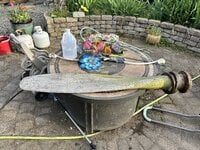

Michael Hope
Airman 1st Class
- 287
- Jun 28, 2016
The "219-15A" is not a full blade model number. Do you have any dimensions i.e. the overall length. The two steel washers appear to be similar to what Hamilton Standard used. There is not a blade model that includes the "219" in it. Do you have any images of the end of the blade to help determine if it is counterweight type blade or a Hydromatic type blade.Trying to identity what aircraft these blades came from. Marking on one of blades are. 219-15A, DWG-CS-40B, MFG-#-59960 1, E17-5-1, 79709
- Thread starter
- #3
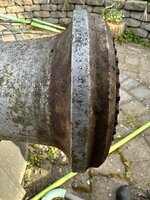
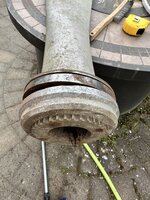
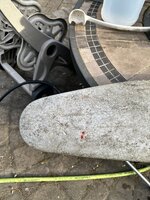
54.5" long x 9.5" wide. Three blades all together. The first set of numbers are different on each blade.
Attachments
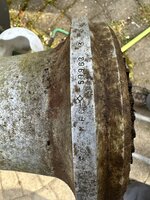
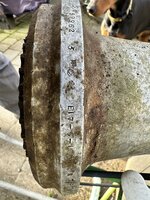
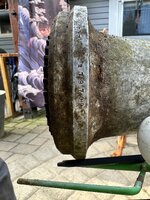
- Thread starter
- #4
I'll get this figured out yet. But I did post measurements and pictures.The "219-15A" is not a full blade model number. Do you have any dimensions i.e. the overall length. The two steel washers appear to be similar to what Hamilton Standard used. There is not a blade model that includes the "219" in it. Do you have any images of the end of the blade to help determine if it is counterweight type blade or a Hydromatic type blade.

IMHO it is the Hamilton Standard prop blade type but made by the Sumitomo Metal Industries, a Japanese manufacturer, judging by the factory stamps. So it is the Sumitomo-Hamilton licenced one. Also it seems the Japanese origin can be confirmed by the remnants of the two narrow red painted strips at the prop blade tip I noticed in the first pic and the one above. According to the net source, a DWG-CS-3B blade was used for Mitsubishi G4M Betty for instance. Here below the markings on the Sumitomo-Hamilton prop blade I found via the net and these on your blades. IMHO these look the same and the minor differences in markings are because of the different prop blade type or factory or just the factory control team. The Sumitomo operated four manufacturing plants by the mid of 1944. The question is if it is the WW2 set of the prop blades or a post-war one. The shots to compare ...
DWG-CS-40B

DWG-CS-3B

DWG-CS-40B


DWG-CS-3B


the pic source:

 www.aviationart.com
PS. the dimensions you provided above indicate a prop of about 3m ( 120" ) diameter. The G4M Betty had the prop of the 3,44m ( 134" ) what correspods to the 64" long x 11" wide dimensions stated on the site with the CS-3B prop blade. So your plane had to be smaller. I wouldn't exclude the A6M Zero or other WW2 Japanese planes with a three-blade prop of 3-3,2m diameter.
DWG-CS-40B
DWG-CS-3B
DWG-CS-40B
DWG-CS-3B
the pic source:
Sumitomo Hamilton WWII CS-3B Mitsubishi G4M Betty Bomber 503rd Air Force Japanese Airplane Propeller Blade
Exceptionally Rare One of a kind Airplane Propeller Blade from the Estate of POW Colonel Frank H. Collins. Off of a Mitsubishi G4M Betty Bomber and signed by the members of the WWII 503rd AFF Base Unit. Propeller stands 64 inches tall x 11 inches wide. DWG-CS-3B,
www.aviationart.com
PS. the dimensions you provided above indicate a prop of about 3m ( 120" ) diameter. The G4M Betty had the prop of the 3,44m ( 134" ) what correspods to the 64" long x 11" wide dimensions stated on the site with the CS-3B prop blade. So your plane had to be smaller. I wouldn't exclude the A6M Zero or other WW2 Japanese planes with a three-blade prop of 3-3,2m diameter.
Continuing the search for more info on the CS-40B prop blade I have found the info in a book by James D'Angina published by the Air Vanguard vol.19. for the A6M Zero plane ...
and ...
The Nakajima Sakae-12 was an air-cooled radial engine design with 14 cylinders arranged in two rows. The powerplant utilized a CS40B three-bladed constant-speed propeller manufactured by Sumitomo/Hamilton, and produced 940hp at 2,550rpm. The Sakae-12 engine was used on the A6M2a and A6M2b aircraft. Both the A6M2-N Type 2 float-fighter and the A6M2-K two-seat trainer also utilized the original Sakae-12 engine.
and ...
Mitsubishi A6M2a (Model 11)
First produced in December 1939 at Mitsubishi's Nagoya plant, the A6M2 (Model 11) featured a multitude of changes in comparison to the first prototypes. The powerplant was changed from the Mitsubishi Zuisei to the Nakajima Sakae-12 (14-cylinder radial engine), which produced 940hp, turning a CS40B Sumitomo/Hamilton Standard three-bladed constant-speed propeller.
- Thread starter
- #7
IMHO it is the Hamilton Standard prop blade type but made by the Sumitomo Metal Industries, a Japanese manufacturer, judging by the factory stamps. So it is the Sumitomo-Hamilton licenced one. Also it seems the Japanese origin can be confirmed by the remnants of the two narrow red painted strips at the prop blade tip I noticed in the first pic and the one above. According to the net source, a DWG-CS-3B blade was used for Mitsubishi G4M Betty for instance. Here below the markings on the Sumitomo-Hamilton prop blade I found via the net and these on your blades. IMHO these look the same and the minor differences in markings are because of the different prop blade type or factory or just the factory control team. The Sumitomo operated four manufacturing plants by the mid of 1944. The question is if it is the WW2 set of the prop blades or a post-war one. The shots to compare ...
DWG-CS-40B
View attachment 876146
DWG-CS-3B
View attachment 876147
DWG-CS-40B
View attachment 876150
View attachment 876148
View attachment 876149
DWG-CS-3B
View attachment 876151
View attachment 876153
View attachment 876152
the pic source:
Sumitomo Hamilton WWII CS-3B Mitsubishi G4M Betty Bomber 503rd Air Force Japanese Airplane Propeller Blade
Exceptionally Rare One of a kind Airplane Propeller Blade from the Estate of POW Colonel Frank H. Collins. Off of a Mitsubishi G4M Betty Bomber and signed by the members of the WWII 503rd AFF Base Unit. Propeller stands 64 inches tall x 11 inches wide. DWG-CS-3B,
PS. the dimensions you provided above indicate a prop of about 3m ( 120" ) diameter. The G4M Betty had the prop of the 3,44m ( 134" ) what correspods to the 64" long x 11" wide dimensions stated on the site with the CS-3B prop blade. So your plane had to be smaller. I wouldn't exclude the A6M Zero or other WW2 Japanese planes with a three-blade prop of 3-3,2m diameter.
Thanks for the info. I've had these blades lying around for over twenty years and now I know what they're off of. Thanks again.Continuing the search for more info on the CS-40B prop blade I have found the info in a book by James D'Angina published by the Air Vanguard vol.19. for the A6M Zero plane ...
and ...
- Thread starter
- #8
Continuing the search for more info on the CS-40B prop blade I have found the info in a book by James D'Angina published by the Air Vanguard vol.19. for the A6M Zero plane ...
and ...
A brown-redish back of the prop blades confirms the WW2 Japanese design used for the licenced HS blades. So the A6M2 model with the Nakajima Sakae 12 engine can be the one it was used with. Certainly there could be other Japanese kites powered by the engine and the prop but as I mentioned above the Zero fighter/float plane/ trainer can't be excluded. In other words a great and quite rare WW2 artifact that can be believed to be of the Zero kite. Especially that the three blades look like being a set for the same prop.

- Thread starter
- #10
A brown-redish back of the prop blades confirms the WW2 Japanese design used for the licenced HS blades. So the A6M2 model with the Nakajima Sakae 12 engine can be the one it was used with. Certainly there could be other Japanese kites powered by the engine and the prop but as I mentioned above the Zero fighter/float plane/ trainer can't be excluded. In other words a great and quite rare WW2 artifact that can be believed to be of the Zero kite. Especially that the three blades look like being a set for the same prop.
Yes they are a set with these numbers.
MFG-#-59960 1
MFG-#-59961 2
MFG-#-59962 3
They were recovered somewhere around Bristol Bay Alaska where exactly I have no way to find out.
Last edited by a moderator:
- Thread starter
- #12
- Thread starter
- #13
After reading the book you mentioned and that the blades were found in the Aleutian Islands probably taken off an aircraft that was damaged and replaced with new blades. So I'm thinking that they could be off an A6M2-N float plane used by the Japanese during the occupation of Kiska Island. My best guess at the moment.
Users who are viewing this thread
Total: 1 (members: 0, guests: 1)
Similar threads


- Replies
- 1
- Views
- 393
