A google of "alternatives to balsa" does come up with a few suggestions and alternatives. The Germans developed some alternatives, which had their problems, but they shouldn't be judged harshly because the effect of bombing on German industry forced them to substitute. They did come up with a material called 'formholz' (formed wood) which was glue, sawdust and graphite that was used as the filler/spacer between two sheets of multiply but it can't have been as light as balsa. There was also TyBu or Ty-Bu which was a laminate of wood and Bakelite used as the spar on the He 162.
Then there is the possibility of an all metal Mosquito.
I don't see this as a problem at all for US industry. The three dimensional compound curves of the US metal mosquito would be stretch formed over wooden dies in the same way Martin made the B-26 Marauder and in the way the Spitfire wing was eventually made.
There was also a gentlemen by the name of Howard Hughes who developed Hughes H-4 Hercules (cruelly called the Spruce Goose though it was made of Birch) which I suspect didn't need balsa.
They used many thin layers of birch (not spruce) to create a new material, in fact
a composite material called Duramold. Wikipedia
explains about this material:
Duramold
From Wikipedia, the free encyclopedia
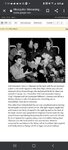
View attachment 621797
The
Hughes H-4 Hercules, made of birch ply Duramold
Duramold is a composite material process developed by
Virginius E. Clark. Birch plies are impregnated with
phenolic resin, such as
Haskelite and laminated together in a mold under heat (280 °F, 138 °C) and pressure for use as a lightweight structural material.
[1] Similar to
plywood, Duramold and other lightweight composite materials were considered critical during periods of material shortage in
World War II, replacing scarce materials like aluminum alloys and steel.
[2][3]
The material has some advantages over metal in strength, construction technique, and weight. A cylinder made of duramold is 80% stronger than a cylinder made of aluminum.
[4] There are over 17 varieties of Duramold, using various quantities of
birch or
poplar wood, with as many as seven plies.
[5] The Duramold process has also been used to make
radomes for aircraft as well as missile bodies.
[6]
The
Fairchild Aircraft Corporation patented the process, designing and constructing the
AT-21, (NX/NC19131) as the first aircraft made using the Duramold process.
[7] Several aircraft used Duramold in parts of their structure but the largest aircraft manufactured with the process is the
Hughes H-4 Hercules designed by
Howard Hughes and
Glenn Odekirk, which was almost completely built with Duramold in very large sections.
[8] Hughes Aircraft had purchased rights to the process for this use.
The Duramold and Haskelite process was first developed in 1937, followed by
Gene Vidal's Weldwood and later the Aeromold process produced by the
Timm Aircraft Company. In the United Kingdom, the
De Havilland Aircraft Company (founded by
Geoffrey de Havilland, a cousin of
Olivia de Havilland, the actress who dated Howard Hughes in 1938) used similar composite construction for aircraft including the
DH.88 Comet,
DH.91 Albatross, the
Mosquito, and
Vampire. The aeromold process differs in that it is baked at a low 100 °F at cutting and forming, and 180 °F for fusing together sections after the resins are added.
[9]
In reality the US probably had a better material than balsa plywood sandwitch.