
Navigation
Install the app
How to install the app on iOS
Follow along with the video below to see how to install our site as a web app on your home screen.
Note: This feature may not be available in some browsers.
More options
You are using an out of date browser. It may not display this or other websites correctly.
You should upgrade or use an alternative browser.
You should upgrade or use an alternative browser.
What if Hitler had followed the Luftwaffe strategic war plan? (1 Viewer)
- Thread starter Art Medcalf
- Start date
Ad: This forum contains affiliate links to products on Amazon and eBay. More information in Terms and rules
More options
Who Replied?
Both, unfortunately.Of course, during the war, condemned prisoners weren't executed, they were sent to the front.
The list of Red Army high-ranking officers, generals or equal rank, killed/died during the German-Soviet war:
(Article in Russian, Google Translate is OK, but note that "camp", "prison" mean the Soviet one, unless indicated otherwise.)
Total names: 480
Died (all reasons, but mostly executed) after being arrested in the USSR: 53.
Now, to add to the overall picture of Soviet absurd policies...
Died (all reasons) in the German captivity: 33.
It is about the generals only. I doubt that the total number of Red Army personnel executed by the Soviets in 1941-1945 will ever be known. However, it appears that there is a consensus among historians regarding hundreds of thousands.
Years ago, I obtained the scans of some records from the Black Sea Fleet archive. One of them was the table of the personnel losses related to the so-called "special group": deserters, interned, convicts, defectors, and suicides.
Convicts, total: 7250
Among them -
Sent to the front: 4158
Sent to the camps: 2361
Executed: 731
For info, the total Black Sea Fleet personnel losses were just a fraction of the Red Army total. 82394 irrecoverable, including 16942 KIA and died of wounds.
All the above is about the military personnel only. Civilian prisoners' mortality during that war remains a contested topic, but numbers were certainly higher than those of the military convicts.

The scale of the repression of senior officers during the war cannot be compared to either the Great Purge or the purges of the early 1930s. The scale of the latter has not yet been fully clarified, although an attempt was made by Tinchenko in his book "Golgotha of the Russian Officer Corps in 1930-1931". It is possible that these repressions even exceeded the Great Purge in terms of their consequences.Died (all reasons, but mostly executed) after being arrested in the USSR: 53.
There are quite informative sources on the repressions in the Red Army both during the Great Purge (for example, Suvenirov) and during the war (for example, Smyslov), but unfortunately, they are in Russian. They contain also individual descriptions of Soviet generals, which are useful for understanding what was happening. It is unlikely that these sources will be of interest to anyone here.
In terms of experience, Soviet military leaders were several levels below their German counterparts. For example, most Soviet generals (but not all of them!) were roughly equivalent to German lieutenant colonels. This is one of the reasons for the huge Soviet losses.
In addition to personnel problems, the pre-war Red Army had another problem: suboptimal structures of large combat formations (divisions and above). For example, a mechanized corps was a huge, poorly manageable structure that could not be effective neither in defense nor in offense. And it is extremely unlikely to expect any positive changes in the absence of combat operations. Therefore, I consider the effectiveness of the use of the time factor by the Soviets to be very low - even if the war had started a year later, there would be no fundamental changes, neither in the level of command, nor in organization, nor in combat training.
The only "window" when the Soviets had any chance of either defeating Germany or forcing it to accept peace conditions favorable to the Soviets was to attack with all available forces in September 1939 in Poland. But this would have required not staging a farce of negotiations with the British and French and not signing a pact with Germany. Too much for the not particularly visionary Soviet leadership.
General conclusion: the Germans would not risk too much if they postponed the outbreak of war in the East. No modernization of the Red Army posed a serious threat to them. The only condition was to ensure the surprise of the attack in order to gain a strategic advantage. I think this was quite feasible.
Last edited:

FulmenTheFinn
Airman 1st Class
General conclusion: the Germans would not risk too much if they postponed the outbreak of war in the East. No modernization of the Red Army posed a serious threat to them. The only condition was to ensure the surprise of the attack in order to gain a strategic advantage. I think this was quite feasible.
We must remember a couple of things: the lack of RKKA readiness to face an Axis invasion in the summer of 1941 was a large factor in the initial Axis success. And even so the RKKA still managed to severely slow the Germans down, and of course, eventually repel them.
I would argue that while Soviet doctrine likely wouldn't have seen any major developments in the intervening time if Barbarossa was delayed until spring-summer 1942, the Soviets would have been more ready to face Germany and her allies. Not just because the RKKA would've had more materiel, more finished fortifications and so on, either: If you have Germany just sitting around for over a year after the Greek campaign, preparing for Barbarossa, I think there is a good chance Stalin becomes more suspicious that Hitler is preparing to invade, which in turn means a more prepared RKKA with a higher state of mobilisation at the start of hostilities.
The Germans would've of course had more tanks, more aircraft, probably better preparation logistically, etc., but this may have mattered less than a higher state of Soviet preparedness.
Then there's also the question: has the US entered the war by this point, or does it look like she's about to? And if so, is Germany even going to invade the USSR?
At the end of the day this is all guesswork one way or the other.
It is unlikely that these sources will be of interest to anyone here.
A bit OT, but I've noticed this forum is rather American-dominated. In some ways it reminds me of the Internet of the early 2000s. A few weeks ago in mid-December I actually did a tally of the 200 threads on the first 10 pages of the Aviation sub-forum: 106 threads were on Anglo-American (British Empire or US) topics, 2 on other Western Allied, 5 on Soviet, 25 on German, 16 on Japanese, 0 on other Axis, and 46 were on topics I categorised as "general", but they too were overwhelmingly to do with Anglo-American aviation. I'm not saying it's good or bad, only that it's my observation.
Anyway, I wouldn't mind knowing or even taking a look at those sources.

GrauGeist
Generalfeldmarschall zur Luftschiff Abteilung
In the early days of this forum, a large share of members were from the UK, Australia and Europe at large.A bit OT, but I've noticed this forum is rather American-dominated. In some ways it reminds me of the Internet of the early 2000s
There was also a large number of members from Texas for some reason, too.
In the nearly 20 years that I've been a member here, I cannot think of a time that there was a bias for or against any nationality or their aircraft of WWII. There are members here (past and present) who have given good insight into Japanese and Soviet types.
As a matter of fact, this forum was extremely fortunate to have Shinpachi (from Japan) as a member, who gave us incredible insight into Japanese aircraft construction and technical information.

BarnOwlLover
Staff Sergeant
And as far as biases may (key word, may) go, knowing what we know now about Nazi Germany and the Soviet Union before, during, and in the case of the Soviets, after World War II, I do suppose that there's a perception in the west that there's really no "good guys" on the Eastern Front. The Nazis were evil, the Soviets were evil, and it's hard to tell which one was more or less evil than the other. It's like voting between two bowls of crap, I guess you have to decide which one smells better or worse. Not saying that the Nazis or Soviets as a people (their leaders don't count, obviously) were subhumans, but you had the perception at least of one flawed ideology fighting another flawed ideology that both lead to the same thing at the end of the day.
And that's not saying that the Western Allies were saints, because no one is, no one's perfect. There's those who own up to their flaws and at least try to be the best they can be given circumstances, or those who put on that saintly facade and are lying. And the Nazis and Soviets were good at lying on that front until that facade crumbled. Not to mention that there was the whole Western Allies fighting to preserve democracies and republics, while the Nazis and Soviets were all in on the totalitarianist/centralized power dictatorship thing. Not to mention how far both went to try and annihilate each other and the depravity involved.
That's just my observations on that perception, real or imagined. I hope it wasn't too far off topic.
And that's not saying that the Western Allies were saints, because no one is, no one's perfect. There's those who own up to their flaws and at least try to be the best they can be given circumstances, or those who put on that saintly facade and are lying. And the Nazis and Soviets were good at lying on that front until that facade crumbled. Not to mention that there was the whole Western Allies fighting to preserve democracies and republics, while the Nazis and Soviets were all in on the totalitarianist/centralized power dictatorship thing. Not to mention how far both went to try and annihilate each other and the depravity involved.
That's just my observations on that perception, real or imagined. I hope it wasn't too far off topic.
ThomasP
Chief Master Sergeant
The main reason the forum is largely Anglo is the language barrier. Believe me when I say that there are many members of the forum who would like to know more of the other nations experiences and technical data.
Until the internet exploded and scans of original documentation became available, along with the ability to (sometimes) translate said documents using various freely available programs, there were very few documents and/or authoritative sources available to English only readers.
There was also a serious form of censorship going on in the West where the Soviet Union was considered, and this sort of filtered over onto the Satellite Nation.
Until the internet exploded and scans of original documentation became available, along with the ability to (sometimes) translate said documents using various freely available programs, there were very few documents and/or authoritative sources available to English only readers.
There was also a serious form of censorship going on in the West where the Soviet Union was considered, and this sort of filtered over onto the Satellite Nation.
Well said. A "saintly facade" is a proper characteristic of those regimes.or those who put on that saintly facade and are lying.
Was it Timothy Snyder (or Hanna Arendt before him?) who argued about the "eternal innocence" as one of the cornerstones of the totalitarian mindset...
By the way...
According to the graphs posted by the topic starter, the total number of Luftwaffe aircraft was expected to reach 23,000 by 1947, before the next war. With "Battle Aircraft Stock" fixed at 10,000 since 1941, as I read the graph.
According to the Soviet (draft) Mobilisation Plan for 1941, written in Feb 1941, the number of aircraft expected on July 1, 1941:
Combat aircraft in service - 22,171
Auxiliary and training - 10,457
Source: https://www.alexanderyakovlev.org/fond/issues-doc/1011435
(Google Translate struggles with this page, but Google Gemini translates perfectly.)
According to the graphs posted by the topic starter, the total number of Luftwaffe aircraft was expected to reach 23,000 by 1947, before the next war. With "Battle Aircraft Stock" fixed at 10,000 since 1941, as I read the graph.
According to the Soviet (draft) Mobilisation Plan for 1941, written in Feb 1941, the number of aircraft expected on July 1, 1941:
Combat aircraft in service - 22,171
Auxiliary and training - 10,457
Source: https://www.alexanderyakovlev.org/fond/issues-doc/1011435
(Google Translate struggles with this page, but Google Gemini translates perfectly.)
Shortround6
Lieutenant General
There could be several reasons for this.A bit OT, but I've noticed this forum is rather American-dominated. In some ways it reminds me of the Internet of the early 2000s. A few weeks ago in mid-December I actually did a tally of the 200 threads on the first 10 pages of the Aviation sub-forum: 106 threads were on Anglo-American (British Empire or US) topics, 2 on other Western Allied, 5 on Soviet, 25 on German, 16 on Japanese, 0 on other Axis, and 46 were on topics I categorised as "general", but they too were overwhelmingly to do with Anglo-American aviation. I'm not saying it's good or bad, only that it's my observation.
1. For most of the post WW II period English was the dominant Language in the world. Not so much in actual population but print and media (movies).
2. In the 1950s and 60s the American economy was such that there was more money available to buy books and models with. A French author of aviation books was going to have a limited market for French language books and many model makers had a very limited selection of French models. This is just economics. Many of us are from 60-80+ years of age (I am 74) and many of us became interested in WW II aviation as kids or teens. Many Europeans were just trying to dig out and/or get enough food in the 1950s.
The Mid-East through Far East was much the same. Many people were just trying to survive or improve basic living conditions rather than spend time/money on hobbies and this means less interest/market for books/magazines and hobby shops which means less interest per 1000 people even in later years.
3. The Americans actually did dominate both WW II and the cold war aviation scene. At least in numbers. For example, in10 years (1935 -1945) the US went through about 55 different Army fighter designs, there were 3 unused numbers from the P-35 to the P/F-84. Some of the numbers were used but never made it off paper. The US Navy was not prolific

I am trying not to pass judgement although many of the Army ones that were built in 1,2 or 3 maybe shouldn't have been? But that is a large amount of source material/stories for a large audience and may skew the readership.
I am trying not to make any judgments as to merit or quality. Just the size of the market in the 1950s-80s and the resulting amount of different offerings (books/magazines, models, accessories)

When my grandfather was demobilized, on his request (he was offered to go to the military school, being 21 yo, but declined), in 1946, he was stunned just how the village he returned to was poor. In his words: 'we didn't have anything to eat!' He got married, and used oxen to plow the fields, and they have had some sheep for wool, and a pig or two. Meat was a rare occurrence on the table, mostly pig; if there was some pig liver or lungs to eat, it was like a jack pot.Many of us are from 60-80+ years of age (I am 74) and many of us became interested in WW II aviation as kids or teens. Many Europeans were just trying to dig out and/or get enough food in the 1950s.
(my mother's father was a bit luckier; in the 1960s, they even bough a combined radio/record player, but never a car, nor even the motobike)
Come 1960s, 1st my father - an straight A student - went to high school in Split (~50 km away as the crow flies), and his younger brother two years later. Grandpa, who was working two jobs now and, together with grandma and younger sons, his fields and vineyards, paid for the monthly housing and food as much as his two paychecks. Come the end of the high school for my father, and the school-wide excursion to Italy, he said 'my folks have no money for this'. So his school paid for his ticket. But no allowance, so no gelato in Trieste and/or Padua for the 18 yo him.
Back at home, the 1st to get up might get the pair of socks, but not for those that like to snooze.
Now imagine saying "I want the modelling magazines, books and models" in that 'economy'.
FulmenTheFinn
Airman 1st Class
According to the Soviet (draft) Mobilisation Plan for 1941, written in Feb 1941, the number of aircraft expected on July 1, 1941:
Combat aircraft in service - 22,171
Auxiliary and training - 10,457
On a related note, according to Krivosheev the Red Army (and, presumably, Navy) had 32,100 aircraft at its disposal on 22 June 1941 (Soviet Casualties and Combat Losses in the Twentieth Century, p. 254). I suspect the real number was even higher, as according to the primary source documents photographed in the 2003 Voyenno-vozdushnyye sily Rossii. Neizvestnyye dokumenty (1931-1967) g.g. [Russian Air Force: Unknown Documents (1931-1967)] already on 25 September 1940 the Red Army had 26,239 aircraft while the Red Navy had 3,630, for a total of 29,869 aircraft (some of the Navy's data is from 1 October 1940). In addition to this there were thousands of aircraft in the PVO, GvF and Osoaviakhim (OAH). As I recall even the NKVD had a few aircraft. For instance in April 1941 there were 5,551 U-2s in "non-military" organs in the USSR (how non-military the GvF and OAH actually were is a topic for another time), to the point that some 9,200-9,400 U-2s are estimated to have been in existence in the USSR on 22 June 1941. Thousands were then transferred to the VVS RKKA, some of which likely ended up seeing combat service e.g. as light bombers during night harassment missions against German positions, airfields, etc.
Here's a table I made some years back, based on a Russian table which in turn is based on the primary source documents found in the aforementioned 2003 book. If there's interest in the photos of the latter, I can probably post or DM some of them too, but the documents are entirely in Russian. In fact I should probably update my table, as the documents are more detailed and give breakdowns of models by engine type (e.g. on 25.9.40 the VVS RKKA had 2,135 I-153s with Shvetsov M-62s and 304 with Shvetsov M-63s), but that will have to wait.
View: https://docs.google.com/spreadsheets/d/1KAkXmgCfunP9ZJwIFUFQpMTzsaOlOpohtsZk05wePDI/edit?usp=sharing
There could be several reasons for this.
All things considered I think it mostly boils down to the language barrier. There's historical aircraft nuts with access to a wealth of information in just about every country in the northern hemisphere, and probably in much of the southern hemisphere too for that matter. But if they don't speak, and more importantly write, good English to the point of being fully comfortable with it, they don't end up engaging in places like this. There's a similar phenomenon in video games: in international European servers there's far less voice communication than in US/Anglosphere ones, which is incidentally why I personally prefer playing in American servers. You see it in text chat too.
Shortround6
Lieutenant General
Yes Tomo.
In that local economy any local historian is going to have a very hard time getting a publisher to actual buy his article/book and sell it to the public in any local language. It would never pay for itself.
So any hobbyist was pretty much forced to buy foreign books about foreign aircraft because that is all there was on the market.
A bit like movies. Many nations could dub movies or use sub-titles but actual European production of movies took a long time to catch up to Hollywood production wise. Not talking about writing/directing/acting.

US churned out a lot of crap movies in the 50s and 60s
In that local economy any local historian is going to have a very hard time getting a publisher to actual buy his article/book and sell it to the public in any local language. It would never pay for itself.
So any hobbyist was pretty much forced to buy foreign books about foreign aircraft because that is all there was on the market.
A bit like movies. Many nations could dub movies or use sub-titles but actual European production of movies took a long time to catch up to Hollywood production wise. Not talking about writing/directing/acting.
US churned out a lot of crap movies in the 50s and 60s
Last edited:

SaparotRob
Unter Gemeine Geschwader Murmeltier XIII
GrauGeist
Generalfeldmarschall zur Luftschiff Abteilung
The numbers of aircraft available to the VVS at the onset of the German invasion look impressive, but just how many of those types were obsolete by Spring of 1941?
FulmenTheFinn
Airman 1st Class
The numbers of aircraft available to the VVS at the onset of the German invasion look impressive, but just how many of those types were obsolete by Spring of 1941?
You'll want to take a look at this:
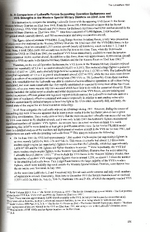
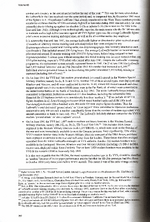
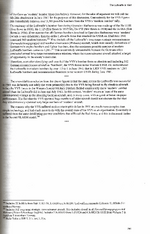
Source: Nigel Askey (2014): Operation Barbarossa, vol. IIB.

Howard Gibson
Staff Sergeant
Most educated people speak English. If you are from Mongolia and you have to give a lecture in perhaps Kenya, you don't speak Swahili, and they don't understand Mongolian. The language everybody has to learn just as easily could be Magyar, but the British and Americans conquered large swathes of territory, and built large economies. The language of diplomacy used to be French. In a century or so, people may have to learn Chinese.There could be several reasons for this.
1. For most of the post WW II period English was the dominant Language in the world. Not so much in actual population but print and media (movies).
2. In the 1950s and 60s the American economy was such that there was more money available to buy books and models with. A French author of aviation books was going to have a limited market for French language books and many model makers had a very limited selection of French models. This is just economics. Many of us are from 60-80+ years of age (I am 74) and many of us became interested in WW II aviation as kids or teens. Many Europeans were just trying to dig out and/or get enough food in the 1950s.
The Mid-East through Far East was much the same. Many people were just trying to survive or improve basic living conditions rather than spend time/money on hobbies and this means less interest/market for books/magazines and hobby shops which means less interest per 1000 people even in later years.
3. The Americans actually did dominate both WW II and the cold war aviation scene. At least in numbers. For example, in10 years (1935 -1945) the US went through about 55 different Army fighter designs, there were 3 unused numbers from the P-35 to the P/F-84. Some of the numbers were used but never made it off paper. The US Navy was not prolific
I am trying not to pass judgement although many of the Army ones that were built in 1,2 or 3 maybe shouldn't have been? But that is a large amount of source material/stories for a large audience and may skew the readership.
I am trying not to make any judgments as to merit or quality. Just the size of the market in the 1950s-80s and the resulting amount of different offerings (books/magazines, models, accessories)
I think Stalin would have preferred to wait longer and enter the war under conditions that were more favorable to him. By the summer of 1942, those conditions would most likely not have materialized; moreover, the Red Army would have lost several more capable generals, such as Meretskov.I would argue that while Soviet doctrine likely wouldn't have seen any major developments in the intervening time if Barbarossa was delayed until spring-summer 1942, the Soviets would have been more ready to face Germany and her allies. Not just because the RKKA would've had more materiel, more finished fortifications and so on, either: If you have Germany just sitting around for over a year after the Greek campaign, preparing for Barbarossa, I think there is a good chance Stalin becomes more suspicious that Hitler is preparing to invade, which in turn means a more prepared RKKA with a higher state of mobilisation at the start of hostilities.
I see no reason for optimism regarding Soviet preparations for war. How much was corrected between the end of the Winter War and the start of Operation Barbarossa? Almost nothing, even though the problems had been analyzed! The release of new technology will not lead to the emergence of new tactics - the Soviets can only realize the need for new tactics in the course of large-scale combat operations. In addition, crew training is required. And for that, there was no fuel in the USSR - the demand far exceeded production capacity! That's how Soviet planning worked. In other words, new equipment will provide minimal advantages, if any at all. The best results at the beginning of the fighting on the Eastern Front were achieved by Soviet soldiers mainly with weapons they were already familiar with, rather than with weapons that had just been put into service. In the absence of combat operations, the improvements of design and production flaws in new types of weapons would proceed very slowly, and it was unlikely that significant improvements in quality could be expected within a year. The only significant factor that gave the Soviets some advantage was the completion of concrete runways at western airfields and the dispersal of aircraft. It is difficult for me to judge how much this would help. I do not think it would have fundamentally changed the outcome.
In many aspects the Soviet system was extremely inert, so the time factor played in favor of the Germans - their advantage in technology, tactics, and organization only grew.The Germans would've of course had more tanks, more aircraft, probably better preparation logistically, etc., but this may have mattered less than a higher state of Soviet preparedness.
Of course, I did not take into account the "American factor" - it changes the whole game.Then there's also the question: has the US entered the war by this point, or does it look like she's about to? And if so, is Germany even going to invade the USSR?
Agree. But I try to extrapolate the available facts cautiously. I have no illusions about the Soviet system's mobilization capabilities anymore.At the end of the day this is all guesswork one way or the other.
I didn't want to express anything negative, but rather didn't want to annoy anyone with excessive links that are unlikely to be useful, while at the same time implicitly expressed my willingness to provide additional information if anyone is interested.A bit OT, but I've noticed this forum is rather American-dominated. In some ways it reminds me of the Internet of the early 2000s. A few weeks ago in mid-December I actually did a tally of the 200 threads on the first 10 pages of the Aviation sub-forum: 106 threads were on Anglo-American (British Empire or US) topics, 2 on other Western Allied, 5 on Soviet, 25 on German, 16 on Japanese, 0 on other Axis, and 46 were on topics I categorised as "general", but they too were overwhelmingly to do with Anglo-American aviation. I'm not saying it's good or bad, only that it's my observation.
These are good books, perhaps a bit more emotional than is permissible in a purely academic style, but still more than just journalism. Some figures may be shocking.Anyway, I wouldn't mind knowing or even taking a look at those sources.
By the way, here's another interesting point: the Soviets were actively building factories in the western regions of the USSR - for example, an aircraft factory in Minsk to produce Il-2s (or Yaks - decisions about production changed). It is possible that in 1942, the share of industry in the western regions would have increased, and as a result, with the loss of territory, the situation for the USSR would have been even worse than it was actually. But this is only a guess.
Last edited:
I'm joining in a bit late but let's get back to the beginning.
The question is which two wars are planned.
My opinion (and I base it on well-known statements of the main actor) is that in the diagram of planed production the first war (after the repetition of the Czechoslovakian story in Poland) is the conquest of the rotten structure in the east - read the USSR. (Not my words - but how long war Wehrmacht planed on east ?). This somewhat explains the relative surprise of the Reich leadership and the production plans when 1939 war started.
The conquest of Lebensraum forms a self-sufficient entity - economically independent ( ores and oil and grain and ...) under the rule of Germany. The rest of Western Europe and the Balkans begin to gravitate towards that great German Reich.
Great Britain (and France) are not the decisive factor in this (while they do not hinder the realization of an economically/minerally complete Reich) because size of Reich will dwarf them.
The goal of that complete entity is the next and inevitable confrontation with the only other economic (and thus military) remaining factor.
The USA.
And that is that second war.
The question is which two wars are planned.
My opinion (and I base it on well-known statements of the main actor) is that in the diagram of planed production the first war (after the repetition of the Czechoslovakian story in Poland) is the conquest of the rotten structure in the east - read the USSR. (Not my words - but how long war Wehrmacht planed on east ?). This somewhat explains the relative surprise of the Reich leadership and the production plans when 1939 war started.
The conquest of Lebensraum forms a self-sufficient entity - economically independent ( ores and oil and grain and ...) under the rule of Germany. The rest of Western Europe and the Balkans begin to gravitate towards that great German Reich.
Great Britain (and France) are not the decisive factor in this (while they do not hinder the realization of an economically/minerally complete Reich) because size of Reich will dwarf them.
The goal of that complete entity is the next and inevitable confrontation with the only other economic (and thus military) remaining factor.
The USA.
And that is that second war.
Users who are viewing this thread
Total: 2 (members: 0, guests: 2)


