Basically true. I don't think there was any great difference between the stress limits of the two airframes, nor that it is to be blamed on the airframe if the pilot does not adhere the operational limits of the airframe.
Secondly its a bit bizarre to argue that the German paper issued at the end of August 1942 is some sort of evidence that the Spitfire was less likely to be overstressed in dive, as you were already shown (several times) the British papers preceeding the German papers by a couple of months, and dealing with the very subject of
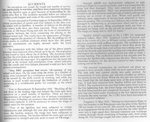
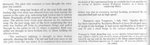
"several accidents to Spitfire V aircraft in service... attributed to excessive accelerations in pullouts from dives with consequent failure of the wing structure"
Firstly it is blatantly evident from the British paper that Spitfire wing structure failures occured and were a serious concern to the RAF the same time the LW became concerned about the same in the 109 (and I guess it is true for a couple of other airforces, which just become aware of the dangers at high Mach speed).
Secondly there's a difference - whereas the structural failures of the 109s were attributed to the pilots disobedience of the dive limits of their aircraft, the Spitfire wing failure accidents were attributed to a design aspect of the Spitfire, namely that the aircraft had a tendency to tighten up the turns in high speed dives, and overload itself... that was a fault of the design, not the pilot who flew it.
The Spitfire II Pilot's notes is very definietive about certain dangers stemming from the control characteristic of the aircraft (poor pitch stability, and overly sensitive elevator control). While indeed there are some generic limitations laid down in the manual which are valid for all aircraft, some are very specific to the Spitfire regardless how you blurr it.
The manual uses no uncertain terms that the aircraft has very sensitive controls, and it is easy to overload the design, and also notes that this could be easily done accidently, ie. due to unintenional movements of the pilot's hand in bumpy weather. Furthermore it makes clear warning not to trim the aircraft for level flight during dives because doing so exaggrevates the pilot's capacity to overload the airframe. Dives and bumpy weather are hardly ''extreme cases''...
The issue is simple to understand - the Spitfire had unusually low stick force stability, at about 4 lbs required to pull 1 G; the 109 was on the high side, at around 20 lbs/G.
Say a 109 and a Spitfire is a dogfight, both pilots pulling as much as possible on the stick, near their human limits, pulling 5 Gs... suddenly a blow of wind, a propeller from an aircraft or an AA shell exploding nearby shakes both aircraft and pilots, who accidentally pull another 20 lbs on the stick... the Spitfire is now pulling 10Gs all the sudden instead of 5, the 109 is now pulling 6Gs instead of 5...
Or you say you didn't see wing failure mention in context of other aircraft - say for example wing failures mentioned for Spitfire in documents you saw about a day before you wrote this? Or what way?




 Since when has one sarcastic comment become "numerous requests"
  ; however, to the point: Quill devotes an entire chapter to longitudinal stability (pages 229-241 Murray 1983) in his book "Spitfire a Test Pilot's Story" in which he goes into detail about the problems involving several Spitfire Vs which broke up in 1942; Quill describes the problem of Spitfire Vs breaking up; he then goes on to describe the solutions which were a): to ensure that when new equipment was added that the loading was kept within limits and b):the design of bobweights, which were added to the elevator circuit, as well as the modified elevators fitted to later Spitfire marks. After the bob-weights were fitted, and the loading sorted out, the problem disappeared.


