The problem is looking 3-4 years down the road, or more.
It was even popularised in the literature and the "infotainment" media of that period, as technical magazines and documentaries.
This was world wide and the US experimental aircraft got a lot of "press"/newsreel footage. Likewise record setting aircraft of all kinds including altitude records of various kinds (not just altitude but weight lifted to XXXX height). With the rapid progress in many areas of aviation many people expected progress to keep going at the same rate that had occurred in the mid to late 1930s.
The need for pressure cabins and not just oxygen masks for crews to operated for several hours at over 30,000ft was unforeseen. Many of difficulties with pressure cabins were also unforeseen. Compressibility problems were either unforeseen or not noticed outside of a few researchers? Even variable pitch propellers were only a few years old let alone figuring out what actually worked in higher thinner, air.
The answers were not as easy to come by as going from under 200 mph biplanes to over 300 mph monoplanes. It took a lot more work to get smaller increases in performance.
What had been a high altitude airplane in 1938-40 was NOT a high altitude airplane in 1942-43.
I would note that even the turbocharged American aircraft were not rated at 25,000ft in the late 30s. What they wanted and what they got were not the same. A lot of the late 30s turbo charged airplanes had critical altitudes of around 20,000ft.
For example the YP-43s had been ordered in March of 1939, they started being delivered in Sept 1940. A few months after at the First P-40s. The engines in the YP-43 was good for 1200hp for take off and 1100hp at 20,000ft. Which for a turbo is not all that great. But in Sept 1941 they were delivering P-43A's with new powerplant that gave the same 1200hp for take-off but also gave 1200hp at 25,000ft. Roughly 20% more power at 25,000ft than the YP-43 had.
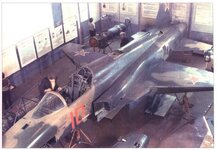
The PE-8 bomber was envisioned as a high altitude aircraft.
"
These requirements specified a bomber that could carry 2,000 kg (4,400 lb) of bombs 4,500 km (2,800 mi) at a speed greater than 440 km/h (270 mph) at an altitude of 10,000 metres (32,808 ft)."
This required the installation of a Klimov M-100 engine driving a central supercharger to supply to the four Mikulin AM-34FRN engines.
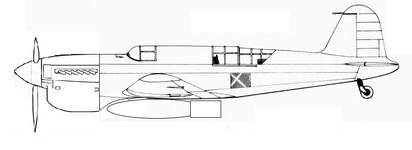
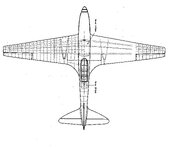
Now if your government is looking at a 10,000 meter bomber it kind of stands to reason that they would be looking for a 10,000 meter interceptor in case their enemies came up with their own 10,000 meter bomber. How much (what percentage of effort) was put into these projects compared to the lower altitude planes may not have been large.
My own impression of Soviet engine development is that they
tried to turbo-charge just about every large aero engine they had at some point. They had less luck than the US had in the late 30s (turbo explosions were common in both countries).





 Probably, "the Soviets" is a better term.