Alternative light and anti-tank guns, 1935-45

Ad: This forum contains affiliate links to products on Amazon and eBay. More information in Terms and rules

It's clear that even the superior performance of tungsten carbide doesn't invalidate the merit of steel cores as long as long as your gun didn't achieve 900-1000 m/s with full-bore ammunition. In the case of Brandt 75mm, you're talking about a 53mm core at 966 m/s, making it possibly more powerful than 6 pounder full-bore ammo. Even when using a 640 or 700 m/s class 75, you could still go with a slightly heavier core (say 60mm) to stay around 1000 m/s. The advantage of subcaliber ammo is that going for lighter but faster rounds can yield performance increases without exceeding the limit of your recoil system, as momentum can be reduced or kept constant.
All very true.
The other question/s are what is the expected engagement range? The high velocity stuff extends the engagement range as the lower drop in trajectory makes it easier to hit at long range, assuming the dispersion doesn't got to hell at the longer ranges.
APCR looses velocity faster than normal shells so it's advantage at longer ranges is not as marked (doesn't exist at all for the smaller calibers) while APDS shot, using carbide cores, has a marked advantage at long ranges, assuming decent dispersion pattern. Steel cored APDS may or may not have much an advantage depending on size of the core, initial velocity and range.
This is actually sorta the period when more mobile carriages for high-speed traction start development. That said this just means that traditional carriages were ok for 30kph while the new carriages would be good for 50-70 kph.
Some armies (Italian?) rated the some of the traditional carriages at 20kph tow speed. Most horse drawn artillery was not towed at the gallop. In some armies the crew walked along side the guns/limbers. There was a large gap in speeds that went unexploited. Motor tractors that could tow at 20-30kph could have significantly increased army mobility while reducing the need for horses. Heck, even being able to tow at 15kph average for 8 hours was well above what horses could do and a 120km advance in a day was a big advance.
But you need somewhat better carriages to do even that.
France already prototyped low-velocity 75mm howitzers in the 20s and 30s so little need for using the B1's gun here, if the concept had been retained
Now we get into the difference between low velocity guns and howitzers. You can use the same projectiles and the same barrels and even the same basic cartridges.
But the howitzers are going to want to be able to use 3-5 different powder charges to adjust the trajectory.

Using the German 7.5cm infantry gun as an illustration, the gun itself only weighed 400kg so it was easy to handle, compared to a 'standard' field gun. It fired a 6kg projectile with a rather decent HE content. It used 5 different powder charges so the gunners could vary the velocity from 92ms to 210ms which allowed the gunners to drop shells over some tall intervening terrain/building if need be.
As an ersatz AT gun it runs into problems. Original HEAT shell of 3kg was fired using the original charge 5 load for 260m/s and while rated for 45mm of penetration that is a bit reduced in service. Also trying to hit at anything except very close range was problem. Even if we forget about wind resistance (drag) it had about a 3 second time of flight to 750yds and forget about the target moving, the projectile will drop 24.5 meters in the last second of flight and that is after dropping 14.7 meters in the 2nd second of flight.
German designed a new projectile with a bit better penetration and crimped the shell into the cartridge case with it's own powder charge that gave 345ms mv that significantly increase the chances of hitting at close range. Like adding 90-100 meters of effective range.
You also have to careful balancing the weight/velocity of the shell to the weight gun/howitzer.
_183-B23252%2C_Kaukasus%2C_Gebirgskanone_im_Schnee.jpg

this weapon could not use charge 5 at less that 15 degrees elevation as the gun bounced around too much.
Despite the 750kg weight and the muzzle brake the Germans used charge 4 to fire a 4.4kg HEAT shell at 390ms.
German only ran the graduations on the sight out to 1000 meters for this shell.

There is only so much you can do due to physics even using tricks like muzzle brakes.
 
The British 47mm guns in the 1920s were pretty much 1880s guns that had the black powder propelling charges replaces by smokeless powder without change the ballistics much. They might have produced some new barrels but kept the old ballistics.

If they picked the 47mm Vickers, that would've allowed them to have ballistics in the ballpark of the Czech or the French ATG 47mm guns.
Problems with any successful use of a 47mm (3pdr) gun in British service requires NOT using the mounts (tank and towed) and projectile types that the 2pdr was stuck with.
Not trying to reinventing the wheel with the 2pdr gun and carriage leaves a lot of time and a nice sum to make better AP stuff, as well as the better and timely HE stuff.

Just imagine 6-8 men on foot (or with 1-2 horses) trying to cart around a worthwhile number of 75mm HE projectiles.
No need to imagine that. That was a reality in many armies, and the French and British would've have it easier since they had more off-road going vehicles and trucks the the Germans or Soviets in the 1930s.

The 75mm in the hull of the Char B. It was only an AT gun because the German tanks used such thin armor.............and got really close to the French.

470 m/s with plain AP ammo, 40mm at 400m @30 deg.
Crew of the best German tank in AT job in 1940 - that of the Pz-IV - would've loved having such a gun on their tank, even if that is just because of extra MV.
 
All very true.
The other question/s are what is the expected engagement range? The high velocity stuff extends the engagement range as the lower drop in trajectory makes it easier to hit at long range, assuming the dispersion doesn't got to hell at the longer ranges.
APCR looses velocity faster than normal shells so it's advantage at longer ranges is not as marked (doesn't exist at all for the smaller calibers) while APDS shot, using carbide cores, has a marked advantage at long ranges, assuming decent dispersion pattern. Steel cored APDS may or may not have much an advantage depending on size of the core, initial velocity and range.
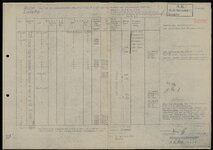
The images under spoilers are the dispersion and ballistic results using the current and Brandt APDS projectiles for the 75mm Mle 1897, resulting from 1939 trials. Note that the Brandt has an extra advantage of having 791mm of recoil against 929mm for the full-bore round, showing the much lower momentum.


Dispersion-wise (496m), the table shows results for new and worn guns. What it shows is that the Brandt displays a ca. 35% increase in dispersion over the fullbore round.
However, with the table on the left showing the trajectory at 500 and 1000m, you see that the much shorter flight time and flatter trajectory results in a much lower max trajectory height (1.25m instead of 3.78m at 500m, and 6.2m vs 18.5m), and much smaller corrections for wind or enemy vehicle speed (half of those for the service round).

In practice, since hit probability is heavily succeptible to errors in the target distance, wind and vehicle speed, the APDS more than makes up for its increased dispersion. In terms of penetration (that was with steel or tungsten steel, not sure which alloy), the APDS was superior at any realistic range. The benefits would be smaller against the new Mle 1940 APCBC owing to said BC, and the AP cap improving performance against cemented plates, but still significant. APCR with a good BC may still be better than full-bore ammo.

In this case we are talking about, Brandt was talking about up to 1000m of practical range, which was indeed quite common in WW2. More than that becomes difficult even with good guns owing to the various gunnery errors.


1763916510976.png
1763916538522.png
 
Not trying to reinventing the wheel with the 2pdr gun and carriage leaves a lot of time and a nice sum to make better AP stuff, as well as the better and timely HE stuff.
Problem is that the British didn't want to pay for better AP stuff, or the HE stuff, even when they went to the 6pdr guns.
It was price/doctrine and perhaps not in that order. The British were making a crap load of 2pdr HE shells for the Pom-Pom guns and it took until the end of 1942 to actually load any into 2pdr AT gun cartridges and even longer to get any to the front lines.
Expecting much different when going to the 47mm may be expecting a lot.
No need to imagine that. That was a reality in many armies,
Problem here is the use. A Field gun battery was not 4 or 6 guns towed by 4 or 6 teams of horses and few guys in a wagon as a HQ. There were an extra caissons, one or two per gun in addition to the caisson/limber attached to the gun with horse teams as immediate ammo supply and many armies added several 4 wheel ammo wagons per battery.
Field gun battery of 4 guns could have 8-12 horse teams moving the ammo and more moving the HQ and communications.

AT gun batteries were not expecting to fire scores or hundreds of rounds of HE in day.
470 m/s with plain AP ammo, 40mm at 400m @30 deg.
Something is off here. Either French figures or German figures.
Most sources (wrong?) claim the German short gun in the Pz IV was good for 39mm at 500meters@ 30 degrees with it's standard (not HEAT) round.
Penetrating 1mm less 100meters further away does not sound like there was a huge need to change over to Gun performing like the French one.
German round is supposed to be (wrong?) an APCBC round and not a plain AP round?
Crew of the best German tank in AT job in 1st 1/2 of 1940

Fixed it for you :)
From the summer of 1940 they were putting the short 50mm in the MK IIIs. A bit short sighted as it turns out but it meant the MK IVs could stay as support tanks.
 
Problem is that the British didn't want to pay for better AP stuff, or the HE stuff, even when they went to the 6pdr guns.
It was price/doctrine and perhaps not in that order. The British were making a crap load of 2pdr HE shells for the Pom-Pom guns and it took until the end of 1942 to actually load any into 2pdr AT gun cartridges and even longer to get any to the front lines.
Expecting much different when going to the 47mm may be expecting a lot.
British were investing into n all-new gun, and into an expensive carriage, plus were designing the edditional 6 pdr (despite the RN already spending the money on a epon that can do 90-95% as good). Going 'normal' saves them pretty penny that can be used to get the better ammo.
Vickers 3pdr as-is will be a better hole puncher than the 2pdr, with the ammon of same type.

AT gun batteries were not expecting to fire scores or hundreds of rounds of HE in day.
Nobody expects them to do so. The HE ammo for the AT guns is like the AP ammo for the field guns - having 10, 15 or 20% of that ammo ready to use improves the worth of these pieces in combat.

Something is off here. Either French figures or German figures.
Both Germans and French say 470 m/s.

Most sources (wrong?) claim the German short gun in the Pz IV was good for 39mm at 500meters@ 30 degrees with it's standard (not HEAT) round.
Penetrating 1mm less 100meters further away does not sound like there was a huge need to change over to Gun performing like the French one.
German round is supposed to be (wrong?) an APCBC round and not a plain AP round?

APCBC-HE, at least that is per the October 1939 manual.
German tankers would've appreciated the increase of MV by 25%.
 
Germans almost ended up with the reasonably powerful 75mm L40 gun very early on the future StuG-III; gun was supposed to be firing the 6.8 kg AP projectile at 685 m/s:

L40 1.jpg

Tests in 1940 were convincing on what was hoped for, and gun was outfitted with the muzzle brake. Note also the rapid fire, eg. 10 rounds in 25 seconds; there is also one firing done at over-pressure (greater propellant load?), pushing the AP shot to 700 m/s :

L40 3.jpg

Propellant charge was ~1.67 kg, or almost double of the French 75.
 
Rheinmetall-Borsig designed the Kanone 37 L/41 with the same ballistics (same specs given by the HWA?), used on the Pz Sfl II:
1764063094462.jpeg


I notice that:
- these guns are extremely similar in length and ballistics as the French 700 m/s gun, albeit with a 6.8kg proj instead of 6.4kg
- the propellant mass is considerably greater, 600 grams more than the French gun at 685 m/s and 500 more at 700 m/s.
- the service pressure is around 260 MPa, more in line with French 640 m/s class guns and 75mm M3, while French 700 m/s class gun runs at 290 MPa. This may explain the greater propellant mass along with the heavier projectile. When tested at 290 MPa, the German gun achieves 700 m/s.

Speaking of pressures, it seems that in the end the French 90mm AA gun which served as the basis for 1940 tank and AT guns was a 260 MPa class weapon. A 270 or 290 MPa class weapon like US hot load 90mm and British 17 pdr could yield some more power (or keep same power with a smaller case and/or shorter barrel).
 
I notice that:
- these guns are extremely similar in length and ballistics as the French 700 m/s gun, albeit with a 6.8kg proj instead of 6.4kg
- the propellant mass is considerably greater, 600 grams more than the French gun at 685 m/s and 500 more at 700 m/s.
- the service pressure is around 260 MPa, more in line with French 640 m/s class guns and 75mm M3, while French 700 m/s class gun runs at 290 MPa. This may explain the greater propellant mass along with the heavier projectile. When tested at 290 MPa, the German gun achieves 700 m/s.
From the German point of view, the L40 (L41? maybe these were the same guns, or at least the ammo was the same - I'll look at it more closely*) gives at about 90% or the MV and energy as the future L48 tank gun. Ballparking it and being on the conservative side, that might mean the penetration, at 30 deg, of 85+ mm at 500m, and 75+ mm at 1000 with the Pzgr 39 shell. That level of performance keeps them very happy in 1940, and it is still very useful in 1941,in 1942 (by what time the improved HEAT shell should've been available), and even in 1943.
With the Pzgr 40 shot, it looks like 105+ or 85+ mm at 500 and 1000m, respectively - a convincing level of AP performance for any war year.
(not that this should preclude the development of the better guns, obviously)

And all of this in a gun that is very easy to install even on the light vehicles, as well as on a Pz-IV and Stug-III, and whose ammo is not oversized (very important for a vehicle-mounted gun). But the main advantage, that they missed on, was that the gun have had a perfect timing.

* this L40 gun seems to be Krupp's product
 
Last edited:
Something else that caught my attention again is how the Brandt subcaliber AA ammo relates to APDS for certain guns.

The Brandt 105/80 APDS weighed 8.73 kg including 6.935 kg in flight. 775 m/s MV

The 105/85 HEDS for the same Mle 1913 gun (used for AA) weighed 7.08kg including 6.51kg in flight, with 852 m/s MV. Lighter sabot resulting in less difference between complete and in-flight weight?

The 90/80 HEDS for the 90mm CA 39 weighs 6.61 kg including 5.795 kg in flight at 1040 m/s. This involves a lower muzzle energy than the fullbore APCBC round (11.2kg at 820 m/s).

The hypothetical 90mm rebored to 105mm (a L42) fires a 80mm 6kg projectile (complete it seems?) at 1220 m/s. This is at 230 MPa while the Mle 1913 shot its APDS at 235 MPa.

In comparison, the German 75mm KwK 42 L70 shot 6.8kg APCBC at 935 m/s and a 4.75kg APCR at 1120 m/s. 17 pdr shot a 7.7kg APCBC at 900 m/s (IIRC a lil more for new barrels) and 3.5kg APDS at 1200 m/s.

Unless the sabot remains as heavy relative to the rest of the projectile as on the 105/80 APDS, seems like the 90mm and theoretical 105 L42 can achieve good performance with subcaliber ammo, on par or somewhat better than the 17 pounder (not that surprising as the French and US 90 and British 17pdr were in very similar classes) and German 75 L70 (a weapon that is 75cm longer).
The theoretical 105 isn't even that powerful, it's quite low pressure compared to other guns firing subcaliber ammo and the barrel length is not too high. An hypothetical late-war French 105mm with a L50 barrel and a service pressure of 290 MPa or more could get quite a big boost for subcaliber ammo.
 
I've probably mentioned this before - but for the Germans, going with the ammo & barrel from the 7.5cm Flak as the base for the new AT gun would've perhaps bought them a few months, or much more if that idea dawned on them.
(LW didn't wanted these, so the Navy adopted them as coastal Flak)
Ammo is less clumsy, too, with casing being 640mm long vs. 714 for the pak 40 - might come in handy on a vehicle installation. Propellant weight was some 2.4kg as used on the Flak, where it was propelling the 6.5 kg shell at 860 m/s from a L60 barrel. Plenty enough of power to deal with many ww2 tanks, even before looking at better ammo types, or/and how to load it hotter.
 
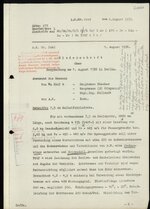
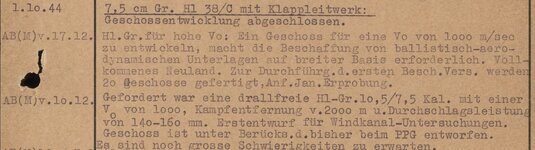
Different ways to square the circle of the HEAT shells not being that good when firing from the rifled guns. One approach involved the introduction of the shell that has the expandable fins (Klappleitwerk in the doc below); the development is finished (with what results - it does not say). The way of avoiding the rotation by the rifling must be found (drallfreie = non-rotatting). Another thing that was mooted was the very high MV for the HEAT ammo, 1000 m/s; that is commented as being the 'uncharted territory' (Vollkommenes Neuland). A way to have that from the 105mm howitzer was supposed to be the under-calibre (10,5/7,5 Kal.) shell with discarding sabot (TS).
The last sentence says that big problems (grosse Schwerigheiten) still lay ahead.

10001.jpg
 
Last edited:
I notice that:
- these guns are extremely similar in length and ballistics as the French 700 m/s gun, albeit with a 6.8kg proj instead of 6.4kg
- the propellant mass is considerably greater, 600 grams more than the French gun at 685 m/s and 500 more at 700 m/s.
- the service pressure is around 260 MPa, more in line with French 640 m/s class guns and 75mm M3, while French 700 m/s class gun runs at 290 MPa. This may explain the greater propellant mass along with the heavier projectile. When tested at 290 MPa, the German gun achieves 700 m/s.

Speaking of pressures, it seems that in the end the French 90mm AA gun which served as the basis for 1940 tank and AT guns was a 260 MPa class weapon. A 270 or 290 MPa class weapon like US hot load 90mm and British 17 pdr could yield some more power (or keep same power with a smaller case and/or shorter barrel).
The long 5cm seems to be under-loaded. Normal working pressure was just 2550 kg/sq cm, or just a tad under 250 MPa. While loading it to go to 290 MPa will not put in in the league of the Soviet, or even the British 57mm, seems like it would've helped a good deal. Probably being loaded just to 840-900 grams (smaller number is for the Pz.Gr. 40/1, with the heavier and better streamlined projectile) was too feeble? The Soviet 57mm was at 1400g, for comparison.
 
Just some thoughts
Different ways to square the circle of the HEAT shells not being that good when firing from the rifled guns. One approach involved the introduction of the shell that has the expandable fins (Klappleitwerk in the doc below); the development is finished (with what results - it does not say). The way of avoiding the rotation by the rifling must be found (drallfreie = non-rotatting). Another thing that was mooted was the very high MV for the HEAT ammo, 1000 m/s; that is commented as being the 'uncharted territory' (Vollkommenes Neuland). A way to have that from the 105mm howitzer was supposed to be the under-calibre (10,5/7,5 Kal.) shell with discarding sabot (TS).
The last sentence says that big problems (grosse Schwerigheiten) still lay ahead.
I have a personal problem with HEAT shells in WW II.
Even in the 4-5 years of WW II there was a lot progress made in the design of HEAT Shells and fuses. There seems to have been a lot more made between 1945 and the mid 50s. Let alone what was done from the late 50s onward.
WW II showed it would work but not a lot more without development. Which it got as the small AT guns (Under 90mm in the west) could not really deal with the Soviet boogie man (JS III) unless very very close and using Tungsten Carbide. HEAT was the only avenue for AT weapons that were less that 3.5-4 tons and WW II had shown that those were not actually usable as towed AT guns. A lot of recoilless rifles in the late 40s and 1950s. A lot of Primitive wire guided AT Missiles.
British gave up on HEAT during WW II as you know and never came back to it (unless in the last 10-15years, I haven't been paying attention).
Expanding (flip) fins didn't work well in low pressure mortars. I would guess they would work even less well in a high pressure gun barrel. Or even in a moderate pressure gun barrel. The idea has merit, the execution has problems, any problems with the fins or any problem with uneven/unequal timing on the expansion of the fins means a miss at medium/ long range. The Americans used slipping rotating bands to cut down on the RPS of the shell. French in their 105mm tank guns tried putting an inner shell inside the rotating outer shell separated by ball bearings. They accepted a smaller diameter shaped charge that was not spinning much rather than a larger cone that was spinning. Maybe someone has the specs, I don't. A lot of the low pressure 90mm guns of the 50s and 60s used shaped charges and fin stabilization but their materials and research ( high speed cameras, wind tunnels, etc) was better than what could be done in WW II.
Trying to use high velocity HEAT rounds means you need really, really, really good fuses. Most (all?) modern HEAT ammo uses a longer stand off distance the WW II. Higher impact velocity means less time for the fuse to function and more crush to the nose cone (less stand off distance). But slow shells have problems hitting. Firing a 75mm shaped charge out of a 105mm barrel means you have to deal with spin, you have to deal with inaccuracy due the discarding sabot/s and you now have a small diameter shaped charge cone. They had to find out what did not work in order to concentrate on what did.
We have hindsight, we have a much better understanding of what didn't work and why.
HEAT ammo was somewhat effective from smaller guns (75mm and bigger) against light (maybe medium? ) tanks.
Trying to fire something the size of the German Stick bombs (145mm to 160mm or inner diameter and outer?) that weighed 8.6kg with 2.43kg of HE at even 400ms is going to be quite a trick and require a weapon larger than a 10.5 cm howitzer. And the 180mm penetration is at 0 degrees. Things got a lot better in the 50s, 320-360mm penetration from 90mm shells of much less weight, but that requires time travel.
The long 5cm seems to be under-loaded. Normal working pressure was just 2550 kg/sq cm, or just a tad under 250 MPa. While loading it to go to 290 MPa will not put in in the league of the Soviet, or even the British 57mm, seems like it would've helped a good deal. Probably being loaded just to 840-900 grams (smaller number is for the Pz.Gr. 40/1, with the heavier and better streamlined projectile) was too feeble? The Soviet 57mm was at 1400g, for comparison.
I am sure you can hot load the German 5cm but you may not get the results you think.
A lot going on with internal ballistics. I think the weights of propellent we find in many reference books are interesting but I sure don't know enough about the powders to really get anything them out of them. Digl R P is double base propellent but different batches or sub types can have different grain sizes (diameter and length of the sticks and/or different diameter of the tube in the middle of the 'stick'.) I am assuming (but could be wrong) that all Digl R P has a very similar heat content (calories per gram) to each other or they would have called it something else (Ngl R P ?) but the different grain size (or flakes?) can significantly alter the burn rate as can additives and/or deterrent coatings.
For US shooters that hand load there is a series of powders that were originally made/marketed by Dupont, company has sold the power division and it has been resold several times(?) but some of the original over 100 year old recipes are still being made/sold. I am getting there ;)
Many of these Dupont powders had a 4 digit code or name like 3031 or 4895 and many of them were the same basic power but varied in grain dimensions and coatings. The slower burning types could fill a 30-06 case and have the bullet rammed in compressing the powder and be save. Some of the faster burning types would blow the gun up if loaded that way and one or two of the faster types would blow the gun up if you even the case 3/4s full. All had about the same caloric value, what changed was the burning rate.
I don't know about now, 20-30 years ago nobody knew how much pressure smokeless powder would generate. They kept blowing up the test chambers at well over 250,000psi.

When trying to compare calibers we have to be careful of actual bore size. A 5cm gun has a bore area of 19.63 sq cm. a 57mm gun has a bore area of 25.5sq cm. Which means the bigger gun as about 25% more area of shell that the gasses are acting on. This is the whole idea behind the discarding sabot. More area for the propellent gases to act on rather than trying to funnel a lot of gas through a narrow long barrel (tube).

In the case of the 5cm AT gun firing a .85kg APCR projectile compared to a 2.05kg projectile the light projectile may just accelerate down the barrel much faster.
If I load a bullet that is about 1/2 weight of my normal 6.5 bullets I can get higher velocity, I can use more powder safely, but the last 10% of the powder charge may not get me much unless I change the actual powder/burn rate. Bullet sort of outruns the slow powder ;)
Smokeless powder is strange stuff, it burns faster the more pressure it is under. So if I use slow powder behind a light bullet I don't get to the pressures I get with the heavier bullet and the entire pressure curve inside the barrel is off. Light bullet may leave with only 4000psi pushing it instead of 6-7000psi. Still moving faster than the heavy bullet but if I had used more (only a little) of a faster burning type of powder I would have a pressure curve with more pressure total acting on the light bullet.
Without knowing what some countries were using it is hard to guess what differences in powder charges really mean. With some research we may be able to find the caloric value but not the burning rate.
Just a note, the powder used in 20mm Oerlikon ammo is faster burning than the powder used in .50 cal machine gun ammo. That big bottle neck case needs slower burning powder to perform well. It was a change in powder that gave the .50 cal an extra 350-380fps velocity. Trying to add more of the 1920s/early 30s powder would have just blown the guns up.
 
I have a personal problem with HEAT shells in WW II.
Even in the 4-5 years of WW II there was a lot progress made in the design of HEAT Shells and fuses. There seems to have been a lot more made between 1945 and the mid 50s. Let alone what was done from the late 50s onward.
WW II showed it would work but not a lot more without development. Which it got as the small AT guns (Under 90mm in the west) could not really deal with the Soviet boogie man (JS III) unless very very close and using Tungsten Carbide.
You have a personal problem with the HEAT shells in ww2 because the ones from the 1950s and under 90mm were not capable of dealing with JS3? That is a new level of petty :)

When trying to compare calibers we have to be careful of actual bore size. A 5cm gun has a bore area of 19.63 sq cm. a 57mm gun has a bore area of 25.5sq cm. Which means the bigger gun as about 25% more area of shell that the gasses are acting on. This is the whole idea behind the discarding sabot. More area for the propellent gases to act on rather than trying to funnel a lot of gas through a narrow long barrel (tube).

The 5cm, at least what the Germans had, will have a really hard time to come close even to 90% of what a good 57mm was capable for. The realistic limit was probably pouring in up to 950, then 1000, then 1050 and lastly 1100 grams, and see what loadout still safely works and what is worthwhile.
But the main trick for the 5cm idea to really give the best mileage is the early introduction, say at least late 1939, while not fiddling with the short version at all. Even better if it is actually 55mm, or 57mm (= at least the equivalent of the 6 pdr).

The idea has merit, the execution has problems, any problems with the fins or any problem with uneven/unequal timing on the expansion of the fins means a miss at medium/ long range. The Americans used slipping rotating bands to cut down on the RPS of the shell.

Soviet 122mm HEAT shell for the post-war howitzer, with slip rings and pop-out fins: schematics1, schematics2
 
Last edited:
You have a personal problem with the HEAT shells in ww2 because the ones from the 1950s and under 90mm were not capable of dealing with JS3? That is a new level of petty :)
Maybe I wrote that wrong.
What I am trying to say is that the AT guns of 90mm and under (with any type of ammo) were not capable of dealing with the JS III in 1945-46 and as a result the western nations poured a lot money into HEAT shell research (or followed late WW II research, not production) to get something that would work. They succeeded and got good HEAT shells.

What my personal problem is that people try to back date the performance of the 1950s HEAT rounds and offer up HEAT shells as a solution to WW II problems. WW II HEAT shell functioned but the penetration was not really that good. US claimed about 3 1/2 inches from a HEAT round fired out of a 75mm Howitzer which is good for the Howitzer. But not much better than a AP shot fired from a 75mm Field gun. Problem with this comparison is that the field gun was easier to hit with (higher velocity) and against a tank with 50-75mm armor the AP shot is probably more lethal. HEAT rounds need a certain amount of over penetration in order to cause damage inside the tank/AFV. IF a 14-16lb 75mm shot/shell succeeds in making through 50-75mm of plate (sloped) there is the steel from that hole flying around inside the tank even if the projectile barely makes to the rear wall ;)

Even better if it is actually 55mm, or 57mm (= at least the equivalent of the 6 pdr).
This is probably the best solution. The German 5cm was around 60 calibers in length and is within a few centimeters in length to the British 6pdr with it's longer barrel. Much longer that the short barrel 6pdr (43 caliber barrel). Penetration goes up with diameter of the shot at the same velocity.
Soviet 122mm HEAT shell for the post-war howitzer, with slip rings and pop-out fins: schematics1, schematics2
And we are back to using 1960s technology (aerodynamics, HEAT warheads, and manufacturing) to say what people could have done in 1943-44.
And we don't really have a good idea on how well the Soviet 1960s shells actually worked. As in what was the dispersion at 1000meters or what was the expected chance of a first round hit or a 2nd round hit at 1000meters ;)

From Wiki on the older M-30 122mm Howitzer.
During and after World War II new types of ammunition were developed, notably HEAT shells. The World War II era HEAT shell BP-460A could pierce 100–160 mm of armor at 90°; the post-war BP-1 managed 200 mm at 90°, 160 mm at 60°, and 80 mm at 30°.
And the M-30 managed 335ms velocity on the old HEAT, much less than it could get using standard HE rounds. Overspin or fusing problems? or both?

Soviets didn't always make the best choices. Like the 73mm 2A28 Grom gun used in the BMP-1.
 
The variations in composition, size and shape of smokeless powders existed back in the black powder days too. Up to mid 19th century the tendency was for the smaller calibre rifles to use finer grain 'rifle' powder whilst the big bore muskets used coarse 'musket,' powder. Once the general issue rifle muskets arrived the weighty conical bullets needed a coarse powder to maintain a slow burn, keeping the heavy projectile accelerating to a useful speed. Personally I have also observed that very light versions of the base expanding bullets needed a fine powder too to make them kick open rapidly to engage the rifling, otherwise the gases would blow by the bullet. But that is purely a target shooting issue and the quick burning powder left the bullet slow and light so very vulnerable to the wind. Wonderful at closer ranges in still air but useless with any real wind.

In black powder artillery we see the issue being that period design and metallurgy of the guns had limited the available power. Even conventional coarse cannon powder began the deflagration too quickly causing immense pressure spikes at the beginning as the shell began to moved forward. The older solution was to build heavier cannon but this was proving impractical in service and the huge weight making them almost immobile on period roads. The later period solution was to slow the rate of burn. Either by slow partly carbonised 'brown powder' or by golf and tennis ball size solid powder chunks and then pressed solid powder in regular shapes and with a variety of through holes. All to control the rate of deflagration to a known speed and duration which gave a lesser and known variation in pressure in the chamber and barrel with permitted either lighter guns for the same performance (handy for necessarily horse pulled speedy field artillery) or more performance from larger guns, especially in fixed positions and shipboard.

The next step, other than generally improving the quality and clean burning of the powders, was to seek means to consciously seek a known speed of burn and variation in the rate of burn as the powder deflagrates and that took us down the path of solid black powder charges which allowed the shape of the charge to be varied in a known manner. Coinciding with breech loading metal cased ammunition. Frequently with a hole down the middle of the solid rod for the rod burning outwards from the hole with an increasing surface are as it burns. Or a rod smaller than the case allowing the rod to burn inwards and reduce the rate of burn as it burns. Just as they then were experimenting with differing shapes of rod to give even more control of the burn smokeless powder reappeared on the scene. I say reappeared as the Austrians had issued con Lenk gun cotton charges for their rifle muskets in the 1860s but the factories tended to go bang too often.

However, that research into controlled deflagration by shape continued for rocket engines and, had smokeless powder not become the norm, then that research would have been employed in firearm ammunition. Who knows what any of the modern solid fuel rocket technology items might then have been also employed in firearms. With the proviso that rockets do not care about fouling but firearms definitely do.

My point being that the issues of differing smokeless powders were paralleled in the past by black powders too. That period was not so far in the past for WW2 ordnance science as to be out of mind. After all many of the early breech loading and magazine rifles were using, or designed to use, solid black powder in their conventional brass cased centre fire ammunition eg Mauser M1877, Lee Metford and Schmidt Rubin m1889. The scientists of the OP period could see that controlled burning allows controlled pressures and the shape, size and composition of the 'fuel' could be adapted to the demands of the projectile and thus the strength and weight of the weapon and it's carriage/mounting and size.

As Jean-Baptiste Alphonse Karr said in 1849 "Plus ça change, plus c'est la même chose".
 
Last edited:
Which it got as the small AT guns (Under 90mm in the west) could not really deal with the Soviet boogie man (JS III) unless very very close and using Tungsten Carbide.
The upper side armor of the IS-3 (damn, that's the ONLY CORRECT designation for this tank!) could be penetrated even by a 7.5 cm KwK 42 AP shell from a distance of 1600 m (at 60°). And a single successful hit from a 100 mm shell in the welded joint in the middle of the "pike nose" of a mass-produced IS-3 could lead to the complete destruction of the hull. The real combat value of these tanks is still a subject of heated debates.
 
What my personal problem is that people try to back date the performance of the 1950s HEAT rounds and offer up HEAT shells as a solution to WW II problems.
I guess that some people will indeed try to do that. Hopefully not on this forum.

WW II HEAT shell functioned but the penetration was not really that good. US claimed about 3 1/2 inches from a HEAT round fired out of a 75mm Howitzer which is good for the Howitzer. But not much better than a AP shot fired from a 75mm Field gun. Problem with this comparison is that the field gun was easier to hit with (higher velocity) and against a tank with 50-75mm armor the AP shot is probably more lethal. HEAT rounds need a certain amount of over penetration in order to cause damage inside the tank/AFV. IF a 14-16lb 75mm shot/shell succeeds in making through 50-75mm of plate (sloped) there is the steel from that hole flying around inside the tank even if the projectile barely makes to the rear wall ;)
The 75mm howitzer weighed less than half of what the 75mm gun weighted. Even the ZiS-3 weighted double as much as the Pack Howitzer (capitals are because of a respect). That math favors the howitzer as far as the people handling it are concerned.

And we are back to using 1960s technology (aerodynamics, HEAT warheads, and manufacturing) to say what people could have done in 1943-44.
The execution was from the 1960s.
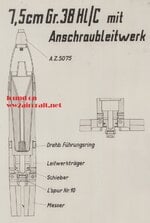
The idea and experimenting with different shells that had the slip rings and pop-out fins is German from ww2. They made much more of the experiments on the long HE thin-walled shells for the 'normal' artillery, that had the slip rings and pop-out fins; these also looked a bit different, with fins extending backwards.

slipRing.jpg

Slip ring is the 'Drehb. Fuerungsring'.
 

Users who are viewing this thread

Back