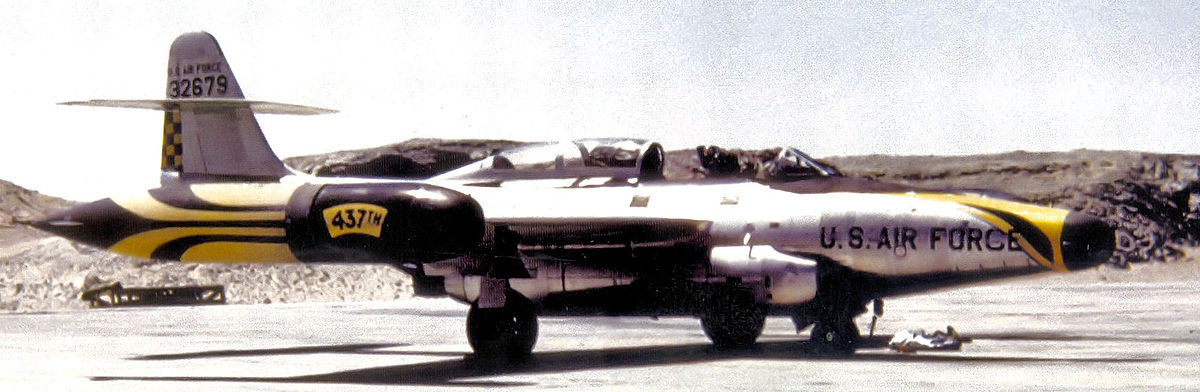
Are HVAR and RP-3 usable in air to air combat against bomber? (1 Viewer)

Ad: This forum contains affiliate links to products on Amazon and eBay. More information in Terms and rules

mig-31bm

Airman 1st Class
172
60
Mar 28, 2014
Apparently, R4M rocket increased the combat effectiveness of German Me-262 by over 3 times
Me_262_with_R4M_installation.jpg
2.png


US and UK also put rocket on their fighters, most notably the HVAR and RP-3 rocket, but it seem like they are only used in air to ground role. Is this because German simply doesn't have enough bomber or fighter escort for these rocket to be used? or these rocket simply can't be used in air to air role like R4M?
HVAR rocket.png

R8 rocket.png
 
I read of a case in which TBM's were flying at night over the area of Okinawa still held by the Japanese. They would reach the proper area and be told when to shove the nose down and fire their HVAR. One night they got a radio call that there was a bandit in area and to clear out. The pilot of one TBM see an airplane, visible by its exhaust, proceeding through the combat area. He called over the radio asking why he had to clear out when there was another guy still in there. The response was "You idiot! That's the bandit!"

So the TBM pilot flew over behind the bandit and salvoed his HVAR. BOOM!

That is the only case I can recall where where HVAR was used air-to-air in WW2. HVAR was not intended as an air-to-air weapon. The rockets used on F-89, F-94, and F-86D were 2.74 inch folding fin rockets designed for air to air at high speeds - and which when used on helicopters in Vietnam for air-to-ground were not considered to be very accurate.

I do recall reading of A-1 Skyraiders firing HVAR at Migs over Laos when they were attacked but I don't think they hit anything.
 
Perhaps, the ground?
There were pilots who confessed they were surprised when they were even able to do that much.

I read that in one of the first engagements for the HueyCobra, at Hue, there was a machine gun post firing away from the side of a hill. The AH-1 made a fighter type high speed pass and fired two 2.75 in rockets. Missed. They did it again and missed. So with the ground troops getting vocal over the radio about how long this was taking, the pilot parked the helicopter in front of the machine gun, and with the gun blazing away at them, very carefully took aim and fired all the remaining rockets in the canister at the nest. Vaporized it.
 
The unguided air-to-air rocket will probably always remain a niche solution.
Was "Mighty Mouse" on F-89 the last serious attempt?
Define serious?

Missile bay doors on the F-102
AIM-26A_3.jpg

12 Rockets total which is not very serious given the lack of accuracy of these things.
English Electric Lightnings had an option for 44 2in (51mm) rockets but they went in the area that the missile electronics went.
ightning_F.53_418_G-AXEE_Kuw_LEB_07.06.69_edited-5.jpg

Doors either side of the nose gear. This supposed to be a Saudi MK 53. The rockets in the doors are a different size than the rockets in the pods?

DH 110 Sea Vixen had 14 round launchers each side of the nose gear on the MK I version.

Some others may have had them.
I don't know who had them last.
 
Last edited:
I seem to remember reading of a WWII rocket kill but can't remember the specifics so won't bore you further. I'm sure they could be used as unguided AAMs, and if I'm the rocket barge I'm going to want to unload a lot of weight quickly anyway, even though I'm stuck with the pylons.

As an aside, I always loved/was baffled by those overwing pylons, it's like "do we have room here? there, stick in a pod" kind of thing. Very MacGyver.
 
Define serious?

Missile bay doors on the F-102
View attachment 850116
12 Rockets total which is not very serious given the lack of accuracy of these things.
English Electric Lightnings had an option for 44 2in (51mm) rockets but they went in the area that the missile electronics went.
View attachment 850117
Doors either side of the nose gear. This supposed to be a Saudi MK 53. The rockets in the doors are a different size than the rockets in the pods?

DH 110 Sea Vixen had 14 round launchers each side of the nose gear on the MK I version.

Some others may have had them.
I don't know who had them last.
Wow. I never knew about rockets in the bay doors. Thank you for this picture.

Aren't Electric Lightning's overwing pods for air-to-ground rockets?
 
I seem to remember reading of a WWII rocket kill but can't remember the specifics so won't bore you further. I'm sure they could be used as unguided AAMs, and if I'm the rocket barge I'm going to want to unload a lot of weight quickly anyway, even though I'm stuck with the pylons.

As an aside, I always loved/was baffled by those overwing pylons, it's like "do we have room here? there, stick in a pod" kind of thing. Very MacGyver.
Some VVS pilots claimed successful kills with RS-82. If memory serves me right, one of them was Arseniy Vorozheikin, who allegedly shot down or damaged one Bf 109 with a rocket salvo and shot down another one with guns in a quick battle near the home airfield. His aircraft was an I-16.
 
Wow. I never knew about rockets in the bay doors. Thank you for this picture.

Aren't Electric Lightning's overwing pods for air-to-ground rockets?
Yes. The British (and a number of other NATO countries) adopted the French Thomson Brandt 68mm rockets which are different than the US 2.75in (70mm) rockets.
Both of these families get very confusing as over time (1948 for the American and early 50s for the French) they have added more styles of warheads and changed rocket motors several times. The American 70mm rockets are now ground attack (or support ie flares, illumination, smoke) and the increased power rocket motors (higher burn out speed) is now used for greater stand off range.
The rockets turned out to be not a very good idea even against large 500mph jet bombers. By the time they got more powerful rocket motors for better long range performance the Sidewinder missile (and clones) was proving to be a more cost effective weapon.

Not saying it is impossible to use such rockets for air to air but you need a huge load of luck or very large slow targets.
Early attempts to use the US rockets to arm helicopters failed because the rockets had been designed to be fired from 500-600mph jets and they did not stabilize well when fired from slow or hovering helicopters. Pop out fin rockets also did not do well the rotor down wash of slow helicopters. Things got better when the helicopters were moving fast but that created problems of it's own. Using more powerful engines and using new nozzles that imparted some spin instead of relying on fins alone also helped.

After Aug 16th 1956 many in the US wondered if they had been sold a snake oil weapon with the Unguided rockets.


Granted the F-89s had problems but the vaunted radar systems did not work, repeatedly. The newest, most advanced system required the removal of the older gun sight and the fuses did not work as intended. It was a miracle that nobody on the ground was killed.
 
Hello to All,
A few years back, a friend and I worked on an aerial combat video game, my friend Guido dealing more with the IT side while I was the "air enthusiast" half for the duo. We did some research on the matter of "aerial rockets" and had great fun learning about the "Battle of Palmdale" To make it short, we shared the opinion that, impressed by R4M results against their own bombers, the US pressed on the development of a similar weapon (the FFAR) before realizing it just was a dead end. Results obtained with the R4M were subjected to a set of circumstances : change one of these and the end result is ... very different. As FFARs designs improved, they found a more proper application in air-to-surface warfare, first as an area saturation weapon before futher development offered them enough accuracy (and guidance) to allow single shots to be considered.

Besides (non exhaustive list) the F-86D[24xFFAR], F-89D[102], F-94C[48] and F-102A[24],and F-8C[32], boarding FFARs for air-to-air combat also involved the Sea Vixen Mk1 (UK), the CF-100 Mk5[58] and the Mystere IVN (Matra 101 [55x68mm]).

Other designs incorporating built-in FFAR launchers had more to do with air-to-surface warfare : SE2140 Gronard[32], Mystere.IVA (Matra 101[55]), Vautour (2xMatra 104[112@]), Super-Mystere SMB2 (Matra 105[35]), Etendard IV (Matra 106[35]) and Bréquet 1100 (Matra 107 [40]), not forgetting the HF24 Marut (Matra 103[50]), EE Lightning Mk53 and FFA P-16 (Matra 10?[44]) - If I missed mentioning any design [no doubt I did...], all corrections, additions or suggestions are most welcome

Then remained a "mystery" : did early design of the Sukhoi Su-7 also involved an internal air-to-ground rocket pack ? I sort of remember to have seen a suggestion to that effect sometime somewhere, but failed to corroborate. Obviously, it never reached production;

Anyway, the disturbance generated by such a lump extending into the airflow was soon abandoned in favour of external pods

Regarding the casual use of HVAR in air-to-air mode, I sort of remember a Squadron of Australian Meteors en route to a ground target of some kind. Intercepted by North Korean MiGs, they fired their HVARs toward the interceptors facing them with ... ??? results

Back to the original issue : to imagine that at any given time the USAF relied exclusively on FFARs for air defense is ... baffling.

Best regards to All, Pierre Deveaux, Brussels, Belgium
 
The primary reasons for adopting the air-air rockets for interceptors were the increase in capability of on-board fire control systems carried by the bombers, the relative speeds of the target and interceptor, and the importance of shooting down bombers carrying atomic/nuclear bombs - not in order of importance.

US on-board fire control for their bombers' self-defense systems became good enough - for a brief period (10 years?) before effective IR and radar guided air-air missiles became available - that there was concern a significant number of the gun-armed interceptors would not survive long enough to shoot down the enemy bombers during a tail chase. Also, it had been shown that guns guns of .50 cal and 20mm did not assure a single-pass kill agains bomber sized targets. In theory this concern was confirmed based on operational research and post-war tests performed by the USAF.

Subsequent post-war tests with rocket armed interceptors - firing their rockets in large numbers at a single bomber - showed a significantly better chance of killing a large and relatively non-maneuverable bomber. The range of the rockets out-ranged the defensive guns of the bomber in a tail chase, while in a single head-on pass the rockets were shown to have ~5x the chance of achieving a kill. The odds of getting a kill with 1 hit due to the size of the explosive warheads (3.5 lbs of HE) was a big plus as well.

It should also be pointed out that the USAF (and I believe also the UK and French) interceptor pilots were expected to ram the atomic/nuclear bomb armed bombers if required, so closing to point blank range if necessary to assure a hit was considered acceptable.

The above - in concert with the perceived effectiveness of the Luftwaffe air-to-air rockets attacks on US bombers in WWII - convinced the USAF to adopt the 2.75" Mighty-Mouse FFAR (Folding Fin Aerial Rocket) as their primary dedicated interceptor weapon.

[edit: Changed 6 lbs of HE to 3.5 lbs of HE, the total warhead weight was 6 lbs in the 1950s era Mk.4 Mighty-Mouse.]
 
Last edited:
Hello ThomasP,
Thanks for correcting me or setting the air-to-air FFAR in perspective. All the best, Pierre
 
FWIW the report below is dated from 1951 and looks at the then current vs the next generation of air defense systems planned and/or speculated upon. It is an interesting read.

The report mentions an additional factor in the use of the 2.75" FFAR for the interceptors, said factor being the then operational airborne and ground based FC radars possessing virtually no low altitude targeting capability.
 

Attachments

  • US Air Defense Study 1951.pdf
    18.4 MB · Views: 20
FWIW the report below is dated from 1951 and looks at the then current vs the next generation of air defense systems planned and/or speculated upon. It is an interesting read.

The report mentions an additional factor in the use of the 2.75" FFAR for the interceptors, said factor being the then operational airborne and ground based FC radars possessing virtually no low altitude targeting capability.
AAAH ! Facts (or their scientific review) is a zillion times better than comment ! :salute:
 
:) I agree. Unfortunately, much of the information i have gathered over the years is from before the internet became a big thing, and then before I ever planned on posting an a website/forum (I have been on the internet since the mid-1990s but did not post anywhere, until I did so on this forum back in 2019). So I often quote from my notes.

re "The primary reasons for adopting the air-air rockets for interceptors were the increase in capability of on-board fire control systems carried by the bombers, the relative speeds of the target and interceptor, and the importance of shooting down bombers carrying atomic/nuclear bombs - not in order of importance."

I ran across a document addressing this issue about 10 years ago, and I remember that I downloaded it, but I cannot find it now - it may have been on my laptop that unexpectedly crashed on me about 6 years ago. :( I had only had that laptop for about 6 months and had made no back-up yet. :(:(

I think the document specifically addressing the use of rockets by interceptors was from the DTIC website, but am not sure. The document I posted above is from the DTIC website.

A bit off topic, but this document below might be of interest. There is another document that was a USAF/SAC study from about the same period, on the vulnerability of the continental US and our military installations when attacked by bombers carrying atomic/nuclear bombs. It covered quite a few aspects of the problem including the expected effectiveness (ineffectiveness?) of the interceptors of the time. I will try to find it again and post it here. {Found it! It is called "The Emerging Shield" - here is the link "https://apps.dtic.mil/sti/pdfs/ADA246702.pdf"]

Also a bit off topic, but the document below may be of interest. It addresses manned interceptors armed with atomic/nuclear tipped rockets and guided missiles - eg the MB-1/AIR-2A 'Genie' thru the GAR-11/AIM-26A 'Atomic Falcon' - along with the concepts and perceived effectiveness/problems involved.
 

Attachments

  • Nuclear Armed Interceptors 1951-63.pdf
    12.7 MB · Views: 27
Last edited:
Then remained a "mystery" : did early design of the Sukhoi Su-7 also involved an internal air-to-ground rocket pack ?
Definitely not. The Su-7 (as "pure" fighter) could carry only underwing ORO-57K launchers with S-5 rockets intended primarily for air-to-air use.
I sort of remember to have seen a suggestion to that effect sometime somewhere, but failed to corroborate. Obviously, it never reached production
The Su-7 (as a "pure" fighter, not Su-7B) reached mass production in late 1958, 132 were produced in 1958-1960, its design never included internal rocket launchers - from very early project development stages.
 

Users who are viewing this thread

Back