Brewster Buffalo - what is the verdict? (3 Viewers)

Ad: This forum contains affiliate links to products on Amazon and eBay. More information in Terms and rules

1786356683062.png

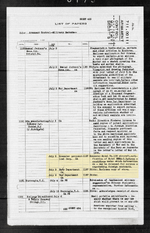
From Technical data digest, U.S. Army air forces v.7 no.24 1941 Dec 15
I found a copy:
1786358393819.png

1786358335511.png

1786358242293.png
 
Last edited:
Possibly this would be of some help. It is the index for most(?) of the aeronautical related technical documents held at Wright Field - which may be under the NASM umbrella of responsibility now. It is word searchable, and there are lots of documents listed under Brewster and F2A - maybe other designations and/or subject headings - I have not had time to go through it in detail yet. Unfortunately, most are not digitized yet, but more are being processed every day.
 

Attachments

  • NASM Wright Field Tech Doc Library Index.pdf
    1.6 MB · Views: 14
re
AHT also mentions a section of armour on both sides of the fuselage behind the pilot, which is not displayed in the above image. Interestingly the top-down image seems to indicate armoured glass above the pilot as well. EDIT: AHT also does not specify the thickness of the pilot's seat armour, which it mentions consisted of a plate aft of the seat. 4.25 mm, if accurate, is remarkably thin!
This is probably referring to what is usually called deflection plate. It usually consisted of an increased thickness of the skin plating, but it could also be a significantly thicker and separate aluminum plate fastened over a section of the fuselage skin. This was usually to deflect tha projectile away from a specific area or in order to start the projectile tumbling before it reached the interior armour - thereby increasing the effectiveness of the armour plate. Below is an example layout on a F4U. Note that the thickness varied depending on the aircraft and location, and whether it took the place of the original skin panel or if it was applied over the already existing skin. Sometimes it would simply be 2 skin panel panels applied one over the other, usually it was a thicker replacement panel (10 SWG / 0.128" for example) at a minimum, but depending on the airframe some of the plating applied over the skin panels it could reach upto 3/8". I think the thickness of the large deflection plate in front of the cockpit on the F4U diagram below was 3/16".
F4U-1C:D armour & SSFT ACP Aug'45.jpg


re
Interestingly the top-down image seems to indicate armoured glass above the pilot as well. EDIT: AHT also does not specify the thickness of the pilot's seat armour, which it mentions consisted of a plate aft of the seat. 4.25 mm, if accurate, is remarkably thin!
The hashmarked square that appears to be over the cockpit is the area the seat armour would appear to occupy if you look at an X-ray of the airframe from the top down, in a similar manner to how the pilot's seat bottom armour appears in the F4U diagram above.
 
Last edited:
From Technical data digest, U.S. Army air forces v.7 no.24 1941 Dec 15
https://catalog.hathitrust.org/Record/002138627 I found a copy:
Book Library

Great finds, Simon. A few things stand out right away: this digest is calling the F2A-2 and A-3 the Buffalo II & III respectively. The glossary list from 1943 called the 339B the Buffalo II & III. Granted, it did imply them as names for the A-2 and A-3 as well. Given the date of the digest, it is also clear that the "439" being referred to here is not the 339-23, which older post-war literature has a tendency of calling the 439. It almost sounds like the "439" referred to in both the 1941 digest and the 1943 glossary list is in reference to a later batch, or batches, of 339Es. However I remain sceptical that Brewster would have called them 439s, and to me it sounds more like an unofficial designation assigned by someone else.

Going off what Jim Maas has written, the three-number designations used on the export versions of Brewster aircraft may have originated with the Brewster Export Corporation, and they appear to have consisted of the ordinal number of the product being offered for export that year, followed by the last two digits of the year the product was first offered for export. The XSBA-1 was offered for export as the Model 138, i.e. the 1st product offered by the Brewster Export Corporation for sale in 1938.* An unrealised scout fighter variant of the XSBA-1 was offered in 1939 as the Model 139, followed by the F2A-1 as the Model 239 and the F2A-2 as the Model 339. As is known the latter was sold in a number of different variants, and so in that case the numbers were followed by ordinal letters denoting the sequence of 339 variants sold, 339A being the first (changed to 339B as per new Belgian spec requirements very soon thereafter). Apparently in 1941 Brewster changed the numbering system, possibly as a result of the US government directing companies to use block numbers to identify subtypes, which gave birth to the 339-23 being used as the designation for the final Dutch order. Without the change perhaps the 339-23 would've been called the 439. Then again it might've been called the 339F. After all, while having the longer nose of the F2A-3, it was much closer to an F2A-2 in configuration than it was to an A-3. Interestingly all the mentions of a "Brewster 439" on the NARA online catalog are from captured German records, again alluding to the Germans (and the Brits?) calling some version of the 339E the 439.

Another sticking point is the claim in the digest, and the implication in the glossary list, that the US Navy called the F2A aircraft Buffalo Is, IIs and IIIs. The name Buffalo originated with the British in 1940 or '41 to refer to the 339E. I recall only ever seeing one contemporary US military document calling the aircraft Buffalo, and that was a USMC report from 1942 or '43.

Possibly this would be of some help. It is the index for most(?) of the aeronautical related technical documents held at Wright Field - which may be under the NASM umbrella of responsibility now. It is word searchable, and there are lots of documents listed under Brewster and F2A - maybe other designations and/or subject headings - I have not had time to go through it in detail yet. Unfortunately, most are not digitized yet, but more are being processed every day.

re

This is probably referring to what is usually called deflection plate. It usually consisted of an increased thickness of the skin plating, but it could also be a significantly thicker and separate aluminum plate fastened over a section of the fuselage skin. This was usually to deflect tha projectile away from a specific area of in order to start the projectile tumbling before it reached the interior armour - thereby increasing the effectiveness of the armour plate. Below is an example layout on a F4U. Note that the thickness varied depending on the aircraft and location, and whether it took the place of the original skin panel or if it was applied over the already existing skin. Sometime it would simply be 2 skin panel panels applied one over the other, usually it was a thicker replacement panel (10 SWG / 0.128" for example) at a minimum, but depending on the airframe some of the plating applied over the skin panels it could reach upto 3/8". I think the thickness of the large deflection plate in front of the cockpit on the F4U diagram below was 3/16".
View attachment 890268

re

The hashmarked square that appears to be over the cockpit is the area the seat armour would appear to occupy if you look at an X-ray of the airframe from the top down, in a similar manner to how the pilot's seat bottom armour appears in the F4U diagram above.

Thank you for the insight Tom. I do believe I've gone through that file in the past but it's good that you brought it up. The Smithsonian's Online Virtual Archive doesn't have the contents of the listed Brewster-related boxes in nearly the level of detail as that file does.

Regarding the pilot's seat armour, the reason 4.25 mm (over 1/8") strikes me as thin is this: In early 1940 the Finns ordered 44 sets of 6.5 mm (~1/4") armour plates from Diebold Safe & Lock Company, with the Brewster Aeronautical Corporation functioning as the middleman. A payment of $2,640 was made to Brewster at the turn of April-May and the plates were shipped as far as I can tell in July (shipment inspected and approved 12 July), arriving in the arctic port of Liinahamari in Finland's Petsamo some time later. In September the plates were tested extensively in Finland and found to be no good: many different calibres were fired at them from a range of 50-150 metres (about 55-165 yards), and many rounds as small as 7.62 - 7.7 mm (.30 - .303 cal) penetrated the armour even at considerable range. The plates were not installed into the aircraft and claims were filed for quality not being as advertised, along with the presence of other defects, and the belatedness of the shipment. The Finnish State Aircraft Factory was tasked with designing a better alternative and consequently the aircraft were fitted with 10 mm (~3/8") plates directly onto the pilot's seat. Interestingly in one of the documents I found in the Finnish archives, Brewster claimed the seat could handle an extra weight of only if memory serves in the ballpark of 30 or so kg (~66 lb), but the 10 mm plates weighed around 60 kg (~132 lb). Would be interesting to know what the deal with that was, and what workaround, if any, was made. At any rate, in January or February 1944 the Finns decided to remove even the 10 mm plates, because by that point it was just dead weight against the newer Russian fighters with their usual 12.7 and 20 mm armament.

So with all the above in mind, 4.25 mm seems wholly insufficient.

The Dutch plate behind the pilot in the 339C and D was btw according to the Dutch pilot's manual for both aircraft 6.3 mm. Here's a picture of it.

1786366570238.png


*EDIT: Incidentally here's the National Munitions Control Board approving the export of the Model 138 on 9 July 1938. Came across this a couple of weeks ago while looking for Brewster-related stuff from the NARA online catalog. The NA identifier is 87822480 and the page can be found through this link. Note that the Model 138 is referred to as a modification of the Model XSBA-1, which further reinforces Maas's interpretation that the three-number designations referred specifically to export versions of Brewster aircraft, and were not working designations applied to all Brewster aircraft at the time, as has previously been interpreted (the prime example of the latter interpretation being the claim that the Model 139 would've been the XF2A-1, which, as stated, it evidently wasn't).

1786368931098.png
 
Last edited:
Perhaps the 4.25mm is a typo and should read 6.25mm? This would be within tolerance for standard US made 1/4" plate thickness of 0.250" +.030"/-.010".
 
The USN Take, from Naval Aircraft, Record of Acceptances 1935-1946 Bureau of Aeronautics, Navy Department, Washington DC, NAVAER 15838

1 XF2A USN (Dec 1938), approved name Buffalo
92 F2A Holland, (72 Mar-Jun-41, 20 Jan-Apr 42), Model 339D, approved name Brit. Buffalo
11 F2A-1 USN (May-Dec 39), approved name Buffalo
44 F2A-1 Finland (Dec? 1939 - Feb 40), Model 239, approved name Buffalo
43 F2A-2 USN (Sep-Nov 40 plus 1 in Jan 41), approved name Buffalo
40 F2A-2 Belgium (most to Britain) (Apr-Jul 40), Model 339, approved name Buffalo
170 F2A-2 Britain (Dec 40 - May-41), Model 339E, approved name Buffalo
108 F2A-3 USN, approved name Buffalo
509 Total

XF2A-1/XF2A-2 used Wright XR-1820-22 (XF2A-1 converted to XF2A-2)
F2A-1 and model 239 used Wright R-1820-34
Model 339, 339D and E used the Wright GR-1820-G-105A
USN F2A-2, -3 used Wright R-1820-40

The USN calls the Brewster Bermuda the SB2A-4 the model 340-14, including the 142 ordered by NEI but built for the USN.

Only for the 1940 and later orders does the USN consider the PBY approved name to be Catalina, RAF Catalina marks start with PBY-5 = mark I. There were no F4F-2 and 2 XF4F-5, the Wildcat V being the FM-1

USAAF Report NO. WS-378 Airplane and Glider Acceptances, Factory Deliveries and Departures from U.S. by type, model and country. Based on contracts active as of January 1940, excluding Navy direct, Navy Lend Lease and Commercial. For period January 1940 to December 1942 inclusive. Prepared by Aircraft Delivery Unit, Statistical Control Office

Says Model 339 for Belgium, 339D for NEI, 339E for Britain, F2A-1 for Finland

RAF Census, end February 1943, Buffalo (no mark numbers), none on strength, 2 instructional, 59 category E overseas, 109 unaccounted for on evacuation, total 170.

RAF Serial Registers, the ex Belgian order are listed as Brewster 339 (AS serials), Brewster (AX serials), British order listed as Buffalo (both W and AN serials)

Performance Tables of British Service Aircraft, Air Publication 1746, dated August 1939 but data includes 1940/41 aircraft. The ranges of fighters are shown as ranges at maximum economic cruising power on the fuel available, after deducting fuel used in 15 minutes at maximum power at sea level. This allowance is for warming up and climbing to operational height.

MakerBrewster
NameBuffalo
Type1 Seat Fighter
EngineNumber
1​
MakeCyclone G105A
CoolingAir
PowerHorse Power
800​
At Height (feet)
17,100​
SizeSpan (feet, inches)35'
Length (feet, inches)26'
Height (feet, inches)12'
Wing Area (square feet)178 (nett)
MenCrew
1​
ArmamentForward Fuselage (a)Two 0.5 inch
Forward Wings (b)Two 0.5 inch
Rounds Per Machine Gun250(a), 500(b)
WeightTare (pounds)
4,495​
NormalWeight (pounds)
6,272​
Take Off (Over 50 ft) (Yards)190 (Ground)
Climb to Height (feet)
15,000​
Climb to Height Time (Mins)
6.3​
Service Ceiling (Feet)
31,000​
Maximum Speed (m.p.h)
313​
Max Speed Height (Feet)
18,500​
Cruising Speed (m.p.h)
255​
Cruise Speed Height
15,000​
Range (15 mins allowance) Miles
520​
Endurance (15 mins allowance) Hours
1.78​
Fuel for range, gallons
66.5​
Fuel for allowance, gallons
25.5​
Fuel (Total, Gallons)
92​
ExtendedOverload Weight (pounds) (Maximum Fuel)
6,588​
Maximum Fuel Capacity (Gallons)
133​
Service Ceiling
30,000​
FastSpeed (m.p.h)
255​
Height (feet)
15,000​
Range (15 mins allowance) Miles
840​
Endurance (15 mins allowance) Hours
3.28​
Fuel for range, gallons
107.5​
Fuel for allowance, gallons
25.5​
Fuel (Total, Gallons)
133​
EconomicSpeed (m.p.h)
180​
Height (feet)
15,000​
Range (15 mins allowance) Miles
900​
Endurance (15 mins allowance) Hours
4.9​
Fuel for range, gallons
101​
Fuel for allowance, gallons
32​
Fuel (Total, Gallons)
133​
 
When the British were examining the initial Buffalos they noted the US armour plate in place, but also said this would be replaced by British armour. I can't say for sure why, but I know they were suspicious of the Mohawk's low-quality armour plate when examining the first examples of those.

4-mm seat amour plate would match what was in place for the early-war Hurricane and Spitfire.
 
When the British were examining the initial Buffalos they noted the US armour plate in place, but also said this would be replaced by British armour. I can't say for sure why, but I know they were suspicious of the Mohawk's low-quality armour plate when examining the first examples of those.

4-mm seat amour plate would match what was in place for the early-war Hurricane and Spitfire.

Do you have a source for that, please? Was this part of the British Purchasing Commission's acceptance inspections at the factory?

I ask because armour plate was definitely installed in the Far East behind the pilot's seat. A degree of self-protection was built into the wing fuel tank during construction but I was unaware of other armour plate being installed at the factory.
 
No this was at the AFDU. The seat back armour was the only armour installed.

'This armour is American type and it is understood it is being replaced by British armour'
 
The USN Take, from Naval Aircraft, Record of Acceptances 1935-1946 Bureau of Aeronautics, Navy Department, Washington DC, NAVAER 15838

1 XF2A USN (Dec 1938), approved name Buffalo
92 F2A Holland, (72 Mar-Jun-41, 20 Jan-Apr 42), Model 339D, approved name Brit. Buffalo
11 F2A-1 USN (May-Dec 39), approved name Buffalo
44 F2A-1 Finland (Dec? 1939 - Feb 40), Model 239, approved name Buffalo
43 F2A-2 USN (Sep-Nov 40 plus 1 in Jan 41), approved name Buffalo
40 F2A-2 Belgium (most to Britain) (Apr-Jul 40), Model 339, approved name Buffalo
170 F2A-2 Britain (Dec 40 - May-41), Model 339E, approved name Buffalo
108 F2A-3 USN, approved name Buffalo
509 Total

Is there a date on when this was written? Also any chance you could post links to this and the other stuff you posted, or to the archives you found them from?
 
....

Performance Tables of British Service Aircraft, Air Publication 1746, dated August 1939 but data includes 1940/41 aircraft. The ranges of fighters are shown as ranges at maximum economic cruising power on the fuel available, after deducting fuel used in 15 minutes at maximum power at sea level. This allowance is for warming up and climbing to operational height.

MakerBrewster
NameBuffalo
Type1 Seat Fighter
EngineNumber
1​
MakeCyclone G105A
CoolingAir
PowerHorse Power
800​
At Height (feet)
17,100​
SizeSpan (feet, inches)35'
Length (feet, inches)26'
Height (feet, inches)12'
Wing Area (square feet)178 (nett)
MenCrew
1​
ArmamentForward Fuselage (a)Two 0.5 inch
Forward Wings (b)Two 0.5 inch
Rounds Per Machine Gun250(a), 500(b)
WeightTare (pounds)
4,495​
NormalWeight (pounds)
6,272​
Take Off (Over 50 ft) (Yards)190 (Ground)
Climb to Height (feet)
15,000​
Climb to Height Time (Mins)
6.3​
Service Ceiling (Feet)
31,000​
Maximum Speed (m.p.h)
313​
Max Speed Height (Feet)
18,500​
Cruising Speed (m.p.h)
255​
Cruise Speed Height
15,000​
Range (15 mins allowance) Miles
520​
Endurance (15 mins allowance) Hours
1.78​
Fuel for range, gallons
66.5​
Fuel for allowance, gallons
25.5​
Fuel (Total, Gallons)
92​
ExtendedOverload Weight (pounds) (Maximum Fuel)
6,588​
Maximum Fuel Capacity (Gallons)
133​
Service Ceiling
30,000​
FastSpeed (m.p.h)
255​
Height (feet)
15,000​
Range (15 mins allowance) Miles
840​
Endurance (15 mins allowance) Hours
3.28​
Fuel for range, gallons
107.5​
Fuel for allowance, gallons
25.5​
Fuel (Total, Gallons)
133​
EconomicSpeed (m.p.h)
180​
Height (feet)
15,000​
Range (15 mins allowance) Miles
900​
Endurance (15 mins allowance) Hours
4.9​
Fuel for range, gallons
101​
Fuel for allowance, gallons
32​
Fuel (Total, Gallons)
133​

This thread is going for three years and 290+ posts but real inspiration for my post is the spec sheet posted by Geoffrey Sinclair yesterday.
I did try a best estimate model of Brewster fighters couple of years ago. While F2A-2 and -3 are reasonably well documented (NAVAER spec sheets available at least), the earlier durect-drive Brewster 239 variants are not well covered.
There is what I got performance-wise from my model of Brewster 239 and F2A-3.

Best regards,
Yavor


55455679602_12f4204c9b_o.jpg


55457059360_52c0f80277_o.jpg


55456836369_22218d449a_o.jpg


55457059550_a8b6158015_o.jpg


55456671106_da2251dc62_o.jpg
 
re
. . . 4-mm seat amour plate would match what was in place for the early-war Hurricane and Spitfire.
My info may be wrong, but in my notes for the first armour installations on the Hurricane and Spitfire I have the primary armour behind the seat and head being a nominal 1/4" (often stated as 6mm but actually coming in at 6.25-6.4mm). The later additions of the lower/under-seat and leg armour are listed as a nominal 5/32" (4mm).


re the quality of the US & UK supplied armour plate

The US had some serious problems with poor manufacturing processes and consequent quality control of their thin armour plate in the pre- and early-war period, bad enough that they pretty much abandoned the thinner cemented / face-hardened and through-hard armour below a thickness of about 1.5", and instead focused on good quality homogeneous armour plate. The problems were present in armour plate for aircraft, tanks, and ships. I do not know that this is the cause of the problems with the US supplied plate under discussion here, but even good quality homogeneous plate will not stop RCMG bullets (whether Ball or AP) anywhere near as well as good quality face-hardened and through-hard armour plate designed to stop such projectiles - the thickness required usually works out to about 1.5 : 1 for homogeneous : through-hard.

The UK had a pretty good process for their thinner face-hardened and through-hard armour plate from the pre-war period through the war.

There was a study re the quality of US war-time armour - done after the war - that gave considerable detail on the subject. I think I posted it (or part of it) on this forum before, but I will try to find it again.
 
Last edited:
This thread is going for three years and 290+ posts but real inspiration for my post is the spec sheet posted by Geoffrey Sinclair yesterday.
I did try a best estimate model of Brewster fighters couple of years ago. While F2A-2 and -3 are reasonably well documented (NAVAER spec sheets available at least), the earlier durect-drive Brewster 239 variants are not well covered.
There is what I got performance-wise from my model of Brewster 239 and F2A-3.

Best regards,
Yavor


View attachment 890426

View attachment 890427

View attachment 890428

View attachment 890429

View attachment 890430
Excellent, Finnish test flights, the aircraft used was the BW-366, one of the better ones. Max speed was 428 km/h at sea level and 480 km/h at just under 5000 meters. The Finns usually made a compression correction to their speed test results.
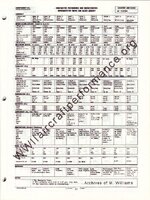
 
... Finnish test flights, the aircraft used was the BW-366, one of the better ones. Max speed was 428 km/h at sea level and 480 km/h at just under 5000 meters. The Finns usually made a compression correction to their speed test results.
In metric units, high gear, 4854.5 m, 34" Hg boost, the maximum speed on the Brewster 239 graph is 478.5 km/h.
Sea level figures are 434.9 km/h (rated power, 850 hp) and 456.1 km/h (1000 hp).
 
Here's an example of what I have right now for fully loaded Brewsters:

1786456867951.png


1786461524718.png


I'll link the full table where all the sources are listed when it's more complete.

I've also got a few tables for different loadout configurations (e.g. 110 gal fuel).

The armour for the non-Finnish types should already be included in the figures, it's just not shown separately. Some of the empty weights might also include the paintjob meaning it's getting double-counted in the grand total. I suspect the .30 cal on the F2A-1 could take up to 700 rounds and the .50s up to 220 rounds, same as the 239's ammo boxes, but with the lack of hard evidence I've went with the official figures of 600 and 200 rounds respectively. I've also seen a Finnish document mentioning the nose .50s had a capacity of 225 rounds each, but 220 seems to have been the standard loadout, same as on the wing guns (in Finnish literature you'll come across claims that the wing guns could fit 400 or even 800 rounds; this is wrong and likely results from someone's misread of BAC Report 350 which clearly states the that the wing guns put together had a capacity of 400 rounds, i.e. 200 each).

The engines, horsepowers, propellers etc. are currently in other tables but the idea is to ultimately get something like this, but for Brewsters:

japfighters-comp.jpg

The aim is also to include as many different configurations of the aircraft as possible, including a few more of the Finnish test configurations (two-bladed Soviet AW-1 propeller, two-bladed Finnish Wegelius wooden propeller, 2-gun light fighter, metal wing w/ self-sealing fuel tanks, ski-landing gear, etc. etc. etc.), maybe in a separate table away from the "main configurations".

Regarding speed tests, here's a couple of charts from Jukka Raunio's Brewster magazine (SIHL Erikoisnumero 3):

MT = Bf 109 G
BW = Brewster
MY-II = Myrsky II
HM-sarja = Humu series
HM-koe = Humu test flight
MCY = R-1820-G5

The data from BW-366 was collected on 20 May 1940, so it'd have been largely in the BAC-specified configuration still at that point, without pilot's seat armour or many Finnish weight-increasing modifications, or the wear and tear on both the engine and the airframe that significantly dropped both achievable horsepower and speed. Later in the war some BWs were getting IIRC a top speed of only around 430 kmh at 5,000 m as opposed to the factory-specified 484 kmh or so, while one R-1820-G5 performance-tested at the State Aircraft Factory c. Q2-Q3 of '42 gave around or even less than 800 hp instead of the usual 850 hp at cruise power.

481979222_1419016115929131_8985267998945521014_n.jpg

482021939_1419016092595800_6821555403499519378_n.jpg


Here's some more data collected from BW-366's test flights. The following table was created by one of my countrymen. Unfortunately I don't know who, or I would credit him.

1786459495802.png
 
Last edited:
Here's an example of what I have right now for fully loaded Brewsters:
...
You have an interesting set of data. I do not think the Brewster performance will be on the same level with a two-blade wooden propeller, or the two-blade AW-1 propeller from an I-16, even equipped with an M-63 engine. With a blade tip speed well into supersonic range the aircraft is going to remain below 500 km/h maximum level speed.

From my point of view the Brewster was a very good design for late 1930s. Direct-drive was still a reasonable option for an engine of up to 900 hp at 2500 rev/min. A geared engine was necessary for a good maximum speed above 15000 feet. Also, from a technical point of view, I do believe the Brewster fighter had development potential. The main undercarriage design was good enough for the 239 but a bit complex and occupied far too much space in front of the main wing spar. For the heavier, and more powerful variants (C9GC, C9H), a new wing load-bearing structure and undercarriage design was necessary (as Grumman did for F6F, and again for F8F, just for example).

Best regards,
Yavor
 
My info may be wrong, but in my notes for the first armour installations on the Hurricane and Spitfire I have the primary armour behind the seat and head being a nominal 1/4" (often stated as 6mm but actually coming in at 6.25-6.4mm). The later additions of the lower/under-seat and leg armour are listed as a nominal 5/32" (4mm).

I have:
6 mm plate for the pilot's head armour
4 mm plate for the pilot's seat back
6 mm plate for the seat extension (legs)
8 swg dural for the seat bottom (works out to about 4 mm)

As we've been saying, nominal thickness. Just as I was looking the above figures up and saw Orfordness measurements of a Spitfire back plate at 4.4 mm and Hurricane back plates at 4.3 mm and 4.5 mm.
 
I have:
6 mm plate for the pilot's head armour
4 mm plate for the pilot's seat back
6 mm plate for the seat extension (legs)
8 swg dural for the seat bottom (works out to about 4 mm)

As we've been saying, nominal thickness. Just as I was looking the above figures up and saw Orfordness measurements of a Spitfire back plate at 4.4 mm and Hurricane back plates at 4.3 mm and 4.5 mm.
Hi
The book 'Knights of the Skies' by Michael C Fox has information on this subject including this for the early Hurricane I on page 219:
Scan_20260812.jpg

Mike
 
jimmaas is trying to join the conversation but has password problems.

USAF Material Command reports,
USAAF Report NO. WS-378 Airplane and Glider Acceptances, Factory Deliveries and Departures from U.S. by type, model and country. Based on contracts active as of January 1940, excluding Navy direct, Navy Lend Lease and Commercial. For period January 1940 to December 1942 inclusive. Prepared by Aircraft Delivery Unit, Statistical Control Office, dated 6 January 1942, which presumably should be 1943.

U.S. National Archives files
RG (Record Group) 72 Entry 153 Boxes 1 and 2, USN Production division aircraft production program, records of acceptances 1935 to 1949, undated, references and sources page lists reports dated between 31 May 1932 and 31 December 1946.
RG 149B Entry C2743, U.S. Military Aircraft Acceptances 1940 - 1945 Aircraft, Engine and Propeller Production, U.S. Department of Commerce, Civil Aeronautics Administration, possibly dated October 1946.
RG 179 Entry 249B Box 719, Bulky central decimal files 452.1, Air Technical Services Command Special Historical Report of Airframe Weight 1940 to 1944. Print out dated 22 July 1945.

Australian Files, RAAF Museum, Point Cook, Victoria.
Performance Tables of British Service Aircraft, Air Publication 1746, dated August 1939 but data includes 1940/41 aircraft.

British files, RAF Museum, Hendon, London
serial registers / delivery logs MF-1 to 5 (ex microfilm, now digitised) serials K1000 to RZ499.

Unexamined British Archive files for consideration
SUPP 9/2 Aircraft Data Sheets and Photographs. United States of America types.

Anything else?

Production from RG 179 Entry 249B Box 719, first 6 Finland model 239 assumed to be accepted in December 1939,
MonthTotalUSNFinlandBelgiumUSNBritainNEIUSN
MonthModelF2A-1
239​
339​
F2A-2339E339DF2A-3
Jun-39​
1​
1​
Jul-39​
1​
1​
Aug-39​
1​
1​
Sep-39​
0​
Oct-39​
0​
Nov-39​
2​
2​
Dec-39​
12​
6​
6​
Jan-40​
24​
24​
Feb-40​
14​
14​
Mar-40​
0​
Apr-40​
1​
1​
May-40​
8​
8​
Jun-40​
22​
22​
Jul-40​
9​
9​
Aug-40​
0​
Sep-40​
6​
6​
Oct-40​
20​
20​
Nov-40​
16​
16​
Dec-40​
40​
40​
Jan-41​
43​
1​
42​
Feb-41​
18​
18​
Mar-41​
36​
18​
18​
Apr-41​
46​
36​
10​
May-41​
43​
16​
27​
Jun-41​
17​
17​
Jul-41​
1​
1​
Aug-41​
24​
24​
Sep-41​
41​
41​
Oct-41​
23​
23​
Nov-41​
9​
9​
Dec-41​
10​
10​
Jan-42​
10​
10​
Feb-42​
0​
Mar-42​
1​
1​
Apr-42​
9​
9​
Total
508​
11​
44​
40​
43​
170​
92​
108​
Plus 1 XF2A-1/XF2A-2 prototype accepted in December 1938.
 

Users who are viewing this thread

Back
