Castles....

Hohenstein Castle (Burg Hohenstein), a picturesque medieval castle located in the Franconian region of Bavaria, Germany.
The castle was built on a high promontory and was first recorded in history in the 11th century.

Photo: ervik.de

IMG_20251217_005547.jpg
 
Taufers Castle (Castel Taufers) is a breathtaking medieval fortress nestled in the picturesque South Tyrol region of northern Italy, near the charming town of Sand in Taufers. Dating back to the 12th century, it stands as one of the best-preserved medieval castles in the area, offering stunning views of the lush Ahrntal valleys and majestic mountain peaks.

Originally built by the noble Taufers family, the castle was designed for protection and control over the valley below. Over centuries, it has been carefully expanded and renovated, showcasing a blend of Romanesque and Gothic architecture. Its thick stone walls, defensive towers, and expansive courtyard transport visitors back to the heart of medieval life.

Photo: castlepics

IMG_20251217_005308.jpg
 
Dura-Europos. The Romans decisively captured Dura-Europos in 165 AD and greatly enlarged it as their easternmost stronghold in Mesopotamia, until it was captured by the Sasanian Empire after a siege in 256-257 AD. Its population was deported, and the abandoned city eventually became covered by sand and mud and disappeared from sight.

map.png
Dura-Europos the temple of Bel.png

A view of the southern wadi and part of the walls of the city of Dura-Europos WIKI.png

Aerial view of Dura-Europos from the east ISMY.png

The Palmyrene Gate, the principal entrance to the city of Dura-Europos WIKI.png

View of Dura Europos and the Euphrates WIKI.png
 
IMG_20251218_061830.jpg


IMG_20251218_062209.jpg


Hunaudaye Castle (Château de la Hunaudaye), located in Brittany, France, was originally constructed around the year 1220 by Olivier Tournemine, a feudal lord. The castle was designed as a fortified residence with a large moat and impressive defensive towers, reflecting the military architecture of the 13th century. Over the centuries, it underwent various modifications, especially in the 15th century, to adapt to evolving warfare technologies. The castle was damaged during the French Revolution and left in ruins, but it has since been partially restored and is now open to the public as a historical monument.
 
Whenever I see the Aleppo Citadel I always wish I could see what it looked like back in the time it was built and operational. If it looks impressive now as a ruin, what would it have looked like then?
 
:cool:
 
The Citadel of Cairo or Citadel of Saladin (Arabic: قلعة صلاح الدين, romanized: Qalaʿat Salāḥ ad-Dīn) is a medieval Islamic-era fortification in Cairo, Egypt, built by Salah ad-Din (Saladin) and further developed by subsequent Egyptian rulers. It was the seat of government in Egypt and the residence of its rulers for nearly 700 years from the 13th century until the construction of Abdeen Palace in the 19th century
Layout of the Cairo Citadel today WIKI.png

The enormous stone bridge constructed by Sultan al-Zahir al-Ghazi over the moat led to an imposing bent entrance complex MADA
The enormous stone bridge constructed by Sultan al-Zahir al-Ghazi over the moat led to an impo...png

View of the Cario Citadel near the visitor entrance today. The minarets of the 14th-century Al...png

The two easternmost towers of the Cario Citadel, fortified by al-Kamil in 1207 the Burj al-Ram...png

View of the Citadel, with the Ottoman-era gate of Bab al-'Azab, and the 19th-century Muhammad ...png

View of the Cario Citadel from the southeast WIKI.png
 
IMG_20260102_131435.jpg


IMG_20260102_131551.jpg


IMG_20260102_131710.jpg


The Château du Marais in the Nièvre region of France dates back to the medieval period, likely constructed between the 13th and 15th centuries. Its architecture and moat reflect the typical design elements of feudal castles built during this era for both defense and residential purposes. Over the centuries, the château has been maintained and preserved, making it a captivating representation of France's rich historical and architectural legacy.

Source: Internet
 
Location of Nimrod Fortress in northern Israel,
NImrod Fortress.png

Plan from the 1871-77 PEF Survey of Palestine WIKI
Plan from the 1871-77 PEF Survey of Palestine WIKI.png

Nimrod Fortress 'Qal'at Namrud' from Nimrod 2012 WIKI
Nimrod Fortress 'Qal'at Namrud' from Nimrod 2012 WIKI.png

Nimrod Fortress 'Qal'at Namud' view towards the keep WIKI
Nimrod Fortress 'Qal'at Namud' view towards the keep WIKI.png

Panorama of Nimrod's Fortress 'Qal'at Namrud' looking West WIKI
Panorama of Nimrod's Fortress 'Qal'at Namrud' looking West WIKI.png

Nimrod Fortress WIKI
fortress.png

closeup side.png
room.png

cistern.png

1.png

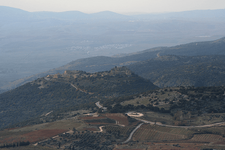
Nimrod Fortress guarded the road to Damascus.
2.png
 

Attachments

  • fortress.png
    fortress.png
    287.3 KB · Views: 27
IMG_20260104_222831.jpg


IMG_20260104_223038.jpg


The Château de Chamerolles, located in the Loiret department of France, was constructed in the early 16th century by Lancelot I du Lac, a nobleman and confidant of King François I. The castle reflects the transition from medieval military architecture to Renaissance style, featuring a harmonious blend of fortifications and elegant design. It is particularly notable for its beautifully restored Renaissance gardens and the Perfume Museum housed within, which explores the history of fragrance and cosmetics. Today, the château is a popular destination for history and art enthusiasts, offering a rich cultural experience.
 
IMG_20260104_223625.jpg
Château de Montcony, dating from the 13th century, classified as a historical monument.
 

Users who are viewing this thread

Similar threads

Back