Dewoitine D.520 VS Heinkel He 112, which one has more development potential

Ad: This forum contains affiliate links to products on Amazon and eBay. More information in Terms and rules

No, SparotRob. The He 112B radiator was under the center fuselage and was fairly "normal" in shape.

The early He 100 had a surface evaporative cooling system (problematic, to say the least), but the He 100D that supposed to be a "service" aircraft reverted to a semi-retractible radiator that was more "normal."
 
re
According to former Hurricane pilots, it wasn't that fast, EVER.

I've seen BOB pilots reports that say it could barely hit 300 mph in wartime trim, in large numbers. I mean normal in-service trim, as issued to front line units.

And those reports were not isolated. That makes me really wonder how accurate the top speed numbers bandied about in Wiki and other websites are.
??

Sorry, but I do not know where you are getting your information from. Very few reports that I have run across give the speed, sometimes only the boost [or some such], and whether they caught up to the target or could not do so. The pilot combat reports I have read from the BoB that give the speeds do so in IAS, so they [Mk I] would almost never reach 300 mph IAS in level flight above about 6,000 - 7,000 ft for a Standard Day density altitude. Depending on the altitude where they are taking the reading the level flight Vmax for a new Mk I would usually be noted as about 240 mph IAS at 17,000-18,000 ft to about 270 mph IAS at 12,000-13,000 ft.


As to "it wasn't that fast, EVER." - this does not even make any sense.

The A&AEE/RAE used trailing pitot when measuring the baseline speeds during their tests (something the USAAF did not do until mid-war). This gave them quite accurate speeds for the specific airframes they were using in the tests. And just like the US they routinely tested aircraft off the production line, not all the aircraft for maximum performance, but a sampling of them to see if quality was being maintained. They tested the aircraft whenever they made significant changes that would affect performance (eg switching from 8x MG to 4x 20mm, Merlin III to Merlin XX, DH to Rotol prop, w/wo bomb racks and/or DT, w/wo Vokes filter, etc) as well as drag reduction testing. When they had time, and the airframes were available, they also occasionally tested worn airframes to see how much performance they had lost.

A&AEE/RAE found that the Vmax for the Hurricane were as for the numbers I listed in my last post. NACA determined the Vmax for the Hurricane Mk IIA they tested (in Nov-Dec'41) to be 340 mph TAS at +9 lbs boost at 22,000 ft, and 328 mph at +12 lbs boost at 6,000 ft. These are the same as A&AEE/RAE found to within 2 mph TAS and 1,000 ft altitude.

USAAC Material Division measured the speeds for the Mk IIA at 330 mph TAS at +9.6 lbs boost 19,000 ft and 319 mph TAS at +10 lbs boost at 12,000 ft.


As to "That makes me really wonder how accurate the top speed numbers bandied about in Wiki and other websites are."

I agree, that is why I never use the speeds from Wiki or "other websites" unless I add the disclaimer that they are from Wiki or some such. All of the numbers I provided in my last post and this post are from A&AEE/RAE, NACA, or Material Command documents.
 
Last edited:
Well, I read that stuff more than 25 years ago in pilot reports from WWII. At least,that's what they were advertised as in the places I read them at the time.

It also shows up in whatever William Green book the Hurricane is in, as well as a few other books I was reading in the 1960s / 1970s. Wasn't hard to find back then. Not sure about now since so many things have been re-written as people who weren't there "discover" what "REALLY happened."

As you can guess, I'm not much of a fan of revisionism unless it can be proven, and I don't mean by reading and then making "educated" guesses from between the lines while claiming it is fact backed up with primary sources. I have litera;lly watched and heard that take place before.

Cheers.
 
Last edited:
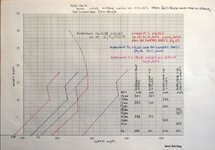
I don't know who made this chart (is Niel Sterling a regular here?) but it shows the Hurricane IIC Trop (presumably with Vokes filter) maxing out at 301 mph at 18,000', and 288 mph at 10,300', 238 mph at Sea Level, all at +12lb boost. Hurri IIC without Tropical modifications managed 327 mph at 18,000 ft, 313 mph at 10,0300, and 261 at Sea Level. As usual the IIA is the great performer with 342 mph at 17,500 ft at +12 boost and the same speed at 13,500 ft with +16 boost, and even 291 mph at Sea Level, but that type doesn't seem to have been in combat that much.

The second chart shows the I think Sea Hurricane maxing out at 308 mph at 18,000 ft with a Merlin III engine. This Sea Hurricane may have the Vokes filter. This must be an early mark, equivalent to Hurricane I ?)

So Greg's contention may not be entirely wrong, depending on the specific gear carried and what boost setting / fuel is used.
 

Attachments

  • Hurricane-II_12lbs.jpg
    Hurricane-II_12lbs.jpg
    217.1 KB · Views: 17
  • Sea Hurricane stats.jpeg
    Sea Hurricane stats.jpeg
    107.6 KB · Views: 18
Hey Greg,

re
Well, I read that stuff more than 25 years ago in pilot reports from WWII. At least,that's what they were advertised as in the places I read them at the time.

It also shows up in whatever William Green bok the Hurricane is in, as well as a few other books I was reading in the 1960s / 1970s. Wasn't hard to find back then. Not sure about now since so many things have been re-written as people who weren't there "discover" what "REALLY happened."

As you can guess, I'm not much of a fan of revisionism unless it can be proven, and I don't mean by reading and then making "educated" guesses from between the lines while claiming it is fact backed up with primary sources. I have litera;lly watched and heard that take place before.

Sorry, but I am still confused. It sounds like you saying that vague recollections of something read 25 years ago are better reference than primary/original source documents?


Hey Steamed_Banana,

re
The second chart shows the I think Sea Hurricane maxing out at 308 mph at 18,000 ft with a Merlin III engine. This Sea Hurricane may have the Vokes filter. This must be an early mark, equivalent to Hurricane I ?)
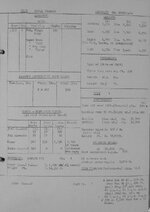
This is the ADS (Aircraft Data Sheet) for the non-tropicalized SeaHurricane Mk Ib, As you surmise it is a navalized Hurricane Mk I. Basically it had been strengthened in a couple of places in the fuselage, fitted with tail hook and catapult spools (the primary causes of the drag increase/speed decrease), and FAA avionics.

The 308 mph TAS at 18,000 ft is with +6.25 lbs boost as indicated in the lower left corner in the engine section - the normal maximum boost for the Merlin III at 16,250 ft when static, or 18,000 ft with RAM. In the lower right corner Vmax with +16 lbs boost isnoted as 315 mph TAS at 7,500 ft with RAM (when static the +16 lbs boost occurs at 5,500 ft).

NOTE Unless stated otherwise on the document the ADS Vmax for fighters are with 1/2 fuel and full ammo - aka "(mean wt.)" - and in clean condition with no external stores.

In contrast to the SeaHurricane Mk Ib, the regular Hurricane Mk I ADS gives a Vmax of 316 mph TAS at +6.25 lbs at 17,750 ft.
Hurricane Mk I ads_01.jpg

Unfortunately it does not give the Vmax for +12 lbs boost, even though the increase to +12 lbs was issued in early-1940. The increase in Vmax for the Mk I with +12 lbs boost is mentioned in a prior document from Dec'39:

"It will be noted from the service reports than an approximate increase in speed, due to the use of emergency 12 lbs. boos, of 28/34 m.p.h. is obtained depending upon the altitude flown up to 10,000 feet."

Here is an A&AEE Vmax chart for the Hurricane Mk I using +6.25 lbs boost giving 316 mph TAS at 17,900 ft. Add the 28/34 mph to the speed line as you wish.
Hurricane Mk I L2026 speed 2.jpg


Hurricane Mk IIA ADS gives 342/322 mph TAS at +9 lbs boost at 22,000/13,500 ft with RAM.
Hurricane Mk IIA ads.jpg


Hurricane Mk IIC ADS gives 339/319 mph TAS at +9 lbs boost at 22,000/13,500 ft with RAM.
Hurricane Mk IIC ads.jpg


These are, of course, only a few examples. And they are the performance for a brand new production airframes direct from the factory or MU.

Most of the aircraft tested by the A&AEE/RAE were aircraft pulled from Squadrons or from the MU/RMU pipeline and as such were not brand new. Some were aircraft held back and used for multiple test conditions. As with aircraft in the field there was usually wear and tear on the aircraft, and there were sometimes sub-standard airframes and/or engines - which circumstances are often mentioned in the reports.

And as is true for all aircraft of all nations, the performance decreased with higher flight hours on the airframes and engines, and after damage or having to be repaired.

Here is the Mustang Mk III (P-51B/C) ADS example of what the A&AEE/RAE tests showed for a new airframe and engine. Did the Mustang Mk III (P-51B/C) ever reach 450/424 mph TAS at 28,000/15,000 ft in the field?
P-51B:C Mustang Mk III ads_01.jpg


Or how about the Mustang Mk IV (P-51D) - did it ever manage 437/407 mph TAS at 24,500/11,000 ft in the field?
Mustang Mk IV ads.jpg


etc, etc

:study:
 
Last edited:
Hey Greg,

re


Sorry, but I am still confused. It sounds like you saying that vague recollections of something read 25 years ago are better reference than primary/original source documents?


Hey Steamed_Banana,

re

This is the ADS (Aircraft Data Sheet) for the non-tropicalized SeaHurricane Mk Ib, As you surmise it is a navalized Hurricane Mk I. Basically it had been strengthened in a couple of places in the fuselage, fitted with tail hook and catapult spools (the primary causes of the drag increase/speed decrease), and FAA avionics.

The 308 mph TAS at 18,000 ft is with +6.25 lbs boost as indicated in the lower left corner in the engine section - the normal maximum boost for the Merlin III at 16,250 ft when static, or 18,000 ft with RAM. In the lower right corner Vmax with +16 lbs boost isnoted as 315 mph TAS at 7,500 ft with RAM (when static the +16 lbs boost occurs at 5.500 ft).

NOTE Unless stated otherwise on the document the ADS Vmax for fighters are with 1/2 fuel and full ammo - aka "(mean wt.)" - and in clean condition with no external stores.

In contrast to the SeaHurricane Mk Ib, the regular Hurricane Mk I ADS gives a Vmax of 316 mph TAS at +6.25 lbs at 17,750 ft.
View attachment 892891
Unfortunately it does not give the Vmax for +12 lbs boost, even though the increase to +12 lbs was issued in early-1940. The increase in Vmax for the Mk I with +12 lbs boost is mentioned in a prior document from Dec'39:

"It will be noted from the service reports than an approximate increase in speed, due to the use of emergency 12 lbs. boos, of 28/34 m.p.h. is obtained depending upon the altitude flown up to 10,000 feet."

Here is an A&AEE Vmax chart for the Hurricane Mk I using +6.25 lbs boost giving 316 mph TAS at 17,900 ft. Add the 28/34 mph to the speed line as you wish.
View attachment 892903

Hurricane Mk IIA ADS gives 342/322 mph TAS at +9 lbs boost at 22,000/13,500 ft with RAM.
View attachment 892892

Hurricane Mk IIC ADS gives 339/319 mph TAS at +9 lbs boost at 22,000/13,500 ft with RAM.
View attachment 892893

These are, of course, only a few examples. And they are the performance for a brand new production airframes direct from the factory or MU.

Most of the aircraft tested by the A&AEE/RAE were aircraft pulled from Squadrons or from the MU/RMU pipeline and as such were not brand new. Some were aircraft held back and used for multiple test conditions. As with aircraft in the field there was usually wear and tear on the aircraft, and there were sometimes sub-standard airframes and/or engines - which circumstances are often mentioned in the reports.

And as is true for all aircraft of all nations, the performance decreased with higher flight hours on the airframes and engines, and after damage or having to be repaired.

Here is the Mustang Mk III (P-51B/C) ADS example of what the A&AEE/RAE tests showed for a new airframe and engine. Did the Mustang Mk III (P-51B/C) ever reach 450/424 mph TAS at 28,000/15,000 ft in the field?
View attachment 892900

Or how about the Mustang Mk IV (P-51D) - did it ever manage 437/407 mph TAS at 24,500/11,000 ft in the field?
View attachment 892901

etc, etc

:study:

Thanks for the corrections, I didn't look at that Sea Hurricane chart closely enough.

Those are rather astonishing speeds reported for the Mustangs :oops: Are those from Boscombe Down tests or just estimates or...?

What do you make of the chart showing the tropicalized Hurricane IIC at ~ 300 mph max speed?
 
A lot of US test reports give descriptions of the test aircraft, like;
The P-51B tested was the P-51B-15, AAF No. 43-24777 and was equipped with a Packard V-1650-7 engine with a 11 ft. 2 in., four blade constant speed propeller. Gross weight at take-off was approximately 9680 lbs. The weight included 265 gal. of fuel, full oil, and no ammunition (85 gal. in auxiliary tank instead of ballast for ammunition).
and;
It will be noted that all tests were run with the wing racks installed. Speeds would be approximately 12 mph faster with the wing racks removed as shown by the dash line curve on the Speed vs Altitude Curve.

see

This is a May 1944 test. Tests at different times could/were different. A 1940 or 1941 P-40 test would probably not be done with rack/s as they weren't either standard issue (1940) or weren't carried in combat. By 1944 paired racks were pretty much standard. But read descriptions carefully.
Some reports are still open to interpretation. They were written by different officers. On later P-40s there tests with and without drop tanks and test with and without sway braces.
In another P-40 test (1943) it says that the under fuselage shackle was fitted but makes no mention of sway braces.
How easily racks/shackles could be taken off I don't know. Sway braces might be detachable from the rack/shackle or might not be?
Test of the first P-40N-1 (the 378mph speed demon) was done with the under-fuselage shackle but without rear view mirror or external gun sight.
It was also about 900lbs lighter than a P-40N-5.
Seemingly minor bits and bobs could worth 10-15mph on a 300mph plus fighter they are added together.
 
re
Those are rather astonishing speeds reported for the Mustangs :oops: Are those from Boscombe Down tests or just estimates or...?
All of the ADS vales are supposed to be from actual tests. After the first year or two of rceiving aircraft from the US that did not meet their quoted speeds the Air Ministry ordered that a sample of the incoming aircraft should be tested to Air Ministry standards - at least as far as speed, climb, roll. etc. Here is a speed chart (done by agency in the Air Ministry) comparing the Mustang Mk I, P-51A, and P-51B (Mustang Mk III). I think all of the P-51B were fitted with the V-1650-3 which is one of the higher altitude rated Merlins. I suspect the P-51B (Mustang Mk III) speed is without any racks, but I do not know for sure.

Mustang Mk I,P-51A,P-51B Vmax graph.jpg


The header below is from the A&AEE test for the 450 mph TAS result. You can find the full report over on the "WWII Aircraft Performance" website.
Mustang Mk III s&c test A&AEE.jpg


FWIW When the Australian Air Ministry(?) was considering which aircraft to produce ("Spitfire" or the "Mustang") in Apr'43, they rated the "Mustang" with Merlin 61 at 443 mph at 28,000 ft - based on a demonstration for the Australian liaison in the US.

What do you make of the chart showing the tropicalized Hurricane IIC at ~ 300 mph max speed?
Sorry, but without knowing who made the chart and/or what test the numbers are from, I have no way of knowing. To me it seems too much of a speed loss.

:) Plus what Shortround6 said.
 
Last edited:
RAAF 1943 fighter decision,

Readable online at Australian Archives, the first has 19 pages, the second covers more topics, 137 pages (page 125 on for McVey mission report), including passing comments on the P-47.

Series A14487 Control Symbol 32/AB/4818 barcode 24709158 Air Board Agenda 4818 (RAAF) - Production in Australia of Mustang aircraft

Series A2680 Control Symbol 12/1943 barcode 31425999 Aircraft production policy - production in Australia of 'Mustang' aircraft (refers to Advisory War Council Minute Nos 1108, 1181 and 1192)

To perhaps help, it was the McVey mission that investigated options in early 1943, the Australian local production order was for 350 CA-17 Mustang, including from 100 kits supplied by North American with provision to increase the order by another 340 aircraft. With the delay in starting production Australia was allocated 285 Mustangs from US production in the second half of 1944, then another 215 as part of 1945/46 Lend Lease.
 
Hey Greg,

re


Sorry, but I am still confused. It sounds like you saying that vague recollections of something read 25 years ago are better reference than primary/original source documents?


Hey Steamed_Banana,

re

This is the ADS (Aircraft Data Sheet) for the non-tropicalized SeaHurricane Mk Ib, As you surmise it is a navalized Hurricane Mk I. Basically it had been strengthened in a couple of places in the fuselage, fitted with tail hook and catapult spools (the primary causes of the drag increase/speed decrease), and FAA avionics.

The 308 mph TAS at 18,000 ft is with +6.25 lbs boost as indicated in the lower left corner in the engine section - the normal maximum boost for the Merlin III at 16,250 ft when static, or 18,000 ft with RAM. In the lower right corner Vmax with +16 lbs boost isnoted as 315 mph TAS at 7,500 ft with RAM (when static the +16 lbs boost occurs at 5.500 ft).

NOTE Unless stated otherwise on the document the ADS Vmax for fighters are with 1/2 fuel and full ammo - aka "(mean wt.)" - and in clean condition with no external stores.

In contrast to the SeaHurricane Mk Ib, the regular Hurricane Mk I ADS gives a Vmax of 316 mph TAS at +6.25 lbs at 17,750 ft.
View attachment 892891
Unfortunately it does not give the Vmax for +12 lbs boost, even though the increase to +12 lbs was issued in early-1940. The increase in Vmax for the Mk I with +12 lbs boost is mentioned in a prior document from Dec'39:

"It will be noted from the service reports than an approximate increase in speed, due to the use of emergency 12 lbs. boos, of 28/34 m.p.h. is obtained depending upon the altitude flown up to 10,000 feet."

Here is an A&AEE Vmax chart for the Hurricane Mk I using +6.25 lbs boost giving 316 mph TAS at 17,900 ft. Add the 28/34 mph to the speed line as you wish.
View attachment 892903

Hurricane Mk IIA ADS gives 342/322 mph TAS at +9 lbs boost at 22,000/13,500 ft with RAM.
View attachment 892892

Hurricane Mk IIC ADS gives 339/319 mph TAS at +9 lbs boost at 22,000/13,500 ft with RAM.
View attachment 892893

These are, of course, only a few examples. And they are the performance for a brand new production airframes direct from the factory or MU.

Most of the aircraft tested by the A&AEE/RAE were aircraft pulled from Squadrons or from the MU/RMU pipeline and as such were not brand new. Some were aircraft held back and used for multiple test conditions. As with aircraft in the field there was usually wear and tear on the aircraft, and there were sometimes sub-standard airframes and/or engines - which circumstances are often mentioned in the reports.

And as is true for all aircraft of all nations, the performance decreased with higher flight hours on the airframes and engines, and after damage or having to be repaired.

Here is the Mustang Mk III (P-51B/C) ADS example of what the A&AEE/RAE tests showed for a new airframe and engine. Did the Mustang Mk III (P-51B/C) ever reach 450/424 mph TAS at 28,000/15,000 ft in the field?
View attachment 892900

Or how about the Mustang Mk IV (P-51D) - did it ever manage 437/407 mph TAS at 24,500/11,000 ft in the field?
View attachment 892901

etc, etc

:study:
My recollections a ren't vague and one of the so-called "primary sources" above says 319 mph at 13,500 feet, and 339 at 22,500 ft.

Not sure how high you think they patrolled, or whether you actually believe that they routinely accelerated to top speed (untrue in the extreme), but they usually took off when scrablmed for incoming attacks and were nowhere NEAR 22,500 feet when they engaged. They also weren't anywhere NEAR top speed since they were at best climb speed until engaging.

Combat speed over England was nowhere mear top speed for either side unless they ended up in a steep dive. If they did, it didn't stay that fast for long since they weren't really high enough for prolonged dives. It rapidly deteriorated to 250 - 300 mph combat speeds, sometimes slower.
 
Last edited:
Hey GregP,

re
Not sure how high you think they patrolled, or whether you actually believe that they routinely accelerated to top speed (untrue in the extreme), but they usually took off when scrablmed for incoming attacks and were nowhere NEAR 22,500 feet when they engaged. They also weren't anywhere NEAR top speed since they were at best climb speed until engaging.

Combat speed over England was nowhere mear top speed for eith side unless they ended up in a steep dive. If they did, it didn't stay that fast for long since they weren't really high enough for prolonged dives. It rapidly deteriorated to 250 - 300 mph combat speeds, sometimes slower.

??

None of the above has anything to do with or contradicts what I said up-thread.

re
My recollections a ren't vague and one of the so-called "primary sources" above says 319 mph at 13,500 feet, and 339 at 22,500 ft.

??

I am quite aware that the ADS for the Mk IIC lists "319 mph at 13,500 ft, and 339 mph at 22,500 ft". So . . . ?

Also, am I to assume that you do not think the speeds given for the P-51 are correct either?

Also, please define what you consider as an acceptable primary source?
 
Last edited:
If you read the comments, I mentioned specifically the Hurricane. Many people doubt it's published speeds over the years in various books. I didn't mention other fighters in that statement.

So no, I don't doubt the top speed of the P-51 unless you are saying they routinely cruised at or near top speed. Then we can have a discussion about it; they didn't.

Up until then, my doubts about top speed are confined to the Hurricane. It was a good mid-1930s fighter, but wasn't exactly near the top of things speed-wise in 1940 and beyond. Still, it was reliable, available, and did it's best when it had to. I respect the Hurricane's accomplishments while not thinking it was as fast as generally claimed. You are perfectly free to disagree. I've had the pleasure of watching a real Hurricane and Spitfire Mk IX and XIV fly at the museum on several occasions. Theya re all beautiful and I hope they all fly for many more years.

I tend to think of the Hurricane as Britain's P-40. Did the job and held the line until later, more capable aircraft came along. Still, the P-40 was used right up to the end of the war. Pretty much the same for the Hurricane. A good soldier if not the best.

Cheers.
 
Hurricane was actually used longer and more extensively, mainly in India / Burma. Whether it should have been is another issue.

All combat aircraft had different real speeds between testing on home fields vs in field conditions at the front line. As a very general rule, the further away the front line was the more extreme this got. It also seems to vary by aircraft type quite a bit.

The British testing at Boscombe Down seems to typically lean toward more conservative conditions - more fuel on the aircraft, combat fittings like antennas, mirrors, bomb shackles etc., in some cases tropical filters, and often relatively low boost ratings on the engines. The last seemingly especially for US types, which were frequently tested at military or max continuous power levels. Sometimes they also tested aircraft that had been used in the field which may have minor damage, rough paint etc. that can further degrade performance (but which likely represent typical field conditions than aircraft right out of the factory).

So you get a bit of both factors - realistic kit and extras that can weigh down the aircraft, but sometimes also very conservative engine settings which are probably lower than were being used in combat at the time of the testing. Sometimes considerably lower.

Some of the Australian tests were also done this way, albeit sometimes with somewhat higher boost ratings on the more familiar US types they were already using than on somewhat less familiar British types.

Conversely, some US companies seem to have conducted testing that was set up in very optimistic circumstances - removal of all extra equipment, filling in holes and gaps with putty, sanding the paint, even waxing, carrying less than full fuel load, sometimes flying without guns and / or ammunition, and running the test at high boost settings. Probably the most famous culprit of this is Bell with some of their early P-39 testing which showed performance far better than what the customers found when the aircraft arrived at duty stations.

I think NACA is considered pretty well balanced in regard to these factors.

In the field, we know that some aircraft were being used with higher than sanctioned boost levels. Different air forces and different Theaters had varying standards for how well this kind of thing was enforced. Flying at higher boost could dramatically reduce engine life, and also used up drastic amounts of fuel. In the field, with some specific units (for example the AVG) aircraft were sometimes tweaked to get the best possible speed, sanded, waxed and even literally polished. Other sites struggled to keep up even basic maintenance and flew planes with holes and bits sticking out. Soviet pilots were flying a lot of their fighters with the canopy fully removed due to problems opening it in an emergency, and this went on for at least a year. This was also done for similar reasons with some Italian fighters.

So there is a wide range of actual field performance compared to benchmarks done back in the home country. In some units they may have been performing considerably better, in other cases (probably many) considerably worse.
 
...

I tend to think of the Hurricane as Britain's P-40. Did the job and held the line until later, more capable aircraft came along. Still, the P-40 was used right up to the end of the war. Pretty much the same for the Hurricane. A good soldier if not the best.

Cheers.
The under appreciated heroes. The Hurricane, the P-40, the F4F and the Y-wing.
 
re
So no, I don't doubt the top speed of the P-51 unless you are saying they routinely cruised at or near top speed. Then we can have a discussion about it; they didn't.

??

There are 2 problems in the above quote:

1. The Hurricane and the P-51 speeds were arrived at by the same establishment using the same methods - and in some cases the same personnel including the pilots. There is therefore no reason to accept the accuracy of the P-51 results over the accuracy of the Hurricane results.

2. If you reread what I posted you should see that I have not said or implied that the Hurricane or P-51 (or any other airframe) "routinely cruised at or near top speed".


re again
Not sure how high you think they patrolled, or whether you actually believe that they routinely accelerated to top speed (untrue in the extreme), but they usually took off when scrablmed for incoming attacks and were nowhere NEAR 22,500 feet when they engaged. They also weren't anywhere NEAR top speed since they were at best climb speed until engaging.

Combat speed over England was nowhere mear top speed for either side unless they ended up in a steep dive. If they did, it didn't stay that fast for long since they weren't really high enough for prolonged dives. It rapidly deteriorated to 250 - 300 mph combat speeds, sometimes slower.

Again, if you would bother to reread what I posted upthread you would see that I have not said or implied any of the above. Your continued harping on this is at best irrational.

However, if you have not already done so, you should visit the thread on the Hurricane dive speed here: 'Comparison of Pacific, Indian Ocean, Mediterranean, and North Atlantic naval combat'
The documents were provided courtesy of slaterat. The Hurricanes mentioned in the Sqn reports are (I think) all Mk I. Relative to the current discussion the 2 pages referencing the diving trials using airframes S/N P3426 & P3856 are particularly noteworthy, as are the pages covering the Squadron notes on dive speeds occurring in combat during the BoB.

Here are the 2 trials reports:
Hurri Mk I P3416 dive trials.jpeg


Hurri Mk I P3856 dive trials.jpeg


I should note that according to the airframe logs, P3416 had been involved in 2 significant mishaps prior to the dive tests - an engine fire resulting in a crash landing, and a landing hard enough to collapse the undercarriage - both of which required the airframe to be sent to an MU for repair. P3856 was in relatively good condition, having been assigned to a couple of training Sqn upto the time of the tests, and had not been in combat or any mishaps requiring the attentions of any MU.

Also, note that in the 2 trials reports the speed reached are in "computed" mph, while in the Sqn reports most of the speeds are listed as ASI.


Also again, please define what you consider as an acceptible primary source?

Also, so far you have provided only anecdotes, and anecdotes of anecdotes, in support of your statements.

Also, I am pretty sure that I do not need your permission to disagree with you. :)
 
Last edited:

Users who are viewing this thread

Back
