Steamed_Banana
Staff Sergeant
- 1,145
- Sep 29, 2025
I don't know, but here is some operational history for you
View: https://www.youtube.com/watch?v=PmbZMUt94Q0
View: https://www.youtube.com/watch?v=PmbZMUt94Q0

Follow along with the video below to see how to install our site as a web app on your home screen.
Note: This feature may not be available in some browsers.
No, that was the He 100/113. German numbers are sometimes confusing as sometimes a manufacturer could request a certain out of sequence number for publicity purposes.Was the He 112 the plane with an extensive wing installed cooling system?


??According to former Hurricane pilots, it wasn't that fast, EVER.
I've seen BOB pilots reports that say it could barely hit 300 mph in wartime trim, in large numbers. I mean normal in-service trim, as issued to front line units.
And those reports were not isolated. That makes me really wonder how accurate the top speed numbers bandied about in Wiki and other websites are.
Well, I read that stuff more than 25 years ago in pilot reports from WWII. At least,that's what they were advertised as in the places I read them at the time.
It also shows up in whatever William Green bok the Hurricane is in, as well as a few other books I was reading in the 1960s / 1970s. Wasn't hard to find back then. Not sure about now since so many things have been re-written as people who weren't there "discover" what "REALLY happened."
As you can guess, I'm not much of a fan of revisionism unless it can be proven, and I don't mean by reading and then making "educated" guesses from between the lines while claiming it is fact backed up with primary sources. I have litera;lly watched and heard that take place before.
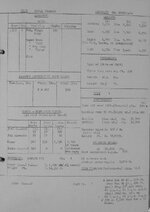
This is the ADS (Aircraft Data Sheet) for the non-tropicalized SeaHurricane Mk Ib, As you surmise it is a navalized Hurricane Mk I. Basically it had been strengthened in a couple of places in the fuselage, fitted with tail hook and catapult spools (the primary causes of the drag increase/speed decrease), and FAA avionics.The second chart shows the I think Sea Hurricane maxing out at 308 mph at 18,000 ft with a Merlin III engine. This Sea Hurricane may have the Vokes filter. This must be an early mark, equivalent to Hurricane I ?)

Hey Greg,
re
Sorry, but I am still confused. It sounds like you saying that vague recollections of something read 25 years ago are better reference than primary/original source documents?
Hey Steamed_Banana,
re
This is the ADS (Aircraft Data Sheet) for the non-tropicalized SeaHurricane Mk Ib, As you surmise it is a navalized Hurricane Mk I. Basically it had been strengthened in a couple of places in the fuselage, fitted with tail hook and catapult spools (the primary causes of the drag increase/speed decrease), and FAA avionics.
The 308 mph TAS at 18,000 ft is with +6.25 lbs boost as indicated in the lower left corner in the engine section - the normal maximum boost for the Merlin III at 16,250 ft when static, or 18,000 ft with RAM. In the lower right corner Vmax with +16 lbs boost isnoted as 315 mph TAS at 7,500 ft with RAM (when static the +16 lbs boost occurs at 5.500 ft).
NOTE Unless stated otherwise on the document the ADS Vmax for fighters are with 1/2 fuel and full ammo - aka "(mean wt.)" - and in clean condition with no external stores.
In contrast to the SeaHurricane Mk Ib, the regular Hurricane Mk I ADS gives a Vmax of 316 mph TAS at +6.25 lbs at 17,750 ft.
View attachment 892891
Unfortunately it does not give the Vmax for +12 lbs boost, even though the increase to +12 lbs was issued in early-1940. The increase in Vmax for the Mk I with +12 lbs boost is mentioned in a prior document from Dec'39:
"It will be noted from the service reports than an approximate increase in speed, due to the use of emergency 12 lbs. boos, of 28/34 m.p.h. is obtained depending upon the altitude flown up to 10,000 feet."
Here is an A&AEE Vmax chart for the Hurricane Mk I using +6.25 lbs boost giving 316 mph TAS at 17,900 ft. Add the 28/34 mph to the speed line as you wish.
View attachment 892903
Hurricane Mk IIA ADS gives 342/322 mph TAS at +9 lbs boost at 22,000/13,500 ft with RAM.
View attachment 892892
Hurricane Mk IIC ADS gives 339/319 mph TAS at +9 lbs boost at 22,000/13,500 ft with RAM.
View attachment 892893
These are, of course, only a few examples. And they are the performance for a brand new production airframes direct from the factory or MU.
Most of the aircraft tested by the A&AEE/RAE were aircraft pulled from Squadrons or from the MU/RMU pipeline and as such were not brand new. Some were aircraft held back and used for multiple test conditions. As with aircraft in the field there was usually wear and tear on the aircraft, and there were sometimes sub-standard airframes and/or engines - which circumstances are often mentioned in the reports.
And as is true for all aircraft of all nations, the performance decreased with higher flight hours on the airframes and engines, and after damage or having to be repaired.
Here is the Mustang Mk III (P-51B/C) ADS example of what the A&AEE/RAE tests showed for a new airframe and engine. Did the Mustang Mk III (P-51B/C) ever reach 450/424 mph TAS at 28,000/15,000 ft in the field?
View attachment 892900
Or how about the Mustang Mk IV (P-51D) - did it ever manage 437/407 mph TAS at 24,500/11,000 ft in the field?
View attachment 892901
etc, etc
 Are those from Boscombe Down tests or just estimates or...?
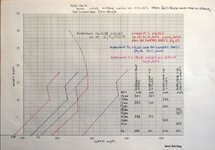
All of the ADS vales are supposed to be from actual tests. After the first year or two of rceiving aircraft from the US that did not meet their quoted speeds the Air Ministry ordered that a sample of the incoming aircraft should be tested to Air Ministry standards - at least as far as speed, climb, roll. etc. Here is a speed chart (done by agency in the Air Ministry) comparing the Mustang Mk I, P-51A, and P-51B (Mustang Mk III). I think all of the P-51B were fitted with the V-1650-3 which is one of the higher altitude rated Merlins. I suspect the P-51B (Mustang Mk III) speed is without any racks, but I do not know for sure.Those are rather astonishing speeds reported for the Mustangs
Sorry, but without knowing who made the chart and/or what test the numbers are from, I have no way of knowing. To me it seems too much of a speed loss.What do you make of the chart showing the tropicalized Hurricane IIC at ~ 300 mph max speed?
 Plus what Shortround6 said.
My recollections a ren't vague and one of the so-called "primary sources" above says 319 mph at 13,500 feet, and 339 at 22,500 ft.Hey Greg,
re
Sorry, but I am still confused. It sounds like you saying that vague recollections of something read 25 years ago are better reference than primary/original source documents?
Hey Steamed_Banana,
re
This is the ADS (Aircraft Data Sheet) for the non-tropicalized SeaHurricane Mk Ib, As you surmise it is a navalized Hurricane Mk I. Basically it had been strengthened in a couple of places in the fuselage, fitted with tail hook and catapult spools (the primary causes of the drag increase/speed decrease), and FAA avionics.
The 308 mph TAS at 18,000 ft is with +6.25 lbs boost as indicated in the lower left corner in the engine section - the normal maximum boost for the Merlin III at 16,250 ft when static, or 18,000 ft with RAM. In the lower right corner Vmax with +16 lbs boost isnoted as 315 mph TAS at 7,500 ft with RAM (when static the +16 lbs boost occurs at 5.500 ft).
NOTE Unless stated otherwise on the document the ADS Vmax for fighters are with 1/2 fuel and full ammo - aka "(mean wt.)" - and in clean condition with no external stores.
In contrast to the SeaHurricane Mk Ib, the regular Hurricane Mk I ADS gives a Vmax of 316 mph TAS at +6.25 lbs at 17,750 ft.
View attachment 892891
Unfortunately it does not give the Vmax for +12 lbs boost, even though the increase to +12 lbs was issued in early-1940. The increase in Vmax for the Mk I with +12 lbs boost is mentioned in a prior document from Dec'39:
"It will be noted from the service reports than an approximate increase in speed, due to the use of emergency 12 lbs. boos, of 28/34 m.p.h. is obtained depending upon the altitude flown up to 10,000 feet."
Here is an A&AEE Vmax chart for the Hurricane Mk I using +6.25 lbs boost giving 316 mph TAS at 17,900 ft. Add the 28/34 mph to the speed line as you wish.
View attachment 892903
Hurricane Mk IIA ADS gives 342/322 mph TAS at +9 lbs boost at 22,000/13,500 ft with RAM.
View attachment 892892
Hurricane Mk IIC ADS gives 339/319 mph TAS at +9 lbs boost at 22,000/13,500 ft with RAM.
View attachment 892893
These are, of course, only a few examples. And they are the performance for a brand new production airframes direct from the factory or MU.
Most of the aircraft tested by the A&AEE/RAE were aircraft pulled from Squadrons or from the MU/RMU pipeline and as such were not brand new. Some were aircraft held back and used for multiple test conditions. As with aircraft in the field there was usually wear and tear on the aircraft, and there were sometimes sub-standard airframes and/or engines - which circumstances are often mentioned in the reports.
And as is true for all aircraft of all nations, the performance decreased with higher flight hours on the airframes and engines, and after damage or having to be repaired.
Here is the Mustang Mk III (P-51B/C) ADS example of what the A&AEE/RAE tests showed for a new airframe and engine. Did the Mustang Mk III (P-51B/C) ever reach 450/424 mph TAS at 28,000/15,000 ft in the field?
View attachment 892900
Or how about the Mustang Mk IV (P-51D) - did it ever manage 437/407 mph TAS at 24,500/11,000 ft in the field?
View attachment 892901
etc, etc
Not sure how high you think they patrolled, or whether you actually believe that they routinely accelerated to top speed (untrue in the extreme), but they usually took off when scrablmed for incoming attacks and were nowhere NEAR 22,500 feet when they engaged. They also weren't anywhere NEAR top speed since they were at best climb speed until engaging.
Combat speed over England was nowhere mear top speed for eith side unless they ended up in a steep dive. If they did, it didn't stay that fast for long since they weren't really high enough for prolonged dives. It rapidly deteriorated to 250 - 300 mph combat speeds, sometimes slower.
My recollections a ren't vague and one of the so-called "primary sources" above says 319 mph at 13,500 feet, and 339 at 22,500 ft.
The under appreciated heroes. The Hurricane, the P-40, the F4F and the Y-wing....
I tend to think of the Hurricane as Britain's P-40. Did the job and held the line until later, more capable aircraft came along. Still, the P-40 was used right up to the end of the war. Pretty much the same for the Hurricane. A good soldier if not the best.
Cheers.
So no, I don't doubt the top speed of the P-51 unless you are saying they routinely cruised at or near top speed. Then we can have a discussion about it; they didn't.
Not sure how high you think they patrolled, or whether you actually believe that they routinely accelerated to top speed (untrue in the extreme), but they usually took off when scrablmed for incoming attacks and were nowhere NEAR 22,500 feet when they engaged. They also weren't anywhere NEAR top speed since they were at best climb speed until engaging.
Combat speed over England was nowhere mear top speed for either side unless they ended up in a steep dive. If they did, it didn't stay that fast for long since they weren't really high enough for prolonged dives. It rapidly deteriorated to 250 - 300 mph combat speeds, sometimes slower.