Effectiveness of the P-38 (2 Viewers)

Ad: This forum contains affiliate links to products on Amazon and eBay. More information in Terms and rules

I guess by this point 14th FG was pulled out (?) as all the combat seems to be 1st and 82nd FG
How fast is a Bf 109G2, G4, and G6 by March 1943?

 
Gentlemen,

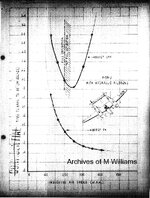
In regards to the P-38 roll rate, the attached shows the rate of roll for the boosted and un-boosted ailerons on a P-38J.

FWIW

Eagledad
 

Attachments

  • P-38J-25 Roll.jpg
    P-38J-25 Roll.jpg
    242.7 KB · Views: 24
There was no P-38 flying operationally in Europe early in the war.
As for the rest of the 'British fuel' story, it was debunked. I've agree with the debunks, and still do..
We all have our conceptions and misconceptions, you, me. and everyone else.

We can agree to disagree here, and still be friendly.

And, whether or not the fuel issue was "real," the smooth intake issue, lack of cabin heat, and early pilot inexperience were all indisputable.

I mis-spoke above. The P-38 got into combat in Aug 1942, in North Africa. They got into combat in Europe in Oct 1943, with the 55th Fighter Group, flying P-38Hs. The P-38J followed rapidly, before the end of the year, with most showing up in mid-1944. The small period when the intake and fuel issue was being solved ran mostly from early 1943 up through about Sep 1943. By the time the P-38J got to Europe, the intake and fuel issues were solved and no longer problems. The electric heater came along with the P-38J, which also had improved cockpit deicing, among other changes.

None of the fighters stagnated for long without incremental improvements trickling in. But, you know that.
 
We all have our conceptions and misconceptions, you, me. and everyone else.

We can agree to disagree here, and still be friendly.

And, whether or not the fuel issue was "real," the smooth intake issue, lack of cabin heat, and early pilot inexperience were all indisputable.

I mis-spoke above. The P-38 got into combat in Aug 1942, in North Africa. They got into combat in Europe in Oct 1943, with the 55th Fighter Group, flying P-38Hs. The P-38J followed rapidly, before the end of the year, with most showing up in mid-1944. The small period when the intake and fuel issue was being solved ran mostly from early 1943 up through about Sep 1943. By the time the P-38J got to Europe, the intake and fuel issues were solved and no longer problems. The electric heater came along with the P-38J, which also had improved cockpit deicing, among other changes.

None of the fighters stagnated for long without incremental improvements trickling in. But, you know that.
P-38s were flying patrols out of Iceland in August 1942. First kill against German a/c - Fw 200. Some uneventful patrols and sweeps from England in September and October. 1st and 14th to North Africa November. 82nd in December.
 
Well, I'm a huge fan -- mostly for its art deco look, though. I even prefer the early cowling look...
That is a photo of P-38F "Glacier Girl", rescued and rebuilt after decades buried beneath Greenland's glaciers. All it took was money - a lot of money!
 
Gentlemen,

In regards to the P-38 roll rate, the attached shows the rate of roll for the boosted and un-boosted ailerons on a P-38J.

FWIW

Eagledad
Note - that maximum roll rate is at very low combat airspeed.

Additionally, that is a sustained roll rate after initial inertia and response time is overcome.

That would certainly enable the P-38J-25/L to maneuver better than previous models but would not compare well with FW 190. Two factors that mitigate the enhanced roll rate are a.) initial reaction time from control input to initial roll acceleration due to large inertia of the large P-38, b.) same factor when a reversal is desired.

It was nothing to write home about above 300mph TAS.
 
P-38s were flying patrols out of Iceland in August 1942. First kill against German a/c - Fw 200. Some uneventful patrols and sweeps from England in September and October. 1st and 14th to North Africa November. 82nd in December.
I could be mistaken, but I think the Iceland P-38s were using US-supplied fuel and had issues only with the intakes, IF they were flying high. Otherwise, they were operating well, albeit with the same pilot inexperience and bad cockpit heaters. I say likely US-supplied fuel because I have never seen an Iceland report describing the typical issues seen in Europe, other than the lack of good cockpit heat, which would be present simply because they had not yet installed electric cockpit heaters. Seems like if they HAD been using European fuel, then the issues would have cropped up and would have been documented.
 

I mis-spoke above. The P-38 got into combat in Aug 1942, in North Africa. They got into combat in Europe in Oct 1943, with the 55th Fighter Group, flying P-38Hs. The P-38J followed rapidly, before the end of the year, with most showing up in mid-1944. The small period when the intake and fuel issue was being solved ran mostly from early 1943 up through about Sep 1943. By the time the P-38J got to Europe, the intake and fuel issues were solved and no longer problems. The electric heater came along with the P-38J, which also had improved cockpit deicing, among other changes.

None of the fighters stagnated for long without incremental improvements trickling in. But, you know that.
Not entirely true re: P-38J-5 through mid block J-10. Continued fuel detonation, oil freezing, turbo failures due to poor throttle management and cockpit heating issues plagued P-38 operations into April 1944 when the late J-10s and J-15s arrived.

Unmentioned frequently is that the P38J models did not have factory installed external tank fuel pump pressurization slaved off the engine vacuum pump exhaust until J-15s arrived.

Both NAA and Republic adapted much faster with late P-51B-5 and P-47D-11s operational in ETO in January 1944.

Dive compressibility was never solved, only better dive recovery with the introduction of the dive flaps (also for P-47D-30).

At the end of the day the P-38 was a 'tweener' and a jack of all trades with B grade marks - but for long-range escort it was the best we had until the P-51B was operational.
 
I could be mistaken, but I think the Iceland P-38s were using US-supplied fuel and had issues only with the intakes, IF they were flying high. Otherwise, they were operating well, albeit with the same pilot inexperience and bad cockpit heaters. I say likely US-supplied fuel because I have never seen an Iceland report describing the typical issues seen in Europe, other than the lack of good cockpit heat, which would be present simply because they had not yet installed electric cockpit heaters. Seems like if they HAD been using European fuel, then the issues would have cropped up and would have been documented.
Interesting you should mention fuel.
I have read that aircraft returning Stateside from Alaska in 1943 also had issues with fuel.
 
Note - that maximum roll rate is at very low combat airspeed.

Additionally, that is a sustained roll rate after initial inertia and response time is overcome.

That would certainly enable the P-38J-25/L to maneuver better than previous models but would not compare well with FW 190. Two factors that mitigate the enhanced roll rate are a.) initial reaction time from control input to initial roll acceleration due to large inertia of the large P-38, b.) same factor when a reversal is desired.

It was nothing to write home about above 300mph TAS.
There are reports showing the boosted P-38 to have exceptional roll performance above 400 mph, with 90° in about 0.4 seconds being achieved at 400 mph. At least, AI found that, but didn't cite the reoport number.

The flight test data in WW2aircraftperormance.com seems to have disappeared for P-36 through P-43, but is there for the others, or at least most of the others. So, the info above was courtesy of AI only. We all know how accurate AI is, don't we?

Edit: Found the chart: Seems like 0.45 seconds to 90° when boost was used.
 
Last edited:
Interesting you should mention fuel.
I have read that aircraft returning Stateside from Alaska in 1943 also had issues with fuel.
I believe that is the issuw with the intake manifolds being too smooth, causing the air and fuel to separate inside the intake manifold when very cold, as Alaska would be in fall, winter, and spring. That one was solved by installing turbulators inside the intake manifolds, keeping some turbulence in the intake and keeping the mixture swirling inside it.

I can't see any reason for Alaska P-38s to have been using British fuel, can you?
 
Not entirely true re: P-38J-5 through mid block J-10. Continued fuel detonation, oil freezing, turbo failures due to poor throttle management and cockpit heating issues plagued P-38 operations into April 1944 when the late J-10s and J-15s arrived.

Unmentioned frequently is that the P38J models did not have factory installed external tank fuel pump pressurization slaved off the engine vacuum pump exhaust until J-15s arrived.

Both NAA and Republic adapted much faster with late P-51B-5 and P-47D-11s operational in ETO in January 1944.

Dive compressibility was never solved, only better dive recovery with the introduction of the dive flaps (also for P-47D-30).

At the end of the day the P-38 was a 'tweener' and a jack of all trades with B grade marks - but for long-range escort it was the best we had until the P-51B was operational.
Hi Bill,

If you ever get to Chino, the P-47D at Yanks Air Museum has the dive brakes installed on it. Very interesting installation, just behind the landing gear openings, forward-hinged. I was quite interested to see that. The Yanks P-38 also has dive brakes installed, although it also has a photo nose on it instead of a fighter nose.
 
I believe that is the issuw with the intake manifolds being too smooth, causing the air and fuel to separate inside the intake manifold when very cold, as Alaska would be in fall, winter, and spring. That one was solved by installing turbulators inside the intake manifolds, keeping some turbulence in the intake and keeping the mixture swirling inside it.

I can't see any reason for Alaska P-38s to have been using British fuel, can you?
No, but I think US fuel formulations changed between 1942 and '43.
 
The problem with this 'story' is that it covers around 2 years or more and 4-5 different fuel specifications.

1940
British have got their 100 octane fuel with no less than 20% aromatics.
There are at least 16 different aromatic compounds, some more useful than others for making aviation fuel. Some are a lot more expensive than others. Some are a lot better at being 'anti-knock than others.

Now the US specified no more than 2% aromatics in their 1939-1940 fuel. A lot depends on the quality of the base stock and the amount of lead they use to raise the octane number.
Problems is without aromatics it is hard to get much over 100/100 fuel without using expensive base stocks (low production) or excessive amounts of lead which had it's own problems. However aromatics tend to dissolve US self-sealing materials and gaskets in US fuel systems. This really became a problem in early 1942 when fuel Supplied by the DEI before the teh Japanese took over had 40% aromatics.

1940/41
Has to be compatible with both US and British fuel tanks and fuel systems. It also has got to be cheap to produce and not use too much lead (trying to avoid lead fowled spark plugs for one thing). Several US engines are type tested on 100/125 fuel but it does not seem to have seen major production.
The US was working on better spark plugs from 1939 though 1941 with ceramics replacing Mica as the insulator.

1941
Sept.
The US Army and Navy agree to up the limit of lead from 3 ccs per US gallon to 4 ccs per US gallon. This will allow a 25% increase in production of 100 fuel as it required a lot less alkylate or other octanes. Oct 1941 sees Sun oil agree to turn over it's cat cracking facilities for the production of 100 PN fuel.
Dec 1941/1942
Shortly after Pearl Harbor The US and the British start working on a joint fuel specification. US 100 octane is varying from 100/104 to 100/130 because they are not specifying a rich mixture response measure. British want 100/125 with a test for the rich mixture response. Some American companies had developed engines using 100/120 fuel and 100/104 was not working. British and Americans finally 'agreed' on a 100/125 joint specification only to quickly change it to 100/130.

Late 1942
to increase production of 100/130 fuel the British and Americans agree to use up to 4.6cc of lead per US gal. At the same time here was a change in the allowable amounts of some aromatics although the total amount could not exceed the 20% total. Most of the time the amount was somewhere in the mid-teens. It was this fuel that caused the problems in the P-38s in 1943. It was anticipated and samples had been supplied to engine makers for testing and Allison was working in the new intake manifold for a number of months in 1943.
Now at any given time there could be dozens if not hundreds of different 100/139 fuel blends in tanks/storage around the world. The 100/130 specification was not a recipe for an exact blend. It was performance specification for a number of things like evaporation and freezing and number of BTUS per pound of fuel and allowable gum/varnish. Some refineries changed the "mix" almost weekly depending in the available raw materials. Very early 1942 saw the US/British production exceed 2,000,000 gallons a day.
By late 1942 there was no more US 100 octane less than 2% aromatic fuel available unless in some forgotten tank/s or drums.

And by late 1942/ or early 1943 there was NO British or American fuel. There was joint fuel from a number of different suppliers and these suppliers could and did change/tweak the fuel on a nearly weekly basis to maximize production. It was quite possible to draw samples from different airfields in Britian just a few hundred miles apart and get different fuel mixes, but all would 'pass' the specification test/limits.
The late 1942 specification laid out max limits on certain things. Not all batches of fuel used the max limits of many things. A lot depended on the base stocks and not all stocks were exactly the same, not all cracked gasoline was the same, could vary octane rating by a point or 2. Refineries used the lowest amounts of a boosting materials (which were more expensive) to get the base fuel (straight run + cat cracked) up the standard needed and used enough lead to get the required performance.
 
Sorry Shortround6. I mean that solving the issue took about 6 - 8 months after being able to FIND the problem.

Prior to some smart person shipping a quantity of British fuel to Allison, they could never replicate the issue on the test stand. Since they could not find an issue, they had no way to "fix" it. When they got some British fuel, the problem showed up in the test cells right away.

Fixing it didn't take 6 - 8 months at all. Fixing it was fairly fast. What took 6 - 8 motnhs was:

1) getting the new jetting into the field in newly-delivered aircraft.
2) rejetting existing deployed aircraft.
3) getting US fuel specs and British fual specs to be the same so the issue would "go away" and stay away.

All that got done, but it wasn't ovenight. Bureaucratic delays were rampant.
 
Last edited:
I have posted previously on this subject. Note that the problems occurred in the CBI and in extensive tests done in California

"In any event the basic premise of Bad British Fuel as the cause of the Allison failures is bogus. The Allison's problems were NOT limited to the ETO. This part of the myth was debunked by Daniel Whitney (author of Vees for Victory, the very comprehensive book on the V-1710) in the in his article "The Allison Time Bomb" in Volume 1 Number 2 of the "Torque Meter"
"Not long after the introduction of the P-38J pilots in all theaters began experiencing unexpected and sudden failures of their engines."

"The entire topic is further complicated because of the common impression that the failures occurred only in the ETO, so the problem "must have been poor quality British fuel" or the "low temperature at the high operating altitudes over the Continent."


He goes on to describe in some detail the problems experienced in the CBI.

The mode of failure was consistent. The outer most cylinders (1 and 6) received too rich a mixture, while the inner two (3 and 4) received too lean a mixture. The result was a failure of number 3 and 4 cylinders."

"Meanwhile, as Whitney notes, in January 1944 Lockheed instituted an accelerated test program on the opposite side of the earth in sunny, warm California. "The Battle of San Fernando Valley". The 3 P-38J-15's involved blew up 14 engines! At least 2 of these had the venturi intake."


Users who are viewing this thread

Back