Steamed_Banana
Staff Sergeant
- 1,113
- Sep 29, 2025
I guess by this point 14th FG was pulled out (?) as all the combat seems to be 1st and 82nd FG
How fast is a Bf 109G2, G4, and G6 by March 1943?
How fast is a Bf 109G2, G4, and G6 by March 1943?

Follow along with the video below to see how to install our site as a web app on your home screen.
Note: This feature may not be available in some browsers.
Ad: This forum contains affiliate links to products on Amazon and eBay. More information in Terms and rules

We all have our conceptions and misconceptions, you, me. and everyone else.There was no P-38 flying operationally in Europe early in the war.
As for the rest of the 'British fuel' story, it was debunked. I've agree with the debunks, and still do..

P-38s were flying patrols out of Iceland in August 1942. First kill against German a/c - Fw 200. Some uneventful patrols and sweeps from England in September and October. 1st and 14th to North Africa November. 82nd in December.We all have our conceptions and misconceptions, you, me. and everyone else.
We can agree to disagree here, and still be friendly.
And, whether or not the fuel issue was "real," the smooth intake issue, lack of cabin heat, and early pilot inexperience were all indisputable.
I mis-spoke above. The P-38 got into combat in Aug 1942, in North Africa. They got into combat in Europe in Oct 1943, with the 55th Fighter Group, flying P-38Hs. The P-38J followed rapidly, before the end of the year, with most showing up in mid-1944. The small period when the intake and fuel issue was being solved ran mostly from early 1943 up through about Sep 1943. By the time the P-38J got to Europe, the intake and fuel issues were solved and no longer problems. The electric heater came along with the P-38J, which also had improved cockpit deicing, among other changes.
None of the fighters stagnated for long without incremental improvements trickling in. But, you know that.
Gentlemen,
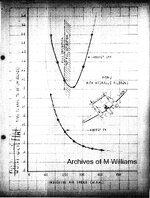
In regards to the P-38 roll rate, the attached shows the rate of roll for the boosted and un-boosted ailerons on a P-38J.
FWIW
Eagledad
0.2 seconds, faster rolling at high speed am I reading that right?
What I am seeing is just over 0.4s for 90° roll at 400mph IAS.
That is a photo of P-38F "Glacier Girl", rescued and rebuilt after decades buried beneath Greenland's glaciers. All it took was money - a lot of money!Well, I'm a huge fan -- mostly for its art deco look, though. I even prefer the early cowling look...

Note - that maximum roll rate is at very low combat airspeed.Gentlemen,
In regards to the P-38 roll rate, the attached shows the rate of roll for the boosted and un-boosted ailerons on a P-38J.
FWIW
Eagledad
I could be mistaken, but I think the Iceland P-38s were using US-supplied fuel and had issues only with the intakes, IF they were flying high. Otherwise, they were operating well, albeit with the same pilot inexperience and bad cockpit heaters. I say likely US-supplied fuel because I have never seen an Iceland report describing the typical issues seen in Europe, other than the lack of good cockpit heat, which would be present simply because they had not yet installed electric cockpit heaters. Seems like if they HAD been using European fuel, then the issues would have cropped up and would have been documented.P-38s were flying patrols out of Iceland in August 1942. First kill against German a/c - Fw 200. Some uneventful patrols and sweeps from England in September and October. 1st and 14th to North Africa November. 82nd in December.
Not entirely true re: P-38J-5 through mid block J-10. Continued fuel detonation, oil freezing, turbo failures due to poor throttle management and cockpit heating issues plagued P-38 operations into April 1944 when the late J-10s and J-15s arrived.I mis-spoke above. The P-38 got into combat in Aug 1942, in North Africa. They got into combat in Europe in Oct 1943, with the 55th Fighter Group, flying P-38Hs. The P-38J followed rapidly, before the end of the year, with most showing up in mid-1944. The small period when the intake and fuel issue was being solved ran mostly from early 1943 up through about Sep 1943. By the time the P-38J got to Europe, the intake and fuel issues were solved and no longer problems. The electric heater came along with the P-38J, which also had improved cockpit deicing, among other changes.
None of the fighters stagnated for long without incremental improvements trickling in. But, you know that.
Interesting you should mention fuel.I could be mistaken, but I think the Iceland P-38s were using US-supplied fuel and had issues only with the intakes, IF they were flying high. Otherwise, they were operating well, albeit with the same pilot inexperience and bad cockpit heaters. I say likely US-supplied fuel because I have never seen an Iceland report describing the typical issues seen in Europe, other than the lack of good cockpit heat, which would be present simply because they had not yet installed electric cockpit heaters. Seems like if they HAD been using European fuel, then the issues would have cropped up and would have been documented.
There are reports showing the boosted P-38 to have exceptional roll performance above 400 mph, with 90° in about 0.4 seconds being achieved at 400 mph. At least, AI found that, but didn't cite the reoport number.Note - that maximum roll rate is at very low combat airspeed.
Additionally, that is a sustained roll rate after initial inertia and response time is overcome.
That would certainly enable the P-38J-25/L to maneuver better than previous models but would not compare well with FW 190. Two factors that mitigate the enhanced roll rate are a.) initial reaction time from control input to initial roll acceleration due to large inertia of the large P-38, b.) same factor when a reversal is desired.
It was nothing to write home about above 300mph TAS.
I believe that is the issuw with the intake manifolds being too smooth, causing the air and fuel to separate inside the intake manifold when very cold, as Alaska would be in fall, winter, and spring. That one was solved by installing turbulators inside the intake manifolds, keeping some turbulence in the intake and keeping the mixture swirling inside it.Interesting you should mention fuel.
I have read that aircraft returning Stateside from Alaska in 1943 also had issues with fuel.
Hi Bill,Not entirely true re: P-38J-5 through mid block J-10. Continued fuel detonation, oil freezing, turbo failures due to poor throttle management and cockpit heating issues plagued P-38 operations into April 1944 when the late J-10s and J-15s arrived.
Unmentioned frequently is that the P38J models did not have factory installed external tank fuel pump pressurization slaved off the engine vacuum pump exhaust until J-15s arrived.
Both NAA and Republic adapted much faster with late P-51B-5 and P-47D-11s operational in ETO in January 1944.
Dive compressibility was never solved, only better dive recovery with the introduction of the dive flaps (also for P-47D-30).
At the end of the day the P-38 was a 'tweener' and a jack of all trades with B grade marks - but for long-range escort it was the best we had until the P-51B was operational.
No, but I think US fuel formulations changed between 1942 and '43.I believe that is the issuw with the intake manifolds being too smooth, causing the air and fuel to separate inside the intake manifold when very cold, as Alaska would be in fall, winter, and spring. That one was solved by installing turbulators inside the intake manifolds, keeping some turbulence in the intake and keeping the mixture swirling inside it.
I can't see any reason for Alaska P-38s to have been using British fuel, can you?

 ww2aircraft.net
ww2aircraft.net
ww2aircraft.net