It's interesting reading many of these replies and threads because you soon realise just what a close run thing it was. Imagine if Mitchell had decided to build the plane the RAF wanted instead of what he thought they needed, or Echols got his way and made B 25's instead of P51's, If Sholto Douglas and Mallory were in charge during the BoB instead of Dowding and Park, the list goes on.

Navigation
Install the app
How to install the app on iOS
Follow along with the video below to see how to install our site as a web app on your home screen.
Note: This feature may not be available in some browsers.
More options
You are using an out of date browser. It may not display this or other websites correctly.
You should upgrade or use an alternative browser.
You should upgrade or use an alternative browser.
Engine choices for P-51 mustang ?
- Thread starter VA5124
- Start date
Ad: This forum contains affiliate links to products on Amazon and eBay. More information in Terms and rules
More options
Who Replied?
GregP
Major
Lets be honest, without the Merlin the Mustang would just be another fighter but with it it became a legend. The Allison engined models were great aircraft but so were all the other low altitude planes, it's above 20,000ft were the men were seperated from the boys and where the air war ultimately progressed.
The men were separated from the boys in air combat. The altitude didn't matter and was a random factor of where the two sides met while climbing, descending, or cruising.
Last edited:
wuzak
Captain
What you really want requires "alternative history" levels of change.
1) RR invite Allison engineers to England to help fix the useless Merlin Mk1 engine ramp head
2) Allison give them the pent-roof chamber and roller-rockers they`ve designed
3) RR pass on test data on high pressure cooling to Allison
4) A collaborative partnership emerges
5) RR, grateful, and Allison receptive - RR call Allison in 1940 to ask if they want "in" on the new 2 stage project
I think you can imagine the rest, this is totally fanciful and utterly against the corporate attitudes of the time
and would never ever have happened. But....
Any other aspects where Allison could have helped Rolls-Royce?
Were any V-1710s given to Rolls-Royce for testing during the war? Would Rolls-Royce have pushed the V-1710 harder in testing than Allison was doing at the same time?
The V-1710 was designed to be modular. Could Rolls-Royce have designed a 2 stage system that could have been bolted in place of the regular supercharger?

Thumpalumpacus
Colonel
The men were separated form the boys in air combat. The altitude didn't matter and was a random factor of where the two side met while climbing, descending, or cruising.
It's all good and well until you're bounced. Even being a man might not save your ass at that point.
Equipment isn't everything, but it does matter.
What matters is the P51 couldn't do it at 34,000ft, the Allison models were good aircraft but the Merlin made the Mustang.The men were separated form the boys in air combat. The altitude didn't matter and was a random factor of where the two side met while climbing, descending, or cruising.

GrauGeist
Generalfeldmarschall zur Luftschiff Abteilung
I find it amazing, our clarity of events 80 years after the fact.
If they knew then, what we know now, then the Battle of Britain would have been fought with jets...
If they knew then, what we know now, then the Battle of Britain would have been fought with jets...
GregP
Major
What matters is the P51 couldn't do it at 34,000ft, the Allison models were good aircraft but the Merlin made the Mustang.
No, it didn't. The Merlin made it a high-altitude airplane. Before that is was an excellent low-altitude airplane.
The Allison Mustangs were faster than the Merlin airplanes at lower altitudes, so it's good they tried the Merlin since the ETO turned into a higher-than-normal operations area. I'm assuming you know that. Nothing wrong with a Merlin P-51, for sure.
- Thread starter
- #88
I'm still shipping the sabre idea because of the fact its 2.2k horsepower and its a 24 h-type design (h patterens are not common ) plus attiude performence , Packard was not making cars neither was licion or mercury so you can liscense the plans to them for the naiper design and have them make while Hawker bulids typhoons and tempest with it . production problem solved .
They must have known how the air war was going to develope because they both fielded similar high altittude aircraft.I find it amazing, our clarity of events 80 years after the fact.
If they knew then, what we know now, then the Battle of Britain would have been fought with jets...

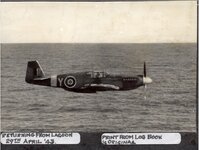
I am sure these gentlemen, who flew their war primarily between zero feet and 8,000ft between 1939 and 1945 would disagree with you. As would their DSOs with Bars (multiple), DFCs with Bars (multiple), M-i-Ds (multiple), plus numerous other decorations would indicate that the war below 20,000ft in the face of intense anti aircraft fire from light to heavy AA fire that could reach them in that envelope, usually being outnumbered by enemy fighter bouncing' them from a great height whilst "down on the deck", would beg to differ.The Allison engined models were great aircraft but so were all the other low altitude planes, it's above 20,000ft were the men were seperated from the boys and where the air war ultimately progressed.
A number of those pictured did also perform operations in the "pure" world of fighter operations above 20,000ft, but still recalled their low level operations at zero feet as the ones that required the most 'nerve' where the threat came from not just the enemy but power and telephone lines, church steeples, chimneys, wireless towers, large seabirds (a couple pictured returned from sorties with their aircraft badly damaged from impacting large flocks of seagulls as the crossed the Channel at zero feet), along with sea mist that destroyed any semblance of a horizon whilst flying mere feet above the sea.
One of those pictured here, returned from a low level sortie to obtain photography of a Gestapo headquarters in occupied France with bullet holes in his aircraft received from enemy AA, that could only have been made by the enemy AA gunner firing DOWN upon him - one of his photos from the sortie captured through the window of an upper floor of the enemy HQ, the light fitting on the ceiling of the room captured though the window. Without the low level sorties flown by these pilots, from 1939 to 1945, the War may have turned out a bit differently.
And yes, they did fly low, and they relied on the Allison engines in their Mustangs to get them there and back, from mid-1942 until August 1945.
Attachments
Deleted member 68059
Staff Sergeant
- 1,056
- Dec 28, 2015
Bearings is probably the only other major one, Allison bearings were much better than RR ones until something like 1942-ish.Any other aspects where Allison could have helped Rolls-Royce?
Were any V-1710s given to Rolls-Royce for testing during the war? Would Rolls-Royce have pushed the V-1710 harder in testing than Allison was doing at the same time?
The V-1710 was designed to be modular. Could Rolls-Royce have designed a 2 stage system that could have been bolted in place of the regular supercharger?
For some reason nobody cares about bearings in history about aviation. Which is pretty dim, as the entire motive power of the engine
is only possible because bearings stop the crankshaft flying out the bottom of the engine. So if your bearings are at their
maximum capacity, you cannot increase the engine power !
But who cares about little semicircular shells of dull looking metal...
Maybe take more care with your words.Maybe you all should read what I wrote, the P51 made it's name and built it's reputation escorting bombers to Germany, for that it needed the Merlin, not the Allison, say what you like, that's the reality.
Oh, by the way, five of the pilots in my photo, flew the first genuine long range - outside the range of the Spitfires and Hurricanes and Whilrwinds of the day - low level bomber escort for the medium bombers of 2 Group in September 1942, and three of those photographed participated in the first operation by single engined fighters based on the UK over Western Germany in October 1942 - all using their Allison engined Mustangs.

Howard Gibson
Staff Sergeant
If only DB showed RR how to build fuel injection!What you really want requires "alternative history" levels of change.
1) RR invite Allison engineers to England to help fix the useless Merlin Mk1 engine ramp head
2) Allison give them the pent-roof chamber and roller-rockers they`ve designed
3) RR pass on test data on high pressure cooling to Allison
4) A collaborative partnership emerges
5) RR, grateful, and Allison receptive - RR call Allison in 1940 to ask if they want "in" on the new 2 stage project
I think you can imagine the rest, this is totally fanciful and utterly against the corporate attitudes of the time
and would never ever have happened. But....
Howard Gibson
Staff Sergeant
A Mustang designed around a Napier Sabre would be a bigger aircraft with a fatter fuselage. Once they made the engine reliable in 1944, it would have been very fast below 20,000ft. Where was the upgrade path to provide high altitude performance in 1943?I'm still shipping the sabre idea because of the fact its 2.2k horsepower and its a 24 h-type design (h patterens are not common ) plus attiude performence , Packard was not making cars neither was licion or mercury so you can liscense the plans to them for the naiper design and have them make while Hawker bulids typhoons and tempest with it . production problem solved .
If you are American and you want 2,000HP, you talk to Pratt and Whitney. If you did not do this initially, a few months trying to get the Sabre's sleeve valves working would have changed your mind.
A Sabre engined Hawker Tempest_V was mostly faster than a Mustang below 20,000ft. Perhaps the Tempest_V with its laminar flow wings is your Napier engined Mustang!
Shortround6
Lieutenant General
They swiped 6 Sidestrand centerline grinders from P & W Kansas to send to England for the Sabre as it was and delayed production by about 6 weeks on the R -2800 C series engines.
The engines for the F4U-4 and the P-47M and N.
Be careful what you ask for, you might just get it.
The engines for the F4U-4 and the P-47M and N.
Be careful what you ask for, you might just get it.
Shortround6
Lieutenant General
They had investigated crashed DB601s by the summer of 1940. They knew how to build them. They didn't want to spend the time (labor and machine time) to build the fuel injection system (over 500 parts?) They also didn't want to give up the charge cooling.If only DB showed RR how to build fuel injection!
- Thread starter
- #98
Cant ask pratt and whitney they didnt make anything that wasnt a raidal at that point .A Mustang designed around a Napier Sabre would be a bigger aircraft with a fatter fuselage. Once they made the engine reliable in 1944, it would have been very fast below 20,000ft. Where was the upgrade path to provide high altitude performance in 1943?
If you are American and you want 2,000HP, you talk to Pratt and Whitney. If you did not do this initially, a few months trying to get the Sabre's sleeve valves working would have changed your mind.
A Sabre engined Hawker Tempest_V was mostly faster than a Mustang below 20,000ft. Perhaps the Tempest_V with its laminar flow wings is your Napier engined Mustang!
Your flogging a dead horse mate, fitting the Sabre into the Mustang is like fitting a 6Ltre V8 into a VW Golf, it won't fit.Cant ask pratt and whitney they didnt make anything that wasnt a raidal at that point .

buffnut453
Captain
Your flogging a dead horse mate, fitting the Sabre into the Mustang is like fitting a 6Ltre V8 into a VW Golf, it won't fit.
'Course you can!
I'll get my

Users who are viewing this thread
Total: 1 (members: 0, guests: 1)
Similar threads
- Replies
- 1
- Views
- 533


