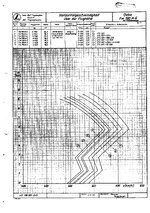
To further the above post by SplitRz we can look at a 1943 fighter bomber (service use) that has been held up as example.
A-36 with two 500lb bombs, Gross weight as per load and weight chart in manual. 180 US gals (150 imp) full internal tanks.
1325hp for take-off vs your favorite 1939-40 fighter engine/s ????
232sq ft wing
Now for the interesting part.
Manual says on a sod runway it needs with zero wind, 2400ft (800yds) to lift off and 3200ft (1066yds) to clear 50ft.
However that is at 0 degrees C. Manual says add 10% for every 10 degrees C higher than zero degrees so add 15% for 15 degrees C (59 degrees F)
so 3620 ft (1206yds) just to get off the run way. Adjust further for summer days (or warm spring and fall)
Head winds help but what size were the 1939-40 airfields/runways?
Some lists of the 4 greatest American weapons of WW II some times include the bulldozer

There were reasons why the single engine "bombers" of the 1930s and 1940 used either large wings or small bomb loads (or both). They had to operated out of existing airfields using engines that were limited in power compared to the engines that would be available in 1942-43.
Trying to backdate a late 1942/early 1943 aircraft to 1939 by just saying "use lower powered engine and bit less gas and even two 250lbs bombs" may still leave you with a plane that cannot get out of a standard 1939 airfield except on a windy winter day.
For the A-36 we can go to a pair of 250lb bombs, take out two .50 cal guns and associated ammo and take out about 40 gal US gas and get the plane down to 9000lbs.
Still needs 1900ft (633yds) to get off the run way and and 2600ft (866yds) to get to 50ft at zero wind and zero degrees.
Now take out the 1325hp engine and replace with a 1040hp engine (or 1939-40 Merlin, DB 601, Jumo 211, HS 12Y or 1939 M-105) of your choice.