
drgondog
Major
Fix, train, deploy in four days - a unique fighter that previously did not exist in USSR - rather than remove and study in detail?To defend Leningrad ?

Follow along with the video below to see how to install our site as a web app on your home screen.
Note: This feature may not be available in some browsers.
Fix, train, deploy in four days - a unique fighter that previously did not exist in USSR - rather than remove and study in detail?To defend Leningrad ?

According to Vladimir Kotelnikov, the Spitfires (LF IX) actually served in Leningrad's air defense (the 11th IAP and the 26th, 27th and 102nd Guards IAP). Furthermore, the 767th IAP flew "Spitfires" while defending Murmansk. But that were all air defense (PVO) units - almost all of the "Spitfires" received by the Soviets were used there.
I doubt that Finnish pilots could have encountered these "Spitfires" - deployment mainly began in the summer of 1944. In the north, near Murmansk, "Spitfire" reconnaissance aircraft were operated, but it was mainly German pilots who encountered them.Interesting. Do we know if these PVO Spitfires ever crossed paths with Finnish aircraft? I assume over Murmansk they might have seen some action against German aircraft flying out of Finland or Norway.
...but in fact they were all Yaks or LaGGs.Yes Hans Wind claimed 2 Spits with Brewster and two with 109 G.
I dont think any aircraft is as easy to recognize as a Spit....but in fact they were all Yaks or LaGGs.
You've already been told that misidentifying the type of enemy aircraft in combat was quite common among pilots on all sides. It's easy to mistake a Spitfire for a Yak.I dont think any aircraft is as easy to recognize as a Spit.
There were plentyful.
The thing that caught my eye was that he was escorting Blenheim bombers in mid 1944. You have to take your hats off to the crews of those bombers.Found this, an post war interview with one of the Finnish pilots involved, it seems the soviets did use their early P-51's for one short period in 1944.
.
I doubt that Finnish pilots could have encountered these "Spitfires" - deployment mainly began in the summer of 1944. In the north, near Murmansk, "Spitfire" reconnaissance aircraft were operated, but it was mainly German pilots who encountered them.

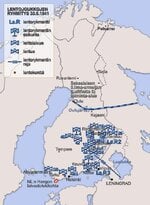
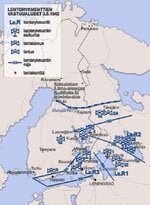
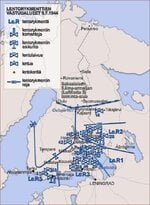
Kotelnikov's data seemed insufficient to me, so I decided to consult book All of Stalin's Fighter Aviation Regiments by Anokhin and Bykov and discovered the following:Interesting. Do we know if these PVO Spitfires ever crossed paths with Finnish aircraft? I assume over Murmansk they might have seen some action against German aircraft flying out of Finland or Norway.
Kotelnikov's data seemed insufficient to me, so I decided to consult book All of Stalin's Fighter Aviation Regiments by Anokhin and Bykov and discovered the following:
All of the regiments listed belong to the Air Defense Forces (PVO).
- The 26th GIAP received 8 Spitfire Vs in late June 1943, and from late June 1944 onward, it had only Yak-9s and Hurricanes. Spitfire IX arrived in February 1945
- The 27th GIAP received Spitfire IXs in June 1945
- The 102nd GIAP received Spitfire IXs in May 1945
- The 11th GIAP received Spitfire IXs in the spring of 1945.
How could that be possible as they don't look at all the same.You've already been told that misidentifying the type of enemy aircraft in combat was quite common among pilots on all sides. It's easy to mistake a Spitfire for a Yak.

You might want to consider how the air war over Britain began with the Battle of Barking Creek.How could that be possible as they don't at all the same.

I mean I don't understand at all why the highest scoring finnish officer ability see anything is even in question ?You might want to consider how the air war over Britain began with the Battle of Barking Creek.
Battle of Barking Creek - Wikipedia
en.wikipedia.org
My Dad was posted to Vaenga, Kola Inlet as part of 455 Squadron RAAF to deploy and provide Air cover for the arrival of Convoy PQ18. There was little action and the aircrews were recovered to UK on the USS Tuscaloosa. My Dad's troops were left behind at Vaenga to complete technical maintenance training and hitch-hiked back to UK aboard HMS Intrepid and manned an Oerlikon. Their Hampdens were gifted to the Russians and survived for a year, before the species went extinct.Not P-51Bs from the brits.
The first two ex-RAF "Mustang I" planes have been shipped in December, 16, 1941, last aircrafts have arrived in the USSR on May, 14, 1942. One of first planes in June - July 1942 was tested in Scientific research institute of Soviet Air Force. Most of technical parametres were not pleasant to the Soviet experts; they liked only powerful weapons.
Most part of those ten "Mustangs" was transferred in 6th Reserve Brigade (the Commander - colonel Shumov), where P-51s were used as trainers. For example, in Summer, 1942, during the training of personnel of 1st ferry-flights Division (these men should know features of American aircrafts), the five P-51s were used. Three of them were used long enough, and were based on aerodrome in Ivanovo town.
Three "Mustangs" from August, 22, 1942 have been directed in 3rd Air Army (Kalininskiy Front) for front trials. Two of them were used in 5th Guard Fighter Regiment, which was equipped with Lavochkin - Gorbunov - Gudkov LaGG-3 fighters. Mainly, on these P-51s the Regiment's Commander V. A. Zaytsev flied; but other pilots also tested these aircrafts - but planes were not pleasant... No one real air combat flight was made. Soon, the airscrews of those two fighters were damaged, and they were returned back (because of lack of spare airscrews).
One of ex-RAF "Mustangs" has been received by Training Regiment of Zhukovskiy-named Air Force Academy (Moscow); in 1946 it was still in the using there. Later this plane served as an element of exhibition of aviation technics. Another "Mustang" was in exhibition of Bureau of new technics in Central Aero-Hydrodynamic Institute (Moscow).
Thus - no any mentions about "the Northern Fleet" in history of Soviet "Mustangs".
The Northern Fleet was the user of another American fighter - P-47.
Russian P51's
Both Spitfire V and IX were in Leningrad:From Ships-USSR
150 Spitfire Vb to Basra in October to December 1942.
201 Spitfire IX to Basra February to July 1944
864 Spitfire IX in Convoys JW.59 to 64 to North USSR August 1944 to May 1945
128 Spitfire IX in independent sailings to North USSR May and June 1945
1,336 Total, Empire Archer reported to have 23 mark IX on board, 22 traced, part of convoy JW.63, the list omits RK915 on Fort Island which was part of JW.62, however RK915 replaces SM455 which moves to Fort Highfield also part of JW.62. Changes give a total of 1,337.
Five Spitfire Vb damaged in transit and written off (NOT sent to India as per comment) from City of Lille, 1 more damaged in transit and written off from Palma, 1 returned to UK from Bandar Shahpour. Of the Spitfire Vb 92 were new, that is only reported at maintenance or ferry/packing units before export, of these 1 was returned to the UK and 1 damaged beyond repair in transit. Serials listed. The new aircraft had serials from EN911 except EN923, EN930 and EP165.
AIR 19/524
150 Spitfire exported October to December 1942
1,187 Spitfire exported February 1944 to June 1945
Copying a table direct from a spreadsheet did not work. Spitfire exports to USSR by month
14 in Oct-42
35 in Nov-42
101 in Dec-42
6 in Feb-44
34 in Mar-44
56 in Apr-44
62 in May-44
16 in Jun-44
51 in Jul-44
40 in Aug-44
50 in Sep-44
100 in Oct-44
85 in Nov-44
155 in Dec-44
99 in Jan-45
90 in Feb-45
22 in Mar-45
170 in Apr-45
30 in May-45
121 in Jun-45
1,337 Total
Air 22/310
Protocol deliveries Final position as at 30 June 1945
985 Spitfire IXE, 201 Spitfire IX, 1 Spitfire HF.IXE, total 1,187
Extra to protocol
150 Spitfire Vb Offered in October 1942, shipped to Basra and handed over
3 Spitfire PR.IV Handed over in North USSR October 1942
3 Spitfire PR.IV Handed over in North USSR June 1944
Total 1,337 fighter and 6 PR versions.
End of Month unless noted
4 February 1943, 63 Spitfire Vb arrived Basra, 87 en route
March 1943, 107 Spitfire Vb arrived Basra, 43 en route
14 April 1943, 150 Spitfire Vb arrived Basra, 59 being erected, 91 handed over.
28 May 1943, 150 Spitfire Vb arrived Basra, 7 being erected, 143 handed over.
17 June 1943, 150 Spitfire Vb arrived Basra, 149 handed over to USSR, 1 awaiting collection.
June 1943, 150 Spitfire Vb handed over to USSR
To reconcile this with the Airhistory listing would require the RAF to replace the 6 damaged beyond repair in transit and the 1 returned to UK.
February 1944, 6 Spitfire IX en route to Basra
March 1944, 40 Spitfire IX en route to Basra
April 1944, 56 Spitfire IX en route to Basra, 36 arrived awaiting erection, 4 erected.
May 1944, 62 Spitfire IX en route to Basra, 24 handed over, 66 arrived awaiting erection, 6 erected awaiting hand over.
June 1944, 94 Spitfire IX en route to Basra, 36 handed over, 56 arrived awaiting erection, 4 erected awaiting hand over.
July 1944, 27 Spitfire IX en route to Basra, 77 handed over, 93 arrived awaiting erection, 4 erected awaiting hand over. 24 Spitfire IXE in ships currently expected to sail in Convoy JW.59.
August 1944, Basra, 116 handed over, 76 arrived awaiting erection, 9 erected awaiting hand over. 64 Spitfire IXE in Convoy JW.59, sailed 15 August.
September 1944, Basra, 171 handed over, 23 arrived awaiting erection, 7 erected awaiting hand over. 64 Spitfire IXE in Convoy JW.59, 50 on JW.60 all arrived.
October 1944, Basra, 186 handed over, 13 arrived awaiting erection, 2 erected awaiting hand over. 214 Spitfire IXE arrivals in North USSR, including 100 in Convoy JW.61.
November 1944, Basra, 198 handed over, 1 arrived awaiting erection, 2 erected awaiting hand over. 214 Spitfire IXE arrivals in North USSR, 85 en route in Convoy JW.62.
December 1944, Basra, 200 handed over, 1 arrived awaiting erection, 2 erected awaiting hand over. 299 Spitfire IXE arrivals in North USSR, 155 en route in Convoy JW.63.
January 1945, Basra, 200 handed over, 1 erected awaiting hand over. 454 Spitfire IXE arrivals in North USSR, 99 en route in Convoy JW.64.
February 1945, Basra, 200 handed over, 1 erected awaiting hand over. 553 Spitfire IXE arrivals in North USSR, 111 IXE and 1 HF.IXE en route in Convoy JW.65
March 1945, Basra, 201 handed over. 664 Spitfire IXE and 1 HF.IXE arrivals in North USSR, 100 IXE en route in Convoy JW.66
April 1945, Basra, 201 handed over. 764 Spitfire IXE and 1 HF.IXE arrivals in North USSR
May 1945, Basra, 201 handed over. 864 Spitfire IXE and 1 HF.IXE arrivals in North USSR, implying 100 IXE in Convoy JW.67
June 1945, Basra, 201 handed over. 985 Spitfire IXE and 1 HF.IXE arrivals in North USSR, implying 121 IXE in Convoy JW.68
No further statements.
The Airhistory listing agrees with the JW convoy totals except 1 more on JW.62 and 1 less on JW.63 and lists JW.68 as independent sailings.
The lists in Air Arsenal North America add 2 Vb both considered new, but EP120 reported never left UK and is still in existence, EP788 sent to NW Africa, no further trace, reported as new and also ex Middle East. The book also reports 8 Vb sent were not delivered, replaced from RAF stocks. W3936, EP145, EP242, EP386 are not in the Air Arsenal North America mark V list. The mark IX list book total is 1,181 but has 1,176 serials.
Yes, there were. But on April 14, 1943, there were no Spitfires near Leningrad. Wind definitely didn't shoot down any "Spitfires," and it's not certain that he shot down anyone at all that day. Either you're not reading your opponents' responses carefully, or you're not reading them at all - I pointed out that Kotelnikov's data (from the article you're citing, even though I referred to a later book of his) is insufficient, and that there is more detailed data available.Both Spitfire V and IX were in Leningrad:
"Confirmed" != "verified". The Soviets acknowledge only the loss of a single I-153 on April 14, 1943 - it was damaged in a dogfight, then came under friendly fire, and finally crashed while landing in fog after its wheel caught on a mound. Air fights involving Soviet fighters have been documented - these included the I-153, I-16, La-5, LaGG-3, and Yak-1. Wind's claims are not confirmed by Soviet documents.
Just like Wind - that is, he didn't shoot down any "Mustangs" by misidentifying the type of aircraft.But how could Kyösti Karhila have shot 2 Mustangs in same area...I cannot tell.
According to Soviet documents, on July 4, 1944, two Yak-9s (one of which was shot down by anti-aircraft artillery; the pilot was rescued) and two Il-2s were lost. On July 7, 1944, one Yak-9 and two Il-2s were lost. It appears that the Yak-9 served as the Mustang.
Ok...I can agree on this.According to Soviet documents, on July 4, 1944, two Yak-9s (one of which was shot down by anti-aircraft artillery; the pilot was rescued) and two Il-2s were lost. On July 7, 1944, one Yak-9 and two Il-2s were lost. It appears that the Yak-9 served as the Mustang.


