German Battleships and convoy hunting. (1 Viewer)

Ad: This forum contains affiliate links to products on Amazon and eBay. More information in Terms and rules

maybe not completely replaced Adler, but different applications take on different characteristics. I think we will see more computer generated arms in the mid-east shortly

 
they are perfect for the mountainous terrian especially for recon so guys like us don't have to go crock popping amongst the boulders of the mid-east and east asia for miles and miles.

sorry if I have gotten a little OT here
 
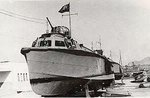
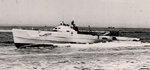
wonder what may have happened had these Leichte-Schnellbootes bee released in sufficient numbers with two torpedos ? The turret housed a 2cm weapon. A bit oversized for a small vessel
 

Attachments

  • ls_6_pir_us_137_111.jpg
    ls_6_pir_us_137_111.jpg
    10.5 KB · Views: 292
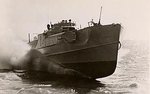
I personally think the E-Boots/S-Boots that the Germans had were of great design and potential. They were made to beat the whole tonnage allowance from the Versaille Treaty, but were fast and well armed. I too think they should have built more of them.
 
I dont know how much damage they could have done in the long run. Small boats in open water are nothing but target practise for aircraft.

The Beufighters and Mosquito's would have had a field day aginst them, just like the 5th AF in the PTO had with the IJN patrol craft.
 
there probably would of been tactics developed though sys to combat the rockets. The S-booten were so bloody manueverable, the biggest problem was getting them out to the depths of the ocean and having such shallow bottoms would of been sunk by the carnage of heavy seas. The proof was the sinking of most of them while in dock, as they were such a nuisance to Allied shipping as a potential threat.
 
They were only target practice during the day at night the planes couldn't hurt them. Some of the most vicious fighting in the North Sea/Channel was between the German S and R Boats and our MTB/MGB's It was fast, furious and at times very close range. Collisions whilst not the norm were not uncommon. HMS Kelly was torpedoed by an E boat and nearly sank but captured the German ensign off the E Boat during the battle which wasn't sunk. Gives an indication as to how close, close could be.

The Germans built large numbers, if I recall over 200 of these boats as did we. Boat for Boat the Germans were better for most of the war, but they tended to be on the defensive as the RN did most of the attacking.

Jap patrol boats were poor by comparison being built in small numbers, they were also poorly armed and tended to be slower.
 
Glider I think the MTB units increased in number while the S-boot Flottilla's deminished in size ............. and MTB units waited for the S-booten to leave port and then catch them if at all possible. As you stated which is so true, some of the nastiest close home enagements were between the two able boots and their crews
 

Attachments

  • 2_kreuz_382.jpg
    2_kreuz_382.jpg
    49.9 KB · Views: 254
To be honest I am not sure on that. I know that both sides started with small numbers and built them quite quickly. Its possible that we outproduced Germany as we had countless small shipyards around our coasts who could build this type of boat.
One thing though is that they were very seaworthy. The RN were operating as far afield as Norway from England from around late 1943 onwards.
I used to have a number of books on this topic but gave them to my brother a few years ago.
As for hiding and waiting, both sides used to do that. One tactic was to wait alongside a buoy or a wreck so you couldn't been seen on radar, creep in, fire and get the heck out of Dodge. Difficult to defend against those tatics.
 
no glider what I meant as to losses there were non KM capabilities to keep up with this as to production, as then it was being overwhelmed during mid 44 to 45 and the real chase began, nearly every opertion by the Schnellbooten arm was at night except for the evac of civilians from the Baltic shores, and even then evac and also waiting for Soviet subs and MTB's to show their faces. The civilians must have literally gotten a thrill from that. Getting into action along with a crew trying to maintain operational accuracy and moving around a small craft covered with too many people..........yee haw
 
From my understanding most were used at night anyhow because of there vulnerability during the day. However large massive numbers at night could have been deadly to the fleets at sea. The problem as Erich put it was getting them to sea.
 
I read the excellent 'Motor Gunboat 658' late last year.

At least in the Mediterranean the British seemed to think that their were superior to their German opponents in every capability except for outright speed. This feeling was doubly reinforced when they started operating with US Partol Boats fitted out with better radar (funnily enough, it was British designed), who allowed them to pick up targets well beyond visual range and manoeuver for the kill earlier. The biggest danger to MTBs, MGBs and 'Dog Boats' seems to have been mines rather than enemy surface action.

The MGBs had 1 6 pounder, a twin 20mm, two twin .50s (later replaced by two single 20mms, and then two twin 20mms), a 40mm pom-pom (later replaced by another 6 pounder) and a couple of twin Vickers .303 mounts. With 4 1000 hp Allisons in the back driving 4 screws, they were no slouch in terms of speed either.

MGB 658 was credited with the sinking of 1 Escort Corvette, 3 E-boats as well as 9 other ships. It was also credited, remarkably, with 3 Fw-190s (2 in one action) 2 Ju-88s and a Do-217. 1 of the Fw-190s, the Do-217 and 1 of the Ju-88s were all destroyed on lone long-range patrols by the crew, so the boats certainly weren't defenseless against fighter and bomber attacks.
 
658 was a Fairmile D known as a Dog Boat in the RN, they were the largest and most heavily armed boats of their type in the world. They were slower than the traditional S Boat and RN MTB/MGB's but in normal sea conditions, compared to the 'Flat Calm' headline speeds, the difference wasn't that great.
 
The Scharnhorst wasn't a pocket battleship they had a main armament of 6 x 11in and were a lot smaller. She was a Battle Cruiser with 9 x 11in and that was one of her disadvantages although her sistership Gneisenau was being rearmed with 6 x 15in to replace the 11in guns. A change that was never finished.
They were fast, seaworthy, well armoured, matching a number of Battleships in that area.
Her secondary guns wasted a lot of weight in that she carried 12 x 5.9in (4x2, 4x1), as well as 14 x 4.1 AA. The single 5.9 in particular were an extravagent waste of armour and weight.
The Germans didn't have a 5in DP gun but she would probably have been better off carrying more 4.1 and light AA guns plus extra deck armour. It was already quite thick but extra protection against air attack never hurt in WW2.
As in a number of areas there was little wrong with the German vessels, it was the lack of leadership that caused difficulties.

Small change to my last posting. The RN had a small number of Steam Gun Boats (which were basically big MTB's) that were larger than the Dog boats but as I said were small in number.
 
Very interesting material from Delcyros.

While naval matters are not my specialty, and knowing the allies are full of shit, it ain´t surprising Bismarck eventually became another one of their post-war targets in another attempt to have her minimized as much as possible.


A question for you navy buffs:

What are your thoughts on the outcome of an engagement between Bismarck and the french Jean Bart?

I like the design of the Richelieu class battleships very much; what do you think about those large cuadruple turrets?

Was it wise to have the main guns located all in the forward section of the vessel (bow)?


If I recall correctly, the only combats Jean Bart ever had during the entire war happened while being tied to her dock -with only one of the cuadruple turrets installed- in Casablanca against ships of the US Navy.

Comments?
 

Users who are viewing this thread

Back