
That's exactly the point. You can't consider this without talking about procurement and context.
Winning Desert Storm is an illogical step because the system was designed to defeat the Soviet Union, not an isolated second-tier Middle Eastern power. That much is true. Pietrucha is saying that CBP is being used as a substitute for strategy and strategic thinking.
I'm not putting this here to prove solutions, Squish. I'm putting it here to prompt/ask questions.
I don't see any point in asking questions if you do not even want to even begin to consider the answers to them.
So does that mean we shouldn't ask questions? This is why, historically, we learn more from our defeats than we do from our victories. Pietrucha's point was that the United States learnt the wrong lessons from Desert Storm. In fact, if you read enough of his stuff, he makes it very clear that the whole basis for tactical planning is a flawed premise, a scenario that was used after all the major threats had been extinguished. If that's not a case for asking questions then I don't know what is.
There is no evidence of this axiom one way or the other. Arguably there is strong evidence to the contrary; hence a common criticism of the US Military is that it's always "fighting the last war."
The lessons that Boyd/Sprey etc took from Vietnam were that the only relevant fighter aircraft was going to be a pure dogfighter that was not equipped with radar missiles in the first place. History has proven this assertion wrong.
We can see this with our most recent defeat in Afghanistan. What lessons did the Army learn from it? Well the lessons of Afghanistan have resulted in a return to the "Battle Rifle" concept and adopting a cartridge that is more powerful than even the 30-06 that was used during World War II.
This is all because of our experience with goat herders taking pot shots at FOBs from a hillside away using ancient Lee-Enfield rifles.
It was the same set of tropes that he always used. I would suggest you look up his studies/articles where he singled out specific programs during the 1970s/1980s and labeled them "cheap winners / expensive losers."What were his reasons? Without any context, of course this looks ridiculous. I don't think he was literally advocating for the M-48.
Of around the 10 or so programs that he singled out for critique...the only one that he was proven correct about happened to be the M-16 Rifle.
Even if we assume that then J-10 or J-17 fighters never turned their radars on (which is likely untrue), and that the missile was guided via datalink (something that is true) it still proves my point.Yeah but the point here was that the missiles could have been fired from anything that could carry them. Control of the electronic battle space was what mattered. The Pakistani J-10 and J-17 fighters didn't even turn on their radar.
The purpose of this wasn't to prove that Sprey's ideas were right. The point was that people need to ask questions, rather that persisting in the time honoured way because there's a belief that it's always worked. Much of what you've written simultaneously validates what I'm saying. My comment that adding capability was not an unreasonable point of view was interpreted as an unreasonable point of view because designers kept adding capability!
With context removed, you can prove anything. That graphic (which I assume you got from Sprey) is one example. Your use of it is another. Both are context-free arguments.
Now, I'm quite sure everyone has had enough of me. I'm not trolling, believe it or not but I can see I'm not getting anywhere.
This kind of highly network centric battlefield is exactly the kind of highly complex and high technology solutions that Sprey fought against his entire career!
I am not apart of any industry and I have been critical of some of the critiques of Sprey/Boyd that downplay their significance to the point of irrelevancy. He does get trotted out as a boogeyman a little too often.I'm not defending everything Sprey said either. During the development of the F-35, a whole industry sprang up generating context-free material with which to attack Pierre Sprey. He became a lightning rod for all kinds of Aunt Sally arguments, whataboutism and ultimately, the defence of a system that lives on blind faith and self-evident truths, something Lockheed-Martin did nothing to prevent. It went a lot further than that but I'm not interested in examining the darker side of what happened. That's an aside to this.
He was wrong about the P-47. He was probably wrong about a lot of things. He was not wrong to challenge the status quo.
This does not change a few facts though; namely that himself and Boyd were wrong about far more things than they were right about. And that the degree to which they were wrong only increased over time.
Neither Boyd nor Sprey were ever willing to admit their assumptions were wrong about anything. Sprey in particular was not capable of any kind of intellectual growth or self-reflection which is why his proposals and positions looked increasingly ridiculous over time. They basically never changed and were frozen in the dogma of the 1970s.
It is one thing to say that the M1 Abrams is going to be a failure in 1980, that it's too expensive, that the Chobham armor isn't going to work, and that the Army should just continue to buy M-60s instead. It is entirely another thing to have that exact same position and even double down on it in 2007!
In what ways does the "current situation" prove that he is right? Do we honestly think that the Iran War would be going better if the USAF inventory consisted of gunfighting F-16s, A-10s, and dumb-bombs?But if you look at the current situation, it's not hard to see where he was right.
The degree to which Sprey has been proven correct is in the same sense that a broken clock can be right once a day or in the sense that anyone can point out that water is wet.
Now let's all be friends and get back to Greg and the P-38.
If we get back to Greg and the P-38 then the only thing that he really brings to the conversation and how his position differs from Sprey is that he at least doesn't discount it as a failure of a fighter.
Aside from that, when engaging with the actual case history, he makes similar attempts to pin the deaths of thousands of airmen at the feet of Hap Arnold by concocting a totally false narrative that the Army Air Corps erroneously decided not to seriously develop escort fighters or drop tanks until after the first Schweinfurt mission.
The only kind of nuance to Greg's narrative is that he believes the P-47 was a superior fighter to the P-51 in practical terms; whereas Boyd/Sprey regarded it as the complex and expensive and poor dogfighting counterpart to the "lightweight" P-51.
Last edited:
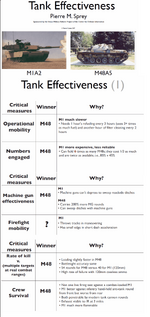
 ) I can conclude that either they were using GIGO (garbage in garbage out) or were out right lying to make their point.


