I certainly know that Greg is more knowledgeable of the technical aspects than I am, but I just disagree with the use of the 687 km/h number as an accurate reference for a 'best case' Ki-84 for these reasons.
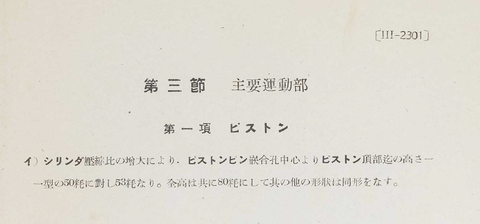
The 1946 'test data' that gave 687 km/h is an exact reprint of the TAIC early 1945 calculations:
View attachment 703261
View attachment 703259
^ TAIC Manual 1945
View attachment 703257
^ Ki-84 T-2 Report 1946
So in the first place, this speed was not obtained by a real flight test. It also
is a wartime calculation based partly on intel, and we can't really know the accuracy of it, not mentioning that calculations with good data can be at variance with reality.
I don't think that this number should be used as a realistic ref for the speed of a top notch Ki-84 if no plane ever actually demonstrated it.
-
Now, looking at both of the 1946 Ki-84 test reports, although the above speed performance figures are given it is doubtful that maximum performance was tested/recorded at all.
Rather it seems that the objective was to determine handling characteristics.
In the 1946 T-2 Report with the copied TAIC estimate numbers:
View attachment 703262
View attachment 703255
View attachment 703253
In the 1946 Middletown report:
View attachment 703256
The climb time is only guessed, and assuming it's an average, at 6'40" to 6,100m (close to actual Japanese test values) it's almost a minute slower than the TAIC calc of 5'48" to 6,100.
As we can see, the 687km/h dataset in question was pretty certainly just calculations from the TAIC. I find it not credible due to the fact that it is exceptionally far from other existing data based on the fully rated Ha-45-21. As was a lot of TAIC data, like that of Shiden and that of Raiden. In general the claims of Japanese planes giving much superior performance in 'US testing' are often unfounded and lead back to the TAIC calcs.
While Japanese prototype performance tests were not done at WEP, they still naturally used adequate fuel for knock prevention and a well made airframe by their standards. Providing superior grade fuel by itself won't appreciably improve performance.
I'm not saying that the overall performance of Ki-84 couldn't be marginally improved in a US test, especially if it was rebuilt with better parts, excellent fuel/oil and so on, but there aren't real numbers for this. I believe 687 is very excessive considering that the highest Japanese test numbers are around 634 km/h, even though they're at mil power. Of course the extant Japanese test data is insufficient in many ways considering the amount of potential variance there was, but a theoretical number like 687 seems very unlikely unless the engine was uprated to produce greater than designed output.
Thanks for the informed rely. I've read your
analysis before and very much enjoyed your thorough discussion of the topic.
There are a few things that I'd point out:
So getting back to TAIC and Middleton (MAMA) testing standards, the information that we're missing is the Homare 21 bench testing under controlled conditions. Do you have access to these documents? There are two AFAIK, one relating to the controlled bench test and one relating to the aircraft evaluation. AFAIK, these are the documents that Greg is primarily referencing and they are absent from your website's analysis. They've been linked to multiple times on this forum.
There are a few points that need to be made:
First, WW2-era pitot tube speedometers aren't always accurate due to differences in wind, heat, humidity, altitude, airflow over the tube, and other variables that can't be controlled for. So TAIC is likely testing engines in isolation, outside of aircraft, in order to avoid two issues. The primary issue is standardization and the secondary issue may be cost. However, Greg doesn't speculate as to why TAIC's engineers used controlled external bench testing conditions to generate the synthetic speed estimates of the Frank, but it's cheaper and it's more standardizable to run the engine up on the ground and then synthetically generate its top speed.
In fact, TAIC basically states in the beginning of their intelligence reports that they do not calculate speed in the air and that all calculations, unless otherwise stated, are done synthetically. But that said, their report on the Homare 21 is actually one of the most thorough and comprehensive reports available on a WW2 engine, according to Greg.
Second, Greg also gets into the 624 KPH numbers and explains why they're not as authoritative as MAMA's data. Basically, those numbers aren't as well understood as the Middleton data. Again, the Homare Ha-45-21 that was tested at Middleton was removed from the Ki-84, completely disassembled and rebuilt to the factory standard (likely using machined components if such components were bad on the original engine). The engine was then tested at Middleton WITHOUT an aircraft attached to the engine using 96 octane (so the issue with knock disappeared). Because it was run with 96 octane, the dash 21 was run at its maximum horsepower using full RPMs and manifold pressure. In other words, this was not indicative of an aircraft flown in the Philippines or Japan, where the majority of air combat occurred. There were only three synthetic fuel factories that could produce 100 octane fuel under Japanese control IIRC. One in Manchuria, Korea, and Taiwan. So if there were Frank fighters capable of similar performance, they would have likely been outside the major zones of conflict (except Taiwan). It's possible that some better conditioned Franks were flying in the 1944 Japanese offensive in China, but IDK.
I don't think the climb data similarity is proof that TAIC's information is incorrect. If it is incorrect, or a result of a patchwork methodology, it would take an aerospace engineer to figure out where the mistake occurred. We lack the calculations used by TAIC and only have their final analysis. Is it possible? It is, but we don't have authoritative data or primary sources to confirm that point. At present, we only have (thanks to your work) a working hypothesis that suggests there might be a mistake in their calculations. However, I believe that the MAMA report might shed additional light on this incongruity.
Third, the 96 octane fuel's impact on test data should have (according to Greg) lowered knock as it wasn't increasing manifold pressure or increasing RPMs. TAIC still ran the engine at its designed power settings. The performance-at-altitude curve that you observed was based on the supercharger settings and should, AFAIK, be pretty much the same. Greg even got into this and mentioned that the critical altitude was suggestive of (IIRC) good knowledge of the Homare's supercharger design. You'll have to watch the video to understand his point about this because I can't remember the details.
In summary, I think that Greg's data only indicates the theoretical maximum performance of the Frank and (as he claims) is not the actual combat performance of most Franks, which was likely heavily watered down by operational limitations. I do not think you are wrong but Greg's point is that he is interested in the theoretical maximum performance of the aircraft as that is the standard that we use to judge the engineering of WW2 aviation designs.
By the way, I believe that TAIC's last report was September of 1945 and that the TAIC report was based on interviews with captured aircrew/pilots and that the Middleton report was generated in 1946 based on benchtesting. So the MAMA report is the final say in all post-war analysis on the Frank.