how did seaplanes get back on the ship?

Ad: This forum contains affiliate links to products on Amazon and eBay. More information in Terms and rules

fireball45

Airman
14
3
Feb 3, 2026
so I've seen pictures of seaplanes on battleships and stuff being launched from these short little catapult type things and there is NO WAY they're landing on that thing, so like do they use a crane or something to get it back on? do they just abandon it? black magic? any help would be appreciated
 
The seaplanes landed in the sea near a ship. Then these were picked up with a crane. Certainly the possibility of lifting from the water depended on the operational situation. So sometimes these could be abandoned and sunk.

w1.jpg

w3.jpg

w2.jpg

W7.jpg

US-Navy-Curtiss-SOC-1-Seagull-scout-observation-aircraft.jpg

the pic source: the net and
 
Launch and recovery the RN way. Aug 1940 training film.

View: https://www.youtube.com/watch?v=6dmNyts7f1w

An alternative method used by some other navies was use of the Hein Mat towed a stern of the ship onto which the aircraft taxied to be recovered.

 
Makes me wonder if the navy(s) ever considered in-flight recovery, akin to the "trapeze" hook system used on the US Navy airships USS Akron and Macon. The stall speed of a Supermarine Walrus, for example was 55–60 knots. a cruiser running at 30 knots into a 30 knot wind might just pull it off.
 
Makes me wonder if the navy(s) ever considered in-flight recovery, akin to the "trapeze" hook system used on the US Navy airships USS Akron and Macon. The stall speed of a Supermarine Walrus, for example was 55–60 knots. a cruiser running at 30 knots into a 30 knot wind might just pull it off.
You mean akin to the WW2 Brodie system?

The answer to your question is no. Just look at all the gear involved.

Not even the 1980s Skyhook caught on (pardon the pun)

 
You mean akin to the WW2 Brodie system?

The answer to your question is no. Just look at all the gear involved.

Not even the 1980s Skyhook caught on (pardon the pun)

That's the one, thanks.

I never thought it made sense for the Harrier. The aircraft can vertically takeoff and land on any reasonable sized area, including a helicopter pad. What's the benefit of the hook below? Surely the ship's 20-25 knot WOD makes no difference in fuel or payload. Now if that arm could trebuchet chuck the Harriers, then maybe, lol.

avav8_3_07.jpg
 
The Brodie system was tested on at least one LST during the war - I don't remember what the main problem was, but the concept was abandoned.

The US Navy's standard recovery techniques were:

AFFIRM - ship at anchor, aircraft taxis up and is hoisted on board

BAKER - ship floating free, aircraft taxis up and is hoisted on board (less trouble if recovery is affected by tides or other moving water)

CAST - ship moves in a circle, pours oil on the water to calm the surface, aircraft lands inside the circle, taxis onto the recovery sled and is hoisted on board

DOG - ship moves in a straight line, aircraft taxis up onto the sled, and is hoisted on board. (Can recover aircraft on either side of the ship - or to the stern - at the same time and less of a target to enemy fire, but more difficult in heavy seas.)

Cheers,


Dana
 
Makes me wonder if the navy(s) ever considered in-flight recovery, akin to the "trapeze" hook system used on the US Navy airships USS Akron and Macon. The stall speed of a Supermarine Walrus, for example was 55–60 knots. a cruiser running at 30 knots into a 30 knot wind might just pull it off.

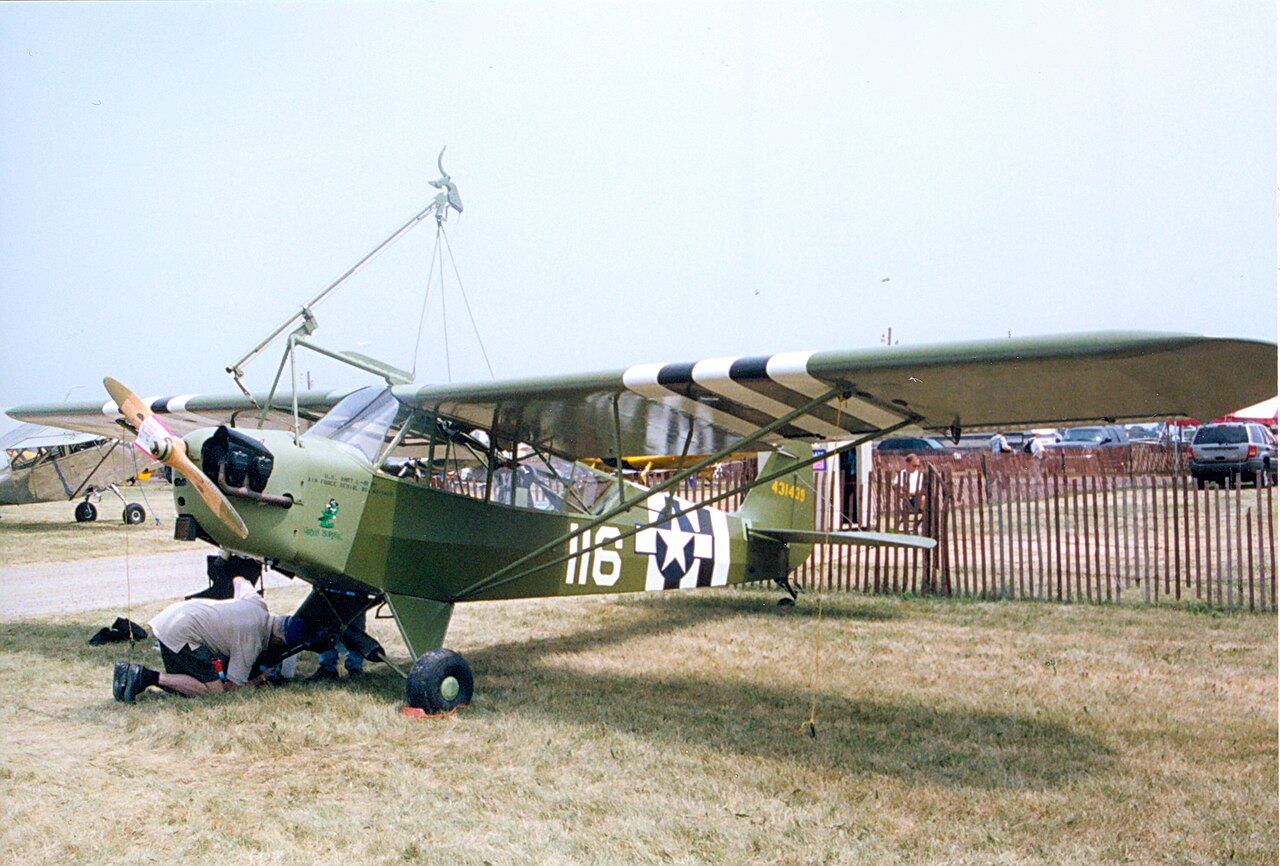
The US Army did:

maxresdefault.jpg


View: https://youtu.be/ZzMnB309s6c?t=405

Source (and a good article on the subject): The saga of the seasick US Army Piper Cubs on the Navy's smallest aircraft carriers.
 
Carrier borne operations, close air support, tank busting, aerial interception and recon. Is there anything the Cub can't do? Take that Storch!

BTW Elvis Elvis has a great signature card.
 
Last edited:

Users who are viewing this thread

Back