How superior climb rate is used in air combat ?.

Ad: This forum contains affiliate links to products on Amazon and eBay. More information in Terms and rules

I suppose a better climbing fighter that was not as badly mismatched as a P-51 versus F3F could use a high speed yo-yo to defeat a more maneuverable opponent. The better climber could not try to turn with the target but instead turn only part way, then zoom upwards above the target, and using the fact that he is slower at the top of the zoom and has more room to maneuver with the added altitude, dive on the target, which probably has lost sight of him anyway.

The need for a high speed Yo-Yo is more to do with being an attacker with excess AIRSPEED and avoiding flying through the plane of the turning target aircraft in front. As I said before, if the attacker from behind flies-through the plane of the target, the attacker may become vulnerable to a reversal of turn direction by the target aircraft with the previous attacker becoming the target!
The counter to a H-S yo-yo is to go up with the attacker as far as possible and also benefit as much as possible from the reduction of turning radius. However, with a lower energy state (speed) the defender is likely to not have as much performance in the vertical (upwards) and may still be losing angles to the attacker. With a lot of excess speed an attacker may get vertical enough to use Roll in the direction of the fight and actually gain large angles against the target without pulling G for lift to turn. With a definitely more agile target though, the attacker may be unwilling to prolong the turning within the H-S yo-yo as soon as his speed drops and may just bug-out.

Eng
 
Last edited:
Another point that readers of these Air Combat and fighter performance conversations should bear in mind is that, real shooting war turning or manoeuvring fighting is very difficult to master, because of the complexity of the variables and the chances of mistakes, that all lead to a nasty death for someone.
It seems to me that many high scoring Aces, and the survivors of many combat situations, often chose to only engage a fighter Vs fighter combat where they had a definite advantage of surprise, strength in numbers or performance, the variables of just pitching-in to a "dogfight" without having a clear advantage are so great that it is like Russian Roulette, you are likely to be shot dead!
Practice Air Combat is sometimes known as "The Sport Of Kings" and it truly is the best excitement there is. However, real Air Combat can be more like a Gladiatorial fight to the Death!

Eng
 
"Reversing in a turning fight is only advised if your chasing opponent has flown-through!" This is what I said and it is correct, if you are being chased and reverse before the fly-through
then you are very likely to simply offer a better angle to your opponent.
There are lots of variables, but if you reverse too early in a situation you become an easier target. Of course, if the attacking aircraft is a high speed barge with no manoeuvring capability you may well be able to reverse just as soon as he can't pull his sight on you, but if his overtake is not as bad as you think and he is more agile than you, he will possibly not fly through and you have just helped his lead solution.
As an attacker with energy advantage, entering any scissors or high-G barrel roll is not advised as it is a last-ditch energy-killing defensive act of a weaker target that having started often only resolves through luck of the draw.
Good examples of related Tactics are those where faster aircraft were advised to avoid entering turning fights with known more manoeuvrable enemy aircraft because as soon as you have lost your high speed advantage to dis-engage, you are in a simple pilot ability and aircraft manoeuvrability contest and you have already lost the manoeuvrability part of the contest!

Eng

There is really no such thing as a generic dogfight.

What you can and cannot effectively do just depends a LOT on your aircraft and your enemy's aircraft. You usually know what aircraft you are flying, figuring out what the other guy is flying is a lot harder.

But in certain Theaters, at least for a time, you may be running into the same aircraft over and over, and their flaws and limitations relative to yours become well known as pilots share information with one another.

If you are in a Fw 190 and fighting a Hurricane, reversing a turn (or scissoring) is a very good idea. Same if you are in a P-40 fighting a A6M, or an I-16 facing an A5M, you are in the same boat. Roll is your one big advantage, you can't turn with this opponent.
 
About the value of climb performance, here is an excerpt from a paper I've done comparing the P-40E and A6M2 Zero, and which is available in pdf format here:

"A strong point for the P-40E is that it can still climb when the A6M2 is at its top speed, which is an observation that is valid from sea level all the way up to almost 9 km in altitude. And what this means in practice, is that a P-40E can maintain its distance from any pursuing A6M2 while at the same time adding energy by climbing. As an example, at 4500 m altitude, if the P-40E maintains the A6M2's top speed at this altitude it can still climb with an impressive 3 m/s (circa 600 fps). Consequently, a very useful and safe tactic for the P-40E would be to attack from an altitude advantage and then extend at a speed slightly higher than any pursuing A6M2 while still climbing, and then return and repeat the process as necessary when a sufficient altitude advantage has been built up. Properly executed, the A6M2 has basically no effective way to combat a P-40 E flown in this way since the P-40E can both attack with impunity, and then choose to either repeat the process or leave the area depending on how the A6M2 pilots respond. And if the A6M2 pilots are foolishly aggressive, they may attempt to pursue the extending P-40E's, thus setting them up for a repeat attack. However, a more wisely flown A6M2 would on the other hand not pursue the P-40E's directly, but instead initiate a maximum rate climb. And since the A6M2's climb rate is so superior to the P-40E's as the figure above shows, the A6M2's could simply climb faster than the P-40E's, thus building up an energy advantage which would preclude the P-40E's from any repeat attack. But this is a rather passive response, since while it certainly saves the A6M2's from any repeat attacks, the Zero pilots cannot take the fight to the P-40E's unless the pilots of the latter are foolish enough to return to the fight without an altitude advantage.

Another thing that we can conclude from the climb rate versus altitude chart is that at any altitude above 1500 m, then the Zero is vastly superior in climb. And what this means from a tactical perspective is that while a flight of Zeros cannot force un-cooperating P-40Es to do battle, they can however still dominate an area, as in establishing air superiority there, and leave any attacking P-40Es only a single slashing attack, after which they would be forced to leave given that the Zeros not only out-climb them, but have a higher ceiling as well. However, the above scenario of course assumes that the P-40Es had an altitude advantage to begin with, since they otherwise would be forced to leave the area immediately."

P-40 pilots, like several from the 49th FG, several New Zealand 14 & 15 Sqns, RAAF 75 and 76 sqns reported being able to disengage more or less at will from the A6M, though it took a while to figure out exactly how to pull this off. Usually when they get into detail it involved putting the stick forward in a nose over, which the P-40 could do but the A6M could not follow into the Zero G part (or they would stall), after which the P-40 does a Split-S and a vertical dive to pick up speed, roll right, turn and extend. You see descriptions of this by pretty confident sounding pilots by later 1942 and 1943. Prior to that they weren't certain how to do it and there was a lot more fear when they had to tangle with the Zeros.

The high speed climb option (including a gentle high-speed climbing turn) is something I've seen described by P-38 pilots several times, though it seems like it might also be viable for early 'Tomahawk' type P-40 (B or C) or later mark P-40s (N, M, and particularly F or L which are good up to about 25,000 ft) but I don't know if I'd risk it in a P-40E or K. I guess it would depend on the altitude of the engagement. Critical altitude for a P-40E or K is about 12,000 ft and performance ceiling is roughly 16,000 ft. Anything over that and you might still have some speed but the plane starts to become 'mushy'.

For some insight into how a p-40 flies against an A6M, I think the famous Australian test where they flew a P-40E against a Spitfire Vc in a series of dogfights at different altitudes and with advantage alternating. The P-40 was able to disengage more or less at will, and could counter the Spitfire's superior turn and climb (by rolling / scissoring and dive / zoom), but only up to about 16,000 ft. Above that the Spitfire had the advantage. This suggests diving would be a good idea if you encounter one at that altitude. The performance and maneuvering differences between the Spit V (slowed down by it's Vokes filter) and the P-40E in this test I think are pretty similar to the difference between the P-40E and the A6M2.

Robert DeHaven, the 49th FG ace, described using a high speed low-yo-yo turn to out turn A6Ms in a P-40. He does appear to have shot down several of them (from the Japanese records, not just USAAF 'confirmed' claims) so he probably knew what he was talking about, though and individual pilots perspective was always somewhat limited. He flew (and got victories with) the P-38 as well.
 
Another point that readers of these Air Combat and fighter performance conversations should bear in mind is that, real shooting war turning or manoeuvring fighting is very difficult to master, because of the complexity of the variables and the chances of mistakes, that all lead to a nasty death for someone.
It seems to me that many high scoring Aces, and the survivors of many combat situations, often chose to only engage a fighter Vs fighter combat where they had a definite advantage of surprise, strength in numbers or performance, the variables of just pitching-in to a "dogfight" without having a clear advantage are so great that it is like Russian Roulette, you are likely to be shot dead!
Practice Air Combat is sometimes known as "The Sport Of Kings" and it truly is the best excitement there is. However, real Air Combat can be more like a Gladiatorial fight to the Death!

Eng

On thing I've noticed reading a lot of accounts and descriptions of hundreds of fighter vs fighter engagements, is that relatively low casualty / loss rates seem to be quite common, even when one side was out-matched by the other numerically. You might have 30 fighters fighting 15 fighters, and end up with 1 forced landing on each side after a long engagement. This is one of the biggest differences between historical air combat and what you see in flight Sims, in which that scenario would end up with all 15 of those on the outnumbered side being shot down in most cases (all other things being equal)

My assumption is that it was easier to avoid being shot down than it was to shoot down an enemy plane, and that trying hard to shoot down the enemy fighters meant you were more likely to be shot down yourself.
 
On thing I've noticed reading a lot of accounts and descriptions of hundreds of fighter vs fighter engagements, is that relatively low casualty / loss rates seem to be quite common, even when one side was out-matched by the other numerically. You might have 30 fighters fighting 15 fighters, and end up with 1 forced landing on each side after a long engagement. This is one of the biggest differences between historical air combat and what you see in flight Sims, in which that scenario would end up with all 15 of those on the outnumbered side being shot down in most cases (all other things being equal)

My assumption is that it was easier to avoid being shot down than it was to shoot down an enemy plane, and that trying hard to shoot down the enemy fighters meant you were more likely to be shot down yourself.
In real combat, fighters were often performing a task that was not to simply engage in a fight.
In flight sims there are some very brave "pilots".

Eng
 
Last edited:
Usually when they get into detail it involved putting the stick forward in a nose over, which the P-40 could do but the A6M could not follow into the Zero G part (or they would stall), after which the P-40 does a Split-S and a vertical dive to pick up speed, roll right, turn and extend. You see descriptions of this by pretty confident sounding pilots by later 1942 and 1943. Prior to that they weren't certain how to do it and there was a lot more fear when they had to tangle with the Zeros.

This description is all mixed-up. No aircraft stalls at Zero G. Possibly, the A6M had a float carburettor that caused engine cuts in zero or negative G?
A disengagement tactic , particularly with an engine that runs under negative G, is a negative G push over into a steep dive, possibly continuing as a negative G split S or just diving for speed. However, with an agile enemy behind, the negative G push over has to be very aggressive or the agile aircraft behind can roll and pull harder and keep you in sight and cut the angles.

The description of "P-40 pilots, like several from the 49th FG, several New Zealand 14 & 15 Sqns, RAAF 75 and 76 sqns reported being able to disengage more or less at will from the A6M" and describing being followed , would seem to suggest that the P40's were getting into turning fights with A6M without maintaining their speed advantage, obviously not a good tactic if the A6M were getting behind them! By definition, trying to use an agility contest to disengage from a more agile opponent is not a good idea.

Eng

.
 
P-40 pilots, like several from the 49th FG, several New Zealand 14 & 15 Sqns, RAAF 75 and 76 sqns reported being able to disengage more or less at will from the A6M, though it took a while to figure out exactly how to pull this off. Usually when they get into detail it involved putting the stick forward in a nose over, which the P-40 could do but the A6M could not follow into the Zero G part (or they would stall), after which the P-40 does a Split-S and a vertical dive to pick up speed, roll right, turn and extend. You see descriptions of this by pretty confident sounding pilots by later 1942 and 1943. Prior to that they weren't certain how to do it and there was a lot more fear when they had to tangle with the Zeros.

I'm not that well read up on AVG history, but AFAIK General Chennault's lectures at Toungoo about how to combat Japanese aircraft were held already in August to December 1941. Surely word got around and isn't a bit of a stretch to say they had no idea about how to combat Zero's until 1942 to 1943?

The high speed climb option (including a gentle high-speed climbing turn) is something I've seen described by P-38 pilots several times, though it seems like it might also be viable for early 'Tomahawk' type P-40 (B or C) or later mark P-40s (N, M, and particularly F or L which are good up to about 25,000 ft) but I don't know if I'd risk it in a P-40E or K. I guess it would depend on the altitude of the engagement. Critical altitude for a P-40E or K is about 12,000 ft and performance ceiling is roughly 16,000 ft. Anything over that and you might still have some speed but the plane starts to become 'mushy'.

Now why wouldn't they risk this in a P-40E? Again: Over much of the altitude band up to and above 20,000 ft the P-40E would climb with about 400-600 fpm at the Zero's top speed (see my paper here). So all you have to do is keep your altitude and climb, and check that the Zero is not gaining on you, and you will gradually build up an altitude advantage. And aircraft are flown at IAS, and in a high speed climb like this you would be at about 270 mph IAS at these altitudes and I can tell you that there is nothing "mushy" when flying at such IAS. I've flown both the Spitfire and Mustang at these speeds (250-300 mph IAS) and the response is crisp and immediate if you are in this IAS range in a WW2 Warbird.

For some insight into how a p-40 flies against an A6M, I think the famous Australian test where they flew a P-40E against a Spitfire Vc in a series of dogfights at different altitudes and with advantage alternating. The P-40 was able to disengage more or less at will, and could counter the Spitfire's superior turn and climb (by rolling / scissoring and dive / zoom), but only up to about 16,000 ft. Above that the Spitfire had the advantage. This suggests diving would be a good idea if you encounter one at that altitude. The performance and maneuvering differences between the Spit V (slowed down by it's Vokes filter) and the P-40E in this test I think are pretty similar to the difference between the P-40E and the A6M2.

Interesting, but perhaps not unexpected, since the Spitfire Mk V is a much better aircraft than the Zero. And on top of being an excellent turner, couples that with good speed performance. I don't have the specs for the Vokes Spit Mk V, but I would guess it would be a much more dangerous opponent to the P-40E than the A6M2 Zero.

Robert DeHaven, the 49th FG ace, described using a high speed low-yo-yo turn to out turn A6Ms in a P-40. He does appear to have shot down several of them (from the Japanese records, not just USAAF 'confirmed' claims) so he probably knew what he was talking about, though and individual pilots perspective was always somewhat limited. He flew (and got victories with) the P-38 as well.

Absolutely: If you are above and have an energy advantage, you can translate that into instantaneous turn performance, and make life very difficult even for an aircraft that has a better sustained turn capability. I'm sure many Spitfire Mk I pilots were shot down during BoB by Bf 109 E's that came down from above and briefly turned inside them and finished them off with a deflection shot, and then zoomed right back up again.
 
In real combat, fighters were often performing a task that was not to simply engage in a fight.
In flight sims there are some very brave "pilots".

Eng

Yes, I would think the task is seldom to dogfight. For example, SwAF doctrine has always been to avoid combat with escorting Migs and Sukhois if possible, and instead go for troop transports and bombers.

And about sims: When you have an infinite number of lives, you can of course afford to "mix it up" on a regular basis. Just hit replay and spawn right back in. ;)

However, people in multiplayer serves who rack up impressive scores, even when flying "iron man" and only having one life, often seem to use the "Hartmann method" and only dive down on unsuspecting victims, and them swoop right back up again, and avoid tangling with targets that might bite back. My guess is that this is much closer to how most people would fly IRL as well.
 
Yes, I would think the task is seldom to dogfight. For example, SwAF doctrine has always been to avoid combat with escorting Migs and Sukhois if possible, and instead go for troop transports and bombers.

And about sims: When you have an infinite number of lives, you can of course afford to "mix it up" on a regular basis. Just hit replay and spawn right back in. ;)

However, people in multiplayer serves who rack up impressive scores, even when flying "iron man" and only having one life, often seem to use the "Hartmann method" and only dive down on unsuspecting victims, and them swoop right back up again, and avoid tangling with targets that might bite back. My guess is that this is much closer to how most people would fly IRL as well.

Yes, my perception is that WW2 type surviving Aces, esp the German ones, were very particular in choosing their engagements. Some wrote this clearly.
Of course, many fighting units were forced to simply do their orders and did not have the luxury of picking and choosing their engagements.
Additionally, there are opinions about how many aircraft never saw their opponent who shot them out of the sky. I think this was a high proportion.

Eng
 
In real combat, fighters were often performing a task that was not to simply engage in a fight.
In flight sims there are some very brave "pilots".

Eng

That's definitely a big part of it, but I don't think it fully explains it. I think the guns are a lot more accurate in flight sims and never jam for one thing.
 
This description is all mixed-up. No aircraft stalls at Zero G. Possibly, the A6M had a float carburettor that caused engine cuts in zero or negative G?

Yes, that's what I'm referring to, the US planes like the P-40 had the Bendix pressure carb, the Zero (at least the A6M2, not sure about later marks) had the gravity feed type which flooded easily in Zero G. This is apparently the reason why one of the early escape maneuvers started with pushing the stick hard forward and to the right and firewalling the throtte, then rolling to the right once the speed comes up...

A disengagement tactic , particularly with an engine that runs under negative G, is a negative G push over into a steep dive, possibly continuing as a negative G split S or just diving for speed. However, with an agile enemy behind, the negative G push over has to be very aggressive or the agile aircraft behind can roll and pull harder and keep you in sight and cut the angles.

Many pilots (US and Australian) described doing the escape maneuver i mentioned above, and I never understood why or how that would work until I read a detailed article which explained about the carbs.

The description of "P-40 pilots, like several from the 49th FG, several New Zealand 14 & 15 Sqns, RAAF 75 and 76 sqns reported being able to disengage more or less at will from the A6M" and describing being followed , would seem to suggest that the P40's were getting into turning fights with A6M without maintaining their speed advantage, obviously not a good tactic if the A6M were getting behind them! By definition, trying to use an agility contest to disengage from a more agile opponent is not a good idea.

Eng.

The P-40 was in some ways more agile than the A6M, in that it had a much better roll rate especially at higher speeds. Dive acceleration and dive speed was another advantage, as well as superior high speed handling e.g. in a dive. In a dogfight, enemy aircraft will get behind you, especially with 'turtledeck' fighters like the P-40 (and Wildcat / Martlet, Spitfire, Hurricane, many other early fighters) where you can't see behind you very well. Even when you are aware of all nearby opponents, fights don't always go the way you want them to, so disengagement is a must. Some aircraft seemed to be able to do this much more effectively than others. After 1942 P-40 combat losses in the Pacific were relatively low, lower than P-39 or F4F. I think this is why.

Early attempts to disengage were not quite as dialed in and were much more harrowing, apparently. One 75 Sqn RAAF pilot described surviving a long low altitude chase over Port Morseby (and far out to sea) by three A6Ms, and when he landed he said he chain smoked an entire pack of cigarettes. Even when they had performance advantages and actually did figure out optimal tactics, survival was never easy let alone guaranteed.
 
Last edited:
I'm not that well read up on AVG history, but AFAIK General Chennault's lectures at Toungoo about how to combat Japanese aircraft were held already in August to December 1941. Surely word got around and isn't a bit of a stretch to say they had no idea about how to combat Zero's until 1942 to 1943?

Word seemed to get out rather slowly, and not just to P-40 pilots. It seems to be a general assumption in modern times that as soon as Chennault advocated what we now call "Boom and Zoom" or energy fighting tactics against the Japanese fighters (Ki-27 mostly for early AVG in the CBI, some Ki-43, and of course later A6Ms especially in the South Pacific) that every Allied pilot knew and understood the concept, executed it correctly, and performed it successfully.

AVG did it successfully, and this was passed down to the 23rd FG. Other US units like 49th FG also did apply this lesson with some degree of discipline, and it clearly paid off. The US Navy perhaps somewhat limited by the performance of the Wildcat (which was much closer to that of the A6M2 in terms of top speed at lower altitudes) developed and swiftly disseminated the Thach Weave which proved about equally effective, and exacted a price from the Japanese if they lingered in a dogfight (so long as the Wildcat pilot had a wingman or two with him).

But unfortunately the reality is that this was a lesson which had to be learned over and over by Allied pilots in dozens of units and over across the CBI and Pacific Theaters.
  • RAAF Squadron leader (and objectively, hero) John Francis "Old John Jackson" of 75 Sqn RAAF figured out BnZ tactics there, started using them with some success, but then immediately came under withering criticism from RAAF brass such as Group Captain Frank Garing and Wing Commander William Gibson called them "cowards" and "dingoes", shaming Jackson who attempted to 'dogfight' and was then shot down and killed.
  • Clive Caldwell had to re-emphasize the use of energy fighting tactics over Darwin during the infamous 'Darwin Spitfires'
  • F4U units in their early combats in the Solomons (including the infamous debut aka 'Valentines Day Massacre' on Feb 14 1943) repeatedly attempted to loop and turn with A6Ms and got shot down as a result, according to their own commentary, even though they knew about energy fighting (you can read about this in some detail in some of Michael Claringbould's books particulalry in his "Pacific Adversaries" series. We had a whole thread discussion about this earlier.
  • US P-38 Ace Thomas B. McGuire was killed over the Philippines on January 7 1945 when he decided to try to turn-fight with a Ki-43 (with external fuel tanks still on!)
  • You can read in Christopher Shores 'Bloody Shambles' 1-3 that British Hurricane pilots repeatedly attempted to turn fight with Ki-43s and paid with their lives. Eventually they adapted energy fighting tactics (and an escape maneuver) though they were not always successful as the margins were limited (and the Hurricane did not roll well).
  • You can read in Christopher Shores 'Bloody Shambles' 3 that Curtiss Mohawk IV pilots did turn fight with Ki-43s and were able to 'turn with them', which is probably in part why they kept using them into 1944
  • You can read in Christopher Shores 'Bloody Shambles' 3, in the pilots own words, that Spitfire V and VIII pilots re-learned this lesson yet again when fighting Ki-43s in their much better performing Spitfires. They had to re-establish specific tactical guidelines for energy fighting with the Spit VIII which became the dominant RAF fighter in India / Burma by 1944.

I think obviously in combat, it takes a lot of discipline and good training to remember the key combat lessons, and these often had to be re-learned when new and ostensibly superior aircraft arrived.

Now why wouldn't they risk this in a P-40E? Again: Over much of the altitude band up to and above 20,000 ft the P-40E would climb with about 400-600 fpm at the Zero's top speed (see my paper here). So all you have to do is keep your altitude and climb, and check that the Zero is not gaining on you, and you will gradually build up an altitude advantage. And aircraft are flown at IAS, and in a high speed climb like this you would be at about 270 mph IAS at these altitudes and I can tell you that there is nothing "mushy" when flying at such IAS. I've flown both the Spitfire and Mustang at these speeds (250-300 mph IAS) and the response is crisp and immediate if you are in this IAS range in a WW2 Warbird.

I'll take your word for it since I've never flown anything more powerful than a Cessna 174 and that with an instructor next to me! The P-40E just looks like it's performance edge over the A6M above 16,000' or so would not be sufficient for a good safety margin, but I assume you are correct since you have done the research. I'll read your paper when I have a chance.

Interesting, but perhaps not unexpected, since the Spitfire Mk V is a much better aircraft than the Zero. And on top of being an excellent turner, couples that with good speed performance. I don't have the specs for the Vokes Spit Mk V, but I would guess it would be a much more dangerous opponent to the P-40E than the A6M2 Zero.

Well you may want to look for that Aussie test I was referring to, A) because it's extremely interesting (and there is a long writeup) and B) because the P-40E seemed to cope quite well with the Spit V, contrary to what you might assume, up to 16,000 ft and this created a lot of consternation among the Aussies.

I'm not sure that Spit V was a better aircraft than the A6M. Nor were any Allied aircraft really until probably mid 1943. They had somewhat different strengths, but based on the operational history, the A6M was still quite dangerous against all Allied opponents all the way through 1943, and in some cases later (depending on the quality of the pilot(s)) even when facing types which clearly were superior in most respects, like the P-38, F4U, F6F, Spit VIII etc etc..

I know some people disparage the A6M these days but I am not one of them (and the same goes for the even more maligned Ki-43)

Absolutely: If you are above and have an energy advantage, you can translate that into instantaneous turn performance, and make life very difficult even for an aircraft that has a better sustained turn capability. I'm sure many Spitfire Mk I pilots were shot down during BoB by Bf 109 E's that came down from above and briefly turned inside them and finished them off with a deflection shot, and then zoomed right back up again.

Definitely
 
Last edited:
Yes, my perception is that WW2 type surviving Aces, esp the German ones, were very particular in choosing their engagements. Some wrote this clearly.
Of course, many fighting units were forced to simply do their orders and did not have the luxury of picking and choosing their engagements.
Additionally, there are opinions about how many aircraft never saw their opponent who shot them out of the sky. I think this was a high proportion.

Eng

I think this is true in some cases but the 'Hartmann method' doesn't seem to universally apply to all Theaters or units (or surviving highly experienced 'ace' etc. pilots)
 
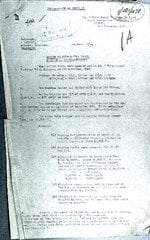
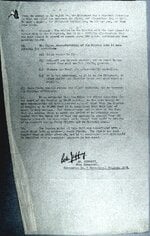
Holtzauge Holtzauge This is a summary of the RAAF test I mentioned, and I've also attached a scan of the original document, where the Spitfire V is referred to as "Capstan"

The scan is pretty crappy, but I messed around with the contrast etc. to try to make it easier to read. This isn't the only document though, there is another one which gets into more detail of each of the mock combats. Maybe somebody else has it?

This is a transcription someone posted previously in this forum:

"5. Results:
a) Spitfire had the greater rate of climb at all heights - the difference becoming greater as height increased above 13,000ft.

b) Spitfire is far more manoeuvrable at all heights.

c) Kittyhawk is faster in level speed from 0 to 16,000ft. Above 16,000ft Spitfire is faster and again the difference becomes greater as height increases. Estimated speed advantage of Kittyhawk up to 16,000ft: 0ft - 15mph; 12,000ft - 20 to 25mph; 16,000ft - 5 to 10mph.

d) Kittyhawk accelerates, both in dive and on increase of throttle on the level, far more quickly than the Spitfire.

6) Combat 1 - commenced at 13,000ft (equal height) and lasted for 5 to 7 minutes, in which time the fight was practically a stalemate. At the end of this period height was reduced to 4,000ft when the Kittyhawk pilots decided he had nothing to gain by staying and so broke off by diving away. Thus, in combat up to 16,000ft, the Kittyhawk has the distinct advantage in that the pilot can commence the fight and discontinue it at will. In such a combat the Kittyhawks tactics are to hit and run, and then come again.

7) Combat 2 - commenced at 20,000ft (equal height) and lasted less than 2 minutes. Spitfire quickly gained dominant position on the tail of the Kittyhawk and couldn't be shaken. Kittyhawk pilot broke off by diving away.

8) Combat 3 - Commenced at 16,000ft (height advantage to Kittyhawk) an lasted 14 minutes. Kittyhawk made repeated dive and zoom attacks with the Spitfire alternatively breaking hard to avoid and climbing for advantage where possible. Fight reduced to 9,000ft with neither pilot gaining a decisive advantage.

9) Combat 4 - Commence at 16,000ft (height advantage to Spitfire) and lasted 11 minutes. Spitfire pounced on Kittyhawk and attempted to gain a position on tail. Kittyhawk used speed advantage in first level flight and then shallow dive to gain separation and then climb for advantage. Spitfire countered by climbing hard. Gaining advantage Spitfire used climb and dive tactics to force the Kittyhawk to make repeated diving breaks to avoid. At 7,000ft Kittyhawk used superior roll rate to scissor behind the Spitfire, who countered with steep climb. Kittyhawk then used speed advantage to again gain separation and fight was broken off.

10) Visions - the vision in the Spitfire with the hood closed is better than the Kittyhawk, but it is a definite disadvantage that the hood cannot be opened at speeds above 160mph particularly when searching up-sun.

11) The flying characteristics of the Spitfire make it more suitable for Operations:

a) it is easier to fly.

b) Take-off run is much shorter and so could be operated from smaller landing grounds. Note – the Spitfire does not handle hard dirt strips as well as the Kittyhawk.

c) Mixture and boost are automatically controlled.

d) It is not necessary, as it is in the Kittyhawk, to alter rudder and elevator trims over great speed changes.

All these facts greatly reduce the pilot's problems and so increase his fighting efficiency. The report concluded by recommending that as the large Volkes air filter on the Spitfire cost 20-30mph in top speed, it should be removed in operational service - or at least an alternative found. Also mentioned was the effect of the Spitfires rough paint finish on performance but the general feeling of the report was that the Spitfire was perhaps the better fighter, especially at altitude."


I thought the part about " At 7,000ft Kittyhawk used superior roll rate to scissor behind the Spitfire" was particularly interesting in light of this conversation (and the comparison between Kittyhawk and A6M).

I believe this Kittyhawk pilot however was a very experienced ace, as was the Spitfire pilot. Not all Allied pilots were that clever.
 

Attachments

  • Spitfire vs Kittyhawk - Mildura .pdf
    108.9 KB · Views: 22
  • Aussie_SpitV_P40-E-p1_Clearer1.jpg
    Aussie_SpitV_P40-E-p1_Clearer1.jpg
    310.7 KB · Views: 14
  • Aussie_SpitV_P40-E-p2_Clearer1.jpg
    Aussie_SpitV_P40-E-p2_Clearer1.jpg
    256 KB · Views: 12
Absolutely: If you are above and have an energy advantage, you can translate that into instantaneous turn performance, and make life very difficult even for an aircraft that has a better sustained turn capability. I'm sure many Spitfire Mk I pilots were shot down during BoB by Bf 109 E's that came down from above and briefly turned inside them and finished them off with a deflection shot, and then zoomed right back up again.
This was certainly the case during the British operations over the continent in 1941-42. And why the German Jadgflieger preferred "frei Jagd" to close escort during BoB. Being able to engage with an advantage is always preferred.
 
Holtzauge Holtzauge This is a summary of the RAAF test I mentioned, and I've also attached a scan of the original document, where the Spitfire V is referred to as "Capstan"

The scan is pretty crappy, but I messed around with the contrast etc. to try to make it easier to read. This isn't the only document though, there is another one which gets into more detail of each of the mock combats. Maybe somebody else has it?

This is a transcription someone posted previously in this forum:

"5. Results:
a) Spitfire had the greater rate of climb at all heights - the difference becoming greater as height increased above 13,000ft.

b) Spitfire is far more manoeuvrable at all heights.

c) Kittyhawk is faster in level speed from 0 to 16,000ft. Above 16,000ft Spitfire is faster and again the difference becomes greater as height increases. Estimated speed advantage of Kittyhawk up to 16,000ft: 0ft - 15mph; 12,000ft - 20 to 25mph; 16,000ft - 5 to 10mph.

d) Kittyhawk accelerates, both in dive and on increase of throttle on the level, far more quickly than the Spitfire.

6) Combat 1 - commenced at 13,000ft (equal height) and lasted for 5 to 7 minutes, in which time the fight was practically a stalemate. At the end of this period height was reduced to 4,000ft when the Kittyhawk pilots decided he had nothing to gain by staying and so broke off by diving away. Thus, in combat up to 16,000ft, the Kittyhawk has the distinct advantage in that the pilot can commence the fight and discontinue it at will. In such a combat the Kittyhawks tactics are to hit and run, and then come again.

7) Combat 2 - commenced at 20,000ft (equal height) and lasted less than 2 minutes. Spitfire quickly gained dominant position on the tail of the Kittyhawk and couldn't be shaken. Kittyhawk pilot broke off by diving away.

8) Combat 3 - Commenced at 16,000ft (height advantage to Kittyhawk) an lasted 14 minutes. Kittyhawk made repeated dive and zoom attacks with the Spitfire alternatively breaking hard to avoid and climbing for advantage where possible. Fight reduced to 9,000ft with neither pilot gaining a decisive advantage.

9) Combat 4 - Commence at 16,000ft (height advantage to Spitfire) and lasted 11 minutes. Spitfire pounced on Kittyhawk and attempted to gain a position on tail. Kittyhawk used speed advantage in first level flight and then shallow dive to gain separation and then climb for advantage. Spitfire countered by climbing hard. Gaining advantage Spitfire used climb and dive tactics to force the Kittyhawk to make repeated diving breaks to avoid. At 7,000ft Kittyhawk used superior roll rate to scissor behind the Spitfire, who countered with steep climb. Kittyhawk then used speed advantage to again gain separation and fight was broken off.

10) Visions - the vision in the Spitfire with the hood closed is better than the Kittyhawk, but it is a definite disadvantage that the hood cannot be opened at speeds above 160mph particularly when searching up-sun.

11) The flying characteristics of the Spitfire make it more suitable for Operations:

a) it is easier to fly.

b) Take-off run is much shorter and so could be operated from smaller landing grounds. Note – the Spitfire does not handle hard dirt strips as well as the Kittyhawk.

c) Mixture and boost are automatically controlled.

d) It is not necessary, as it is in the Kittyhawk, to alter rudder and elevator trims over great speed changes.

All these facts greatly reduce the pilot's problems and so increase his fighting efficiency. The report concluded by recommending that as the large Volkes air filter on the Spitfire cost 20-30mph in top speed, it should be removed in operational service - or at least an alternative found. Also mentioned was the effect of the Spitfires rough paint finish on performance but the general feeling of the report was that the Spitfire was perhaps the better fighter, especially at altitude."


I thought the part about " At 7,000ft Kittyhawk used superior roll rate to scissor behind the Spitfire" was particularly interesting in light of this conversation (and the comparison between Kittyhawk and A6M).

I believe this Kittyhawk pilot however was a very experienced ace, as was the Spitfire pilot. Not all Allied pilots were that clever.

What I find lacking in these and almost all WW2 combat trials is definition of kill criteria in the trial. Almost all WW2 trials I have read make no assessment of kill criteria, they just tend to talk in general terms about ability to follow manoeuvres and where performance limitations are apparent. I sometimes wonder if the assessment pilots were lacking in the required combat ability.
Tactical trials were often limited by the ability to operate captured enemy equipment at operational limits. Additionally, negative comment on enemy equipment was a common prejudice.

Eng
 
What I find lacking in these and almost all WW2 combat trials is definition of kill criteria in the trial. Almost all WW2 trials I have read make no assessment of kill criteria, they just tend to talk in general terms about ability to follow manoeuvres and where performance limitations are apparent. I sometimes wonder if the assessment pilots were lacking in the required combat ability.
Tactical trials were often limited by the ability to operate captured enemy equipment at operational limits. Additionally, negative comment on enemy equipment was a common prejudice.

Eng

In this case, as i said, I believe both pilots were aces, both aircraft were considered friendly allied types, though I think the Aussies as a Commonwealth nation were hoping the Spitfire would be better - also as the Kittyhawk had known limitations e.g. in particular at altitude and also rate of climb. Not to mention everyone assumed that the Spitfire was better. So I think the report overview in the written paper has a bit of a bias for the Spitfire though it looks like they conducted to test fairly honestly and accurately because they really wanted to know.

As for what qualifies as a 'kill', I don't know if that was really necessary. I think they wanted to get a sense of relative advantages and disadvantages, and to just give the (new to them) Spit V an honest assessment and not just a cakewalk.

As for the period data being unsatisfying, well, I think in history we never get truly definitive answers. It's a journey without a final destination ;).
 
Yes, my perception is that WW2 type surviving Aces, esp the German ones, were very particular in choosing their engagements. Some wrote this clearly.
Of course, many fighting units were forced to simply do their orders and did not have the luxury of picking and choosing their engagements.
Additionally, there are opinions about how many aircraft never saw their opponent who shot them out of the sky. I think this was a high proportion.

Eng

Yes, this seems to be the case. I recently finished Part 2 (already listened to Part 1 a while ago) of Heaton & Lewis audio books "The German aces speak" which features personal stories from all of the top scoring German aces. And when it comes to the tactics they used, this seems to be the common factor: Only commit when you are in a position of advantage. In some sense this may seem quite self-evident, but I've also read Helmut Lipfert's memoirs, and that that man survived the war amazes me: His book is exactly the opposite, no dive and zoom attacks, but full of anecdotes of turn fights at low levels.

And both books come highly recommended: They also contain a lot of personal details that I've never heard before, including evaluations of fellow aces, and also their personal impressions of Hitler and Göring when collecting decorations.
 
This was certainly the case during the British operations over the continent in 1941-42. And why the German Jadgflieger preferred "frei Jagd" to close escort during BoB. Being able to engage with an advantage is always preferred.

Exactly. And Galland's famous quote asking for Spitfires should be read in this context: Not necessarily because he thought them better aircraft as such, but that they would be better suited for the type of co-airspeed and co-altitude escort duty Göring was asking of him.
 

Users who are viewing this thread

Back