
Navigation
Install the app
How to install the app on iOS
Follow along with the video below to see how to install our site as a web app on your home screen.
Note: This feature may not be available in some browsers.
More options
You are using an out of date browser. It may not display this or other websites correctly.
You should upgrade or use an alternative browser.
You should upgrade or use an alternative browser.
Italian series 5/6 fighters really better?
- Thread starter spicmart
- Start date
More options
Who Replied?
Fw 190 was probably the fastest of the lot, with MC.205 and 109G-4 being close (and probably faster once the DB 605 engines were fully rated).
Lighter weight of the Italian fighters made them climb well when compared with the Fw 190. Big wings of the Re.2005 and G.55 were providing lower wing loading and thus better horizontal maneuvering, with the trade off being the increased drag that hurt the speed a bit. Bf 109(G) was in disadvantage if/when the increase in firepower was required, since the extra and/or bigger guns increased drag a lot, ant thus lowered the speed (and the RoC a bit).
So it is basically the 'battle of trade offs', with neither of the fighters having all the advantages IMO.
Lighter weight of the Italian fighters made them climb well when compared with the Fw 190. Big wings of the Re.2005 and G.55 were providing lower wing loading and thus better horizontal maneuvering, with the trade off being the increased drag that hurt the speed a bit. Bf 109(G) was in disadvantage if/when the increase in firepower was required, since the extra and/or bigger guns increased drag a lot, ant thus lowered the speed (and the RoC a bit).
So it is basically the 'battle of trade offs', with neither of the fighters having all the advantages IMO.

GregP
Major
I've seen reports from pilots who flew them, and everyone who flew them liked them a lot.
I didn't see any combat flyoff comparisons, just a pilot report from MC.202, MC.205, and RE.2005.
Used to be easily available and findable online, but I've noticed things are generally harder to find these days than they were 15 years ago, and I haven't seen these pilot reports anywhere in maybe 10 years. They were generally very complementary of the Italian airplanes. That is, nothing but good things to say. If it were a combat comparison, there would be some sort of negative somewhere, so maybe the pilot reports I saw were just general impressions from a familiarization flight ... I can't really say.
Taking a nice, casual flight in a military fighter is not the same as trying to evaluate the combat potential of it, and I don't recall there being a mock dogfight in there.
I didn't see any combat flyoff comparisons, just a pilot report from MC.202, MC.205, and RE.2005.
Used to be easily available and findable online, but I've noticed things are generally harder to find these days than they were 15 years ago, and I haven't seen these pilot reports anywhere in maybe 10 years. They were generally very complementary of the Italian airplanes. That is, nothing but good things to say. If it were a combat comparison, there would be some sort of negative somewhere, so maybe the pilot reports I saw were just general impressions from a familiarization flight ... I can't really say.
Taking a nice, casual flight in a military fighter is not the same as trying to evaluate the combat potential of it, and I don't recall there being a mock dogfight in there.
Last edited:
Just Schmidt
Senior Airman
What about range?Fw 190 was probably the fastest of the lot, with MC.205 and 109G-4 being close (and probably faster once the DB 605 engines were fully rated).
Lighter weight of the Italian fighters made them climb well when compared with the Fw 190. Big wings of the Re.2005 and G.55 were providing lower wing loading and thus better horizontal maneuvering, with the trade off being the increased drag that hurt the speed a bit. Bf 109(G) was in disadvantage if/when the increase in firepower was required, since the extra and/or bigger guns increased drag a lot, ant thus lowered the speed (and the RoC a bit).
So it is basically the 'battle of trade offs', with neither of the fighters having all the advantages IMO.
What about range?
Drop tanks were very rare on the Italian ww2 fighters.
- Thread starter
- #6
But depending on source either the G.55 or the MC.205 gets called to be the best (so which one is?) with the Re.2005 being just as good but the most difficult to manufacture.
The Me 109 was despite its size a draggy airframe for all its radiator and S/C inlets and obsolete wing profile.
Did the Italians have less draggy airfoils?
The Me 109 was despite its size a draggy airframe for all its radiator and S/C inlets and obsolete wing profile.
Did the Italians have less draggy airfoils?
Last edited:
GregP
Major
The Macchi-Castoldi M.C. 72 still holds the world seaplane record at 440.681 mph, so their airfoils must not be too bad, but I confess, I don't know the Italian airfoil sections very well other than to know they fly and handle well, and have a good turn of speed for the installed power. That doesn't say much about them other than they're not bad.
I have seen maybe 100 or so WWII airplanes, but have never seen one of the Italian late fighters in person; just pictures. From the pictures, you can't tell if the workmanship is good or bad, but they're good-looking airplanes. I suspect they're well-made, just from the "finished" look they have, but I really can't say for any personal inspection.
There doesn't seem to be a definitive answer to which of the 5-series fighters was "the best." You can find claims for "the best" for all three.
I have seen maybe 100 or so WWII airplanes, but have never seen one of the Italian late fighters in person; just pictures. From the pictures, you can't tell if the workmanship is good or bad, but they're good-looking airplanes. I suspect they're well-made, just from the "finished" look they have, but I really can't say for any personal inspection.
There doesn't seem to be a definitive answer to which of the 5-series fighters was "the best." You can find claims for "the best" for all three.
Last edited:
Shortround6
Lieutenant General
There were also two different MC. 205s, The MC.205V (Veltro) which was an MC.202 with a DB 605 shoved in the nose and the MC.205N (Orione) with a longer fuselage to give an increase fineness ratio and a long span wing (about 2 ft 2in and about 24sq ft more area) Tail surfaces and undercarriage being about the same?But depending on source either the G.55 or the MC.205 gets called to be the best (so which one is?) with the Re.2005 being just as good but the most difficult to manufacture.
Since the C.205N needed new production tooling it's production had not started at the time Italy surrendered. The Production MC.205s were all the Veltro model.
The MC.205V wasn't much different in speed from the 109. Usually credited with 399mph but might have been a bit off in service, like many other planes.
You do get the two 20mm cannon (mostly) without under wing pods. No cannon through the prop.
The 205V was probably the fastest but there wasn't 15mph between all three. The 205V was the smallest but also only had 4 guns.
GregP
Major
It looks to me as if there is a void between the headrest turtledeck and the canopy. I'm sure it was "filled in" by plexi or glass, but would seem to be an unnecessary source of drag.
In real life, if that space were NOT blocked somehow, it would create a very loud noise and a lot of suction at speed. Perhaps it was a way to exit any stray air entering the nose section? Can't say for sure.
In real life, if that space were NOT blocked somehow, it would create a very loud noise and a lot of suction at speed. Perhaps it was a way to exit any stray air entering the nose section? Can't say for sure.
- Thread starter
- #10
Spicemart,
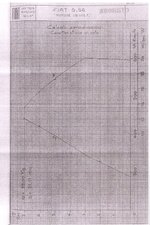
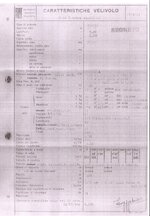
Attached is all the data I have on the Fiat G56.
As for a fly off, a translation of a test between the series 5 fighters and the Messerschmitt 109G-4 and FW-190A-5 is also attached.
Hope this helps!
Eagledad
Attached is all the data I have on the Fiat G56.
As for a fly off, a translation of a test between the series 5 fighters and the Messerschmitt 109G-4 and FW-190A-5 is also attached.
Hope this helps!
Eagledad
Attachments

Boom
Airman
Thanks for posting those attachments eagledad. The report on the comparisons is quite illuminating.
Overall there appears to be little difference between all fighters, each having minor advantages in the flight envelope. Where the italian fighters clearly win out over the Me109 is in armament, range, takeoff and landing. Those advantages are not so obvious against the Fw190.
Its interesting that the report places quite a high emphasis on the Italians fighters lack of ability to perform the Jabo role. Was quite surprised by that view, especially so given this report is 1943. Clearly the fighter bomber role, even in 1943, is recognised as a high priority for the Luftwaffe.
Overall there appears to be little difference between all fighters, each having minor advantages in the flight envelope. Where the italian fighters clearly win out over the Me109 is in armament, range, takeoff and landing. Those advantages are not so obvious against the Fw190.
Its interesting that the report places quite a high emphasis on the Italians fighters lack of ability to perform the Jabo role. Was quite surprised by that view, especially so given this report is 1943. Clearly the fighter bomber role, even in 1943, is recognised as a high priority for the Luftwaffe.
- Thread starter
- #13
Thanks, eagledad for providing this.
Very interesting that the G.56 achieves 685 km/h in 1943 with DB 603A whereas the Fw 190D V76 made 680 km/h with DB 603E in late 1944.
That the G.55 climbs about as good as the Me 109 with the same engine despite weighing over 600 kg more makes me wonder.
Very interesting that the G.56 achieves 685 km/h in 1943 with DB 603A whereas the Fw 190D V76 made 680 km/h with DB 603E in late 1944.
That the G.55 climbs about as good as the Me 109 with the same engine despite weighing over 600 kg more makes me wonder.
Last edited:

swampyankee
Chief Master Sergeant
- 4,306
- Jun 25, 2013
The Macchi-Castoldi M.C. 72 still holds the world seaplane record at 440.681 mph, so their airfoils must not be too bad, but I confess, I don't know the Italian airfoil sections very well other than to know they fly and handle well, and have a good turn of speed for the installed power. That doesn't say much about them other than they're not bad.
I have seen maybe 100 or so WWII airplanes, but have never seen one of the Italian late fighters in person; just pictures. From the pictures, you can't tell if the workmanship is good or bad, but they're good-looking airplanes. I suspect they're well-made, just from the "finished" look they have, but I really can't say for any personal inspection.
There doesn't seem to be a definitive answer to which of the 5-series fighters was "the best." You can find claims for "the best" for all three.
Frequently, the importance of airfoils for overall aircraft performance is oversold.
According to The Incomplete Guide to Airfoil Usage (The Incomplete Guide to Airfoil Usage), most of the Macchi aircraft (including the MC.200 series) used NACA airfoils. So did the Bf109 and the FW190.
- Thread starter
- #15
Thanks, eagledad for providing this.
Very interesting that the G.56 achieves 685 km/h in 1943 with DB 603A whereas the Fw 190D V76 made 680 km/h with DB 603E in late 1944.
That the G.55 climbs about as good as the Me 109 with the same engine despite weighing over 600 kg more makes me wondering.
 tomo pauk and other members Any thoughts on this one?
Also would I rate the G.56 (bigger wing, radiator without proper Meredith effect, extending out of the bottom fuselage) as not less draggy than the V76 which is a D-9 airframe with the cowl guns removed.
Last edited:
The data sheet pre-dates the actual aircraft. That is a big red flag - most of the companies were forced to back-track their estimates once the 1st aircraft were tested.Thanks, eagledad for providing this.
Very interesting that the G.56 achieves 685 km/h in 1943 with DB 603A whereas the Fw 190D V76 made 680 km/h with DB 603E in late 1944.
We can make the comparison vs. the Fw 190s with big V12s, like the D-9 that was also good for 685 km/h on 87 oct and no MW 50, despite having a much smaller wing (= less drag caused by the wing); neither of the two aircraft was with the ground-breaking airfoil or cooling system. The Fw 190 powered with DB 603A was supposed to be good just for ~670 km/h per this table.
I'd also say that a combat-worthy G.56 will not be less draggy than a similar Fw 190, but more draggy.Also would I rate the G.56 (bigger wing, radiator without proper Meredith effect, extending out of the bottom fuselage) as not less draggy than the V76 which is a D-9 airframe with the cowl guns removed.

TM06
Airman 1st Class
From a purely air-to-air perspective, it is my personal opinion that the G.56 and Re.2006 would've been the Axis fighters that stack up the best against Allied fighters. The Dora was probably the better aircraft overall? But I would absolutely prefer a G.56 or Re.2006 over any 109 including the Kurfürst.
For a Bf 109 to match the firepower of a Series 5/6 fighter they need to equip those horrid underwing gunpods that seriously compromises their capabilities elsewhere. Not to mention that the Series 5/6 fighters are already more agile than a base 109 and are arguably better at high altitudes.
If you ask me, the best possible lineup they could've made was the G.56 and Re.2006 for air-to-air combat, the Dora for everything else.
For a Bf 109 to match the firepower of a Series 5/6 fighter they need to equip those horrid underwing gunpods that seriously compromises their capabilities elsewhere. Not to mention that the Series 5/6 fighters are already more agile than a base 109 and are arguably better at high altitudes.
If you ask me, the best possible lineup they could've made was the G.56 and Re.2006 for air-to-air combat, the Dora for everything else.
- Thread starter
- #18
I would rate a G.56 or Re.2006 as Spitfire-esque in air-to-air combat, a plane which Erich Brown said to have parity with a Dora, despite the latter being 3-400 kg heavier.From a purely air-to-air perspective, it is my personal opinion that the G.56 and Re.2006 would've been the Axis fighters that stack up the best against Allied fighters. The Dora was probably the better aircraft overall? But I would absolutely prefer a G.56 or Re.2006 over any 109 including the Kurfürst.
For a Bf 109 to match the firepower of a Series 5/6 fighter they need to equip those horrid underwing gunpods that seriously compromises their capabilities elsewhere. Not to mention that the Series 5/6 fighters are already more agile than a base 109 and are arguably better at high altitudes.
If you ask me, the best possible lineup they could've made was the G.56 and Re.2006 for air-to-air combat, the Dora for everything else.
With the Italian fighters unable to fill the Jabo-role, where are any significant advantages to warrant an addition to the Luftwaffe?
Kurt Tank allegedly said that the Fiat fighter was the best in the Axis. I wonder if he really said that.
On wonders why the LW people will claim that Italian 5 series were not suited for the Jabo role.With the Italian fighters unable to fill the Jabo-role, where are any significant advantages to warrant an addition to the Luftwaffe?
Kurt Tank allegedly said that the Fiat fighter was the best in the Axis. I wonder if he really said that.
Agreed.
The Italian 5 series fighters were at least a full year too late to matter. The DB 603A-powered versions will be slower than the Fw 190D-9 (even if faster than the A-8) or the DB-605ASM-powered 109s, but by late 1943 the Axis really need something capable for 700 km/h, and the G.56 does not tick any of these boxes.
For 1944 and on, only the jet-propelled fighters matter for Axis; just having a parity in performance vs. the Allied best will not cut it.
TM06
Airman 1st Class
I already gave you the significant advantages - they where wholly better than the Bf 109. They would put up a much better fight against the Griffon Spitfires and P-51D than the 109 was able to, that alone is enough to warrant their consideration at the very least.With the Italian fighters unable to fill the Jabo-role, where are any significant advantages to warrant an addition to the Luftwaffe?
Users who are viewing this thread
Total: 1 (members: 0, guests: 1)


