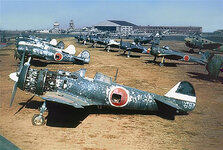
Japanese aircraft paint

FMATAS

Recruit
4
5
Joined
Jul 7, 2014
What is the reason for the paint on Japanese aircraft to deteriorate so quickly?
 

Attachments

  • Ki-43s_and_Ki-84s.jpg
    Ki-43s_and_Ki-84s.jpg
    97.2 KB · Views: 205
This is just a guess, but from almost 50 years experience with automotive paint I've learned there is a optimal paint thickness for any paint.
Too thin, and the paint doesn't have enough material to provide UV protection, the sun breaks down the paint, and it looses adhesion.
Too thick, it becomes brittle, and becomes less flexible than the surface it's expected to adhere to.

I suspect in the Japanese, in their constant attention to excess weight, ( the thicker the paint, the more the coating weighs) maybe they just didn't apply the paint thick enough for good long term UV protection from the sun.

And also maybe with their constant material shortage of a lot of strategic resources, maybe they just didn't see the need to waste premium materials on paint for aircraft that are only have a short service life anyway.

 
Also consider that in the tropics, the constant UV exposure, coupled with operating in harsh environments (coral is exceptionally abrasive) will cause paint to release - especially for aluminum surfaces, which is a difficult metal alloy for paint to bond to.
 
Poor application of paint in the field would be a factor too I think.
Pre and early war paint on Imperial Japanese aircraft was quite good I believe, the constraints and conditions mentioned in posts above as the war effort ramped up explains the paint issues not to mention the operational tempo units were subjected to.
 
Really? Mitsubishi came up with a (better?) duralumin for the Zero. They must have had some metallurgical staff familiar with the stuff.
 
A Japanese painting manual at the time says "Before painting, clean the surface but don't polish up."
 
Late to the party but as a former modeler and warbird restorer/aviator here's a thought:

Nobody expected combat aircraft to last very long--there are probably internet sources on the subject. If the typical Lancaster lasted c. 17 missions (standard tour was 30) you get the idea.

Just FWIW.
 

Users who are viewing this thread

Back