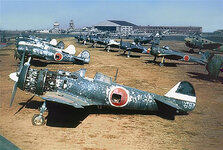
This is just a guess, but from almost 50 years experience with automotive paint I've learned there is a optimal paint thickness for any paint.
Too thin, and the paint doesn't have enough material to provide UV protection, the sun breaks down the paint, and it looses adhesion.
Too thick, it becomes brittle, and becomes less flexible than the surface it's expected to adhere to.
I suspect in the Japanese, in their constant attention to excess weight, ( the thicker the paint, the more the coating weighs) maybe they just didn't apply the paint thick enough for good long term UV protection from the sun.
And also maybe with their constant material shortage of a lot of strategic resources, maybe they just didn't see the need to waste premium materials on paint for aircraft that are only have a short service life anyway.