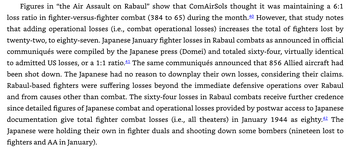
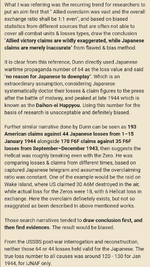
Absolutely. He also is very transparent in trying to piece together which claims are likeliest to have been accurate, and propose explanations for erroneous or contradictory aircrew reports when possible, which I appreciate. I'm not sure how anyone could read the study (SPAW) referenced above and conclude there's any factual sleight of hand going on.
It's not always as compelling a narrative as it could be, and I think some of the larger arguments about the importance of air power in the South/Southwest Pacific campaigns could be fleshed out more and address the historiography more directly. But it's quite detailed and always crystal clear what sources he's working with.
I'm guessing some of the pushback is because this sort of work makes it clear that a lot of the long-established legends about the war simply weren't accurate. I mentioned earlier in this thread that one of the sacred cows is individual pilots' official combat records, but I think another, at least in aviation enthusiast circles, is the set of myths surrounding certain warplanes.
The idea that the P-38, F4U, and F6F were war-winning super weapons in the Pacific is one. I think what the recent research shows is that, yes, they were effective combat aircraft that had some very useful performance advantages over the mid-war fighters they complimented and/or replaced (P-40, P-39, F4F), but they didn't exactly turn the air war upside down either. That runs counter to the stories folks grew up hearing and reading. Hence the skepticism.
Speaking for myself, I find it clears up some problems that never made sense to me when I first read about air combat in the pacific war… e.g. "from what dimension were the famously undersized Japanese air forces magically producing all of these aircraft and pilots to be shot down day after day, week after week?"
It also creates a new shade of appreciation for the skill and courage of allied pilots who, even later in the war, were taking on a persistently dangerous foe who often gave as good as he got—or worse!