Light fighters alternatives, 1935-1945 (1 Viewer)

Ad: This forum contains affiliate links to products on Amazon and eBay. More information in Terms and rules

If a fighter turned out to be successful, it was going to have lives far beyond what the original planners theorized about.
Quite true and it turns out that larger, heavier planes can be adapted to lives (roles) better (easier) than smaller aircraft can.
Also sort of depends on how far the designers are willing to go with it.

I love the Curtiss 75-81-87 from a design history standpoint. I don't believe any fighter (or aircraft?) went through so many different engines or design variations.
All while keeping original wing dimensions and airfoil except for the P-40Q.
There will possibly be some argument from the Spitfire fans.
The Hawk family was on the 4th engine by the time they got to the P-36.
My own engine count is going differ from some others as I am going to only credit the Spitfire with 4 basic engines. Single stage Merlin, two stage Merlin, single stage Griffon and two stage Griffon.
Hawk Family got the turbo Allison (P-37), the single speed/single stage Allison, 1 two stage P&W R-1830, the Merlin and the 2 stage geared Allison in the P-40Q. I am lumping all of the single stage R-1830s and R-1820s together in the first 4 engines regardless of power, supercharger gears.
Obviously some combinations were more successful than others.
330px-Curtiss_YP-37_%2815952957118%29.jpg


Getting back the "light weight" I do not know what the airframe weight of the original Hawk 75 was. We do know that the Fixed gear Hawk 75H
Curtiss-Hawk-75.jpg

used a 780lb wing. The later P-40s used a wing just over 1100lbs, weight gain of 145kg just in the wing. Partially to address wing strength issues, partially to allow for more armament and partially to accommodate higher gross weight. Change in powerplant from the 9 cylinder cyclone to the Allison used in the early P-40s was over 640lbs. (290kg). So when does the Hawk go from light fighter to standard fighter?
The P-40 (no letter) Gained about 1500lbs over the Hawk 75H but doubled the firepower (two .50s in the cowl with 200rpg and two .30s in the wings with 500rpg).
Very few people are going to say that 6800lb P-40 is a light fighter. The early P-40 carried no protection and no underwing/fuselage load.

Now with aid of history we can see that the Curtiss design was sort of past it's prime in the fall of 1940 (NA-73) but that took a while to realize. The US also didn't want to screw with the production lines as the US Army only had two fighters in large scale production in 1941-42 since the other one was the P-39 things were not looking good.
Dec 1940 production 0 P-38s, 10 P-39s, 165 P-40s
June 1941 production 4 P-38s, 37 P-39s, 125 P-40s (change over from P-40C to P-40D/E
Dec 1941 production 54 P-38s, 191 P-39s, 285 P-40s.

Republic was working on the XP-47 "light fighter"
xp47amockup.jpg

Using the same engine (?) as the early P-40s and a similar armament. Two .50s to start and four (?) .30s added in the wings later.
Details as to wing size and weight are very sketchy. Initially a 4900lb aircraft with a 115sq ft wing with no wing guns (Aug 1939). With a 2500lb powerplant one wonders how they planned to do that? Rapidly grew to a 6150lb plane with a 165 sq ft wing that did include the wing guns. And we are no longer in the light fighter catagory.
One does wonder how such a plane would have faired in NA or in the Pacific. Fast but without changing the engine/supercharger getting to 20,000ft to fight may have been tricky and range/ground attack would have been not as good. Very French looking though ;)
 
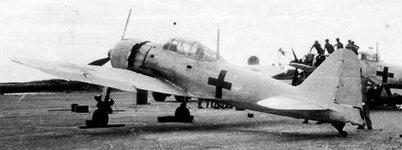
The Forum has already established, in multiple threads, that applying Balkankreuz to any aircraft will immediately improve performance.

Their performance and everything else about them were so superior, it's almost as if they couldn't lose. It makes you wonder. Did they lose? Or are we all just sheeple? :flushed:
 
Quite true and it turns out that larger, heavier planes can be adapted to lives (roles) better (easier) than smaller aircraft can.
Also sort of depends on how far the designers are willing to go with it.

I love the Curtiss 75-81-87 from a design history standpoint. I don't believe any fighter (or aircraft?) went through so many different engines or design variations.
All while keeping original wing dimensions and airfoil except for the P-40Q.
There will possibly be some argument from the Spitfire fans.
The Hawk family was on the 4th engine by the time they got to the P-36.
My own engine count is going differ from some others as I am going to only credit the Spitfire with 4 basic engines. Single stage Merlin, two stage Merlin, single stage Griffon and two stage Griffon.
Hawk Family got the turbo Allison (P-37), the single speed/single stage Allison, 1 two stage P&W R-1830, the Merlin and the 2 stage geared Allison in the P-40Q. I am lumping all of the single stage R-1830s and R-1820s together in the first 4 engines regardless of power, supercharger gears.
Obviously some combinations were more successful than others.
View attachment 851380

Getting back the "light weight" I do not know what the airframe weight of the original Hawk 75 was. We do know that the Fixed gear Hawk 75H
View attachment 851381
used a 780lb wing. The later P-40s used a wing just over 1100lbs, weight gain of 145kg just in the wing. Partially to address wing strength issues, partially to allow for more armament and partially to accommodate higher gross weight. Change in powerplant from the 9 cylinder cyclone to the Allison used in the early P-40s was over 640lbs. (290kg). So when does the Hawk go from light fighter to standard fighter?
The P-40 (no letter) Gained about 1500lbs over the Hawk 75H but doubled the firepower (two .50s in the cowl with 200rpg and two .30s in the wings with 500rpg).
Very few people are going to say that 6800lb P-40 is a light fighter. The early P-40 carried no protection and no underwing/fuselage load.

Now with aid of history we can see that the Curtiss design was sort of past it's prime in the fall of 1940 (NA-73) but that took a while to realize. The US also didn't want to screw with the production lines as the US Army only had two fighters in large scale production in 1941-42 since the other one was the P-39 things were not looking good.
Dec 1940 production 0 P-38s, 10 P-39s, 165 P-40s
June 1941 production 4 P-38s, 37 P-39s, 125 P-40s (change over from P-40C to P-40D/E
Dec 1941 production 54 P-38s, 191 P-39s, 285 P-40s.

Republic was working on the XP-47 "light fighter"
View attachment 851382
Using the same engine (?) as the early P-40s and a similar armament. Two .50s to start and four (?) .30s added in the wings later.
Details as to wing size and weight are very sketchy. Initially a 4900lb aircraft with a 115sq ft wing with no wing guns (Aug 1939). With a 2500lb powerplant one wonders how they planned to do that? Rapidly grew to a 6150lb plane with a 165 sq ft wing that did include the wing guns. And we are no longer in the light fighter catagory.
One does wonder how such a plane would have faired in NA or in the Pacific. Fast but without changing the engine/supercharger getting to 20,000ft to fight may have been tricky and range/ground attack would have been not as good. Very French looking though ;)

Curtiss had all kinds of problems, and the P-36 was certainly limited, but for example, the British discovered that the P-36 (as the French Hawk 75A3/A-4, as the British "Mohawk") was one of the only Allied fighters which could turn with a Ki-43. Which was a happy surprise.

P-40s were definitely overweight, but they were also part of a class of overweight fighters (which could get their own thread just like this one) which did ultimately pan out for a long time, in terms of Operational outcomes, and in spite of Strategic or Operational limitations imposed by the weight.
 
The P-36 as I noted, was never upgraded after 1940
It was upgraded, it was called the P-40.
The XP-40 was the 10th P-36 pulled off the production lines and given the engine swap.
They were built on the same production lines using the same tooling.
There was a radial engined P-40 that used by P&W for development work using a modified version of the engine used in the F4F-4.
P&W purchased a Hawk 81A airframe (MSN 17816) in Sept 1940. but it seems to have taken until some time in 1942 to get it flying. They were still flying it (and tweaking it) in late 1943 with some rather startling results. Like 388mph at 25,000ft.
Before anybody gets too excited by this, the plane was being operated at 7107lbs with no guns (space in the wings for the original four .30 cal guns) and no armor or protected fuel tanks. It was estimated to need a gross weight of 8300lbs to bring the plane up to late 1942/early 1943 standards/equipment. Perhaps some weight could have been saved as the equipment standard was not given (standard P-40F armament?)
 
It was upgraded, it was called the P-40.
The XP-40 was the 10th P-36 pulled off the production lines and given the engine swap.
They were built on the same production lines using the same tooling.
There was a radial engined P-40 that used by P&W for development work using a modified version of the engine used in the F4F-4.
P&W purchased a Hawk 81A airframe (MSN 17816) in Sept 1940. but it seems to have taken until some time in 1942 to get it flying. They were still flying it (and tweaking it) in late 1943 with some rather startling results. Like 388mph at 25,000ft.
Before anybody gets too excited by this, the plane was being operated at 7107lbs with no guns (space in the wings for the original four .30 cal guns) and no armor or protected fuel tanks. It was estimated to need a gross weight of 8300lbs to bring the plane up to late 1942/early 1943 standards/equipment. Perhaps some weight could have been saved as the equipment standard was not given (standard P-40F armament?)

I mean 🤷‍♀️ sure, if that's what you want to think.

Personally I don't think a Spitfire Mk XXI is the same aircraft as a Spitfire Mk 1, or that a Fw 190D9 is the same as a Fw 190A3, or that a MC. 205 is the same as an MC. 200, but if you squint a little and really want to, you can say that they are. You'd be wrong, but you can still say it 😁
 
Ok, I showed where the XP-40 came from and I showed you the data for the radial P-40.
0106-14.jpg

And I gave you the serial number of this 2nd aircraft. There are 4 photos of this aircraft on pages 276-280 of "Curtiss Fighter Aircraft" by Francis Dean and Dan Hagedorn but if you don't want to think that this Happened I guess that is up to you.

By the way, I do not believe that Spitfire Mk XXI is the same aircraft as a Spitfire Mk 1, or that a Fw 190D9 is the same as a Fw 190A3, or that a MC. 205 is the same as an MC. 200
and I am rather insulted that you would imply that.

The XX-40 was the 10th P-36 on the production line. Serial 38-10 (MSN 12424). It did go through a number of changes to the engine cowl and radiator, so you can find several different configurations in the photos. The Wing, tail, cockpit are not mentioned as having any changes. Most photos of the XP-40 show P-36 landing gear doors.
July 1940 was the peak crossover in production with 91 Hawk 75s built and 56 Hawk 81s/P-40s. Perhaps the Hawk 81s used some different parts in the wings or heavier skin panels but they used the same dimensions and the same airfoils.
There is one report from the Philippines (?) about one aircraft (P-40 ?) flying around with one wing from a P-40 and the other side using a P-36 wing.
 
Ok, I showed where the XP-40 came from and I showed you the data for the radial P-40.
View attachment 851413
And I gave you the serial number of this 2nd aircraft. There are 4 photos of this aircraft on pages 276-280 of "Curtiss Fighter Aircraft" by Francis Dean and Dan Hagedorn but if you don't want to think that this Happened I guess that is up to you.

I never said it didn't. But... so what?

By the way, I do not believe that Spitfire Mk XXI is the same aircraft as a Spitfire Mk 1, or that a Fw 190D9 is the same as a Fw 190A3, or that a MC. 205 is the same as an MC. 200
and I am rather insulted that you would imply that.

That's pretty much what you are saying, so by all means feel free. MC.200 to an MC.202 or 205 is basically exactly what you are talking about here.

The XX-40 was the 10th P-36 on the production line. Serial 38-10 (MSN 12424). It did go through a number of changes to the engine cowl and radiator, so you can find several different configurations in the photos. The Wing, tail, cockpit are not mentioned as having any changes. Most photos of the XP-40 show P-36 landing gear doors.
July 1940 was the peak crossover in production with 91 Hawk 75s built and 56 Hawk 81s/P-40s. Perhaps the Hawk 81s used some different parts in the wings or heavier skin panels but they used the same dimensions and the same airfoils.
There is one report from the Philippines (?) about one aircraft (P-40 ?) flying around with one wing from a P-40 and the other side using a P-36 wing.

So what? What does that have to do with light fighters? I could speculate what you are getting at but I think that might be a waste of time. So if you do have a point to make, spell it out.
 
As mentioned by others earlier, things moved so fast in the 1930s-1940s that it is difficult to define the Light Fighter without redefining it for each 2-3 years.
Probably, it is easier in the jet era when the progress slowed down...
Foland Gnat, Yak-23 and F-5 come to mind as very light and small compared to their contemporaries.
Early MiG-21?
If to consider multirole aircraft as "fighters": Fiat G.91 and L-39.
1990s until today: JAS-39 Grippen. Anyone else?

Edit: just realised that the thread has "1939-1945" in the title. My bad.
 
If the USAAC/AAF was favoring a lightweight fighter, the closest to a viable one seems to be, IMO, the NAA P-509. Wing area of 180 sq ft (IOW, similar to what the Soviet fighters of the ww2 mostly had), and 5 feet shorter than the future XP-51. Design is covered in the Bill's book, and some snippet about it & illustration can be read here.
 
Their performance and everything else about them were so superior, it's almost as if they couldn't lose. It makes you wonder. Did they lose? Or are we all just sheeple? :flushed:
The results of a Blackburn Botha getting transsonic at Boscombe Down has only been partially suppressed.
BTW Key in balkenkreuz in The Forum's search and see what comes up.
 
No, it is not and if you cannot see the difference then you are correct. Further discussion is pointless.

I don't think you were even trying to have a discussion. And yes, i agree, it's pointless to try in this, y'all managed to snuff out another one on this forum. Ever wonder why activity here is kind of diminishing? ;)
 
This is just the sour denouement of what could and should have very easily been a light, pleasant, and dare I say, enlightening discussion? But this seems to be a pattern on this forum, for all it's virtues.
The vast majority of this forum's membership are knowledgeable folks who will engage in a scholarly discussion - however, there seems to be a few, who for some reason, live to argue and will fight to the death over a lost point.

It is what it is, I suppose.
 
Regarding the P-36:

It was a contemporary of the Hawker Hurricane and the Bf109 - all of which were mid-30's world class fighters.

As it happens, the P-36 and Bf109 soldiered on through war's end by way of constant upgrades as the rapid evolution of aerial warfare dictated.

In the P-36's case, it evolved into the P-40, which is one of the only warplanes to have fought in every theater of WWII.

The P-36, as the French Hawk 75 export, also accounted for nearly half of all German aircraft shot down in the battle of France.
 
The vast majority of this forum's membership are knowledgeable folks who will engage in a scholarly discussion - however, there seems to be a few, who for some reason, live to argue and will fight to the death over a lost point.

It is what it is, I suppose.

I recognize that, in both facets. I think "What If" threads are particularly challenging for some of the more knowledgeable ones, so I should have probably skipped this one.

I think there is also a trend to shout down any kind of new perspective here sometimes. There are so many half-baked fantasies and myths that endlessly flow in from the web, this kind of subject lending itself so well to fantasy and wish-fulfillment, that there is an obvious necessity to quash that kind of myth, but sometimes the more knowledgeable people also have their own fantasies, and this can be part of a goal to just crush any deviation from familiar stories. Which is a shame because I think it's kind of choking off the life of the forum, the stories already long told... have already been told. In spite of the war being so long ago, new data does emerge routinely in matters of history, and this subject is no different in that sense. There is plenty of legit subjects to talk about, if you let it happen.
 
If I may give an example of "new thinking" vs what works in the "reality".
Many years ago, a group of friends and friend's friends were discussing airplanes which turned to race cars. One guy had the answer for speed: Everyone had the "wing" on the rear on upside down. He figured if the wing was put on "right" with the airfoil same as airplanes, it would reduce the vehicle weight and make it faster.. everyone tried to make him see that the wing was to increase tire contact with the road. He may still believe that to this day, if I haven't out lived him.
 
It was a lot more than an occasional good day. In fact the speed at which Ki-43 became obsolete, (and I agree, it eventually did) arrived a lot later than many of us were led to believe.

They did prove capable, reliably and predictably, to shoot down heavy American-made bombers in Burma and India. If anything they had a little more trouble with the smaller and faster ones like the A-20s and Beaufighters etc., but they shot those down too. Along with many fighters which were allegedly (and on paper) far superior.
The Ki43 certainly did shoot down later and more modern fighters and bombers but it was less an less effective until it was obsolete. However when going up against the heavy four engine B17 and B24 bombers the twin HMG was insufficient and any successes were hard fought for. All nations including Japan went as fast as possible to 4 x 20mm cannon or similar.


Yes the Fw 190 with it's four 20mms was absolutely lethal. But those cannon alone didn't do the trick. The Hurricane IIC also had four 20mm cannons, and it was dead meat against the Ki-43. It was also dead meat against the MC.202 in North Africa, which had a similar armament of two heavy machine guns in the nose, (on paper they had some extra wing guns but these were apparently routinely omitted). I'm also going to point out the Bf 109F-2, which had one heavy 15mm machine gun, (albeit a good one I gather), and two 7.92 machine guns, all in the nose, but utterly annihilated those Hurricane Mk IICs and often had it's way with the (also more heavily armed) Spitfire Mk VB and VCs. The Bf 109F-4 and G-2 were typically only slightly more heavily armed with the single 20mm motorkanone instead of the 15mm.
The Hurricane was outclassed as you stated and its my personal view always was even in the BOB against the 109E3 because of its performance. However the aircraft you mention, the Mc202, Ki43, Me109 F2, F4 and G2 all would struggle against the B24 and similar, why? because they lacked growth potential, because they were light fighters.
Ironically, if the Hurricane IIC could be positioned to fight unescorted B24 and B17 bombers, they would be a serious threat, because they had firepower and the performance was less important.


Guns, in other words, are not enough. If it was that simple this would have been the best fighter in WW2

View attachment 851373

It's also about speed, agility (climb, roll, turn rate), logistics (lighter planes use less fuel, fewer guns less ammunition), cost (lighter planes cost less to build and also to operate).
On this part I totally agree with you
, ease of training and flying (later model Ki-43, MC 202, Yak-3 etc. all had good reputations as being pilot's planes).
Other aircraft were also known as being pilots planes including the Spitfire, its a feature of the design, not the size. An extreme example is the Lancaster which was also lauded as a pilots aircraft. The 109 was always considered a handful until you got to gain experience when you became used to it.
 
The Ki43 certainly did shoot down later and more modern fighters and bombers but it was less an less effective until it was obsolete.

That seemed to happen later and more suddenly than the legend suggests, from my reading of the operational history. However that is also due to the delay by the Allies in sending the most modern fighter types to the Theater. (This is also offset, however, by the very leisurely rate at which the improved Ki-43 variants were developed and deployed, and the other improved JAAF types as well). I would also note however that in India at least, it was really just two types - the P-51B (and later) and the Spit VIII - which kind of suddenly closed the door on the Ki-43. The P-38, the P-47, and the old P-40 and even the ancient Mohawk / Hawk 75 all held their own pretty well, but they were not dominant as you might expect from the meta narrative about the newer types. And I think there are reasons which I'll mention below... The Hurricane had trouble as I noted, and so did the fast and well armed P-51A. For reasons I'm not certain of.

However when going up against the heavy four engine B17 and B24 bombers the twin HMG was insufficient and any successes were hard fought for. All nations including Japan went as fast as possible to 4 x 20mm cannon or similar.

I think you are underestimating how well the Ki-43 actually did in these cases, though admittedly it was always dangerous to attack four engined heavy bombers. I think, however, that they were able to make it very, very costly to send them unescorted and they were suffering fairly painful losses even with escorts. It forced a change in strategy.

I read and re-read some of these incidents, carefully, to try to understand what was going on here. This is just my interpretation so obviously take with a grain of salt, but it seems to be down to two things, and possibly a third:

First the Theater. Targets were Tactical and Operational, meaning small and specific, the largest being things like ports and airfields, but down to bridges and supply depots etc., and the conditions were such that cloud and mist etc. was a constant, both of which meant that these B-17s and B-24s could not fly missions at high altitudes, and instead had to fly pretty low. Which made them vulnerable. We know that B-29s by contrast were able to evade effective attack by any Japanese fighters because they could fly at very high altitudes with their turbos. But they were burning out cities, they were not targeting Tactical or Operational targets.

Second was the tactics. Initial encounters with US made heavy bombers went poorly for both JAAF and IJN fighters. Heavy losses and not much results. But the JAAF apparently trained with a captured B-17 and identified the biggest weakness, i.e. the nose. They practiced fairly rigorously tactics of flying in front of the bombers, then lining up "line astern" or in wide arrays, and flew head on and blasted away with their guns, aiming at cockpit and engines. These being nose guns also seems to mean they are more accurate, by the way. Anyway this clearly worked.

The third factor is that doing these types of attacks seemed to be easier with the heavy bombers than with some of the lighter medium bombers or strafers including B-25s, Beaufighters, Vultee Vengeances etc. and of course the fighter-bombers. Blenheims were pretty much dead meat even against the Ki-27s, but some of these other types seemed to be able to evade fairly well, by varying means.

The Hurricane was outclassed as you stated and its my personal view always was even in the BOB against the 109E3 because of its performance.

I have come to the conclusion that the Hurricane was actually pretty good in the BoB, and continued to be effective well through 1941 in most Theaters. It was outclassed by the 109E series (and even more by the F) but could survive the former with the right tactics. It also had something extra which I'll come back to in a sec...

However the aircraft you mention, the Mc202, Ki43, Me109 F2, F4 and G2 all would struggle against the B24 and similar, why? because they lacked growth potential, because they were light fighters.

As noted, the Ki-43 could kill them, the MC.202 and Bf 109F4 (I am not sure if any F2s made it to the Med) and G2 were definitely able to shoot down B-24s in the Med. But again, I think this is due to their flying mainly Tactical and Operational missions. Conversely, it seems like the B-24s was the most effective weapon against the Luftwaffe in North Africa, because they simply pulverized enemy airfields (destroying more planes on the ground than Allied fighters did in the air) and forced the Axis fighters to engage in sustained combat with the escorts, rather than their preferred hit and run / picking off targets approach, which eliminated a lot of their fighter vs. fighter advantage and cost them further...

Ironically, if the Hurricane IIC could be positioned to fight unescorted B24 and B17 bombers, they would be a serious threat, because they had firepower and the performance was less important.

...the Hurricanes, all types of Hurricanes, seemed to be absolutely lethal against every kind of bomber. More than any other Allied type, though the Kittyhawks and Wildcats are close. But for some reason Hurricanes, if they weren't fighting for their lives against fighters, really sawed down enemy bombers both in the CBI and MTO, including the surprisingly elusive Ju-87s and D3As, but also He 111s, Ki-51s, Ki-21s and Ki-48s, Ki-49s, G4Ms etc. Ju 88s and SM.79s too if they could catch them. I think this is because they had pretty concentrated firepower and flew stable. I think in the Med in particular DAF hurricanes shot down more Axis bombers than any other type.

But against B24s and B17s, I'm not sure that was going to work - most Axis bombers didn't have a lot of defensive guns. Against a four engined heavy it's debatable but I think you need the speed and agility too.

On this part I totally agree with you

Other aircraft were also known as being pilots planes including the Spitfire, its a feature of the design, not the size. An extreme example is the Lancaster which was also lauded as a pilots aircraft. The 109 was always considered a handful until you got to gain experience when you became used to it.

Spitfire was right at the sweet spot, the only caveat being they took a while to get long range. Bf 109 was challenging to fly but also clearly in it's own 'sweet spot' too, with the limit of range which was never resolved. Because, in effect, it was a light fighter :)
 
As mentioned by others earlier, things moved so fast in the 1930s-1940s that it is difficult to define the Light Fighter without redefining it for each 2-3 years.
Probably, it is easier in the jet era when the progress slowed down...
Foland Gnat, Yak-23 and F-5 come to mind as very light and small compared to their contemporaries.
Early MiG-21?
If to consider multirole aircraft as "fighters": Fiat G.91 and L-39.
1990s until today: JAS-39 Grippen. Anyone else?
If you mix time periods it gets funny. Compared to a contemporary large fighter such as the F-22, even heavy bombers like B-17/B-24/Lancaster are lightweights!
 

Users who are viewing this thread

Back