Mitsubishi Oil Cooler Design

Supercharged

Airman
39
71
Joined
Sep 28, 2023
Location
Germany
Greetings,

today I have a question about the design principles of Mitsubishi Aircraft during WW2. As some of you may already noticed, many if not all Mitsubishi designs had the entire oil cooler hidden in the engine cowl (G4M1, Ki-67) or just an external intake(A6M, J2M) but none of them had an external (visible) oil cooler outlet or exhaust.

Some Examples:

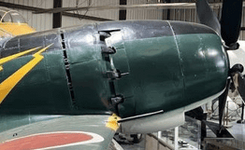
J2M - external intake - exhaust in the engine accessory compartment
Screenshot 2026-07-16 194946.png

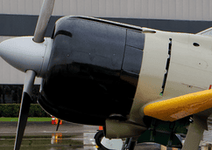
A6M2 - external intake - exhaust in the engine accessory compartment
Screenshot 2026-07-16 195220.png

Ki-46 III - external (retractable) intake - exhaust in the wheel well
Screenshot 2026-07-16 195335.png


The question is, why was Mitsubishi so keen to avoid oil cooler exhaust in to the free airstream?

With regards
 
Hi.
My 2 cents: Mainly because instead of building heavy internal exhaust ducts and cutting extra holes in the aircraft's outer skin, they simply dumped the hot air into the engine accessory compartment (or wheel wells). This allowed the air to exit through the already existing engine cowl flaps, keeping the aircraft's exterior perfectly streamlined and as light as possible. So to a wartime Mitsubishi engineer, aerodynamics and weight were absolute kings. Keeping the slipstream undisturbed was well worth the internal heat penalty!
 
Both the J2M and A6M2 have an opening in the fuselage about a foot or so behind the cowl flaps. The opening is on both sides of the airframe, but not (from what I can see) on the top or bottom. This is likely where the air exits from.
The A6M2 and Ki-46 oil cooler discharges both direct the exit air towards the oil tank. With the short length of the oil cooler, the air discharge temperature is likely not significantly higher than the air inlet temperature - so directing still fairly cool air towards the oil tank may achieve some more cooling. The A6M2 tank dimensions are such that the surface area is relatively high for the volume. More surface area facing the cooling air = more cooling.
The area of the oil cooler inlet appears to be roughly half the area of the outlets. So the velocity of air out must be about half the velocity of the air out, even allowing for the heating (and thus increase in volume) of the air. It's hard to tell if the outlet has any form of flow diverter to direct it rearward rather than straight out.
 

Attachments

  • 1784709611128.png
    1784709611128.png
    25.8 KB · Views: 32
  • 1784709661872.png
    1784709661872.png
    17.4 KB · Views: 25
Both the J2M and A6M2 have an opening in the fuselage about a foot or so behind the cowl flaps. The opening is on both sides of the airframe, but not (from what I can see) on the top or bottom. This is likely where the air exits from.
The A6M2 and Ki-46 oil cooler discharges both direct the exit air towards the oil tank. With the short length of the oil cooler, the air discharge temperature is likely not significantly higher than the air inlet temperature - so directing still fairly cool air towards the oil tank may achieve some more cooling. The A6M2 tank dimensions are such that the surface area is relatively high for the volume. More surface area facing the cooling air = more cooling.
The area of the oil cooler inlet appears to be roughly half the area of the outlets. So the velocity of air out must be about half the velocity of the air out, even allowing for the heating (and thus increase in volume) of the air. It's hard to tell if the outlet has any form of flow diverter to direct it rearward rather than straight out.
This sounds very feasible to me, thanks for your involvement.
 

Users who are viewing this thread

Back