30000 ft service ceiling for the P-40E:
link
30600 ft service ceiling:
link
28700 ft:
link
We are confusing service ceiling with operational ceiling and combat ceiling. Service ceiling is a nice measure of aircraft performance but is
almost useless for planning operations or for figuring out combat results. Except that a plane with a service ceiling of 34,000 will be able to operate
around 3,000ft higher than a plane with a service ceiling of 31,000ft.
However service ceiling is for a single plane, in factory new condition, still being able to climb at 100fpm, in other words it is moving only slightly faster than stall at that altitude. It has very little extra speed in hand and is flying straight and level, any but the most gentile of turns is going to cause the plane to loose altitude.
Now lets try a formation of planes, say four. Not all have identical climb rates anymore than four identical cars have exactly the same acceleration one will always be just a bit faster (or climb better) than the others and one will always be just a bit slower.
Differences in climb tend to carry through. A plane that is 50fpm slower climbing than it's squadron mates at low altitude (not a big difference at low altitudes where you are climbing at 3000fpm) will be markedly slower climbing at high altitudes, perhaps 30fpm slower but if your squadron mates are climbing at 200-300fp and you are climbing at 170-270fpm for 5 minutes you are no longer in formation. Or say the formation turns 90 degrees, at what altitude will the 3 best planes be able to make the turn without losing altitude while poor #4 either falls behind or drops below?
The British figured you needed 500fpm worth of climb in order to fly in formation. Poor #4 being on the outside of the formation when it made a turn?
This cuts several thousand feet from the nominal service ceiling to the ceiling that small formations could even fly a patrol at with the intention of diving to to attack.
Now try to figure what altitude you can effectively fight at, not do a single diving pass and then take 5-10 minutes to regain altitude for a possible 2nd pass.
British figured they needed 1000fpm of climbing ability at a minimum.
This was part of the reasoning in giving the Hurricane the Merlin XX engine. The Spitfire with a Merlin III had a higher climb rate than the Hurricane with the Merlin III and the British were estimating (based on captured 109) that the Hurricane needed better climb in order to fight the 109 at the higher altitudes, The Spitfire was superior to the 109 in climb at the higher altitudes the Hurricane I was not. Even if the Hurricane II was still slower than the 109 at least it could out climb it.
and please remember that climb is an indication of ability to turn without loosing altitude. Doesn't do a lot of good to have a smaller turning circle if you loose hundreds of feet more per turn and wind up too low to get back in the fight.
Going back to the P-40 this explains the difference (at least partly) between the factory figures for ceiling and the combat reports. Yes you could get a P-40 up to 30,000ft given enough time, but once there you couldn't really do anything except fly in a straight line. No weaving, gentle S turns. even flying a box search pattern would be difficult. Unless each corner had a radius of miles you were going to loose altitude on each turn and have to climb back up.
Also note that "cruising" at such an altitude requires the engine to be running only slightly slower (or slightly less boost) than max continuous.
Lets face it, if max continuous power means a climb rate of 100-200fpm how much can you cut the throttle before you fall out of the sky

Or at least start descending.



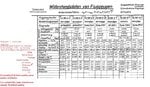


 ), even the over-weight F4F-4 was good for service ceiling of 33000 ft, and the F4F-3 was supposedly good for more than 37000 ft.


