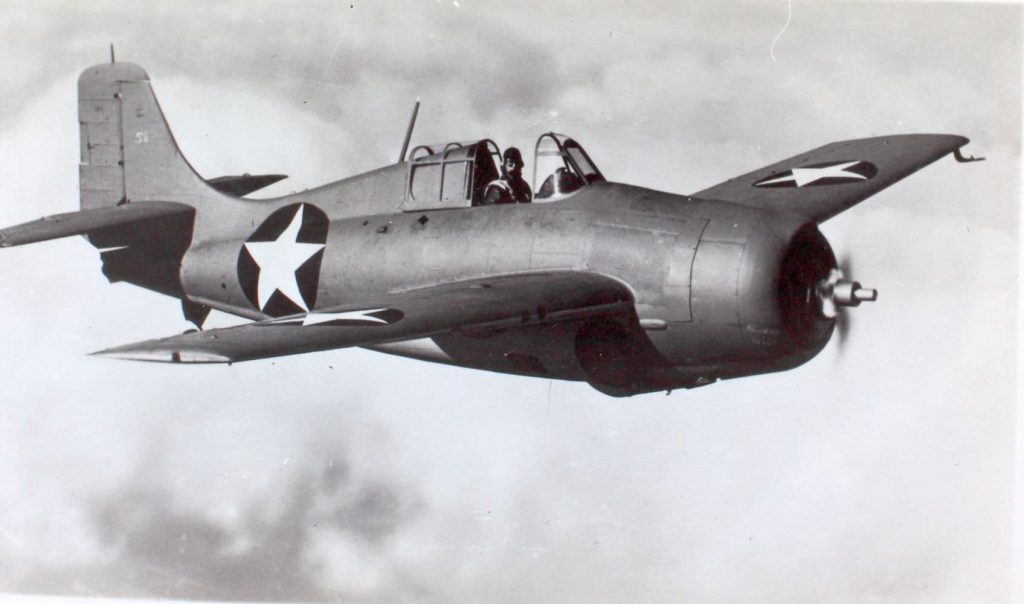
All I can do is quote a source that appears to be reliable. If it isn't reliable, or if he said "Zero" but meant "all Japanese planes," that's a different story. But here it is again:
"By the end of the Battle for Guadalcanal on February 3rd, 1943, records show that Navy and Marine Corps aviators shot down 5.9 Zeros for every Wildcat lost. When the Japanese surrendered in September 1945, the Wildcat to Zero exchange ratio had increased to 6.9 to one."
He very specifically says "Wildcat" and "Zeroes." But he does not say whether the ratios are supposed to be for that specific time period, or
cumulative up to that point (which would make the "time period" ratios even higher to balance out the lower ratios early in the war). As I stated earlier, I am assuming he means for that particular time period.
Conventional wisdom says that the performance of the Mitsubishi A6M Zero-Sen (Zero) was far superior to the Grumman F4F Wildcat. However, if that is truly the c

marcliebman.com