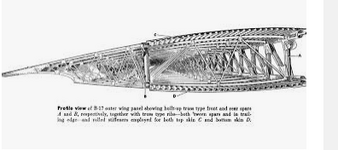
There is no doubt that the steel lasts longer and will stand up "better".
However when it comes down to crew survival we have to figure out what it means.
Hypothetical numbers, steel lasts 3 times longer than aluminum before failing.
Aluminum spar lasts 12 seconds under XXX Flame impingement.
Steel lasts 36 seconds.
You are a turret gunner getting out of a turret, grabbing parachute from rack on fuselage, attaching parachute to harness and getting out of escape hatch.
How long?
I have seen aluminum components reduced to puddles on the floor/ground. I have also seen iron water pipes (Sprinkler pipes 6in in diameter) and structural components that looked like cooked spaghetti draped over parts/rubble that were lower. Steel, if I remember correctly, becomes "plastic" at around 800 degrees. The steel pipe or beam will maintain it's "shape" like tube or I beam but can no longer support itself, and droops/sags down onto whatever will support it. It hasn't "melted" like aluminum but it isn't holding up a lot either.
Steel buildings are known as "non-combustible" buildings which basically means that the building structure (beams, siding, etc) will not contribute to the fire load over and above what the contents are doing. It does NOT mean the steel building is fire proof. Steel structure can be fire proofed with the application of layer/s of insulation or coatings to give a certain rating for flame impeachment, some times given as how many minutes before failure.
Now with a damaged aircraft how big is the fuel fire, how big is the airflow through the compartment/s where the fire is, how fast/volume is the airflow and what is the altitude (air density) of the air feeding the fire?
That is just stuff I can think of off the top of my head. I would guess that steel stands up better there is a lot of stuff that affects the result in each case.