
Soviet tanks suffered their main losses from anti-tank artillery, not from enemy tanks. It was much more important for the Soviets to provide anti-tank artillery (and divisional artillery in general) with tractors and trucks than to improve the ballistics of the guns.Tank engagements were seldom tank on tank duels. A company that can engage/destroy more enemy tanks per minute can often overcome initial odds.

Navigation
Install the app
How to install the app on iOS
Follow along with the video below to see how to install our site as a web app on your home screen.
Note: This feature may not be available in some browsers.
More options
You are using an out of date browser. It may not display this or other websites correctly.
You should upgrade or use an alternative browser.
You should upgrade or use an alternative browser.
Soviet purchase programs, logistics and everything, alternatives and realities 1937-43 (1 Viewer)
- Thread starter tomo pauk
- Start date
More options
Who Replied?Initially F-22 prototype had a larger chamber for a new cartridge - the same way as the Germans afterwards. F-22 was created as an universal gun with AA capabilities which were never used, it had numerous flaws which made it inappropriate for the Soviets. The Germans had enough chassis to produce AT self-propelled units - it was reasonable to use the captured guns, however only with the the improved AP-round. When the Soviets were able to produce enough chassis for the self-propelled artillery, they had already 85-mm gun which was even more efficient! In 1941, even the 57-mm ZIS-2 proved to be overpowered as AT gun - the need for it appeared only in the second half of 1942. And a weak HE shell was considered to be the major disadvantage of the ZIS-2.You do know that F-34 and F-22 used the ammo with same outward dimensions, right?
1) If the design bureau of the N1 plant remains with Polikarpov, then the world will see biplane (I-170 with an M-105 engine) instead of the MiG-1/3. And it will also be necessary to remove from history the entire line of Mikoyan jet fighters, from MiG-9 to MiG-31))IMO one of the most important things for Soviet fighter aircraft is keeping Polikarpov in the design business. The MiG that was formed in his absence made disappointment after disappointment, and when they finally got their act together with the I-220 series, they had no need for the aircraft anyways.
By contrast, the excellent I-185 which first flew in 1941 could be argued to be one of the best fighter aircraft in the world until 1944, and the ITP was no slouch either.
If the M-71 actually gets put into production (along with Yakovlev not being a jealous bastard), the I-185 would be an extreme headache for the Germans and help put the VVS on a more level playing field with the Luftwaffe.
2) The I-185 is not the best fighter in the world, it is just an experimental aircraft with an experimental engine.
3) The M-71 is absolutely not viable in the form in which it was installed on the I-185.
Shortround6
Lieutenant General
Revisiting this
And in 1943/44 are higher powered 76.2mm guns offer any advantage over the historic 85mm guns?
Advantages of higher powered (higher velocity) 76.2mm guns are.
1. more armor penetration for AT work.
2. longer range for artillery work.
3 higher ceiling for AA work.
Disadvantages are.
1. Larger, heavier gun barrel (cost)
2. need for larger mounting (cost)
3. faster barrel wear (also cost)
4. more expensive ammo (cost of brass/steel casing and more propellent)
5. cost also includes larger trucks/tractors for towing and more trucks/tractors to transport larger/heavier ammunition.
With the 76.2mm field guns being the bulk of Soviet divisional artillery does adding much range to the existing 13.3k range do much for the artillery capability? It out ranges the German 75mm guns and 105mm howitzers. It out ranges any German allied field guns and it out ranges the American 105 and British 25pdr. Granted the shell size/weight is small but higher power/velocity will not fix that. Can soviet divisions make use of any extra range? I mean did soviet divisions have the needed targeting ability to locate German guns at longer ranges by sound or flash spotting or aircraft or other means? Soviet heavier artillery units may have dedicated units with such targeting capabilities which date to WW I but such units need some special equipment and/or training and a way to communicate to the firing units. Messenger is probably not going to work.
The Soviets had longer barreled 76.2mm guns but with the same ammunition that didn't give much greater range.
There were some 76.2mm AA guns with more powerful ammunition (and longer barrels) but here the Soviets decided that 85mm guns gave better results for the 'cost'. They basically stuck the 85mm gun/barrel on the 76.2mm carriage in 1939(?)
For tank use things are a bit harder to figure out. How much extra power do you want and what can the soviet gun designers (and ammo makers) do for you?
Adding 200-225mm to cartridge length (and more width) may have been OK for an AA gun or field gun but cramming the bigger gun and larger ammo into the T-34 tank without a brand-new turret (T-34/85 style) is going to be very hard. Maybe the soviet gun designers can do a bit better than the Americans and British but it also depends on what you are trying to do. High velocity means lots of extra propellent.
US 75m tank gun ammo used about 80-88 cu/in propellent space.
US 76m tank gun ammo used about 140-144 cu/in propellent space.
US 3 in tank gun ammo used about 204 cu/in propellent space.***
British 17pdr gun used about 300 cu/in of propellent space.
***US 3in actually used spacers in the cartridge case. Modern (1930s) propellants did not need the same space as 1900-1910 propellants needed. problem with using legacy shells/engineering.
Higher velocity shells or AP shot gave better penetration but nothing for HE capability.
Higher velocity makes it easier to hit at tank ranges but even so, ability to hit at much over 1000 meters requires good equipment and training. Adding 200m/s to the velocity may buy another 200-250 meters of effective range using the same equipment/techniques. Using a gunner and a commander may add several hundred meters of effective range vs using a single man as a gunner trying to spot his own shots.
Maybe not but for some of those years does it really give the Soviets any real advantage?Would it be bad for the Soviets to have a higher-powered 76.2mm gun on their tanks and artillery units between 1941 and 1944?
And in 1943/44 are higher powered 76.2mm guns offer any advantage over the historic 85mm guns?
Advantages of higher powered (higher velocity) 76.2mm guns are.
1. more armor penetration for AT work.
2. longer range for artillery work.
3 higher ceiling for AA work.
Disadvantages are.
1. Larger, heavier gun barrel (cost)
2. need for larger mounting (cost)
3. faster barrel wear (also cost)
4. more expensive ammo (cost of brass/steel casing and more propellent)
5. cost also includes larger trucks/tractors for towing and more trucks/tractors to transport larger/heavier ammunition.
With the 76.2mm field guns being the bulk of Soviet divisional artillery does adding much range to the existing 13.3k range do much for the artillery capability? It out ranges the German 75mm guns and 105mm howitzers. It out ranges any German allied field guns and it out ranges the American 105 and British 25pdr. Granted the shell size/weight is small but higher power/velocity will not fix that. Can soviet divisions make use of any extra range? I mean did soviet divisions have the needed targeting ability to locate German guns at longer ranges by sound or flash spotting or aircraft or other means? Soviet heavier artillery units may have dedicated units with such targeting capabilities which date to WW I but such units need some special equipment and/or training and a way to communicate to the firing units. Messenger is probably not going to work.
The Soviets had longer barreled 76.2mm guns but with the same ammunition that didn't give much greater range.
There were some 76.2mm AA guns with more powerful ammunition (and longer barrels) but here the Soviets decided that 85mm guns gave better results for the 'cost'. They basically stuck the 85mm gun/barrel on the 76.2mm carriage in 1939(?)
For tank use things are a bit harder to figure out. How much extra power do you want and what can the soviet gun designers (and ammo makers) do for you?
Adding 200-225mm to cartridge length (and more width) may have been OK for an AA gun or field gun but cramming the bigger gun and larger ammo into the T-34 tank without a brand-new turret (T-34/85 style) is going to be very hard. Maybe the soviet gun designers can do a bit better than the Americans and British but it also depends on what you are trying to do. High velocity means lots of extra propellent.
US 75m tank gun ammo used about 80-88 cu/in propellent space.
US 76m tank gun ammo used about 140-144 cu/in propellent space.
US 3 in tank gun ammo used about 204 cu/in propellent space.***
British 17pdr gun used about 300 cu/in of propellent space.
***US 3in actually used spacers in the cartridge case. Modern (1930s) propellants did not need the same space as 1900-1910 propellants needed. problem with using legacy shells/engineering.
Higher velocity shells or AP shot gave better penetration but nothing for HE capability.
Higher velocity makes it easier to hit at tank ranges but even so, ability to hit at much over 1000 meters requires good equipment and training. Adding 200m/s to the velocity may buy another 200-250 meters of effective range using the same equipment/techniques. Using a gunner and a commander may add several hundred meters of effective range vs using a single man as a gunner trying to spot his own shots.
- Thread starter
- #65

Throwing the 85mm guns into the 1941-43 timeframe muddles the water a lot. If any 85mm gun was firing towards the Germans in that period, it is an AA gun in 9999 times of 10000.Maybe not but for some of those years does it really give the Soviets any real advantage?
And in 1943/44 are higher powered 76.2mm guns offer any advantage over the historic 85mm guns?
Further, it is not about being better on aggregate than a 85mm gun, but being better than the bulk of the Soviet 76mm guns historically used by army, namely the zis-3 and F-34, some USVs and whatever the Germans didn't captured of the F-22 fleet.
Advantages of higher powered (higher velocity) 76.2mm guns are.
1. more armor penetration for AT work.
2. longer range for artillery work.
3 higher ceiling for AA work.
Over the weaker 76mm guns - certainly. (note that I did not specify that AA work in the quoted post)
Over the 85mm gun(s) - 1) earlier availability, 2) factories can churn them and the respective ammo in the far greater rate, should fit in the existing turrets, more ammo can be carried. 1) plus 2) are the kickers here.
Disadvantages are.
1. Larger, heavier gun barrel (cost)
2. need for larger mounting (cost)
3. faster barrel wear (also cost)
4. more expensive ammo (cost of brass/steel casing and more propellent)
5. cost also includes larger trucks/tractors for towing and more trucks/tractors to transport larger/heavier ammunition.
Note that I'm not advocating for the Soviet equivalent of the Panther's gun or the 17 pdr. The equivalent of the kwk 40 or something close to the 77mm HV will do the trick until the 85 and 100 mm guns arrive, that will be with all of these shortcomings and then some. Soviets can piggy-back on their 76mm AA gun and work from there.
Shortround6
Lieutenant General
Thank you.
Difference in shell weight in minimal. Difference in max range, unless you provide for the same or better elevation than the ZiS-3, is marginal and to make use any extra range you need better forward observers and better communications equipment. The ZiS-3 can take care of all but around 100 German tanks in 1942 (80 Tigers accepted in 1942) and a rather high percentage of the German tanks in 1943. Over 600 of the total Tiger tanks show up in 1944. German Panther tank production in 1943 was around 1340, with about 725 built in the last 3 months. Panther's ability to standup to hits in the side even at over 1000 meters?
The "weak" Soviet 76.2mm guns were better than the US 75 tank guns or 75mm field artillery. Maybe not a lot better but even 10-20% is something.
That brings us to the negatives like the larger, heavier cartridge cases and propellent charges which are not needed for anything except anti-tank work.
ZiS-3 already has a decent muzzle brake to allow for a lighter weight gun. Going for a higher velocity gun probably means a heavier gun.
Wiki says the Soviets made 103,000 ZiS-3 guns. Maybe they should have changed over sooner in 1944 but there wasn't much need in 1941-42-43.
The ZiS-3 was not perfect, but it suited the Soviet army. It offered a verity of shells, it was simple to use and it was fairly light (over 300kg lighter than a PaK 40) for a 76.2mm gun.
A problem (in anybody's army) is that field artillery shells were built in the 10s of millions. small changes add up. So did barrel life. A 76.2mm gun firing a 1 hour barrage at just 4 rounds per minute instead of the max 20-25 rpm is going to use up 240 shells. A 4 hour barrage?
Some tanks were lucky if they fired 1000rounds out of the main gun in their life.
Point I am trying to make is that the equivalent of the KwK 40 or 77mm HV doesn't really do anything for the Soviet artillery (Field or AT) in 1941 or 1942 or even for much of 1943.Note that I'm not advocating for the Soviet equivalent of the Panther's gun or the 17 pdr. The equivalent of the kwk 40 or something close to the 77mm HV will do the trick until the 85 and 100 mm guns arrive, that will be with all of these shortcomings and then some. Soviets can piggy-back on their 76mm AA gun and work from there.
Difference in shell weight in minimal. Difference in max range, unless you provide for the same or better elevation than the ZiS-3, is marginal and to make use any extra range you need better forward observers and better communications equipment. The ZiS-3 can take care of all but around 100 German tanks in 1942 (80 Tigers accepted in 1942) and a rather high percentage of the German tanks in 1943. Over 600 of the total Tiger tanks show up in 1944. German Panther tank production in 1943 was around 1340, with about 725 built in the last 3 months. Panther's ability to standup to hits in the side even at over 1000 meters?
The "weak" Soviet 76.2mm guns were better than the US 75 tank guns or 75mm field artillery. Maybe not a lot better but even 10-20% is something.
That brings us to the negatives like the larger, heavier cartridge cases and propellent charges which are not needed for anything except anti-tank work.
ZiS-3 already has a decent muzzle brake to allow for a lighter weight gun. Going for a higher velocity gun probably means a heavier gun.
Wiki says the Soviets made 103,000 ZiS-3 guns. Maybe they should have changed over sooner in 1944 but there wasn't much need in 1941-42-43.
The ZiS-3 was not perfect, but it suited the Soviet army. It offered a verity of shells, it was simple to use and it was fairly light (over 300kg lighter than a PaK 40) for a 76.2mm gun.
A problem (in anybody's army) is that field artillery shells were built in the 10s of millions. small changes add up. So did barrel life. A 76.2mm gun firing a 1 hour barrage at just 4 rounds per minute instead of the max 20-25 rpm is going to use up 240 shells. A 4 hour barrage?
Some tanks were lucky if they fired 1000rounds out of the main gun in their life.
Elan Vital
Airman 1st Class
- 210
- Aug 24, 2024
Historically, the context surrounding the attempts at getting a HV 76mm in production for KV-1 before Barbarossa were that the 3-K AA gun had ceased production a year ago while the anticipated German heavy tanks had led to the order to develop a 85mm tank gun at the same time as the 76mm gun (June-July 1940), and then a 107mm gun in 1941.
Both in 1941 and 1943 when the 76mm returned in the form of the S-54, some services objected to the re-introduction of 76mm 3-K ammunition as the 76mm AA guns had been relegated to Corps level and having both 3-K and F-34 ammunition would complicate logistics. That said, there was a version of the Zis-5 which used F-22 ballistics and combined the long barrel with a regular F-34 385R cartridge with an increased propellant load, getting to 780 m/s as opposed to 813 for the 3-K ammo (687 m/s it seems when the long barrel is combined with a regular F-34-style propellant load. But it's possible that even the modified load was objected to and the gun at the time was not satisfactory in KV-1.
After Barbarossa, the Soviet Union had to suspend or cancel many projects. Additionally, the Germans did not come with heavily armored tanks and the F-34 proved perfectly adequate, so while development of 85mm guns continued in 1941 and especially 1942, progress was slow.
Finally, it is also noted at the time that the 57mm Zis AT gun had competitive armor penetration with the HV 76mm, so it was definitely more valuable to the infantry which wanted the lightest AT gun, and at one time it was still interesting enough for T-34. In 1943-44, the S-54 was doomed with the development of the 85mm guns and the acceptance of a new turret for T-34.
So overall, it's quite understandable why the Soviets did not go all-in at the time, though it would definitely have been useful against Tiger I and Panther (increased engagement enveloppe against the lower and especially the sloped upper sides).
Both in 1941 and 1943 when the 76mm returned in the form of the S-54, some services objected to the re-introduction of 76mm 3-K ammunition as the 76mm AA guns had been relegated to Corps level and having both 3-K and F-34 ammunition would complicate logistics. That said, there was a version of the Zis-5 which used F-22 ballistics and combined the long barrel with a regular F-34 385R cartridge with an increased propellant load, getting to 780 m/s as opposed to 813 for the 3-K ammo (687 m/s it seems when the long barrel is combined with a regular F-34-style propellant load. But it's possible that even the modified load was objected to and the gun at the time was not satisfactory in KV-1.
After Barbarossa, the Soviet Union had to suspend or cancel many projects. Additionally, the Germans did not come with heavily armored tanks and the F-34 proved perfectly adequate, so while development of 85mm guns continued in 1941 and especially 1942, progress was slow.
Finally, it is also noted at the time that the 57mm Zis AT gun had competitive armor penetration with the HV 76mm, so it was definitely more valuable to the infantry which wanted the lightest AT gun, and at one time it was still interesting enough for T-34. In 1943-44, the S-54 was doomed with the development of the 85mm guns and the acceptance of a new turret for T-34.
So overall, it's quite understandable why the Soviets did not go all-in at the time, though it would definitely have been useful against Tiger I and Panther (increased engagement enveloppe against the lower and especially the sloped upper sides).
Polikarpov was tasked to design a maneuverable biplane fighter for production at Plant No. 1 according to order No. 401 by Kaganovich from December, 8 1939. The I-170 was an attempt to achieve acceptable performance (for the customer - VVS) within the scope of this assignment, since Polikarpov had no illusions about the I-190 considering the development of the I-180/I-185 to be his primary task.1) If the design bureau of the N1 plant remains with Polikarpov, then the world will see biplane (I-170 with an M-105 engine) instead of the MiG-1/3.
Perhaps this would even be beneficial for the Soviet Air Force.And it will also be necessary to remove from history the entire line of Mikoyan jet fighters, from MiG-9 to MiG-31))
The I-185 was undoubtedly the best fighter on the Eastern Front in 1943. Polikarpov succeeded to ensure the reliable operation of three synchronized ShVAKs, something Lavochkin had failed to achieve with the B-20 on the La-7. The I-185 was fully ready for production, which was assumed at Plant No. 81.2) The I-185 is not the best fighter in the world, it is just an experimental aircraft with an experimental engine.
The I-185M-71 successfully passed frontline tests on the Kalinin Front, and the Su-6 with the M-71f successfully passed state tests - with "non-viable" engines.3) The M-71 is absolutely not viable in the form in which it was installed on the I-185.
In 1943, production of the M-82FN engines was halted due to numerous crankshaft defects (cracks, breakages); even in 1944, this engine required (at least) a major overhaul with cylinder replacement after just 25–30 hours of operation. The differences in reliability compared to the M-71 in late 1942 were not that significant.. The M-71 had every chance of being brought up to an acceptable level if it had been considered more promising - in 1941, the M-71 completed its 50-hour tests prior to the M-82, and their levels of readiness were roughly the same. However Shvetsov decided to focus all of the design bureau's efforts on the M-82 engine - he simply did not have enough staff to complete the development of both engines. And the M-71 was abandoned with Stalin's approval.
Last edited:
Throwing the 85mm guns into the 1941-43 timeframe muddles the water a lot. If any 85mm gun was firing towards the Germans in that period, it is an AA gun in 9999 times of 10000.
Further, it is not about being better on aggregate than a 85mm gun, but being better than the bulk of the Soviet 76mm guns historically used by army, namely the zis-3 and F-34, some USVs and whatever the Germans didn't captured of the F-22 fleet.
Over the weaker 76mm guns - certainly. (note that I did not specify that AA work in the quoted post)
Over the 85mm gun(s) - 1) earlier availability, 2) factories can churn them and the respective ammo in the far greater rate, should fit in the existing turrets, more ammo can be carried. 1) plus 2) are the kickers here.
Would it really have been any quicker? Production of the 76mm AA had been stopped and factories already retooled for the M1939 85mm AA gun, from which the T-34/85 tank gun and the eventual ZiS-3 replacement (D-44) were developed. Retooling some other factory to produce a higher velocity 76mm tank gun, which will soon be replaced to the 85mm tank gun anyway, doesn't seem worth it? If we want to improve the T-34 before the 85mm gun is available, it seems a three man turret and more/better(?) radios would have a better payoff than changing the gun.
Of course, introducing a new turret (and modified hull with bigger ring) takes time, and by the time that is ready the 85mm gun might be ready as well, giving us the T-34/85. So how much time can we save by getting the new turret out there with a new higher velocity 76mm gun compared with just going with the 85mm gun from the get-go?
(Or if we want to get fancy, instead of adapting the new turret to the T-34, take the opportunity to introduce an improved hull at the same time. T-44 instead of the T-34/85?)
- Thread starter
- #70
Point I am trying to make is that the equivalent of the KwK 40 or 77mm HV doesn't really do anything for the Soviet artillery (Field or AT) in 1941 or 1942 or even for much of 1943.
Difference in shell weight in minimal. Difference in max range, unless you provide for the same or better elevation than the ZiS-3, is marginal and to make use any extra range you need better forward observers and better communications equipment. The ZiS-3 can take care of all but around 100 German tanks in 1942 (80 Tigers accepted in 1942) and a rather high percentage of the German tanks in 1943. Over 600 of the total Tiger tanks show up in 1944. German Panther tank production in 1943 was around 1340, with about 725 built in the last 3 months. Panther's ability to standup to hits in the side even at over 1000 meters?
The "weak" Soviet 76.2mm guns were better than the US 75 tank guns or 75mm field artillery.
Neither the ZiS-3 nor the F-34 were able to defeat the 80mm front plate of the Pz-IVH beyond 500m, be that with normal ammo or the APCR. Granted, a hit to many other locations will mess up the -IV.
Contrary to that, the -IVH was able to defeat the T-34 under 1000m with the normal APCBC ammo head-on, and under 1500m when firing at the sides or rear.
Similar situation is with StuG-IIIG vs. T-34.
We also know how badly the Soviet tabnks fared at Prokhorovka.
I certainly can understand the procurement decisions, not just the Soviet ones.So overall, it's quite understandable why the Soviets did not go all-in at the time, though it would definitely have been useful against Tiger I and Panther (increased engagement enveloppe against the lower and especially the sloped upper sides).
My opinion is that they made a mistake with not having a powerful 76mm gun on the backburner, that can be quickly used as a tank gun, and as an anti-tank gun.
Would it really have been any quicker? Production of the 76mm AA had been stopped and factories already retooled for the M1939 85mm AA gun, from which the T-34/85 tank gun and the eventual ZiS-3 replacement (D-44) were developed. Retooling some other factory to produce a higher velocity 76mm tank gun, which will soon be replaced to the 85mm tank gun anyway, doesn't seem worth it? If we want to improve the T-34 before the 85mm gun is available, it seems a three man turret and more/better(?) radios would have a better payoff than changing the gun.
T-34 can be improved in many ways, some of these were implemented. My suggestion of the powerful 76mm is one of improvements that I think would've been much easier and faster to make than making a new turret and whatnot.

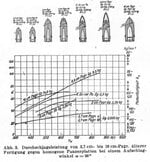
Wasn't the design and heat treatment (too soft) selected by Soviets for their AP shells one of the reasons they didn't go beyond 700 m/s during the first half of the war? It might be stretching plausibility. Germans also had to adapt their APHE during the war to maintain efficiency at higher velocity. Soviet did the same for the 76.2 for after the war, mostly reducing HE charge, tip shape and heat treatment.
The PaK36(r), a rechambered M1939 76.2 mm using German AP shells which were considerably longer and capped, was comparable to the long 7.5 cm of the Pz.IV.
P.S. I see that the shells issue was already mentioned.
The PaK36(r), a rechambered M1939 76.2 mm using German AP shells which were considerably longer and capped, was comparable to the long 7.5 cm of the Pz.IV.
P.S. I see that the shells issue was already mentioned.
Attachments
Last edited:
Shortround6
Lieutenant General
True but the Pz-IVH didn't start production until April of 1943 (?). The Pz-IVG started in production in May 1942 with the slightly less powerful L/43 gun. The L/48 didn't show up until March 1943. A number of Gs got heavier armor, 30mm on top of the normal 50mm. But this was roughly 1/2 of production starting in June 1942. Aprox about 700Gs got the extra armor.Neither the ZiS-3 nor the F-34 were able to defeat the 80mm front plate of the Pz-IVH beyond 500m, be that with normal ammo or the APCR. Granted, a hit to many other locations will mess up the -IV.
Contrary to that, the -IVH was able to defeat the T-34 under 1000m with the normal APCBC ammo head-on, and under 1500m when firing at the sides or rear.
Similar situation is with StuG-IIIG vs. T-34.
True but the question is why? Would better guns alone have made a big difference?We also know how badly the Soviet tabnks fared at Prokhorovka.
It is going to take months after a decision is made to get decent numbers into the field.a mistake with not having a powerful 76mm gun on the backburner, that can be quickly used as a tank gun, and as an anti-tank gun.
This assumes that the new gun will fit in the old turret and not cause major problems.T-34 can be improved in many ways, some of these were implemented. My suggestion of the powerful 76mm is one of improvements that I think would've been much easier and faster to make than making a new turret and whatnot.
M-4 Sherman had a larger turret (69in ring?) than the early T-34 (56in ring?). The Sherman could not hold the existing US 3in gun (reason for the M-10 tank destroyer).
76mm gun Shermans got new turret. Same diameter ring but larger turret.
Old Shermans did get the British 17lbr but the radios had to moved to a box welded onto the back of the old turret. Rate of fire was considerably less and depending on source, depression and sometimes elevation was restricted.
Sherman used ammo with 350mm long casing, Soviet 76.2mm ammo used a 385mm long case. Not a big problem...............until you try to stuff in larger guns. US 76m gun used a 539mm long case and the case was bottlenecked. Soviet 76.2mm AA gun used a 558mm long case. Now there is problem in the original small T-34 turret.
T-34s had a poor rate of fire to begin with the 2 man crew. What was worse is the rate of engagement. How fast can the tank switch to target number 2 and then to target number 3.
A larger, heavier gun filling up more of the turret and needed more time to get the larger rounds into loading position is going to really suck. Yes you have a better chance of taking out the German tanks from the front but then the German tanks have more time to hit the soviet tanks as they take more time to reload. Think 20 tanks vs 20 tanks or even 15 German tanks vs 25 soviet tanks. Germans are going to loose some tanks but the higher rate of fire and faster change over to targets 2, 3 and 4 may leave the Germans as the winners.
With the soviet tanks if the commander is playing gunner he is not telling the driver what to do (advance, back up or turn left/right) making the tank an easier target.
Soviets should have spent more time coming up with a 3 man turret or even a bit bigger 2 man turret with better vision.
A supergun in a two man turret with nearly blind crew (poor vision) may not be the game changer some people think.
- Thread starter
- #73
Thank you. At any rate, Soviet tankers and AT gunners will have a lot at their plate, by an order of magnitude more than the number of the Tiger tanks.True but the Pz-IVH didn't start production until April of 1943 (?). The Pz-IVG started in production in May 1942 with the slightly less powerful L/43 gun. The L/48 didn't show up until March 1943. A number of Gs got heavier armor, 30mm on top of the normal 50mm. But this was roughly 1/2 of production starting in June 1942. Aprox about 700Gs got the extra armor.
The big difference would've been made by a great fighter aircraft for the VVS, as a part of professional and radar-equipped air-defense network together with not suffering crippling losses in 1941-42 in men and material.True but the question is why? Would better guns alone have made a big difference?
The better gun might've upped the German tank and StuG losses by maybe 10% in 1943, and perhaps lowered the Soviet losses by 5%?
Anything that I suggest today, gets in the field tomorrow.It is going to take months after a decision is made to get decent numbers into the field.
It is other people's suggestions that will wait.
See here two 85mm gun types tested in the turret of the T-34-76 tanks:This assumes that the new gun will fit in the old turret and not cause major problems.
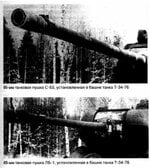
Probably not a great fit, but still - if they did it with 85mm guns, the 76mm gun I've suggested should be a much better fit.
M-4 Sherman had a larger turret (69in ring?) than the early T-34 (56in ring?). The Sherman could not hold the existing US 3in gun (reason for the M-10 tank destroyer).
76mm gun Shermans got new turret. Same diameter ring but larger turret.
Turret ring size is just a par of the equation. Other parts are the recoil length (a tank gun does not need to have the long recoil as a towed gun), and how much the front part of the turret extends from the turret ring.
Luckily, nobody here is suggesting a supergun in a 2-men turret.A supergun in a two man turret with nearly blind crew (poor vision) may not be the game changer some people think.
The characteristics of the tank guns had neither a decisive nor any particularly noticeable impact on the outcome of the Battle of Prokhorovka. Let's start with the fact that about 40% of the tanks in the attacking formations were T-70s and self-propelled guns based on the T-70 chassis. Other factors - above all, poor command, an extremely poor choice of attack direction, and forced improvisation during the advance to the attack line as well as insufficient air and artillery support - played a much more significant role.We also know how badly the Soviet tabnks fared at Prokhorovka.
Considering the level of Soviet technology, no major upgrades of the T-34 could be carried out during the war. Any significant modernization would lead to a reduction in production volumes, which was unacceptable to the Soviets. The T-34's design did not allow for either increasing the thickness of the front armor or mounting a more powerful gun. The 85-mm gun was the limit of what was possible, and it was much better suited to Soviet tank tactics. There was only one way to overcome drawbacks of the T-34: to design a completely new tank, which is exactly what the Soviets did.T-34 can be improved in many ways
Installing an 85-mm gun was a much more reasonable decision, taking into account the problems with shell quality, as discussed earlier., some of these were implemented. My suggestion of the powerful 76mm is one of improvements that I think would've been much easier and faster to make than making a new turret and whatnot.
You should get ready, I will destroy this myth about the trials of the I-185, invented by Ivanov))The I-185M-71 successfully passed frontline tests on the Kalinin Front
Taking into account your rather strange claims in your previous post, I get the impression that you're trying to create a new myth that aligns with your views. Ivanov cited documents - pilots' reports. Furthermore, I've read everything that both Maslov and Moroz have written on this topic. If you can cite documents that have not yet been published, I would be interested reading them. If not, then I have little interest in your personal views.You should get ready, I will destroy this myth about the trials of the I-185, invented by Ivanov))
Users who are viewing this thread
Total: 2 (members: 0, guests: 2)


