The Falklands

Ad: This forum contains affiliate links to products on Amazon and eBay. More information in Terms and rules

Man, don't thank me. CB rules this thread.

:D , I got to post something about the attack agaist the HMS Antelope but no time right now, so isntead I let you 2 pics of the Army s twin Oerlikon 35 mm in action against aerial and ground targets.


gada601145ew.jpg


gada601153bg.jpg
 
Attack against the HMS Sheffield. 4th may 1982.

Antecedents: The sinking of the ARA Belgrano.

The late afternoon of the 2th may the argentine Military junta get a shocking news , one of the largest ship in inventory is going to the bottom attacked by a modern Nucler submarine (The HMS Conqueror who coverted itself in the only SSN who fied in anger) Many question whether the ship was ever a serious threat to the British fleet and to this day the attack remains steeped in controversy, more than twenty years after the guns of war fell silent. One thing was for sure...the dreamers who still believe in some kind of negotiation with the Britsh force now really undestand that there was a war.
In the meanwhile the Argentine Navy Air force was working in some retribution.


The aircraft:

fpaacanaetendard2bb3.jpg


In September 1980, fifty pilots and technician personnel of the 2ª Escuadrilla Aeronaval de Caza y Ataque (2nd Air Naval Fighter and Strike Squadron) of the CANA (Comando de Aviación Naval Argentina, Argentine Naval Aviation Command) arrived at Rochefort Naval Base, in France. Among the group of pilots were the unit's commander, Frigate Captain Jorge Colombo, and sub-commander, Corvette Captain Augusto Bedacarratz.


The rest of the pilots were: Corvette Captains Roberto Agotegaray, Roberto Curilovic and Alejandro Francisco, and Warship Lieutenants Luis Collavino, Julio Barrraza, Juan Rodriguez Mariani, Armando Mayora and Carlos Machetanz. All the pilots had hundreds of hours flying A-4Q Skyhawks (the main type of combat plane used by the CANA by that time).

After three months of French language teaching, they were sent to Landivisiau Air Naval Base, where they flew training sorties in Morane Saulnier planes during 30 days and then began to know their future combat tool - the AMD-BA (Avions Marcel Dassault - Breguet Aviation) Super Etendard. Later, the Argentine pilots started to learn the basic flight lessons in the Super Etendard (a maximum of 50 hours of flight by each pilot) and basic notions about the weapon systems, especially the anti-ship missile AM.39 Exocet.

But on April 2nd 1982, when the 2nd Squadron was waiting the arrival of the French technical team to put the Exocets in an operational status. One of the first acts of the French government was to declare a weapons embargo against Argentina until the conflict ended.

Of course, it deprived the 2nd Squadron of the possibility of being assisted by French technicians but the Argentine personnel of the unit, far from giving up, faced on their own the challenge to set up the Exocets. Two weeks later, the software interface between airplane and missile had been solved, and the tests on anti-ship strikes began. Fortunately for the Argentineans, the country had bought from Great Britain two Type 42 destroyers (the same class used by the Royal Navy), the ARA Hércules and ARA Santísima Trinidad. In consequence, the unit's pilots tested and improved the attack tactics against these kinds of ships. The unit had only reveive 5 Exocet before Miterrand say no more, so want to make good use of it.


The Mission, entering the Neptunes.

At 5:07 hrs on May 4th 1982, a SP-2H Neptune, serial number 0708/2-P-112, call sign 'Mercurio', belonging to the Exploration Squadron of the CANA, took off from Río Grande Air Naval Base. The plane's crew was composed of three members, and the pilot was Corvette Captain Ernesto Proni Leston.

At 7:50 the Neptune had his first radar contact with a British warship, and Proni reported the news to the CANA. He was ordered to keep contact but with discretion. 'Mercurio' had two other contacts at 8:14 and 8:43. A few minutes later an order from the High Command of CANA arrived to evade any contact until 10:00 hrs. Proni guessed that an Exocet sortie was on the way, and set the Neptune's course to the area of the wreckage of the ARA General Belgrano, pretending to be part of a rescue mission searching for survivors.


neptunecy7.jpg


The news about Captain Proni's findings arrived to Río Grande quickly, and it was the turn for Corvette Captain Augusto César Bedacarratz and Frigate Lieutenat Armando Mayora to fly the anti-ship sorties, and all the other pilots helped to prepare the flight paths, points of meeting with the KC-130H tanker, etc. Both Super Etendards took off from Río Grande at 9:45 hrs. Bedacarratz, the leader, (call sign 'Aries') flew the plane 0752/3-A-202, and Mayora, the wingman, (call sign 'Boina') did so with his plane 0753/3-A-203. At 10:00 hrs they met the KC-130H tanker provided by the FAA (Fuerza Aérea Argentina - Argentine Air Force) piloted by Vicecommodore Pessana and received all the necessary fuel to complete the mission.


The mission map (Britains Small Wars)


At 10:35, Corvette Captain Proni did his last climb at 1,170 meters (3,500 feet) and detected a big contact and two medium-size in the coordinates 52º 33' 55'' South, 57º 40' 55'' West. A few minutes later he radioed both Super Etendards and gave the information to Bedacarratz. After that, Proni set his course to Río Grande and landed at 12:04 hrs. His long sortie had reached the end.

But the mission of the SUEs (nickname given by the Argentine pilots to the Super Etendards) had just begun. Flying at very low altitude, around 10:50 hrs they climbed at 160 meters (500 feet) to verify the coordinates given by Proni, but they found... nothing! Both pilots turned back to searching and Bedacarratz decided to continue. 40 kms (25 miles) later they climbed again and, after a few seconds of scanning, the targets appeared on their radar screens. Both pilots loaded the coordinates in their weapons systems, turned back to low level, and after the last minute check, launched their AM.39 Exocets. The exact time was 11:04 hrs.


Fire ¡¡

94864586ty0.jpg


Bedacarratz and Mayora landed at 12:04 hrs, exactly an hour after having launched the missiles. It is unnecessary to say that they were received by their happy comrades as heroes.

There still debate if the Exocet explode or not when it hit the Sheffield, in my opinion the 165 kilograms warhead carried by the French missile should done more damage if exploded. the effect were as vicius however. The damage was serius enough to made his crew abandon ship and finally scuttled on the 10 May 1982.


HMS-Sheffield-MoD-S.jpg
 
Good posting as ever CB. I am certain that the Exocet didn't explode. . When we were sailing into Gibralter and passed a target ship (an old frigate) that had been hit by an Exocet during acceptance trials for the RN. The damage was huge, with a massive hole from just above the waterline up to and including most of the superstructure. How she stayed afloat was a minor miracle.
We were a jolly lot waiting for shore leave and the entire ship went quiet as we passed and realised the power of modern weapons. Its one thing to be told and trained for something, its quite another to actually see it first hand.

Re the attack on the Balgrano there was no doubt that at the time the Argentine Navy were a major threat.

On the 23rd April the 25 de Mayo (Argentine Aircraft Carrier) was spotted by the Splendid asked for permission to attack but was denied as she was outside the exclusion zone.

On the 26th April theSplendid spotted the Argentine Type 42 destroyers and three Exocet Frigates heading it was believed to join the 25 da Mayo and was able to follow them for 24 hours until he was ordered away.

The seas around the Falklands were split into four segments and three SSN were allocated to patrol them. Conquror was allocated the Southwest, Spartan the Northwest, Splendid the Northeast.

On the 28th May the SSN's were in position and the Taskforce was approaching the Islands from the Northeast to keep the maximum distance from the mainland.
On the same day SIgnal intelligence and Satellite intelligence advised that the 25 de Mayo had again set sail with an escort to the island. Still on the 28th the Conqureor had a contact with the Belgrano group.

To the British, it looked as if the Argentine Navy were preparing a Pincer Attack with two forces against the task force that was approaching the Island.

The Conqueror had trouble with communications as her comms mast had been damaged in high seas but she was easily able to trail the Argentine force at a distance of about seven miles astern. The Belgrano force stayed aoutside the Exclusion zone but only by 25 miles and set up a straight forward zig zag course.

On the 1st May, British signal Intelligence were informed that the 25 de Mayo had been informed of the position of the Task Force and gave the position of the Argentine carrier. The Splendid picked up the message but the Spartan didn't and the target was in Spartan's area of patrol.

The British concluded, correctly, that an attack was planned for the morning of the 2nd/3rd May. The nightmare scenario being an Exocet attack by the Belgrano group followed up by the Cruiser, as the task force received an air raid from the 25 de Mayo.

As the British didn't have an SSN in contact with the 25 de Mayo, the only option was to take out one of the claws of the attack, namely the Belgrano and the order was given. Even if she was just outside the Exclusion Zone given the tactical situation there was little alternative.

There was another reason for the urgency. The Belgrano was close to an area of shallow water called the Burdwood Bank approx 70 miles wide by 200 miles long. If the Argentine ships had gone over that area the SSN's would have been unable to follow, or at least at extreme risk to themselves.

Had we been in touch with the 25 de Mayo there is no doubt that we would have taken them both out, as the Carrier was by far the most important of the two.

Sorry for the length of the reply but the background was vital to understanding the reason for the sinking.
 
No problemo, I like long post.

What can I tell you ? fisrt I think that every in here are smart enough to realize that a war is not footbal game that you need to be fair played a always gentlemen, in the other hand The Belgrano sinking was also caused by the bad actuation of the surface combatants of the Navy, moreover in the exact time of the torpedo hits the Belgrano was slowing down and doing some suface target practice instead mantains his speedover 25 knots (it is was old ship but still capable to do that) In the only pic of the cruiser sinking you can see the turrets trained to the left. The captain should be hanged by his incompetence.

And regarding the Exocet yes I agree I get some video of the effect when it actally exploded and it is more espectacular than the Sheffield hole.


View: https://www.youtube.com/watch?v=PqAxsQu8wio
 
No problemo, I like long post.

What can I tell you ? fisrt I think that every in here are smart enough to realize that a war is not footbal game that you need to be fair played a always gentlemen, in the other hand The Belgrano sinking was also caused by the bad actuation of the surface combatants of the Navy, moreover in the exact time of the torpedo hits the Belgrano was slowing down and doing some suface target practice instead mantains his speedover 25 knots (it is was old ship but still capable to do that) In the only pic of the cruiser sinking you can see the turrets trained to the left. The captain should be hanged by his incompetence.

And regarding the Exocet yes I agree I get some video of the effect when it actally exploded and it is more espectacular than the Sheffield hole.


View: https://www.youtube.com/watch?v=PqAxsQu8wio


I have information about the Belgrano doing target practice, in fact I doubt that she was as the SSN would certainly have heard her and possibly seen her through the scope and it would have been included in the report.
Re her speed, she was an old ship and still capable of 25 knots but she wouldn't have cruised at 25 knots. She had been at sea for a few days and her cruising speed is more likely to have been in the 18-20 knot bracket.

When a ship sinks its normal for the turrets to turn in the direction of the list. I don't know why but most shots I have seen of sinking ships have this factor.

As for hanging the captain for incompatance thats a bit hard. A modern well trained up SSN was always going to beat a WW2 cruiser (even if we did use a WW2 torpedo, the Mk 8). The ones who should be hung are the captains of the escorts who ran away and never came back to pick up the survivors. Most of the crew got off the ship and I believe more died in the water than on the ship.
 
Yes, the contest is likely to be win by the subamarine, but if Bonzo put his ship at 25-27 knots it would be a less vulnerable target.

The ones who should be hung are the captains of the escorts who ran away and never came back to pick up the survivors

I have no problem executing that people too.

ARA_Belgrano_sinking.jpg


Hey CB. No offense, but where are you cutting and pasting this stuff from?

No cutting and pasting nothing...you perhaps try to know my sources in the last post ?


View: https://www.youtube.com/watch?v=0i5c-V3xD2Q

The part of the footage showing an Exocet released is wrong however, that Aircraft in from the Aeronavale.
 
If you execute everyone who makes a mistake then: -

a) You will not learn from the mistakes that are made
b) No one will make a decision in case its a mistake

resulting in : -
c) You lose
 
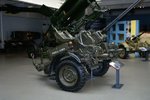
A captured 20mm AA gun. There were a number of these around the islands and they caused a lot of concern to the British in the AA role and in the ground role.
 

Attachments

  • Duxford 3rd Jan 2006 Argentine 20mm.jpg
    Duxford 3rd Jan 2006 Argentine 20mm.jpg
    56.1 KB · Views: 143
Yes. The captured 35mm were refurbished and issued to a reserve RAF regiment to back up the Rapiers.
Later the guns were put in museums and the Skyguard radars incorporated into a weapons range for air to air combat over the North Sea. This was based on the Nellis principle but has to be over water as we simply don't have the airspace over land. So its not perfect by any means, but its a lot better than nothing.
 
This was based on the Nellis principle but has to be over water as we simply don't have the airspace over land. So its not perfect by any means, but its a lot better than nothing.


Thanks for that info, I have no idea of the usage of the Oerlikons by the British Forces, just that they were captured.


laminaik1.jpg


By the way anybody got some pics/footage of the British field artillery in the war...I cant found nothing significative.
 
background: A group of scrap collectors landed on South Georgia an island to the south of the Falklands and started to remove old whaleing sheds, they had no right to be there and were told by the British navy to go.They first raised the Argentine flag declared the island retaken for Argentina and then had to take it down and leave.
At that time Argentiana was ruled by a " junta " goverment meaning, by the military they tried to Politicly " save face " and increase polpularity by invading the Falkland islands. Which they did, we had semi warning they were going to attack but our best shot was a company of marines and a few civilians that were armed.

while in the army i came back from germany on the sir galahad,It went on to the Falklands , this was a troop landing ship that was caught by argentine A-4 bombers, caught fire and sunk with loss of life .At the start of the war there was a worry that the Argentine navy would attack it was a real serious threat to us. we didnt have any forward bases as such and had to reply on carriers. The Uk declared a ' exclustion " zone around the islands and basicly said any Argentine vessel or aircraft would be attacked if it entered the zone.The Crusier the Belgrano was an ex USN cruiser ( which had survived pearl harbour ) which could have quite easily taken out the British carriers the offical story goes it was crusing up and down with its attack group outside the zone and then made a course change which would bring it in the zone.We attacked with a submarine and sunk it with great loss of life.Some of the looses could be blamed on the fact that the Argentine attack group ran for home as soon as the Cruiser was hit.Thus leaving the surviving crew to the elements.The argentine representative to the Un was quoted as saying " Britania might not rule the waves but she waves the rules " as the belgrano was attacked and sunk outside the exclustion zone.There was world protest at the loss of life and the fact it was attacked outside the zone, i think politicly it was a demonstration that the Uk meant buisness.
With the ARN safely back in port the only thing open to the Argentine " junta " goverment was use the Airforce which they did to the best of thier ability, but the reality was they were far from home flying as low as possable and had not only the RAf harriers ready to bounce them but all the " goalposting " ships on the way in to the targets. I even as a brit cant help but admire the bravery of those pilots., but it was a lost cause as soon as we landed the Argentine army started to be rolled back.Apart from a few profesional troops the main bulk of the Argentines were young kids given a gun and asked to fight against one of the best trained armys in the world they mainly ran, it was only after the British army had " yomped " as we called it ... Yomp meaning a long distance march carrying all our kit of 80 miles across the islands that the last Die hard troops of Argentina started to fight on the outskirts of Port Stanley ( the capitol )but it was all over in days.
I can remember the frustration of being back in the UK and wanting to get down there, and the anger at the world not understanding the situation.To the world it was a fight over an stupid island thousands of miles away from the British mainland , fact of the matter was even though the islands are closer to the Argentine mainland than the Uk the people were given a vote " stay with the Uk or be with the Argentines " They voted to stay part of the Uk. Speak english, use english currency and have an english goverment, and so the Americans need to think, it was to us like an " invasion of Rhode island " small not really worth it but still the USA.
End of the story is the Uk won the islands back and then fortified it into a major Airbase. Argentina has very little chance now of a " mutal " gain of the island.Its stalemate no Argentine Goverment would dare to policitly try and get a vote to retake the islands and no british goverment would put a " give away " on the Agenda
 
As an update i can remember going to see an end of war expo in London they had there a " downed pucara " aircraft the thing was totaly wrecked .There was a sign saying " damaged incured during the fighting " One of my Army buddys who was lucky enough to see the fighting told me that the thing had be brought down with a single round through the radiator. faced with an impossable flight back to Argentina the pilot decided to make a controlled landing which he did and was cpatured. The Aircraft at the time was complete, but later that night half of the Parachute regiment armed with wrenches, screwdrivers and any other tools they could get their hands on stripped it down for souveniers:)
 

Users who are viewing this thread

Back