Ultimate WWII bomber (1 Viewer)

OK, first it needs to be a four-engined plane. Since the B-29 was only a paper dream in 1940, I can't just make things easy and build it.

I thought we were talking 1942?

 
Four engine Mosquio, built from metal...

Initial production (1942-1943): RR Griffon III/IV
Late production (1944 onwards): Two options: 2,050 hp RR Griffon 65 for high altitude bomber, or 2,450/2,585 hp Bristol Centaurus for a medium altitude version

Metal allows the aircraft to be lighter and/or stronger than the original 'Wooden wonder'

Expand the wingspan and lengthen the fuselage to accommodate at least 2 x 4,000 MC or HC bombs.

Non 'cookie' loads would be somewhat limited, probably to 4,000-6,000 lbs (typically 9 x 500 lbs/6x 1,000 lbs. 3 x 2,000 lbs).

Top speed would be in the order of 425-430 mph, possibly higher. Cruising speed would be in excess of 350 mph at 30,000 ft, higher (both in terms of speed and altiude) for Griffon 65 engine versions.

No defensive armament.

I would think a remote controlled 20mm stinger in the back would be handy.

But what about some other usefull things like "zap flaps" or full span fowler flaps?
 
I would attempt to hybrid a CH-47 with a B-26 or B-25.

The end result would probably end up being smaller than either, but it would retain two engines in the wings. The idea would be to allow the bomber to land and take off from a stationary position and climb to altitude using the helicopter blades, and then gain speed using the engines.

As the speed builds up the rotary blades could shut down and aline themselves with the fuselage, similarly to how a helicopter is actually stored. The purpose would be to protect the blades from damage in a combat zone, while the plane flies as normal bomber would using its radial engines.

The question is could 1942 technology achieve this?

Bill


even if it could the Ch-47 needs 7500hp for it's vertical lift so you need another FOUR R-2600s to power the rotors. Unless you have a really complicated drive shaft set up in which case you might get away with only two more.
 
The idea follows a CH-47, but it does not need to be the equivalent. The finished design may actually be much smaller as i suggested.
 
Such an aircraft would not even remotely resemble the historical mosquito. You are building an entirely new design starting with a clean sheat of paper. Since you are starting during 1942 the chances are even the American B-29 will beat it into service.
 
Stretch the Martin B-26 design into a 4 engine configuration. Heck, you might be close to a 400mph bomber!
 
I would also go for the Ju-288.

Just put it into mass production by 1942, such as was planned. The Jumo-222A1 worked just fine. Don´t increase the power to beyond 2500 hp and You will end up with a very efficient and good engine producing 2200/2400 hp by 1942. There are production lines already paid for and build up near Vienna. BMW already started to put small parts in mass production.

Historically, the Ju-288 didn´t failed because of technical problems but because the politics was unwilling to put it into mass production, cancelling to many other companies projects and devoiding Germany a bit of the competition environment.
 
A 4-engined B-26 would look fantastic, I must admit. Just to play devil's advocate, would the design also overcome the handling characteristics which gave the B-26 such a bad name?

I particularly agree with del's sentiments about politics killing a good weapon system - it happens time and again in modern history. TSR2, Skybolt, the RN's fleet carriers - these are just a few examples from British post-WW2 history. I'm fairly sure that most the deigns suggested here would get the go-ahead though :D
 
The main point overlooked is what is the requirement? Long range strategic? Medium range heavy? Long range patrol? Target type? weapons to employ? What are your resources? What are your fighting environs--overland or over water?

All these and more influence your design.

if you can define your requirements then you can fit an aircraft to the role.

i would go with the Horten brothers as they were pretty mature in flying wing design and usage.
 
The hortons didn´t matured their powered wing designs in 1942 but they did later.
The Ju-288 can fill the following roles almost superbly:

[+]strategic patrol plane with long range
[+]high altitude level bomber
[+]medium range, medium altitude, heavy bomber
[+]dive bomber (not sure, though- probably only shallow attack)
[+]maritime patrol/attack aircraft
[+]high speed, long range, high altitude reconnaissance
[+]high speed, medium altitude raids
[+]night bomber
[+]high speed, low level attack bomber
 
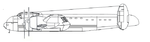
Here is my proposal, Lancaster with R-2800, turbo-charged, no armament (as posted in another thread):
 

Attachments

  • 2800lancaster.PNG
    2800lancaster.PNG
    7.9 KB · Views: 164
No armament is risky for a number of reasons IMHO. 'Nothing will be able to catch me' is a fallacy - the RAF thought that about the Fortress I, and the Germans did catch and kill a number of them, even though they were armed. I would also argue that armament gives a morale boost to crews, especially in a large and relatively slow aircraft like a heavy bomber. The guns may not score any kills, but they can boost crew morale, and may force some attackers to hold back or even abort an attack altogether.

I know most folks will quote the Mossie against both of these arguments, but that was an awful lot faster and more agile than a Lanc, so had a better chance to begin with. If you're going to send an unarmed, radial engined Lanc in to combat zone, you might as well scrap it altogether and use the C-54 instead...
 
No armament is risky for a number of reasons IMHO. 'Nothing will be able to catch me' is a fallacy - the RAF thought that about the Fortress I, and the Germans did catch and kill a number of them, even though they were armed.
What does Fortress I has to do with night bombing? Did they scored any kills vs. night fighters?

I would also argue that armament gives a morale boost to crews, especially in a large and relatively slow aircraft like a heavy bomber.

Not slow any more, but decidedly faster higher flying than any German night fighter...

The guns may not score any kills, but they can boost crew morale, and may force some attackers to hold back or even abort an attack altogether.

No need to said twice about morale boosting :)
How many night fighters were actually brought down by defensive fire? And how many on Schraege music approach alone?

I know most folks will quote the Mossie against both of these arguments, but that was an awful lot faster and more agile than a Lanc, so had a better chance to begin with. If you're going to send an unarmed, radial engined Lanc in to combat zone, you might as well scrap it altogether and use the C-54 instead...

My Lanc would have 8000 HP available @ 30 kft, needing less crew, no armament ammo (canceling out any increased weight from new power plant) , better airframe streamlining (to cancel out any drag increase by radial engines).
How many HPs were available for real Lancasters above 25kft?
 
The hortons didn´t matured their powered wing designs in 1942 but they did later.
The Ju-288 can fill the following roles almost superbly:

[+]strategic patrol plane with long range
[+]high altitude level bomber
[+]medium range, medium altitude, heavy bomber
[+]dive bomber (not sure, though- probably only shallow attack)
[+]maritime patrol/attack aircraft
[+]high speed, long range, high altitude reconnaissance
[+]high speed, medium altitude raids
[+]night bomber
[+]high speed, low level attack bomber

Hello delcyros

I thought the high altitude performance of the Ju 288 was pretty poor. Basically the design adopted a high wingloading to give better speed and reduce weight at the expense of manoeuvrability and altitude performance. I don't see a reason to be a particular fan of the design; capability is pretty similar to the Mosquito but at twice the weight.

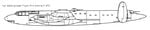
I personally like this historical redesign of the Lancaster. Better fairing of the turrets pushing speed up to around 350mph. Definitely useful for reducing losses when you can simply fly away from Ju88 and Me 110 nightfighters.
 

Attachments

  • lancaster_fast.jpg
    lancaster_fast.jpg
    14 KB · Views: 163
high altitude performance of the Ju 288 was pretty poor
Why is that a problem? Even today we cannot bomb accurately from 30,000 feet using iron bombs. A WWII era level bomber should be operating at 15 to 20,000 feet. Just high enough to get above the accurate range of medium flak like the Bofors 40mm.
 
Tomo

The Fortress I has nothing to do with night bombing - my point was that no matter how high and fast you fly, day or night, there will be something out there to catch you, and if there isn't, there probably will be very soon. That is the nature of aerial warfare. One other related point is that an aircraft flying very high and fast at night is going to have great difficulty bombing accurately on it's markers. It will still have to slow down and descend for the bomb run, at which point it becomes a sitting target.

I'm not going to get into a stats argument with you, but I seriously doubt that a fully loaded Lanc is going to outrun a Bf110 or He219, as you claim. And if you ask how many NFs were shot down by bomber defensive gunfire, you miss my point. Defensive gunfire could throw a NF off it's aim or even drive it off altogether, giving the bomber a degree of protection which an unarmed aircraft obviously lacks.
 
The idea follows a CH-47, but it does not need to be the equivalent. The finished design may actually be much smaller as i suggested.

Fine, why don't you suggest a gross weight and what you plan for lift engines?

B-25s went 33,000lbs loaded or better didn't they?
 

Users who are viewing this thread

Back