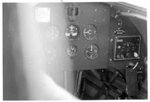
That's true, but the OP, I believe was referring to an instrument trainer, and these panels aren't adequate for instrument training, so if it was one of these airframes, it was modified. OTOH, the rear cockpit control lock image resembles structurally the original photo. Properly equipped, one of these Fairchilds would make a good instrument trainer, as they're docile, stable, and honest flyers, good for building confidence in challenged young pilots struggling to make those pesky needles behave.
Cheers,
Wes
Tom, Wes and all,
I can say with total certainty this is not a Fairchild PT-19, -23, or 26 cockpit. I have studied the type for many years and would have recognized the cockpit if it was. I would also stress that no Fairchild PT's were assigned to any USAAC or RAF schools in California.
To quote my own earlier post -
"In my estimation the panel looks like a form of blind flying panel". It is definitely not the standard RAF Blind-flying panel, such as that fitted to the Fairchild PT-26, as this included a directional giro and giro-stabilized artificial horizon instrument, where as the photograph shows a simple turn & bank indicator.
I would like to point out that despite the obvious aluminium skin, the Spartan 7W, the BT-13 Valiant and Stinson Model O each had a steel tube primary structure in the cockpit area at least.
On further reflection I think this cockpit is too narrow and too "spartan", (in the accepted sense), to be a 7W. The 7W Executives were four-seaters and originally designed for very wealthy customers. The amount of available light in the photograph suggests it may be an open cockpit.
The Stinson Model O, NC13817, used at Glendale was leased from another operator. The FAA records show by 1941 it had fitted with a "Rec.Trans. & interphone" weighing 52.5 lbs but there are no indications as to the manufacturer(s). No original example survive but a reproduction Model O was created a few years ago from remains of a different Model Stinson. I have found no cockpit pics.
The only C-3 cockpit photographs I have found searching today are from surviving aircraft and may be quite different from the Polaris Model C-3R's of 1941/42. Many C-3s became crop dusters in the 1950's and much of their original equipment would have removed. However, the FAA records do show that two of the Polaris C-3R's were fitted with "
Lear AMR1 receiver installed on rear instrument panel" during their conversion to two seat trainers by Aircraft Industries Corp., Glendale, California, in April 1941.
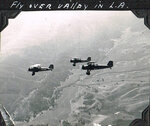
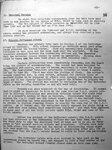
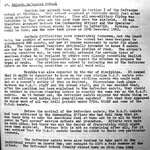
Attached is the only photograph I have of the three Polaris Flight Academy Stearman C-3Rs, plus two relevant extracts from the official diary of No.2 British Flying Training School, Lancaster, CA. I should point out that in
"2-41.06", "17 Polaris School" - at the end of first paragraph the date "
20th December 1942" is a typo and should read
20th December 1941.
Tony