Were spade grip control columns fitted to Allison-engined RAF Mustangs?

Ad: This forum contains affiliate links to products on Amazon and eBay. More information in Terms and rules

mindenroses

Recruit
6
5
Oct 6, 2022
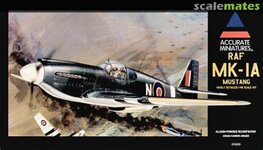
I'm preparing to build Accurate Miniatures 1/48th​ scale RAF North American Mustang I and IA kits. For references, I'm relying primaily on Colin Ford excellent Wingleader Photo Achive Number 22. I've also reviewed photos of RAF Mustang Is and Ias that I've collected off the Internet over the years, and have encountered an oddity: A unknown Polish-language publication contrasts a cockpit photo apparently captioned as a Mustang I cockpit whose control column ends in a typical RAF "spade grip," along with another showing North American's plain stick control column. See scan of page attached. Does anyone know if spade grip control columns were actually fitted to Allison-engined RAF Mustangs? I don't read Polish but the text does appear to reference words I interpret as "Mustang," as opposed to "XP-51." On the image with the RAF-style spade grip column, the right cockpit sidewall detail and canopy framing looks like a Mustang rather than any British single-engined aircraft I'm familiar with. Anybody's thoughts or information are much appreciated.

1787341705297.png
 
Last edited by a moderator:
The language of the posted page isn't the Polish but the Russian one. IMHO it is the Russian edition of the Squadron Signal Walkaround book for the P-51.

PS. IIRC the RAF spade grip of the control stick was used only in the first demo P-51. The serial ones already come with the pistol grip.
 
Colin ColFord ColFord is a member here and pops in as does Bill drgondog drgondog Your best for sure for sure

EDIT: I have the Squadron "Walk Around Allison Engined Mustangs" and it just shows the straight stick, nothing about RAF Mustangs sticks

EDIT Some More: Pilot's Notes Mustang l and lA

1787343447975.png
 
Last edited:
The language of the posted page isn't the Polish but the Russian one. IMHO it si the Russian edition of the Squadron Signal Walkaround book for the P-51.
Many thanks for the correction! I doubt many Polish readers appreciate my blunder.
 
Colin ColFord ColFord is a member here and pops in as does Bill drgondog drgondog Your best for sure for sure

EDIT: I have the Squadron "Walk Around Allison Engined Mustangs" and it just shows the straight stick, nothing about RAF Mustangs sticks

EDIT Some More: Pilot's Notes Mustang l and lA

I would defer to Colin, but NAA delivered all Mustangs with stick. Given the Russian connection, I suspect that AG 348 which went to USSR via RAF was modified in UK.
 
Okay. The first photo, is a photo taken by NAA of a mock-up cockpit that was built during the design and development of the NA-73 Mustang I for the RAF. The mock-up was used in part to help refine the layout of the cockpit, where the various instruments would be, the various controls, the cockpit enclosure, how user friendly it would be and usable for the pilot. In a couple of photos of the mock-up cockpit, NAA included the top ring grip section to the control stick, the same top ring section fitted to the Harvard I aircraft already being supplied by NAA to the RAF. It was a case of showing the customer that they could supply a cockpit layout, look and feel to what the customer was used to - the 'spade' or 'ring' grip being in use with most RAF fighter type aircraft at that time. So just a cockpit section mockup, not an actual aircraft.

However, the decision was made to go into production with a standard US style 'pistol grip' top section to the control column.

However, part 2. A limited, underline, bold and capitalise A LIMITED number of early NA-73 Mustang I aircraft were modified after arrival in the UK and issue to a RAF ACC Squadron, by the modification of the control column. This entailed removing the US NAA supplied pistol grip and replacing the top section with the ring grip normally fitted to a RAF Harvard I, The limited number of instances I have been able to confirm of this happening was usually for senior, long serving RAF officers in command of the Squadrons, whose RAF flying had been on UK manufactured aircraft types fitted with a ring grip as standard. Senior officers using their rank and priviledge for a small personalisation of what would be their 'regular mount. In practice, it didn't last long, as the turnover of early Mustang I aircraft as unmodified Mustang I that had been issued to Squadrons to allow them to work up on the type were replaced with modified Mustangs, and added to which the sharing of aircraft between pilots on a Squadron meant keeping them as standard as possible was required. Also by this stage, the number of pilots with or joining the ACC Mustang Squadrons who had flown other US manufactured aircraft either in training eg Stearman, Yale and Harvard or operationally eg P-40 Tomahawk was in the majority. Any of the limited number of Mustang I aircraft that had the personalised ring grip modification were converted back to the standard pistol grip.

The book extract in the original post is from a 'bootleg' foreign language version of the basic contents of the Squadron Signal book on the early Mustangs. A number of these and similar aviation titles turned up, from Russia from the late 1980s onwards - no respect for the original publishers copyright. I got see an original of one of these some years ago, and the paper and print quality was poor and the translation was certainly a bit 'off' of the narrative and photo captions. To some degree, it also captured a number of the errors of fact and Mustang 'myths' that were circulated about the early Mustangs at that time.

Below is a couple of pages taken from the RAF Pilot's Manual for the Mustang I, showing the standard cockpit layout and the standard pistol grip control column top.


Mustang MkI RAF Pilot Manual Cocpit.jpg
 
Also, for your interest, there is a very long running thread over on Britmodeller about modelling early Allison engine Mustangs. Worth a look (it's where Wingleader and DBMK Models found me)..........

 
I have noticed something about the British versus US grips. US control sticks are rather obviously designed to require the pilot to move his whole arm to control the airplane, while the British "doughnut" is designed to just use the forearm and wrist. This is not just the shape of the grip but also the position of the stick itself relative to the seat; the US stick is further forward.

In flying my own airplane, which uses a control wheel, I use the wrist to twist the wheel, grabbing it rather like the British grip with just my Left hand. US aircraft with sticks that I have flown (1929 Waco, Citabria, T-33A) require you to move your whole arm. There is basic difference in design approach.
 
Okay. The first photo, is a photo taken by NAA of a mock-up cockpit that was built during the design and development of the NA-73 Mustang I for the RAF. The mock-up was used in part to help refine the layout of the cockpit, where the various instruments would be, the various controls, the cockpit enclosure, how user friendly it would be and usable for the pilot. In a couple of photos of the mock-up cockpit, NAA included the top ring grip section to the control stick, the same top ring section fitted to the Harvard I aircraft already being supplied by NAA to the RAF. It was a case of showing the customer that they could supply a cockpit layout, look and feel to what the customer was used to - the 'spade' or 'ring' grip being in use with most RAF fighter type aircraft at that time. So just a cockpit section mockup, not an actual aircraft.

However, the decision was made to go into production with a standard US style 'pistol grip' top section to the control column.

However, part 2. A limited, underline, bold and capitalise A LIMITED number of early NA-73 Mustang I aircraft were modified after arrival in the UK and issue to a RAF ACC Squadron, by the modification of the control column. This entailed removing the US NAA supplied pistol grip and replacing the top section with the ring grip normally fitted to a RAF Harvard I, The limited number of instances I have been able to confirm of this happening was usually for senior, long serving RAF officers in command of the Squadrons, whose RAF flying had been on UK manufactured aircraft types fitted with a ring grip as standard. Senior officers using their rank and priviledge for a small personalisation of what would be their 'regular mount. In practice, it didn't last long, as the turnover of early Mustang I aircraft as unmodified Mustang I that had been issued to Squadrons to allow them to work up on the type were replaced with modified Mustangs, and added to which the sharing of aircraft between pilots on a Squadron meant keeping them as standard as possible was required. Also by this stage, the number of pilots with or joining the ACC Mustang Squadrons who had flown other US manufactured aircraft either in training eg Stearman, Yale and Harvard or operationally eg P-40 Tomahawk was in the majority. Any of the limited number of Mustang I aircraft that had the personalised ring grip modification were converted back to the standard pistol grip.

The book extract in the original post is from a 'bootleg' foreign language version of the basic contents of the Squadron Signal book on the early Mustangs. A number of these and similar aviation titles turned up, from Russia from the late 1980s onwards - no respect for the original publishers copyright. I got see an original of one of these some years ago, and the paper and print quality was poor and the translation was certainly a bit 'off' of the narrative and photo captions. To some degree, it also captured a number of the errors of fact and Mustang 'myths' that were circulated about the early Mustangs at that time.

Below is a couple of pages taken from the RAF Pilot's Manual for the Mustang I, showing the standard cockpit layout and the standard pistol grip control column top.


View attachment 891840
Many thanks, that settles the matter!
 
Okay. The first photo, is a photo taken by NAA of a mock-up cockpit that was built during the design and development of the NA-73 Mustang I for the RAF. The mock-up was used in part to help refine the layout of the cockpit, where the various instruments would be, the various controls, the cockpit enclosure, how user friendly it would be and usable for the pilot. In a couple of photos of the mock-up cockpit, NAA included the top ring grip section to the control stick, the same top ring section fitted to the Harvard I aircraft already being supplied by NAA to the RAF. It was a case of showing the customer that they could supply a cockpit layout, look and feel to what the customer was used to - the 'spade' or 'ring' grip being in use with most RAF fighter type aircraft at that time. So just a cockpit section mockup, not an actual aircraft.

However, the decision was made to go into production with a standard US style 'pistol grip' top section to the control column.

However, part 2. A limited, underline, bold and capitalise A LIMITED number of early NA-73 Mustang I aircraft were modified after arrival in the UK and issue to a RAF ACC Squadron, by the modification of the control column. This entailed removing the US NAA supplied pistol grip and replacing the top section with the ring grip normally fitted to a RAF Harvard I, The limited number of instances I have been able to confirm of this happening was usually for senior, long serving RAF officers in command of the Squadrons, whose RAF flying had been on UK manufactured aircraft types fitted with a ring grip as standard. Senior officers using their rank and priviledge for a small personalisation of what would be their 'regular mount. In practice, it didn't last long, as the turnover of early Mustang I aircraft as unmodified Mustang I that had been issued to Squadrons to allow them to work up on the type were replaced with modified Mustangs, and added to which the sharing of aircraft between pilots on a Squadron meant keeping them as standard as possible was required. Also by this stage, the number of pilots with or joining the ACC Mustang Squadrons who had flown other US manufactured aircraft either in training eg Stearman, Yale and Harvard or operationally eg P-40 Tomahawk was in the majority. Any of the limited number of Mustang I aircraft that had the personalised ring grip modification were converted back to the standard pistol grip.

The book extract in the original post is from a 'bootleg' foreign language version of the basic contents of the Squadron Signal book on the early Mustangs. A number of these and similar aviation titles turned up, from Russia from the late 1980s onwards - no respect for the original publishers copyright. I got see an original of one of these some years ago, and the paper and print quality was poor and the translation was certainly a bit 'off' of the narrative and photo captions. To some degree, it also captured a number of the errors of fact and Mustang 'myths' that were circulated about the early Mustangs at that time.

Below is a couple of pages taken from the RAF Pilot's Manual for the Mustang I, showing the standard cockpit layout and the standard pistol grip control column top.


View attachment 891840
Many thanks, that settles the matter!
 
Also, for your interest, there is a very long running thread over on Britmodeller about modelling early Allison engine Mustangs. Worth a look (it's where Wingleader and DBMK Models found me)..........

Thanks, Colin. I'd bookmarked the Britmodeller thread but decided to look at the question re the control column first.
 
I have noticed something about the British versus US grips. US control sticks are rather obviously designed to require the pilot to move his whole arm to control the airplane, while the British "doughnut" is designed to just use the forearm and wrist. This is not just the shape of the grip but also the position of the stick itself relative to the seat; the US stick is further forward.

In flying my own airplane, which uses a control wheel, I use the wrist to twist the wheel, grabbing it rather like the British grip with just my Left hand. US aircraft with sticks that I have flown (1929 Waco, Citabria, T-33A) require you to move your whole arm. There is basic difference in design approach.

You may be right but I always thought that the RAF used the spade grip because of the crappy ergonomics of British fighters of the day and because of the wheel brake control being on the spade grip instead of on the rudder pedals.

On the Hurricane and Spitfire, the landing gear controls are on the right and power levers on the left so after take off the pilot must take his hand off the power levers, grab the spade with the left hand, release the right hand from the grip to retract the gear, then reverse the process to reduce to climb power. On the Hurricane they again had to swap hands to retract the flaps. This required a spade grip or gripping the column with one hand above the other during the hand over.

Landing naturally required the same "clap your hands" ergonomic insanity. Add to that most Brit aircraft had the brake control on the spade grip which would not work very well on the straight stick.

On US aircraft the pilot grabbed the top of the control column with his right hand and did not need to move it at any time during takeoff and climb or approach and landing as all the engine, landing gear, flap and trim controls were on the left so the spade grip was not needed.

For those not familiar with the Brit brake system the pilot squeezes the lever on the spade to apply the brakes and moves the rudder controls to apply differential to the brakes. US aircraft tilt the rudder pedals as required to apply brakes which means you can apply "crossed" controls if necessary. I have never needed to. Brit brakes were low pressure air operated and slow. US brakes were hydraulic and instantaneous.
 
Last edited:
You may be right but I always thought that the RAF used the spade grip because of the crappy ergonomics of British fighters of the day and because of the wheel brake control being on the spade grip instead of on the rudder pedals.
It seems to be common for Brits getting in US fighters to complain that the stick is too far forward and for US pilots to say the opposite about Brit fighters. Perhaps it is not poor ergonomics but rather a different approach.

Anyway, the positioning of the Spitfire stick would seem to worsen the problem of the aileron forces being too high.
 
I agree about the Spitfire aileron forces though more because the longer moment arm of a column pivoted at floor level requires less force.
Conversely the short upper stick the Brits used did allow for more travel which offset this somewhat.
 
I'm preparing to build Accurate Miniatures 1/48th​ scale RAF North American Mustang I and IA kits. For references, I'm relying primaily on Colin Ford excellent Wingleader Photo Achive Number 22. I've also reviewed photos of RAF Mustang Is and Ias that I've collected off the Internet over the years, and have encountered an oddity: A unknown Polish-language publication contrasts a cockpit photo apparently captioned as a Mustang I cockpit whose control column ends in a typical RAF "spade grip," along with another showing North American's plain stick control column. See scan of page attached. Does anyone know if spade grip control columns were actually fitted to Allison-engined RAF Mustangs? I don't read Polish but the text does appear to reference words I interpret as "Mustang," as opposed to "XP-51." On the image with the RAF-style spade grip column, the right cockpit sidewall detail and canopy framing looks like a Mustang rather than any British single-engined aircraft I'm familiar with. Anybody's thoughts or information are much appreciated.

View attachment 891835
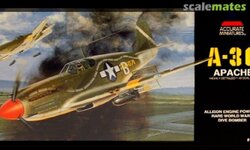
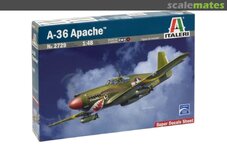
I won't be able to help you (besides that with your smart phone you'll probably be able to point your camera to the text in any language and get a fairly accurate translation on your screen. I've read modeling articles in Japanese that way). But I do have a question you might be willing to answer. I have an Accurate P-51, North Africa version, and have been looking for a long time for a 1/48 RAF P-51 or Mustang Mk. I (so the one with the "chin" machine guns). I didn't know it existed until I read your post. Could you help me out and indicate which kit you have for the first RAF version? I am correct in thinking that the A-36 Apache boxing (Accurate and Italeri) are the (only?) ones? Thanks for any help here.
 

Attachments

  • IMG_5329.jpeg
    IMG_5329.jpeg
    67.9 KB · Views: 29
  • IMG_5330.jpeg
    IMG_5330.jpeg
    90.4 KB · Views: 21
  • IMG_5331.jpeg
    IMG_5331.jpeg
    69.9 KB · Views: 15
  • IMG_5332.jpeg
    IMG_5332.jpeg
    44.2 KB · Views: 22
I won't be able to help you (besides that with your smart phone you'll probably be able to point your camera to the text in any language and get a fairly accurate translation on your screen. I've read modeling articles in Japanese that way). But I do have a question you might be willing to answer. I have an Accurate P-51, North Africa version, and have been looking for a long time for a 1/48 RAF P-51 or Mustang Mk. I (so the one with the "chin" machine guns). I didn't know it existed until I read your post. Could you help me out and indicate which kit you have for the first RAF version? I am correct in thinking that the A-36 Apache boxing (Accurate and Italeri) are the (only?) ones? Thanks for any help here.
Only three models NA-73 & 81 (Mustang I) and NA-97 (A-36) had cowl mounted .50-cal guns. NA-91 (Mustang IA and P-51-NA) had 20mm cannon.
 
Only three models NA-73 & 81 (Mustang I) and NA-97 (A-36) had cowl mounted .50-cal guns. NA-91 (Mustang IA and P-51-NA) had 20mm cannon.
Thank you. I am aware that the Mustang I had cowl mounted guns and the IA hadn't. It is exactly a 1/48 model of the Mk I I am looking for. So my question was about the 1/48 models mindenroses was talking about.
 
I agree about the Spitfire aileron forces though more because the longer moment arm of a column pivoted at floor level requires less force.
Note that the Me-262 had a control stick that unfolded to make it longer when additional stick force was required at high speeds.

One of the relatively few advantages the P-39 had was that its gearing for the ailerons connected to the stick was quite high, requiring little stick movement to get a lot of aileron response. Of course this feature may have been driven more by the limited room in the cockpit rather than a desire for better maneuverability. This feature was well liked by very experienced and highly talented pilots, such as Chuck Yeager and Winkle Brown, but probably proved to be deadly for low time pilots fresh out of a AT-6.

Thank you. I am aware that the Mustang I had cowl mounted guns and the IA hadn't.
Note that the Accurate Miniatures A-36A has the cowl mounted guns and that lower cowl insert should fit the Mk IA as well, if you can find one. Attached is is my favorite picture of a Mk IA.
Mustang-Fra.jpg


By the way, AM did a laudable job of trying to depict SCR-274N radios in their Allison Mustang kits but they did not get it quite right. Some guys wrote a book on detailing Mustang models and further compounded the AM mistakes by adding some totally bogus features.

274in51A.jpg
 

Users who are viewing this thread

Back