why is the A6M Zero's lack of armor emphasized so heavily (3 Viewers)

Ad: This forum contains affiliate links to products on Amazon and eBay. More information in Terms and rules

B-24s were death traps when crash landing. The fuselage would fold up just behind the cockpit with the top turret crushing the pilots. Ditching was even worse as the bomb bay doors would collapse inward, ripping the plane in half.
One unfortunate incident in India. A B-24 full of sightseers was flat hatting along a river when the pilot dipped too low, struck the river, ripping the bay doors off. He was able to bring the plane back, but everyone in the rear of the plane was killed.
 
Interesting conversation here. A couple of things that no one here has cottoned on to, but are worth mentioning. Regarding the lack of armour plating and self sealing tanks in the Zero, Japanese ethos was the issue, as well as timing. Yes, the US Navy and AAF was right to emphasise the lack of protection in the Zero simply because they wanted to destroy it, but the reasons why the Japanese took so long to put armour plating in it is not what you all think.

A few points to put this discussion into perspective.

Firstly, the Zero first flew in April 1939. In April 1939, NO US fighter had self sealing tanks and armour plating as standard off the production line. In 1941, American constructors had a mad rush to put this stuff on their aircraft based on British intelligence from combat in Europe - remember the USA was not at war, so these things had not entered the discussion. At the time of Pearl Harbor, the Navy and Grumman were busily retrofitting F4Fs with these things as they were not rolling off the production lines fitted with them. The British learned the hard way, too, as in 1940 they had to retrofit this stuff against the Germans.

54728347113_6ebc9d83b6_k.jpg
_ADP3899
Full scale replica of the A6M prototype at Gifu Kakamigahara, where the original made its first flight.

Secondly, the Zero was a unique design from the outset; Horikoshi believed that superior aerodynamics and low weight, coupled with a low powered engine would make for a superior fighter that met Japanese expectations of high manoeuvrability, and let's not forget that back in the mid 1930s, that is what every air force wanted of its fighters.

In 1935 Horikoshi built what was designated the Ka-14, an all-metal inverse gull winged aircraft of extremely clean profile, which became the technology demonstrator of the A5M, which was the world's first all-metal monoplane naval fighter. He applied the same idea to the A6M, which was built to an extremely demanding specification issued by the IJN, so much so, Nakajima decided not to enter a design, although the Ki-43 Hayabusa was built to very similar criteria. The Zero was designed with extreme manoeuvrability in mind, which meant extreme measures in terms of weight saving.

This meant that initially the Zero did not have armour plating, and never had self sealing tanks, but as mentioned above, in 1940, when it entered service, neither did its potential adversaries.

54818520276_fe793fcfda_k.jpg
_ADP4965
Modified two-seat A6M2 Model 21 at Hirosawa City, north of Tokyo.

Thirdly, the emphasis on the IJN pilots was that attack was the best form of defense, and Zero pilots did not work together as robustly as the US Navy trained its pilots to do so. This is where US Naval doctrine won out against the Zero (Thatch weave, etc), because pilots realised that to beat it, they needed superior tactics, as pound for pound, the Zero was, in good hands an extremely formidable aircraft.

Fourthly, why did the Japanese not put these things into the Zero sooner? Exactly the reasons why they didn't when it was first built. Zero pilots held on to the belief that superior manoeuvrability was their biggest advantage and in a sense they were right. They even complained about the A6M3 Model 32, whose ethos followed more closely the tactics US aircraft were using against them. It had clipped wings, giving improved roll rate but not turn rate, a high climb rate and good acceleration, and a supercharged Sakae 21 with a modified downdraught carb - the earlier Sakai 11 in the A6M2 (updraught carb) tended to run lean in a bunting manoeuvre. Because of these complaints and lack of range given the more powerful engine, the A6M3 Model 22 that came after the Model 32 was fitted with five fuel tanks and greater wing area. To us, the Model 22 is a retrograde step, but to previous Zero pilots it suited their style of fighting.

54492438046_9b560eb03a_k.jpg
_ADP4662 Converted A6M3 Model 32, Tachiarai, Kyushu.

It is worth remembering though, that contrary to popular belief, Japanese fighter designs from 1942 onwards had armour and self sealing tanks fitted as standard. The J2M Raiden, the Ki-61 Hien, the Ki-84 Hayate, the Zero's much delayed replacement the A7M Reppu were all designed from the outset with these things as standard. Also, the Kawasaki Ki-45 Toryu twin-engined fighter entered service in January 1942 with tanks and armour plating as standard. So much for the Japanese not doing that stuff in a timely fashion.

54728346978_a82ff4f2c4_k.jpg
_ADP3987
Ki-61 Hien, Gifu Kakamigahara.

So, to answer the question, yes, the US were right to pick up on the lack of this stuff in the A6M, simply because that was a key means of defeating it and because in good hands it remained effective when its superior manoeuvrability was used against US fighters. Another factor that became apparent after testing the Zero was its poor control response at high speeds. Big powerful aircraft like the Corsair and P-47 could defeat the Zero at high speed manoeuvres, but - and the but is pretty big, right until the very end of the war, US pilots were warned not to tangle with the type at low speed and in tight turns.

I have a series of flight test reports of an A6M5 that was flown against a P-47, P-51 and P-38, and an F4F, F6F, and F4U in March 1945. All these aircraft proved superior to the Zero in speed, climb, dive and what have you to varying degrees with the exception of the F4F/FM2, which the Zero was superior to in almost every respect, but the margins of difference between the Zero and US fighters are not as great as you might think. The Zero could keep up at different altitudes with even the F4U and P-51.

54493893742_67a72c20bf_k.jpg
_ADP2943
A6M5 on display at the Yushukan in Tokyo.

Here is an example of suggested tactics flying the F6F-5: "The manoeuvrability of the Zeke 52 is remarkable at speeds below about 175 knots, being far superior to that of the F6F-5. Its superiority however, diminishes with with increased speed, due to its high control forces, and the F6F-5 has the advantage at speeds above 200 kts."

"The following are tactics that are suggested for use against the Zeke 52 by the F6F-5.
[In all-caps on the test report] "DO NOT DOGFIGHT THE ZEKE 52. DO NOT TRY TO FOLLOW A LOOP OR HALF ROLL WITH PULL-THROUGH."

"When attacked, use your superior power and high speed performance to engage at the most favorable moment. To evade the Zeke 52 on your tail, roll and dive away in a high speed turn."

This is pretty much the same in all the test reports, which answers the question as to why the Zero was only fitted with armour plate late in the picture; its manoeuvrability would have been compromised by extensive modification. I hope this context helps.
 
Last edited:
Read an article years ago that said that for the typical 7.92 and 20MM armament of a German fighter, the probability of downing a B-17 or B-24 on one pass was around 1%. So it took 50 firing passes to even get a 50% probability. I don't know what the probability was of doing 50 firing passes at an unescorted US bomber formation without the fighter sustaining serious damage but I'd guess it was pretty low.
I would be wary about that figure, for a start the Bf109G-5 and G-6 with the 13mm machine guns began appearing in early 1943. Also whether the Bf109 were carrying 1 or 3x20mm guns.

The Fw190A-2, 3, 4 had the 2x7.9mm, 2x20mm high and 2x20mm low velocity (1942 into 1943), the A-5 had 2x7.9mm, 4x20mm high velocity from around April 1943, the A-7 changed the machine guns to 13mm in late 1943.

That is a wide variety of firepower.

Williamson Murray has Luftwaffe fighter losses on 14 October 1943 as 31 destroyed, 11 write off, 34 damaged. Donald Caldwell says 882 Luftwaffe sorties of which 662 made contact. Roger Freeman has the 8th AF bomber casualties as 60 MIA, 7 write off, 138 damaged from 320 despatched and 229 effective sorties. US fighters claimed 13-1-0 for 1 MIA, 4 write off, 2 damaged. RAF fighters made no claims. The B-17 listings say 61 MIA, 1 "Battle Damage", 2 Flak and Fighter, 55 Fighter, 3 Flak, write offs were 8, 2 "Battle Damage", 1 Fighter, 2 Flak, and 1 each to Fuel Starvation, Landing Accident and Mechanical Failure on take off. Assuming for the moment all the P-47 were lost to enemy fighters, 662 Luftwaffe fighters caused 61 USAAF losses plus 2 shared with flak, which is around 9% of sorties making contact. At 1% per pass it would require nearly 6,000 passes to shoot down the B-17 lost to fighters.

To ignore flak for a moment, 662 Luftwaffe fighters making contact caused around 200 USAAF lost or damaged. Assume half the damaged were to flak and those Luftwaffe fighters caused around 130 USAAF lost or damaged, or about 20% of the sorties making contact. Air Combat in WWII was usually about all the misses.

What read was that the hit rate was 2%. And that twenty 20 mm hits would down a B-17G.
To repeat much of message 13: The reported average of 18 to 20 hits of 20 mm cannon to bring down a B-17 is via causing structural failure, that is no fire.

US firing trials at Aberdeen using German 20mm incendiary rounds versus 40% full B-17 fuel tanks showed the chance of causing a fire per hit was 10% at 50 metres dropping to 2% at 2000 metres. Apparently a 13mm round's chance of starting a fire was 40% of the 20 mm.

So the average number of hits to bring down a B-17 (and by implication other 4 engined types) would have been under the 18 to 20 figure, given the ones lost to fires. For 30mm it was 2 to 3 hits.

The 8th Air force noted that the lethality of Me-262 passes were only 30% of prop aircraft passes
So what period of piston engined fighters is being compared, 1942, 1943, 1944, the Sturm units? Yet the Me262 had 4x30mm cannon firing. The number of Me262 sorties that made contact with USAF heavies is actually small, given the numbers of Me262 actually available in the fighter units. JG7 in 1945 on days when sorties can be determined had 636 sorties, 355 making contact with the enemy. On the days with unrecorded sorties 62 out of the 217 claims for the year were registered, including 14 against Bomber Command on 31 March (11 RAF losses, 6 to ME262, other causes not given).

Giving the Me262 to experienced pilots initially proved counter productive as they tended to treat the engines like piston types, the novice pilots who considered the Me262 to be "normal" did better, then experience began to tell.

(keeping in mind that by 1945 only the Me-262 could realistically attempt passes, given the lopsided forces present).
The Luftwaffe claims system was breaking down in 1945 which creates 2 effects, claims that would have been rejected are in the lists but others did not make the lists. Of 365 Me262 kill claims found 161 are for B-17/24 heavy bombers in 1945 and 66 USAAF fighters or reconnaissance fighters, in 1945 the USAAF ETO lost 199 heavy bombers and the MTO 7 heavy bombers to enemy aircraft, all up about 480 USAAF losses to enemy aircraft in 1945. By the way about half the Me262 claims can be matched to allied losses.

The reason for that is of course that guns HATED overtaking speed, and anything even approaching 60 mph in overtaking speed required last second point-blank fire at about 50-75 metres (to increase the weak 2% hit rate despite the burden of a mismatched overtaking path), 50 metres per second being 180 km/h, the overtaking had to be much slower than that).
Tail chase, closing at 100 yards a second is around 200 mph, against a USAAF heavy you are doing over 400 mph and have under 2 seconds of fire if the lethal zone is 200 yards. 75 yards per second is around 150 mph, under 3 seconds firing time.

Given its losses it likely never got a 1:1 kill ratio.
Seems to be from my writings. JG7 lost 132 Me262s of which 3 were bombed, versus making 262 kill claims. The losses include to 101 to fighter, enemy aircraft, shot down, failed to return and bomber. So overall JG7 was losing about 1 Me262 per real kill, and in combat around 1 Me262 per 1.3 to 1.4 real kills.

As an aside, a very interesting study of all Me-262 losses found that over 70% of them crashed beyond 50 kilometres from their bases, and only about 10-20% within 10 kilometres of their bases, so the idea they were slaughtered while landing or taking off is false...
A 240mph approach speed covers 4 miles per minute, or able to cover around 10km in 90 seconds. The Me262 airfields had good flak coverage plus often patrolling fighters coupled with the speeds involved no surprises the losses due to enemy action were often over 10km from the airfield.

Allied fighter kill claims against Me262s appear reasonable, with 188 claimed versus 89 losses listed to fighters and 75 listed as shot down or lost to enemy aircraft, a total 164. Note a number of these possibles would have been lost to bomber gunners or AA Fire, on the other hand a number of crashes are reported as after combat and other allied claims are a case of mistaken identity, it was not an Me262 that was actually attacked. The discrepancy between allied fighters claims and recorded Me262 losses is biggest in April 1945, 14 to fighters, 38 possibles versus 74 claims, a difference of 22, or almost all the total discrepancy of 188 kills versus 164 possibles.

Another interesting side note is that the B-24 was easier to set on fire because of some of its fuel tank were concentrated in a central area in the spine of the fuselage
No, the only fuselage fuel tanks in both USAAF heavy bombers were carried in the bomb bays. A design flaw of the B-24 appears to have been the fuel lines in the fuselage. Plenty of people have remarked about the smell of fuel in the aircraft and the way the lines could come loose.

The B-24 had a higher fatality rate than the B-17 per aircraft shot down (or adding-in its higher accident rate maybe), but curiously it did not have much heavier losses in terms of loss per sortie in Europe
Definitely coming from my information.

The Luftwaffe kill claims against 8th and 15th AF B-17s are remarkably consistent, over claiming by about 2 to 1 month after month for the entire campaign. Assuming all the B-17s listed as lost to battle damage, unknown causes or a combination of flak and fighters were in fact lost to fighter attack means the monthly figures move around a lot more and the over claim ratio for the entire campaign drops from 2.1 to 1.7 to 1.

The figures for the 8th AF B-24 losses indicate Luftwaffe over claims were under 2 to 1, if all the unknown etc. losses were to fighters it would be as low as 1.5 to 1, and the upper bound around 1.95 to 1.

From a list of 4,509 8th AF B-17 losses, most with cause of loss, but a number without information on crew fate. Also 1,761 B-24 losses, with probably around another 100 losses to be identified that came down on friendly territory or in the ocean but the crew were saved. Around 200 of the B-24 have no cause of loss and quite a few more crew details are missing than for B-17s.

It can be seen by the fact the deaths when shot down by fighters, for the B-17 about 37% of an average 9.74 man crew were KIA when lost to fighters, 32.1% of an average 9.2 man crew were KIA when lost to flak.

For the B-24, after taking out the low level mission flak losses, something like 49.4% of an average 9.4 man crew were KIA when lost to fighters. 37.1% of an average 8.9 man crew when lost to flak.

Note the different crew sizes, that relates to B-24 crews whose fate is unknown and the bias there is to survivors, rather than casualties. If you match crew sizes and assume the extra B-24 men survived, the B-24 KIA figures become 47.3% and 35.7%.

Crew survival training and equipment helps crew survival as well, from the 170 8th AF B-17 lost to fighters to end June 1943, 53% of the men on board were KIA, and 41.7% of the men on board the 52 B-17s lost to flak in the same time period were KIA, average 10 man crews.

8th AF in 1944, percentages are of credit sorties.
1944​
MIACat Ecredit sortieseffective sortiesMIA %Loss %Cat E/MIA
B-17
1957​
502​
121882​
109736​
1.61​
2.02​
0.26​
B-24
858​
346​
66154​
56300​
1.30​
1.82​
0.40​
Total
2815​
848​
188036​
166036​

In theory this means the B-24 was more damage survivable, making it back more often, or took more damage on average in a crash landing. The B-17 accident list has 4,021 accidents, 3,632 of which have a 1 to 5 damage level recorded, 27% level 4, 23% level 5. For the B-24 3,653 accidents, 3,288 of which have a damage level recorded, 30.4% level 4, 35% level 5. So 50% of B-17 accidents probably meant scrapping versus 65% of B-24 accidents. Still suggest battle damaged B-24 were making it home more often.

Note: 8th Air Force 1,003 B-17 lost in 1943 vs 125 B-24 which goes a long way to explaining wartime B-17 MIA of credit sorties 1.58%, B-24 1.20%. The 15th Air Force says B-17 lost or destroyed rate was 1.49%, B-24 2.0% of effective sorties. Credit = entered contested airspace, effective = carried out mission.

 
The B-24 had an odd advantage over the B-17. The bomb bay doors did not drop down but rolled up the sides, as shown in the attached. That meant that enemy fighters could not easily tell when the bombs were about to come out, and during that time the bombers had to be straight and level. The B-17's bomb bay doors dropped down and could be seen from some distance. A B-17 was experimentally fitted with doors that slid out along the bottom of the wings but that was not adopted for use.

Screenshot 2026-06-10 at 10-57-18 Revell Consolidated B-24D Liberator Warbird.png
DSCF3179.jpg
 
I have a related question, It seem like there are two different armor scheme for spitfire, some source suggest that it has an armor plate right behind the spinner. , other source seem to suggest that part doesn't exist? which one is correct?

Screenshot 2026-06-11 085037.png


Spitfire.jpg


Also it kinda surprised that spitfire were supposed to be armored against 20 mm AP round

Screenshot 2026-06-11 085702.png
 
I have a related question, It seem like there are two different armor scheme for spitfire, some source suggest that it has an armor plate right behind the spinner. , other source seem to suggest that part doesn't exist? which one is correct?
They both are.
Lower diagram is for an earlier Spitfire, like a Vc (?) with a C type wing.
Upper diagram is from a MK XIV or MK XVI with an E wing (20mm guns were in the outer gun bay and a .50 cal was used in the inner bay).
MK XIV used a Griffon engine and the MK XVI used a two stage Merlin.

When you go through around 20 types/marks they don't stay with the same armor lay out over 4-5 years and 3 different basic engines.
 
They both are.
Lower diagram is for an earlier Spitfire, like a Vc (?) with a C type wing.
Upper diagram is from a MK XIV or MK XVI with an E wing (20mm guns were in the outer gun bay and a .50 cal was used in the inner bay).
MK XIV used a Griffon engine and the MK XVI used a two stage Merlin.

When you go through around 20 types/marks they don't stay with the same armor lay out over 4-5 years and 3 different basic engines.
Ahh, so late spitfire actually lose the armor behind the spinner?, why they do that?
 
Last edited:
Front armour (header tank, 'frame 5', front ammo boxes) was removed at the same time that the rear amour was beefed up in order to save weight.

'This substitution of the improved rear protection for the forward protection on Spitfires is considered to be amply justified as the great majority of our fighter losses on operations are the result of combats with enemy fighters. It appears probable that this state of affairs is likely to continue. Furthermore, adequate protection against enemy fighters from astern is considered to be of greater importance than retention of the existing protection against bombers' return fire as the pilot is already well protected from ahead by the engine on the occasions when he is subjected to the comparatively weak return fire from bombers, whereas he is at present almost unprotected against enemy 20 m.m. fighter armament from astern.'
- Director of Operational Requirements, 17 October 1943
 
Last edited:
In the book Top Guns, edited by Joe Foss, an interesting incident is described. An Admiral had come to visit Guadalcanal, in a PBY. They asked if they could borrow it, and they used it to attack some Japanese ships. A Japanese air attack was under way and when USMC F4F rose to defend against it, one of the pilots noticed that the borrowed PBY was under attack by three Zeros. Desperate to get the enemy fighters off the PBY, he dove and made quick "strafing" style attacks against the Zeros, intending to just scare them off so the PBY could escape. He just sort of sprayed rounds in their direction, rather than lining them up with the gunsight and firing killing bursts. It worked and the three Zeros broke off and left the PBY alone.

It was not until after the war that he discovered he had scored three kills by that action. None of the Zeros exploded, caught fire, or fell apart. But on their way back to Lae, one had suffered a nick in an oil line and the engine failed, another had a hit in a fuel tank ad it ran out of gas, and the third one suffered some engine damage, which caused it to quit on the way home.

It only took three .50 cal rounds, all fired more or less randomly, to effect that damage and cause the loss of all three Zeros. And this presumably was not even the more effective API .50 cal ammo introduced years later.

Contrast this with Johnson's famous P-47 experience in which he was hit with multiple 20MM rounds, followed by an FW-190 literally running out of 7.92MM ammo trying to finish him off.

That's just a single anecdote, and one I'd like to see verified. Because in the day to day records such as one sees in Shores and Claringbould, both A6M and Ki-43 were routinely flying back to base after suffering battle damage, and not necessarily falling apart like so much confetti the way postwar American / Western legends tell it. Losses were also almost always much lower than claims, on both sides. Comparisons of both loss rates and pilot survival rates when aircraft were lost also don't look that extraordinarily rosy for the Allied aircraft. I've seen posts in here comparing F4F vs A6M and also P-38 and F4U vs A6M along these lines.

From Claringbould's numbers, in the New Guinea area, Japanese pilot / aircrew personnel losses were less the Allies well into 1943.

Aircrew fatalities (from South Pacific Air War vol VI, pp 212-213)
Dec 41 - March 42: Allies 63 / Japanese 139
Mar- April 42: Allies 53 / Japanese 49
May-June 42: Allies 172 / Japanese 187
June-Sept 42: Allies 191 / Japanese 46
Sept-Dec 42: Allies 353 / Japanese 72
Jan-Mar 43: Allies 213 / Japanese 73

Cumulative Dec 41-Mar 43:
Allies 1,045 / Japanese 566

This includes losses for USAAF and RAAF, for Japanese Navy and Army, for bombers and recon aircraft as well as fighters, and it also includes losses caused by sunk aircraft carriers at the Battle of Coral Sea.

I have come to the conclusion that armor and self-sealing fuel tanks mattered, (and this is why some armor was eventually put into later Zeros and -a bit earlier- to Ki-43s), but it wasn't as decisive a factor as the legends suggest, IMO, especially for fighters.

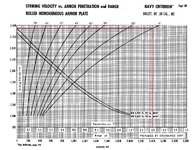
It's also worth pointing out, efficacy or armor and SS tanks depends not just on the caliber of the gun being used, but also the distance to the target, the angle etc. Armor does offer protection from shrapnel as well as individual slugs, and even relatively light armor can offer protection at a long distance where energy is falling off. It also depends on the quality of the armor (which varied a lot) and the type of ammunition used - AP bullets for heavy machineguns or light cannon could punch through most armor at closer ranges, though in some cases good tempered steel armor of sufficient thickness could deflect it.

On the other hand, no amount of armor necessarily protected an aircraft from a wing being blown off, a tail being shot off, the pilot being killed or wounded in shots from above, a radiator being punctured, hydraulic or electrical system being knocked out, ammunition from cooking off etc. Under sustained accurate gunfire at close enough range, even from rifle caliber bullets US fighters routinely went down, just like Japanese fighters did.
 
Hi
For information, the book 'Knights of the Skies - Armour Protection for British Fighting Aeroplanes' by Michael C Fox has a little bit on Japanese armour, extract below:
View attachment 882468
With the "crude depictions" sketches mentioned:
View attachment 882469
A 1946 USAAF report has the following information:
View attachment 882470
View attachment 882471
I hope that is of use.

Mike

Wow this is fantastic - not only thickness but chemical composition of the steel. Very impressive that the US was using moly / vanadium steel at this point. These are trace elements which were used in making steel for armor and swords going back many centuries.
 
I just realize something very weird.
So as far as I know, armor of both P-51 and P-47 were only rated to protect against 0.303 (7.7 mm) caliber whereas armor of both F4U-4 and F6F were rated to protect against 0.5 caliber (12.7 mm). Logically that would suggest that the armor plate on F4U Corsair and F6F Hellcat would be significantly thicker than the armor on P-51.
But the back plate on P-51 is essentially the same as F4U and actually thicker than the plate on F6F. The frontal plate of P-51 also arguably thicker since it made up of 2 plate each with thickness of 6 mm whereas F6F plate is 3 mm. So what is the reason?. One may suggest that due to the radial engine, however, P-47 also has a radial engine and it armor also only rated to protect against 7.7 mm exactly same as P-51.
F4U.png

F6F-5.png

P-51 back seat.png

P-51.jpg
 

Attachments

  • P-51 head.png
    P-51 head.png
    1.3 MB · Views: 18
Pilot survival has a number of stages. Armor helps with a few stages, SS tanks helps with few others, with some cross over. Then come a number of other stages.
1. Pilot doesn't get killed by bullets/shells doing direct hits on the pilot.
2. Wounded pilot is not trapped in burning aircraft.
3. Unwounded pilot has time to bail out of burning aircraft (SS tank/s take over from armor).
4, wounded pilot is able to bail out of a damaged/uncontrolled aircraft.
More?
Now we have the pilot in mid-air out of the aircraft. Assuming that the pilots have parachutes we can progress to the next stage. Surviving ground contact.
5. Not drowning if landing on water.
6. Not dying or severally injured landing on ground.
7. getting recovered from water landing.
8. getting recovered from a ground landing or walking out.
9.Getting back to base or friendly area to report the incident.

This is in addition to pilots that made it back in damaged aircraft with bullet hits on armor or fuel tanks.
Pilots that were picked up in the water needed several steps. In reverse order they needed
An air/sea rescue service to pick up the downed pilot/airmen. Flying boat, floatplane, boat/ship/sub.
Without that it didn't matter how good the armor/self sealing tanks were. On the Flip side the rescue service cannot save dead men.
Same goes for pilots/aircrew that landed on solid ground.
Captured pilots/aircrew can only give reports after the war has ended, too late to influence equipment fits.
Damaged aircraft may have reports, squadron mates fly alongside watching fluid leaking out until the engine quits and plane goes down short of base. Or wounded pilot loses consciousness and crashes.
There were a number of unknowns. Planes that simply didn't return and fate was not discovered until after the war ended.
Armor and SS sealing tanks and/or fire suppression were things that could be done to improve pilot survival but not guarantee it.
Question becomes how much protection/s cost in performance penalty vs saved pilots. Pilots fighting on defense got more benefit as bailing out over friendly territory had a better likelihood of survival once the pilots/aircrew were back on the ground. Pilots fighting on the offensive were lost even with a successful bailout due to capture.
 
Difficulty in bailing out of some planes vs others is another factor which deserves more attention.

P-39, P-38, early P-51 were all known for being tricky to bail out of. P-40s had pretty dismal ditching characteristics. IIRC the KI-45 was known to be hard to bail out of.

And are the pilots even carrying parachutes (?) which some Japanese pilots were not doing early in the war.

Another factor on long term survival is that the Japanese simply executed a lot of captured aviators in the South Pacific and in China / Burma, rather than keeping them as PoWs.

In terms of air-sea rescue, the Allies (US, Australian and Kiwi, mainly) forces in the Pacific were way ahead of the Japanese. The IJN seemed to start taking this seriously very belatedly and never devoted enough resources to the effort, even when some were available. Allied personnel losses would have been much higher if it weren't for the large numbers of PBYs, Hudsons, OS2Us, PB4Y, B-17s and B-24s and other bombers, submarines, and small vessels like minesweepers and PT boats that were devoted to finding and rescuing them.

Nevertheless, a rather appalling number of Allied crew were lost and simply perished in the ocean with little or no trace ever found.
 
I have a related question, It seem like there are two different armor scheme for spitfire, some source suggest that it has an armor plate right behind the spinner. , other source seem to suggest that part doesn't exist? which one is correct?

View attachment 882902

View attachment 882903

Also it kinda surprised that spitfire were supposed to be armored against 20 mm AP round

View attachment 882904

With the Spitfire, some of that 'armor' like for the fuel tank in front of the pilot is actually aluminum alloy. Not sure about the piece behind the spinner.
 
I just realize something very weird.
So as far as I know, armor of both P-51 and P-47 were only rated to protect against 0.303 (7.7 mm) caliber whereas armor of both F4U-4 and F6F were rated to protect against 0.5 caliber (12.7 mm). Logically that would suggest that the armor plate on F4U Corsair and F6F Hellcat would be significantly thicker than the armor on P-51.
But the back plate on P-51 is essentially the same as F4U and actually thicker than the plate on F6F. The frontal plate of P-51 also arguably thicker since it made up of 2 plate each with thickness of 6 mm whereas F6F plate is 3 mm. So what is the reason?. One may suggest that due to the radial engine, however, P-47 also has a radial engine and it armor also only rated to protect against 7.7 mm exactly same as P-51.
View attachment 882997
View attachment 882998
View attachment 882999
View attachment 883001

Nice pics but I'd be very wary of using War Thunder as a guide to anything real. They make various changes and edits to the historical data for the planes in all of those games.
 
Difficulty in bailing out of some planes vs others is another factor which deserves more attention.

P-39, P-38, early P-51 were all known for being tricky to bail out of. P-40s had pretty dismal ditching characteristics. IIRC the KI-45 was known to be hard to bail out of.

And are the pilots even carrying parachutes (?) which some Japanese pilots were not doing early in the war.

Another factor on long term survival is that the Japanese simply executed a lot of captured aviators in the South Pacific and in China / Burma, rather than keeping them as PoWs.

In terms of air-sea rescue, the Allies (US, Australian and Kiwi, mainly) forces in the Pacific were way ahead of the Japanese. The IJN seemed to start taking this seriously very belatedly and never devoted enough resources to the effort, even when some were available. Allied personnel losses would have been much higher if it weren't for the large numbers of PBYs, Hudsons, OS2Us, PB4Y, B-17s and B-24s and other bombers, submarines, and small vessels like minesweepers and PT boats that were devoted to finding and rescuing them.

Nevertheless, a rather appalling number of Allied crew were lost and simply perished in the ocean with little or no trace ever found.
Transfer flights were deadly on both sides with several recorded instances of entire squadrons being lost.
 
In terms of air-sea rescue, the Allies (US, Australian and Kiwi, mainly) forces in the Pacific were way ahead of the Japanese.
I read of a Japanese crewman whose ship was sunk during the same attack that sank the Yamato. Floating, he observed F6F aircraft come down and blow away a Japanese motorized lifeboat. That sounds extreme but then he saw a PBY land and pick up a downed US airman. Now, THAT is SERIOUS air-sea rescue, to have fighters eliminating potentially troublesome enemy light craft just so the PBY's can land and pick up your downed airmen. And this was done from a rather long range, as well.
 

Users who are viewing this thread

Back